The phone calls come at 3 AM. The same questions asked for the hundredth time today. The body that needs lifting, changing, feeding - a body that once lifted and fed you. The person who doesn't remember your name but still needs your presence. Caregiving is among the most demanding roles a person can fill, yet it often happens in isolation, without training, and without the recognition that comes to other forms of service. If you're caring for an aging parent, a spouse with chronic illness, a child with special needs, or any loved one who depends on you, Bible study for caregivers offers what you desperately need: spiritual renewal that sustains when human strength fails.
Bible study for caregivers isn't about adding another task to an overwhelming schedule. It's about finding the Source of strength that never runs dry, the perspective that transforms mundane care tasks into sacred service, and the community that understands what you're experiencing when others can't. Scripture speaks directly to those who serve the vulnerable - not with platitudes that deny the difficulty but with honest acknowledgment of human limitation and divine provision.
Approximately 53 million Americans serve as unpaid family caregivers. Many report physical strain, emotional exhaustion, financial pressure, and spiritual depletion. Bible study addresses all these dimensions - not by making problems disappear but by meeting caregivers in their reality with truth that sustains. Whether you're early in your caregiving journey or years into round-the-clock care, these resources offer what you need: not escape from caregiving but renewal within it.
This guide explores what Scripture says about caring for the vulnerable, how to find time for spiritual renewal amid demanding schedules, Bible study methods that fit caregiver realities, community resources that combat isolation, and honest engagement with the grief, frustration, and fear that caregiving brings. You're not alone in this sacred, exhausting work - and God's Word has more to say to you than you might imagine.

What Scripture Says About Caring for the Vulnerable
The Bible doesn't treat caregiving as optional kindness but as fundamental expression of faith. Understanding Scripture's framework for caring for the vulnerable transforms how you view daily care tasks and provides motivation when exhaustion makes continuing difficult.
The Fifth Commandment - "Honor your father and your mother" (Exodus 20:12) - extends beyond childhood obedience to adult provision. In ancient cultures without Social Security or nursing facilities, this meant caring for aging parents personally. The apostle Paul makes this explicit in 1 Timothy 5:4: "But if a widow has children or grandchildren, these should learn first of all to put their religion into practice by caring for their own family and so repaying their parents and grandparents, for this is pleasing to God." Verse 8 adds stark warning: "Anyone who does not provide for their relatives, and especially for their own household, has denied the faith and is worse than an unbeliever."
Jesus himself condemned religious leaders who evaded parental care through religious technicalities. In Mark 7:10-13, He criticized those who declared resources "Corban" (devoted to God) to avoid helping parents: "Thus you nullify the word of God by your tradition." Jesus made clear that religious activity doesn't excuse care responsibilities - genuine faith expresses itself through practical love for vulnerable family members.
Matthew 25:35-40 reveals that serving the vulnerable means serving Christ Himself: "For I was hungry and you gave me something to eat, I was thirsty and you gave me something to drink... I was sick and you looked after me." When disciples asked when they had served Jesus this way, He answered: "Whatever you did for one of the least of these brothers and sisters of mine, you did for me." Every feeding, every changing, every night without sleep, every patient answer to the same question - these are service to Jesus disguised as service to a person who may never express gratitude.
Yet Scripture also acknowledges human limitation. Even Jesus withdrew from crowds to pray despite ongoing needs (Mark 1:35-38). He didn't heal everyone in Israel. He rested, ate, and maintained relationship with the Father. This balance - genuine service within human limits - provides the model for sustainable caregiving. Your call isn't to destroy yourself through care but to serve faithfully within the strength God provides, accepting that you cannot meet every need and shouldn't attempt to.
Finding Time for Bible Study as a Caregiver
"I don't have time for Bible study" may feel like simple truth to exhausted caregivers. Your days are consumed by care tasks, appointments, medications, and emergencies. But spiritual depletion accelerates physical and emotional burnout. Finding time for Scripture engagement isn't luxury - it's survival strategy. The good news: Bible study for caregivers doesn't require hour-long sessions. Creative approaches fit Scripture into the cracks of demanding days.
Audio Bibles transform drive time, waiting rooms, and hands-busy moments into Scripture engagement. During the drive to medical appointments, listen to Psalms. While preparing meals or doing laundry, let an audio New Testament play. Many caregivers report that audio Scripture during routine tasks provides the spiritual nourishment they can't find time to sit and read. Bible Way and other apps offer high-quality audio for any passage, allowing you to continue where you left off across multiple listening sessions.
Brief devotionals match caregiver reality better than extensive study programs. Five minutes with a single verse, a brief reflection, and a prayer may be all you can manage some days - and that's enough. Daily devotional resources provide structured brief engagement without requiring lengthy commitment. Quality matters more than quantity; ten minutes of focused Scripture meditation can nourish more than an hour of distracted study.
Early morning study, before care recipients wake, offers protected time many caregivers treasure. This requires earlier rising from already-short sleep, but many find the spiritual grounding worth the sacrifice. Even fifteen minutes of Bible reading and prayer before the day's demands begin can transform how you face challenges ahead. If mornings don't work, identify when brief breaks naturally occur in your care routine and protect those moments.

Bible apps on phones create instant accessibility. Rather than needing to find your Bible and a quiet place, simply open the app when moments appear. Waiting while a nurse checks vitals, sitting in pharmacy lines, taking a brief bathroom break - these moments can become Scripture moments. Save specific verses that speak to your caregiving situation for quick encouragement access. The verse you need at 2 AM may be one tap away.
Scripture memorization works even without formal study time. Choose a verse relevant to your situation and rehearse it mentally throughout the day. While bathing your loved one, meditate on "I can do all things through Christ who strengthens me" (Philippians 4:13). While managing difficult behaviors, remember "Love is patient, love is kind" (1 Corinthians 13:4). This ongoing Scripture meditation keeps God's Word active in your mind without requiring dedicated study sessions.
Bible Study Methods That Serve Caregivers
Standard Bible study methods often assume resources caregivers don't have: uninterrupted time, mental energy for deep analysis, consistency that care demands disrupt. Effective Bible study for caregivers adapts to caregiver reality rather than creating guilt when traditional approaches fail.
Psalms study particularly serves caregivers. The Psalms model bringing every emotion to God - exhaustion, frustration, anger, grief, confusion, and occasional joy. Psalm 13 asks "How long, Lord?" - a question caregivers know intimately. Psalm 55:22 offers "Cast your cares on the LORD" - practical advice for overwhelming burdens. Psalm 73 honestly confesses near-loss of faith before renewed perspective. Reading a single Psalm daily provides connection with writers who understood struggle while pointing toward God's faithfulness.
Lectio Divina (sacred reading) adapts well to interrupted schedules. This ancient practice involves reading a short passage slowly, noticing words or phrases that catch attention, reflecting on why they resonate, responding in prayer, and resting in God's presence. Even interrupted, the process works - you can return to the same passage repeatedly, finding fresh insight each time. It doesn't require background knowledge, study tools, or completing assignments - just attentive, prayerful engagement with Scripture.
Thematic studies addressing caregiver concerns provide focused encouragement. Studies on hope counter despair when improvement seems impossible. Studies on prayer deepen communication with God when words are hard to find. Studies on healing address complex questions about illness and God's will. Studies on forgiveness help when caregiving resurrects old family wounds.
Gospel reading keeps Jesus central when faith falters. Extended time in Matthew, Mark, Luke, and John immerses you in Jesus's compassion for the sick, His patience with those who didn't understand, His withdrawal for prayer amid demanding ministry, His sacrifice for the helpless. Seeing Jesus care for others models the caregiving you're called to provide. John's Gospel particularly emphasizes Jesus's love and provides comfort through Jesus's promises about eternal life.
Addressing Caregiver Burnout Through Scripture
Caregiver burnout isn't spiritual weakness - it's predictable response to sustained physical, emotional, and spiritual demands without adequate renewal. Scripture addresses burnout directly, offering both comfort and practical wisdom for those running on empty.
Isaiah 40:28-31 speaks to exhausted servants: "Do you not know? Have you not heard? The LORD is the everlasting God, the Creator of the ends of the earth. He will not grow tired or weary, and his understanding no one can fathom. He gives strength to the weary and increases the power of the weak. Even youths grow tired and weary, and young men stumble and fall; but those who hope in the LORD will renew their strength. They will soar on wings like eagles; they will run and not grow weary, they will walk and not be faint." This isn't promise that caregiving becomes easy but that God provides supernatural strength when human resources fail.
Jesus's invitation in Matthew 11:28-30 offers rest: "Come to me, all you who are weary and burdened, and I will give you rest. Take my yoke upon you and learn from me, for I am gentle and humble in heart, and you will find rest for your souls. For my yoke is easy and my burden is light." This doesn't mean caregiving burdens disappear but that Jesus carries them alongside you. His presence transforms impossible weight into shared load.
Second Corinthians 12:9 reframes weakness as opportunity: "But he said to me, 'My grace is sufficient for you, for my power is made perfect in weakness.' Therefore I will boast all the more gladly about my weaknesses, so that Christ's power may rest on me." Admitting you're inadequate for caregiving demands isn't failure - it's accurately assessing reality and opening space for God's power. The caregiver who acknowledges exhaustion and depends on divine strength may find more resources than the one pretending to have everything handled.
Galatians 6:9 encourages persistence: "Let us not become weary in doing good, for at the proper time we will reap a harvest if we do not give up." Caregiving often lacks visible results - decline may continue despite your best efforts. This verse promises that faithful service bears fruit even when you can't see it. The harvest may come in this life or the next, but it comes.
Burnout prevention is biblical stewardship, not selfishness. Jesus modeled withdrawal for prayer and rest (Mark 6:31: "Come with me by yourselves to a quiet place and get some rest"). Taking breaks, asking for help, setting boundaries, and protecting your health aren't abandoning your loved one - they're ensuring you can continue caring. The caregiver who burns out completely provides far less than the one who sustains moderate engagement over years. Scripture calls you to faithful care, not self-destruction.
Processing Difficult Emotions Biblically
Caregiving generates emotions that can feel shameful to acknowledge: resentment, anger, despair, wishing caregiving would end (even if that means the person's death), guilt about these feelings themselves. Scripture provides space for honest emotional processing that religious perfectionism doesn't allow.
The Psalms of lament demonstrate bringing raw emotions to God. Psalm 88 ends in darkness with no resolved happy ending - "Darkness is my closest friend." The psalmist doesn't pretend faith eliminates suffering. Psalm 13 asks "How long?" four times before turning to trust. Psalm 22 opens with "My God, my God, why have you forsaken me?" - words Jesus Himself quoted on the cross. These psalms give permission to voice what you actually feel rather than what you think you should feel.
Job provides extended model of honest complaint. Job didn't sin by questioning why God allowed his suffering - God specifically defended Job against friends who insisted he must have done something wrong. Job's questions weren't answered with explanation but with encounter with God Himself. Your questions about why your loved one suffers, why you must watch decline, why prayers for healing seem unanswered - these questions are welcome in God's presence even if answers don't come.
Feeling resentment doesn't mean you've failed spiritually. It means you're human carrying burdens not designed for one person alone. The question isn't whether negative feelings arise but what you do with them. Bringing them to God in prayer allows processing rather than suppression. Acknowledging them to supportive friends or counselors provides perspective. Examining whether resentment signals legitimate need for boundaries or help transforms feeling into information. Sometimes resentment reveals you're attempting more than one person can do sustainably.
Anticipatory grief - mourning losses while your loved one still lives - is particularly complex. You grieve the person they once were, the relationship you once had, the life you once lived. Scripture validates grief: Jesus wept at Lazarus's tomb despite knowing He would raise him. Paul told believers to grieve, just not as those without hope (1 Thessalonians 4:13). Studies on healing and grief help process these ongoing losses biblically.
Building and Maintaining Spiritual Community
Isolation is one of caregiving's greatest dangers. As caregiving demands increase, social connections often decrease. Church attendance becomes difficult. Friendships fade when you can't maintain them. Spiritual community - vital for any believer - requires intentional effort to maintain during caregiving seasons.
Online Bible studies provide connection without leaving home. Video-based studies through Zoom or similar platforms allow participation when physical attendance is impossible. Many churches now offer online options that began during recent years and continue for those who can't attend in person. National organizations offer caregiver-specific online studies addressing your particular challenges with others who understand.
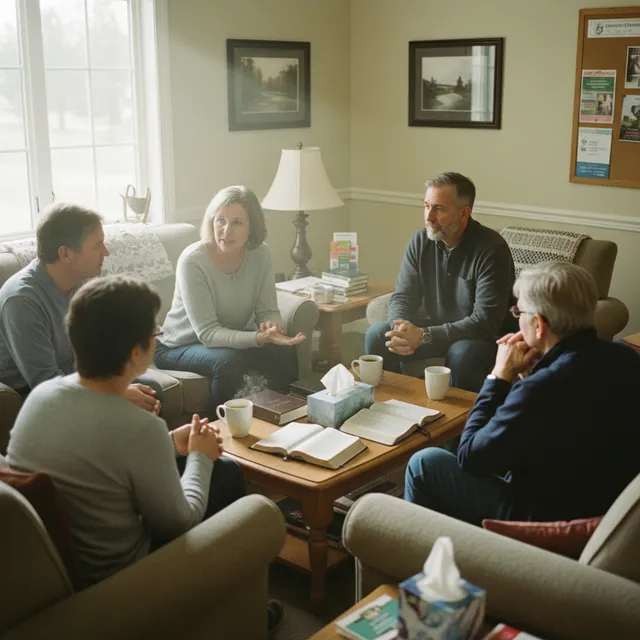
Caregiver support groups - many church-based - combine social support with spiritual encouragement. These groups understand what you're experiencing in ways general Bible studies don't. Sharing struggles with people who truly get it provides comfort that well-meaning advice from non-caregivers cannot. If your church doesn't offer caregiver support, consider whether you might start such a group to serve others in similar situations.
Phone-based connection maintains relationships when visits are impossible. Regular calls with spiritually supportive friends, accountability partners, or pastors keep you connected even when you can't leave. Brief calls during care breaks allow sharing needs and receiving encouragement. Don't underestimate the value of ten-minute conversations for combating spiritual isolation.
Bible Way's community features connect caregivers with fellow believers studying the same content regardless of geographic location or schedule constraints. Digital fellowship doesn't replace in-person community entirely but provides connection that would otherwise be impossible. Posting prayer requests, reading others' insights, and knowing others study alongside you - even across distances - counters the isolation that accelerates burnout.
Caring as Unto the Lord
Colossians 3:23-24 provides transformational perspective: "Whatever you do, work at it with all your heart, as working for the Lord, not for human masters, since you know that you will receive an inheritance from the Lord as a reward. It is the Lord Christ you are serving." Applied to caregiving, this means every task - even the ones that feel demeaning or are never acknowledged - is service to Christ Himself.
This perspective transforms motivation when human appreciation is lacking. Your care recipient may never thank you, may not remember what you've done moments later, may even express hostility due to illness. Working "as unto the Lord" provides motivation independent of human response. Christ sees every act of service, even those no other human witnesses. He values what the world considers menial.
Mundane tasks become worship. Changing diapers becomes care for Christ's body. Preparing meals becomes feeding Jesus. Patient listening to repeated stories becomes offering attention to the Lord. This isn't pretending difficulty doesn't exist but recognizing dignity in service that culture considers beneath notice. The caregiver changing sheets at 3 AM is doing work that matters eternally, whether or not anyone else sees.

However, serving "as unto the Lord" doesn't mean accepting abuse or destroying yourself. Jesus served sacrificially but also maintained boundaries, withdrew for rest, and didn't meet every need everyone brought to Him. Working with all your heart means giving your best within sustainable limits, not performing beyond human capacity until you collapse. The Lord you serve cares about you, not just your output.
Making Difficult Decisions Biblically
Caregiving involves wrenching decisions: when to push for treatment versus accepting decline, whether to continue home care or consider facilities, how to balance care recipient wishes with practical limitations, when to involve hospice. Scripture doesn't provide specific answers to medical decisions but offers principles for decision-making.
James 1:5 promises wisdom: "If any of you lacks wisdom, you should ask God, who gives generously to all without finding fault, and it will be given to you." Caregiving decisions qualify for this promise. Pray specifically for wisdom about the decisions you face, trusting God to guide through circumstances, wise counsel, and internal peace about direction.
Proverbs 15:22 recommends counsel: "Plans fail for lack of counsel, but with many advisers they succeed." Consult medical professionals, pastors, experienced caregivers, and family members when facing major decisions. You don't have to figure everything out alone. Gathering perspectives helps you see options and implications you might miss in isolation.
Studies on wisdom from Proverbs help develop decision-making discernment. Studies on stewardship address managing limited resources including your own health and energy. Family Bible studies provide framework for navigating family dynamics that caregiving often strains.
Placing a loved one in professional care is not abandonment. Scripture honors caring for family but doesn't require providing all care personally. When care needs exceed what you can safely provide, when your health is failing from caregiving strain, when professional medical supervision would benefit your loved one - facilities may be the caring choice. Many caregivers continue significant involvement through daily visits while professionals handle medical needs. The goal is best care, not proving you can handle everything alone.
Finding Eternal Perspective
Caregiving forces confrontation with mortality - yours, your loved one's, everyone's. This proximity to death can either terrify or draw you deeper into Scripture's promises about what lies ahead. Eternal perspective transforms caregiving from pointless postponement of inevitable loss to meaningful preparation for reunion.
For believers, death isn't ending but transition. Paul wrote, "to live is Christ and to die is gain" (Philippians 1:21). Your loved one who knows Christ moves toward glory, not oblivion. The suffering you witness in their declining body gives way to resurrection body free from pain. Study passages about heaven (Revelation 21-22, John 14:1-6) not as escape from present difficulty but as real hope about what's coming.
If your loved one doesn't know Christ, caregiving provides opportunity. Your faithful presence demonstrates Christ's love in tangible form. Conversations about faith may become possible in ways earlier years didn't allow. Studies on salvation equip you to share gospel truth when opportunities arise. Pray persistently for your loved one's spiritual awakening - cases of deathbed conversions throughout history encourage hope.
Your caregiving itself has eternal significance. Matthew 25 reveals that caring for the vulnerable is caring for Christ - service He remembers and rewards eternally. The monotonous tasks that seem meaningless accumulate eternal weight. You're not just maintaining a body that will eventually fail; you're loving an image-bearer of God and serving Christ through them.
Anticipating your own mortality becomes opportunity rather than terror. Your faithful caregiving models how you hope to be treated if roles reverse someday. More importantly, it models faith that trusts God through suffering - a legacy more valuable than any material inheritance. Studies on legacy help you consider what you're teaching those watching your caregiving example.