John Bible Study - Encounter Jesus the Son of God
Experience the most beloved Gospel through the eyes of the beloved disciple. The Gospel of John uniquely reveals Jesus as the eternal Word who became flesh, dwelling among us full of grace and truth. Through carefully selected signs, profound discourses, and intimate moments with Jesus, John invites you to believe that Jesus is the Christ, the Son of God, and that by believing you may have life in His name. Whether you're exploring faith for the first time or deepening your walk with Christ, John Bible study will transform your understanding of who Jesus truly is.
Key Takeaways from John Bible Study
Jesus is the eternal Word of God who was with God and is God - the Creator of all things
Eternal life comes through believing in Jesus Christ as the Son of God - faith is the key
Jesus performed miraculous signs that revealed His glory and led people to faith in Him
The "I Am" statements reveal Jesus as everything we need - bread, light, shepherd, way, truth, life
The Holy Spirit would come as our Helper to guide us into all truth and glorify Jesus
Jesus' love for His own is the model for our love - laying down our lives for one another
Why Study the Gospel of John?
John presents Jesus from a unique perspective - the beloved disciple who reclined next to Jesus reveals depths unseen in other Gospels
The Word Made Flesh
Encounter Jesus as the eternal Word who existed with God from the beginning and became human to reveal the Father to us.
Seven "I Am" Statements
Explore Jesus' powerful self-revelations: Bread of Life, Light of the World, Good Shepherd, Resurrection and Life, and more.
Seven Miraculous Signs
Study the carefully selected miracles John records - from water to wine to raising Lazarus - each revealing Jesus' glory.
Living Water & Eternal Life
Discover Jesus' offer of spiritual satisfaction and eternal life through believing in Him as the Son of God.
The Holy Spirit's Coming
Learn about the promised Helper in Jesus' Upper Room Discourse - the Spirit who guides believers into all truth.
Love Demonstrated
Experience Jesus' love for His disciples - washing feet, laying down His life, and preparing a place in the Father's house.
Understanding John in Context
The Gospel of John stands apart from the Synoptic Gospels (Matthew, Mark, and Luke) with its unique perspective on Jesus' ministry. Written by the apostle John, the "beloved disciple" who was closest to Jesus during His earthly ministry, this Gospel was composed around AD 90 to a predominantly Greek audience. John states his purpose clearly in chapter 20:31: "These are written so that you may believe that Jesus is the Christ, the Son of God, and that by believing you may have life in his name." This Bible study will guide you through John's carefully crafted testimony designed to produce saving faith.
John's Gospel begins not with Jesus' birth but with eternity past: "In the beginning was the Word, and the Word was with God, and the Word was God" (1:1). This majestic prologue establishes Jesus' divine identity before recounting His earthly ministry. John organizes his Gospel around seven miraculous "signs" - from turning water into wine at Cana to raising Lazarus from the dead - each revealing Jesus' glory and pointing to His identity as the Son of God. Unlike the Synoptics' rapid narrative style, John records extended discourses where Jesus explains the deeper meaning of His works. For those seeking online Bible study, John's Gospel provides profound theological content accessible to beginners yet inexhaustible for scholars.
One of John's distinctive features is the seven "I Am" statements where Jesus uses the divine name (connected to God's revelation to Moses at the burning bush) to declare His identity: "I am the bread of life" (6:35), "I am the light of the world" (8:12), "I am the door" (10:9), "I am the good shepherd" (10:11), "I am the resurrection and the life" (11:25), "I am the way, the truth, and the life" (14:6), and "I am the true vine" (15:1). These statements form the theological backbone of John's Gospel, revealing Jesus as the fulfillment of all human spiritual needs. Whether you follow a daily Bible study routine or prefer deep dives, the "I Am" statements will reshape your understanding of who Jesus is.
John's Gospel also contains some of the Bible's most beloved and memorized passages. John 3:16-17 proclaims God's love in sending His Son so that whoever believes might have eternal life. Jesus' conversation with the woman at the well (chapter 4) demonstrates His offer of living water that satisfies forever. The raising of Lazarus (chapter 11) powerfully demonstrates Jesus' authority over death itself. The Upper Room Discourse (chapters 13-17) provides intimate teaching on love, the Holy Spirit, abiding in Christ, and Jesus' high priestly prayer. From women's Bible studies to academic seminaries, John remains the most studied Gospel for understanding Jesus' divine nature and mission. Let Bible Way guide your exploration of this magnificent testimony to the Word made flesh.
Journey Through John's Gospel
From the eternal Word to the risen Christ - all 21 chapters explored
Chapters 1-4: The Word Revealed
Jesus introduced as the divine Word, gathering disciples
- The Word Was God (1:1-18)
- John the Baptist's Testimony (1:19-34)
- First Disciples Follow Jesus (1:35-51)
- Water to Wine - First Sign (2:1-12)
- Temple Cleansing (2:13-25)
- Born Again - Nicodemus (3:1-21)
- He Must Increase (3:22-36)
- Woman at the Well (4:1-42)
- Official's Son Healed (4:43-54)
Chapters 5-8: Signs and Controversy
Growing opposition as Jesus reveals His identity
- Healing at Bethesda (5:1-15)
- Jesus' Divine Authority (5:16-47)
- Feeding the 5,000 (6:1-15)
- Walking on Water (6:16-24)
- Bread of Life Discourse (6:25-71)
- Feast of Tabernacles (7:1-52)
- Light of the World (8:12-30)
- Truth Sets Free (8:31-59)
Chapters 9-12: Opposition Intensifies
From healing the blind man to the triumphal entry
- Man Born Blind Healed (9:1-41)
- The Good Shepherd (10:1-21)
- Jesus and the Father Are One (10:22-42)
- Lazarus Raised from Death (11:1-44)
- Plot to Kill Jesus (11:45-57)
- Mary Anoints Jesus (12:1-11)
- Triumphal Entry (12:12-19)
- The Hour Has Come (12:20-50)
Chapters 13-21: The Passion and Resurrection
Upper Room, cross, and empty tomb
- Jesus Washes Disciples' Feet (13:1-17)
- Prediction of Betrayal (13:18-30)
- New Commandment - Love (13:31-38)
- The Way, Truth, and Life (14:1-14)
- Promise of the Spirit (14:15-31)
- The Vine and Branches (15:1-17)
- The World's Hatred (15:18-16:4)
- Work of the Spirit (16:5-15)
- Sorrow to Joy (16:16-33)
- High Priestly Prayer (17:1-26)
- Arrest and Trials (18:1-19:16)
- Crucifixion and Burial (19:17-42)
- Empty Tomb (20:1-10)
- Jesus Appears to Mary, Disciples (20:11-31)
- Jesus and Peter Restored (21:1-25)
The Heart of John's Gospel
"For God so loved the world, that he gave his only Son, that whoever believes in him should not perish but have eternal life." - John 3:16
This single verse captures the essence of John's message: God's immeasurable love, Christ's sacrificial gift, the simplicity of faith, and the promise of eternal life. John's Gospel was written so that through the testimony of signs, discourses, and the cross, readers would come to believe and find everlasting life in Jesus' name.
From the prologue's declaration that the Word became flesh and dwelt among us (1:14) to Thomas's confession "My Lord and my God!" (20:28), John builds an irrefutable case for Jesus' deity. Each sign performed, each "I Am" spoken, and each discourse delivered points to one conclusion: Jesus is the Christ, the Son of God, and life is found in believing in Him.
What Others Say About Our John Study
How studying John transformed their faith
"John's Gospel has transformed how I lead Bible studies. The way Bible Way unpacks the "I Am" statements helped our group see Jesus in entirely new ways. Women are encountering the living Christ through this study."
"I came to John's Gospel with doubts about Jesus' divinity. The evidence John presents - the signs, the testimonies, the prophecies fulfilled - built a compelling case. John 20:31 became true for me: I believed and found life."
"As someone who just started following Jesus, John felt like it was written for me. The simple yet profound way John explains who Jesus is and how to have eternal life gave me confidence in my new faith."
John Study Resources
Tools to help you encounter the Word made flesh
Chapter Summaries
Clear, detailed summaries of all 21 chapters highlighting key events, discourses, and theological themes.
"I Am" Statement Studies
In-depth exploration of each self-revelation: Bread, Light, Door, Shepherd, Resurrection, Way, and Vine.
Seven Signs Analysis
Careful study of each miraculous sign and what it reveals about Jesus' identity and mission.
Key Verse Memory
Memorization guides for John's greatest passages: 1:1-14, 3:16, 10:10, 11:25-26, 14:6, 15:5.
Upper Room Discourse
Extended study of Jesus' farewell teachings in chapters 13-17 - love, the Spirit, abiding.
Discussion Questions
Thought-provoking questions for personal reflection or group Bible study discussion.
John Study Visuals
Visual guides to help you understand the Gospel of John

The Word Made Flesh
The eternal Word who was with God taking on human nature to dwell among us.

Water to Wine
The first sign at Cana where Jesus revealed His glory and His disciples believed.
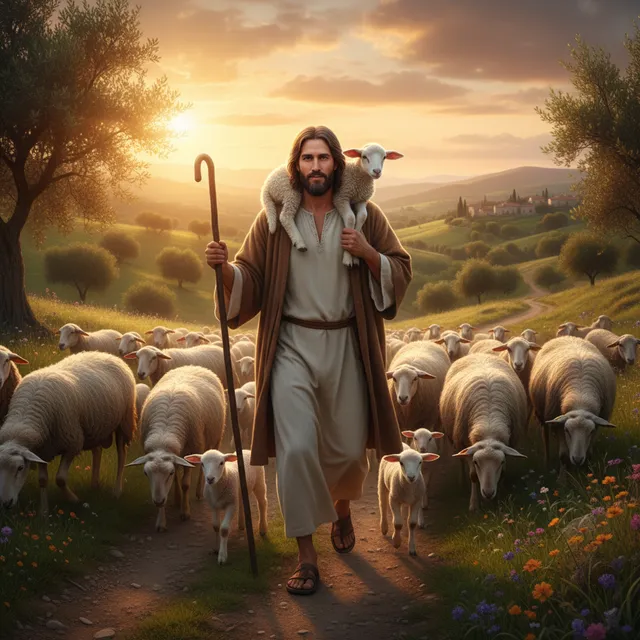
The Good Shepherd
Jesus who knows His sheep by name and lays down His life for them.
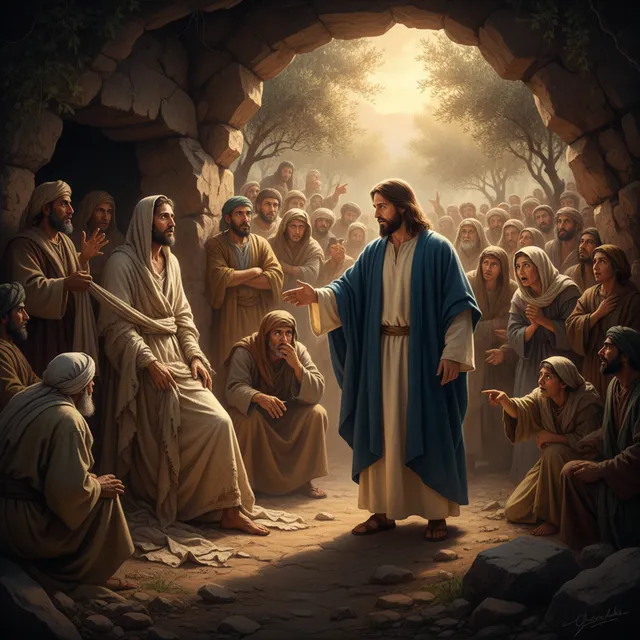
Raising of Lazarus
The greatest sign - Jesus demonstrating He is the resurrection and the life.
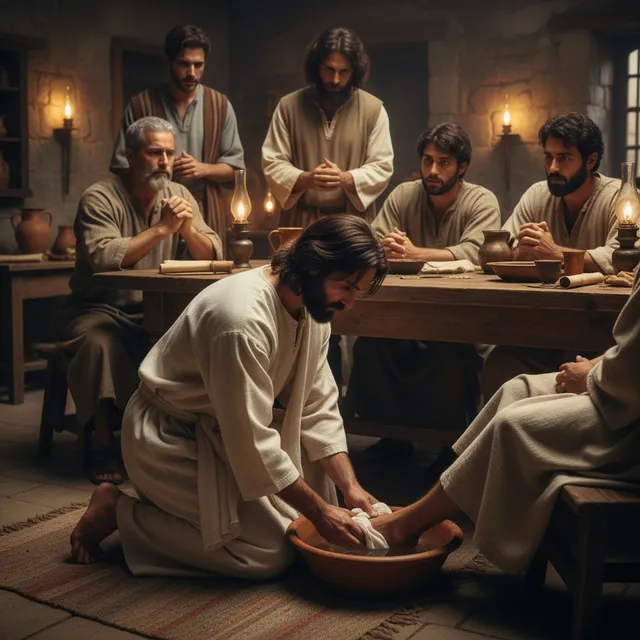
Washing Feet
The Master becoming servant, modeling the love His followers should have.

Group Bible Study
Community study deepens understanding of John through shared insights.
Join Our John Study Community
Encounter Jesus as the Son of God
What You'll Get
- Chapter-by-chapter study guides for all 21 chapters
- Deep dives into all seven "I Am" statements
- Analysis of the seven miraculous signs
- Upper Room Discourse extended study (chapters 13-17)
"John's Gospel helped me fall in love with Jesus all over again. Bible Way's study revealed the depth of Christ's love in ways I'd never seen before. The 'I Am' statements became personal promises to me."
Jennifer M.
20-year believer, still learning
Frequently Asked Questions About John Bible Study
Clear answers to common questions about the Gospel of John
What makes the Gospel of John different from Matthew, Mark, and Luke?
The Gospel of John differs significantly from the Synoptic Gospels (Matthew, Mark, and Luke) in several ways. While the Synoptics share similar content and structure, John contains approximately 90% unique material. John focuses heavily on Jesus' ministry in Jerusalem and Judea, while the Synoptics emphasize Galilee. John records extended theological discourses rather than short sayings and parables. The "I Am" statements, the raising of Lazarus, the washing of feet, and most of the Upper Room Discourse (chapters 13-17) appear only in John. John explicitly states his evangelistic purpose (20:31) and uses symbolic language and themes like light/darkness, life/death, and belief/unbelief throughout. While the Synoptics present Jesus chronologically, John arranges material thematically around seven miraculous "signs." John's prologue (1:1-18) presents the most developed theology of Jesus' pre-existence and deity. John was likely written later (around AD 90) to complement the existing Gospels with deeper theological reflection on Jesus' identity and mission.
Who wrote the Gospel of John and when?
The Gospel of John was written by the apostle John, son of Zebedee, identified in the text as the "beloved disciple" who reclined next to Jesus at the Last Supper (13:23) and stood at the cross (19:26). Church tradition from the second century consistently attributed this Gospel to John. Internal evidence supports this: the author was an eyewitness to events (1:14, 19:35, 21:24), knew intimate details of Jesus' life, had insider access to Jesus' private moments, and demonstrates deep familiarity with Jewish customs and Palestinian geography. The Gospel was likely written from Ephesus around AD 85-95, making John the last Gospel composed. This late date explains its reflective, theological character - John had decades to meditate on Jesus' ministry and the Spirit's illumination to write this profound testimony. Some scholars suggest John's disciples may have edited the final form (see 21:24), but the essential authorship belongs to the apostle who knew Jesus most intimately. This eyewitness testimony gives John unique authority and authenticity.
What are the seven signs in the Gospel of John?
John carefully selects seven miraculous "signs" (Greek: semeion) to reveal Jesus' glory and produce faith. These signs are: (1) Turning water into wine at Cana (2:1-11) - Jesus' first sign, revealing His glory and leading His disciples to believe; it shows Jesus transforms ordinary life into joy. (2) Healing the official's son (4:46-54) - Demonstrates Jesus' authority over distance and sickness; belief precedes seeing. (3) Healing the paralytic at Bethesda (5:1-15) - Shows Jesus as Lord of the Sabbath with authority to give life. (4) Feeding the 5,000 (6:1-14) - The only miracle in all four Gospels; shows Jesus as the Bread of Life who satisfies our deepest hunger. (5) Walking on water (6:16-21) - Reveals Jesus' divine authority over nature; the "I am" of verse 20 echoes God's name. (6) Healing the man born blind (9:1-41) - Jesus is the Light of the World who gives spiritual sight. (7) Raising Lazarus (11:1-44) - The climactic sign showing Jesus as the Resurrection and the Life with ultimate authority over death. Each sign builds toward the ultimate "sign" - Jesus' death and resurrection - and each calls for faith response.
What are the seven "I Am" statements in John?
Jesus' seven "I Am" (Greek: ego eimi) statements in John reveal His divine identity by echoing God's self-revelation to Moses: "I AM WHO I AM" (Exodus 3:14). These statements are: (1) "I am the bread of life" (6:35) - Jesus alone satisfies our spiritual hunger; coming to Him ends emptiness forever. (2) "I am the light of the world" (8:12) - Jesus illuminates the path of life; following Him means never walking in darkness. (3) "I am the door" (10:9) - Jesus is the only entrance to salvation; through Him we find safety and abundant life. (4) "I am the good shepherd" (10:11) - Jesus knows His sheep personally and sacrificially dies for them. (5) "I am the resurrection and the life" (11:25) - Jesus has authority over death; belief in Him means eternal life even through physical death. (6) "I am the way, the truth, and the life" (14:6) - Jesus is the exclusive path to the Father; there is no other way to God. (7) "I am the true vine" (15:1) - Jesus is the source of spiritual life; apart from Him we can do nothing. These statements collectively present Jesus as everything humanity needs.
What is the meaning of John 3:16?
John 3:16 is often called "the gospel in a verse" because it summarizes the entire Christian message: "For God so loved the world, that he gave his only Son, that whoever believes in him should not perish but have eternal life." Key elements include: (1) "God so loved" - The origin of salvation is God's love, not human merit or initiative. The Greek word agape indicates unconditional, self-giving love. (2) "The world" - God's love extends to all humanity, not just Israel or the religious. The term "world" often has negative connotations in John (opposing God), making this love even more remarkable. (3) "Gave his only Son" - God's love is demonstrated through sacrifice. The Father sent the Son to die for sinners. "Only" (monogenes) emphasizes Jesus' unique relationship to the Father. (4) "Whoever believes" - Salvation is available to all without distinction, received through faith alone. (5) "Should not perish" - The alternative to eternal life is destruction; the stakes are ultimate. (6) "Have eternal life" - Life that begins now and continues forever in relationship with God. This verse captures the entire story of redemption: God's love, Christ's sacrifice, humanity's need, faith's response, and life's promise.
What does John teach about the Holy Spirit?
John provides the most extensive teaching about the Holy Spirit's person and work in the Upper Room Discourse (chapters 14-16). Key teachings include: (1) The Spirit is "another Helper" (Parakletos) - the same kind as Jesus Himself (14:16). This Greek term means advocate, counselor, comforter - one called alongside to help. (2) The Spirit of truth dwells in believers (14:17) - unlike Jesus' physical presence, the Spirit is with us and in us permanently. (3) The Spirit teaches and reminds (14:26) - He illuminates Scripture, helping us remember and understand Jesus' words. (4) The Spirit testifies about Jesus (15:26) - His ministry always points to Christ, never to Himself. (5) The Spirit convicts the world (16:8-11) - of sin (unbelief), righteousness (Christ's vindication), and judgment (Satan's defeat). (6) The Spirit guides into all truth (16:13) - progressively revealing what believers need to know. (7) The Spirit glorifies Jesus (16:14) - His work always exalts Christ, not Himself. Earlier in John, the Spirit is connected to new birth (3:5-8), worship (4:24), and rivers of living water flowing from believers (7:38-39). John shows the Spirit as personal, divine, and essential for Christian life.
What is the Upper Room Discourse about?
The Upper Room Discourse (John 13-17) contains Jesus' final extended teaching to His disciples on the night before His crucifixion. This intimate section includes: (1) The foot washing (13:1-17) - Jesus models servant leadership and calls disciples to love one another similarly. (2) Prediction of betrayal and denial (13:18-38) - Judas leaves and Peter's denial is foretold, yet Jesus gives the new commandment of love. (3) Comfort for troubled hearts (14:1-14) - Jesus promises to prepare a place and identifies Himself as the way, truth, and life. (4) Promise of the Spirit (14:15-31) - The Helper will come to be with disciples forever. (5) The vine and branches (15:1-17) - Abiding in Christ is essential for fruitful living; apart from Him we can do nothing. (6) Warning of persecution (15:18-16:4) - The world will hate believers as it hated Jesus. (7) The Spirit's work (16:5-15) - Convicting, guiding, and glorifying Jesus. (8) Sorrow turned to joy (16:16-33) - Temporary grief will become eternal rejoicing. (9) High Priestly Prayer (17:1-26) - Jesus prays for Himself, His disciples, and all future believers to be unified and sanctified. This section provides the most intimate look at Jesus' heart for His followers.
Why does John emphasize believing in Jesus?
The concept of "believing" (Greek: pisteuein) appears nearly 100 times in John's Gospel - far more than in the Synoptics combined. John explicitly states his purpose: "These are written so that you may believe that Jesus is the Christ, the Son of God, and that by believing you may have life in his name" (20:31). John emphasizes believing because: (1) It's the means of receiving eternal life (3:16, 36; 5:24; 6:40) - not works, rituals, or heritage. (2) It involves personal commitment - John uses the verb form, emphasizing ongoing faith as active trust rather than static assent. (3) It has specific content - believing "that Jesus is the Christ" (the Messiah) and "the Son of God" (divine). (4) It produces transformation - believers receive power to become children of God (1:12). (5) It divides humanity - the light has come, and people either believe and come to the light or refuse and remain in darkness (3:18-21). John presents belief through various characters: Nicodemus struggles, the Samaritan woman accepts, the blind man progresses, Thomas finally confesses. These examples show that believing is the decisive response to encountering Jesus that determines eternal destiny.
What does John 14:6 mean about Jesus being the only way?
In John 14:6, Jesus declares: "I am the way, and the truth, and the life. No one comes to the Father except through me." This is one of the most significant claims in Scripture for several reasons: (1) Context - Thomas had asked how to know the way to where Jesus was going (14:5). Jesus answers not with directions but with Himself - He is the destination. (2) "The way" - Jesus is not a way among many but the exclusive path to God. The early church was called "the Way" (Acts 9:2) based on this teaching. (3) "The truth" - Jesus embodies truth itself; He doesn't merely teach truth or point to it. In a world of competing claims, Jesus alone is absolutely true. (4) "The life" - Jesus is the source of spiritual life now and eternal life forever. He doesn't just show us how to live - He is life. (5) "No one comes to the Father except through me" - This exclusive claim means all other paths fail to reach God. Sincerity in false belief doesn't save; only faith in Jesus. (6) Purpose - This isn't meant to exclude but to include - the door is narrow but open to all who come through Jesus. This verse stands at the heart of Christian witness, calling all people to find their way to God through Christ alone.
What is the significance of Jesus washing the disciples' feet?
The foot washing in John 13:1-17 is one of the most powerful scenes in the Gospels, loaded with meaning: (1) Context - It occurred at the Last Supper, "before the Feast of Passover," when Jesus knew His hour had come. He loved His own "to the end" (eis telos - to the uttermost). (2) Cultural shock - Foot washing was the task of the lowest servant, never done by a superior. Peter's protest (v.8) shows how startling Jesus' action was. (3) Symbolic cleansing - Jesus tells Peter, "If I do not wash you, you have no share with me" (v.8). This represents spiritual cleansing; believers are clean but need ongoing washing from daily defilement. (4) Model of service - "If I then, your Lord and Teacher, have washed your feet, you also ought to wash one another's feet" (v.14). Jesus reverses worldly hierarchy. (5) Preview of the cross - Jesus removing His garments, stooping low, and taking the servant's role pictures His coming death. (6) Love in action - John says Jesus "loved them to the end" (v.1) and immediately shows it through humble service. (7) Christian community - The church is called to this same servant posture toward one another. This scene defines Christian leadership and love: serving others in humble, practical ways as Jesus did.
How does John's Gospel prove Jesus is God?
John's Gospel presents the most comprehensive case for Jesus' deity in the New Testament: (1) The Prologue (1:1-18) - "The Word was with God, and the Word was God" establishes Jesus' eternal existence and divine nature before His incarnation. (2) Divine claims - Jesus applies God's name "I AM" to Himself repeatedly (8:24, 28, 58; 13:19), causing Jews to attempt stoning for blasphemy (8:59). (3) Equality with God - Jesus claims to work as the Father works (5:17), have life in Himself (5:26), receive equal honor (5:23), and be one with the Father (10:30). (4) Divine prerogatives - Jesus forgives sins, judges all people, gives eternal life, and will raise the dead - powers belonging to God alone. (5) Worship accepted - Jesus receives worship from the blind man (9:38) and Thomas's confession "My Lord and my God!" (20:28) without correction. (6) The signs - Each miracle reveals divine power over nature, sickness, distance, time, and death itself. (7) Eyewitness testimony - John 1:14 ("we have seen his glory") and 19:35 ground these claims in firsthand witness. (8) The Father's testimony - God testifies to Jesus through works, Scripture, and direct voice. John's Gospel is designed to prove Jesus' deity and elicit the confession of faith.
What are the best commentaries on John's Gospel?
For accessible reading, D.A. Carson's "The Gospel According to John" (Pillar) is comprehensive yet readable - the gold standard for evangelical scholarship. Leon Morris's "The Gospel According to John" (NICNT) offers careful exegesis with pastoral warmth. For laypeople, J. Ramsey Michaels's "John" (NICNT, 2nd edition) and Gary Burge's "John" (NIVAC) provide excellent application. Andreas Köstenberger's "John" (BECNT) is thorough and theologically rich. For devotional study, James Montgomery Boice's exposition and R. Kent Hughes's "John: That You May Believe" (Preaching the Word) offer sermonic richness. Classic works include B.F. Westcott's commentary (still valuable for Greek insights) and Rudolf Bultmann (critical but thought-provoking). For Greek students, C.K. Barrett's commentary rewards careful study. Raymond Brown's two-volume Anchor Bible commentary is massive and scholarly (though more critical). Craig Keener's two-volume work provides exhaustive background information. Bible Way draws from these scholarly resources to provide accessible study guides, discussion questions, and theological summaries that help ordinary believers engage John's Gospel deeply without needing a seminary education.
Helpful External Resources
Trusted resources for deeper John Bible study
Bible Gateway
John commentary with multiple translations and study tools
biblegateway.comBible Project
Visual overview of John with animated explanations
bibleproject.comGotQuestions.org
Common questions about John answered biblically
gotquestions.orgBlue Letter Bible
Original language tools and verse-by-verse study
blueletterbible.orgChristianity Today
Articles on John's Gospel and theology
christianitytoday.comBibleHub
Parallel translations, commentaries, and concordance
biblehub.comGospel Coalition
Scholarly articles on John themes and theology
thegospelcoalition.orgESV Study Bible
Scholarly introduction and notes on John
esv.orgRelated Bible Studies
Romans Study
The gospel explained systematically
Genesis Study
The beginning of everything
Revelation Study
John's apocalyptic vision
Psalms Study
Prayers and praises to God
Explore More Bible Studies
Ready to Begin Your John Bible Study?
Encounter Jesus as the eternal Word who became flesh and dwelt among us. Through John's carefully selected signs, profound discourses, and intimate moments, discover why billions have believed that Jesus is the Christ, the Son of God. From the majestic prologue to Thomas's confession "My Lord and my God!", John's Gospel builds an irrefutable case for faith. Download Bible Way today and begin your journey through the beloved disciple's testimony with chapter-by-chapter guides, "I Am" statement studies, and deep dives into the Upper Room Discourse. Believe and find life in His name.