
Personal Healing
Individuals finding freedom from past hurts through Scripture\'s teaching on forgiveness.
Forgiveness is at the very heart of the Christian faith, central to both our relationship with God and our relationships with others. A Bible study on forgiveness explores what Scripture teaches about receiving God\'s complete pardon through Christ, extending forgiveness to those who have hurt us, and finding freedom from the chains of bitterness and resentment. Whether you\'re struggling to forgive someone who deeply wounded you, battling guilt over past mistakes, or wanting to understand this transformative biblical concept, our comprehensive Bible study resources will equip you with truth and practical wisdom for a life marked by grace.
Understanding forgiveness biblically transforms relationships and brings genuine freedom. Explore our comprehensive features designed to help you experience the power of forgiveness.
Understand the depth of God's forgiveness through Christ and how to fully receive and rest in His complete pardon for all your sins.
Learn biblical principles for forgiving those who have hurt you, even when it seems impossible, and experience the freedom that follows.
Discover how biblical forgiveness breaks the chains of resentment and bitterness that hold you captive to past wounds.
Study Scripture's guidance on when and how to pursue reconciliation, and understand the difference between forgiveness and restored trust.
Explore what the Bible says about forgiving yourself and letting go of guilt and shame when God has already forgiven you.
See how Jesus' sacrifice on the cross is the ultimate demonstration of forgiveness and the foundation for all Christian forgiveness.
See how believers are experiencing freedom through biblical forgiveness
Individuals finding freedom from past hurts through Scripture\'s teaching on forgiveness.

Couples rebuilding trust and intimacy through the power of biblical forgiveness.
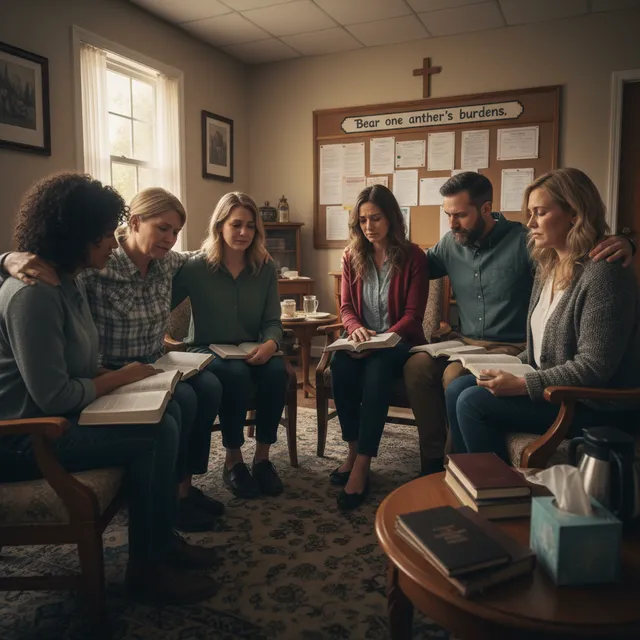
Communities walking together through forgiveness journeys with biblical guidance.

Believers experiencing freedom as they surrender resentment to God in prayer.

Families breaking cycles of hurt and unforgiveness through God\'s Word.

Understanding forgiveness through the ultimate sacrifice of Christ on the cross.
Comprehensive biblical studies covering every aspect of forgiveness. Pair with our healing Bible study for complete restoration.
What Scripture teaches about how God forgives sin through Christ
What Christ taught His followers about forgiving others
How to apply biblical forgiveness in real life situations
Dealing with difficult forgiveness situations
Real testimonials from believers transformed by studying forgiveness in Scripture
"After years of bitterness toward my father, Bible Way's forgiveness study showed me what biblical forgiveness really means. It's not excusing what happened - it's releasing my right to revenge and trusting God as judge. For the first time in a decade, I feel free."
"We've used this forgiveness study with dozens of couples on the brink of divorce. When they truly understand how much God has forgiven them, forgiving each other becomes possible. We've seen marriages restored that seemed hopeless."
"I spent 15 years carrying guilt for what I did. Even after finding Jesus, I couldn't forgive myself. This study taught me that if the blood of Christ is enough for God, it should be enough for me too. That understanding changed everything."
Everything you need to understand and practice biblical forgiveness. Access alongside our online Bible study platform.
Comprehensive collection of Bible verses about forgiveness organized by theme for study and memorization.
Guided journal prompts to work through hurt, process emotions, and document your forgiveness journey.
Verse-by-verse study of Jesus' teaching on unlimited forgiveness with application questions.
Biblical strategies for healing from past hurts while choosing to forgive those who caused them.
Guided prayers for receiving God's forgiveness, forgiving others, and releasing bitterness.
Biblical guidance for when and how to pursue reconciliation after forgiveness is extended.
A Bible study on forgiveness reveals that forgiveness is central to the Christian message. The Greek word translated "forgive" (aphiemi) literally means "to send away" or "to release." When God forgives us, He sends our sins away from us, removing them as far as the east is from the west (Psalm 103:12). This isn't merely overlooking our failures but actually removing the guilt and penalty of sin through Christ\'s sacrifice. "In him we have redemption through his blood, the forgiveness of sins" (Ephesians 1:7). God\'s forgiveness is complete - He promises not only to forgive but to remember our sins no more (Hebrews 8:12). This doesn\'t mean God has amnesia, but that He chooses not to hold our sins against us or bring them up for punishment.
Because we have received such lavish forgiveness, we are called to forgive others. Paul commands, "Be kind to one another, tenderhearted, forgiving one another, as God in Christ forgave you" (Ephesians 4:32). This is perhaps the most challenging aspect of forgiveness - extending it to those who have genuinely hurt us. Jesus taught that forgiving others is not optional for His followers. In the parable of the unforgiving servant (Matthew 18:21-35), a man forgiven an astronomical debt refuses to forgive a small debt owed to him. The master\'s response is severe judgment. Jesus concludes, "So also my heavenly Father will do to every one of you, if you do not forgive your brother from your heart." Our prayer Bible study explores how unforgiveness hinders our communion with God.
Whether you need to receive God\'s forgiveness, forgive someone else, or forgive yourself. Perfect for women\'s groups and men\'s studies.
"My brother and I hadn\'t spoken in seven years after a dispute over our parents\' estate. Bible Way\'s forgiveness study helped me understand that my bitterness was poisoning me, not him. I chose to forgive, and two months later we reconciled. Best decision of my life."
Robert K.
Business Owner, Dallas
Common questions about forgiveness according to Scripture
The Bible presents forgiveness as central to God\'s character and essential for believers. In the Old Testament, God reveals Himself as "a God merciful and gracious, slow to anger, and abounding in steadfast love and faithfulness, keeping steadfast love for thousands, forgiving iniquity and transgression and sin" (Exodus 34:6-7). The New Testament reveals that complete forgiveness comes through Christ\'s sacrifice: "In him we have redemption through his blood, the forgiveness of sins, in accordance with the riches of God\'s grace" (Ephesians 1:7). Key forgiveness passages include Psalm 103:12 ("as far as the east is from the west, so far has he removed our transgressions from us"), Isaiah 1:18 ("though your sins are like scarlet, they shall be as white as snow"), and 1 John 1:9 ("If we confess our sins, he is faithful and just to forgive us our sins and to cleanse us from all unrighteousness"). The Bible also commands believers to forgive others, with Jesus teaching that our willingness to forgive others is connected to our experience of God\'s forgiveness (Matthew 6:14-15).
Forgiving deep wounds is one of the most challenging things Christians are called to do, but Scripture provides a pathway. First, acknowledge the reality and pain of what happened - forgiveness is not denial or minimization. Second, remember how much God has forgiven you - the parable of the unforgiving servant (Matthew 18) shows that contemplating our own forgiven debt motivates us to forgive others. Third, understand that forgiveness is a choice, not primarily a feeling. You may need to choose forgiveness repeatedly as painful memories resurface. Fourth, release your right to revenge - "Beloved, never avenge yourselves, but leave it to the wrath of God" (Romans 12:19). Trust that God is a righteous judge who sees all and will ultimately make all things right. Fifth, pray for the person who hurt you - Jesus commanded, "Love your enemies and pray for those who persecute you" (Matthew 5:44). This softens your heart over time. Finally, recognize that forgiveness doesn\'t require restored trust or resumed relationship - those depend on the other person\'s repentance and changed behavior.
This distinction is crucial for healthy biblical application. Forgiveness is a unilateral decision you make before God - you can forgive someone regardless of whether they apologize, acknowledge wrongdoing, or change their behavior. It\'s releasing your right to revenge and entrusting justice to God. Reconciliation, however, is bilateral - it requires both parties. Full reconciliation involves repentance from the offender, acknowledgment of wrongdoing, genuine change, and rebuilding of trust over time. Paul writes, "If possible, so far as it depends on you, live peaceably with all" (Romans 12:18) - the qualifier "if possible" acknowledges that reconciliation isn\'t always possible because it doesn\'t depend only on you. You can genuinely forgive an abusive parent from your heart without resuming a close relationship that puts you at risk. You can forgive a betraying spouse while still needing to see consistent changed behavior before restoring marital trust. Jesus calls us to unlimited forgiveness (Matthew 18:22) but also instructs us to be "wise as serpents" (Matthew 10:16) in our dealings with others.
Several passages describe God "forgetting" our sins: "I, I am he who blots out your transgressions for my own sake, and I will not remember your sins" (Isaiah 43:25); "I will forgive their iniquity, and I will remember their sin no more" (Jeremiah 31:34, quoted in Hebrews 8:12). Since God is omniscient, this doesn\'t mean literal amnesia. Rather, it means God chooses not to hold our sins against us, not to bring them up for punishment, not to treat us according to what we deserve. It\'s covenantal language indicating that forgiven sins have no ongoing consequences in our relationship with God. Micah 7:19 uses vivid imagery: "You will cast all our sins into the depths of the sea." Psalm 103:12 says, "As far as the east is from the west, so far has he removed our transgressions from us." This should give us tremendous assurance - when God forgives, the matter is truly settled. Satan may accuse us, and we may struggle with guilt, but God has declared forgiven sins dealt with once for all through Christ\'s blood.
Yes, the Bible calls us to forgive regardless of whether the offender apologizes. Jesus\' words from the cross - "Father, forgive them, for they know not what they do" (Luke 23:34) - were spoken while His executioners were actively killing Him, showing no repentance. Stephen, while being stoned, prayed, "Lord, do not hold this sin against them" (Acts 7:60). Neither Jesus nor Stephen waited for apologies. The command to forgive "as the Lord has forgiven you" (Colossians 3:13) reminds us that God\'s forgiveness in Christ was offered "while we were still sinners" (Romans 5:8), not after we apologized. Forgiveness that depends on the other person\'s actions keeps you in bondage to them. By forgiving unilaterally, you release yourself from the poison of bitterness regardless of what they do. However, while you can and should forgive without an apology, the process of reconciliation and restored trust does appropriately depend on the offender\'s repentance and changed behavior. Forgive always; reconcile wisely.
When Peter asked Jesus, "Lord, how often will my brother sin against me, and I forgive him? As many as seven times?" he thought he was being generous - rabbis typically taught forgiving three times. Jesus\' response was stunning: "I do not say to you seven times, but seventy-seven times" (Matthew 18:21-22, some translations render it "seventy times seven"). Jesus wasn\'t giving a mathematical limit of 490 times but describing unlimited, boundless forgiveness. He then told the parable of the unforgiving servant to illustrate why: our debt to God that Christ paid was so astronomical that any offense against us pales in comparison. Luke 17:3-4 adds, "If your brother sins, rebuke him, and if he repents, forgive him, and if he sins against you seven times in the day, and turns to you seven times, saying, \'I repent,\' you must forgive him." The disciples responded, "Increase our faith!" - recognizing that such forgiveness requires supernatural grace. This doesn\'t mean tolerating abuse or not establishing boundaries, but it does mean continually choosing forgiveness as a disposition of heart.
The phrase "forgive and forget" isn\'t directly from Scripture, though it reflects the principle that God "remembers our sins no more" (Hebrews 8:12). For humans, however, forgiveness doesn\'t mean literal forgetting - we can\'t simply erase memories. What it does mean is that we don\'t dwell on the offense, don\'t bring it up to punish the person, don\'t tell others to damage their reputation, and don\'t let it define how we see them going forward. 1 Corinthians 13:5 says love "keeps no record of wrongs" - not that we can\'t remember, but that we don\'t keep a running tally to use against someone. The goal is that, over time, the memory loses its emotional sting and no longer triggers bitterness. This is a process that often takes time and may require repeatedly choosing forgiveness when memories surface. However, forgetting is not required for genuine forgiveness, nor is it wise in all cases - remembering can help maintain appropriate boundaries to prevent future harm while still releasing the person from your personal judgment.
The concept of "self-forgiveness" doesn\'t appear directly in Scripture - the focus is on receiving God\'s forgiveness and forgiving others. However, many believers struggle with persistent guilt even after confessing to God. Several biblical principles help: First, if God has forgiven you through Christ\'s blood, who are you to declare yourself unforgivable? Refusing to accept God\'s forgiveness can be a form of pride - valuing your own assessment over God\'s. Romans 8:1 declares, "There is therefore now no condemnation for those who are in Christ Jesus." Second, distinguish between godly sorrow that leads to repentance and worldly sorrow that leads to death (2 Corinthians 7:10). Once you\'ve genuinely repented and received God\'s forgiveness, ongoing self-condemnation is not productive. Third, recognize that the enemy is "the accuser of our brothers" (Revelation 12:10) who wants you paralyzed by guilt. Resist his accusations with truth. Fourth, make restitution where possible (Zacchaeus in Luke 19), which can aid emotional closure. Finally, channel your past failure into compassion for others - Paul called himself "the foremost of sinners" yet became God\'s instrument to millions.
Jesus taught explicitly about the consequences of unforgiveness. After teaching the Lord\'s Prayer, He emphasized, "For if you forgive others their trespasses, your heavenly Father will also forgive you, but if you do not forgive others their trespasses, neither will your Father forgive your trespasses" (Matthew 6:14-15). The parable of the unforgiving servant ends with the master delivering the unforgiving servant to jailers "until he should pay all his debt," with Jesus concluding, "So also my heavenly Father will do to every one of you, if you do not forgive your brother from your heart" (Matthew 18:34-35). These are sobering warnings. They don\'t mean we earn God\'s forgiveness by forgiving others, but that genuine reception of God\'s forgiveness transforms us into forgiving people. Someone claiming to be forgiven while harboring bitter unforgiveness has not truly grasped the gospel. Beyond eternal consequences, unforgiveness has practical effects: Hebrews 12:15 warns against "a root of bitterness" that "defiles many." Bitterness poisons relationships, damages health, and hinders prayers. The person who refuses to forgive often suffers more than the one who hurt them.
The overwhelming testimony of Scripture is that God\'s forgiveness covers all sins for those who come to Him through Christ. 1 John 1:9 promises, "If we confess our sins, he is faithful and just to forgive us our sins and to cleanse us from all unrighteousness" - note "all unrighteousness." Isaiah 1:18 declares, "Though your sins are like scarlet, they shall be as white as snow; though they are red like crimson, they shall become like wool." Paul, who persecuted Christians, called himself the "foremost of sinners" yet found mercy (1 Timothy 1:15-16). Jesus forgave Peter who denied Him three times, restored him, and used him mightily. The thief on the cross received paradise on the day he died despite a lifetime of sin. The only "unforgivable sin" Jesus mentions is "blasphemy against the Holy Spirit" (Matthew 12:31-32), which in context refers to persistently attributing the Spirit\'s work to Satan, essentially hardening oneself against the very conviction that leads to repentance. If you\'re worried you\'ve committed this sin, the fact that you care indicates you haven\'t - those who blaspheme the Spirit have no concern about forgiveness.
Jesus is the ultimate model of forgiveness in both teaching and practice. He taught extensively on forgiveness: the Lord\'s Prayer includes "forgive us our debts, as we also have forgiven our debtors" (Matthew 6:12); He commanded forgiving "seventy times seven" (Matthew 18:22); He blessed peacemakers and those who show mercy (Matthew 5:7,9). But Jesus didn\'t just teach - He demonstrated forgiveness constantly. He forgave the paralytic\'s sins before healing him (Mark 2:5). He told the woman caught in adultery, "Neither do I condemn you; go, and from now on sin no more" (John 8:11). He forgave the woman who anointed His feet, declaring her many sins forgiven (Luke 7:47-48). Most powerfully, while being crucified - experiencing the worst injustice in history - Jesus prayed, "Father, forgive them, for they know not what they do" (Luke 23:34). He forgave His executioners in the act of killing Him. After resurrection, He showed no bitterness toward disciples who abandoned Him, instead commissioning them for world-changing ministry. Jesus\' entire mission was about forgiveness - His blood was shed "for the forgiveness of sins" (Matthew 26:28).
Scripture connects forgiveness and healing in profound ways. James 5:16 instructs, "Confess your sins to one another and pray for one another, that you may be healed." Psalm 103:3 praises God "who forgives all your iniquity, who heals all your diseases." When Jesus healed the paralytic, He first addressed his sins, then his physical condition (Mark 2:5-11). Spiritually, forgiveness brings healing from guilt, shame, and alienation from God - the "broken heart" and "crushed spirit" that sin produces. Relationally, both giving and receiving forgiveness heals damaged relationships. Emotionally and even physically, research confirms that holding bitterness produces stress, anxiety, depression, and physical ailments, while forgiveness releases these. This doesn\'t mean physical healing always accompanies forgiveness, but the connection is real. Our Bible study on healing explores this connection more deeply. Bitterness is like drinking poison hoping the other person will die - it harms us more than them. Forgiveness, conversely, is medicine for our own souls even as it releases others from our judgment.
Additional external resources to deepen your study of biblical forgiveness
Comprehensive collection of forgiveness verses across Bible translations
biblegateway.com →Biblical answers to common questions about forgiveness and grace
gotquestions.org →Articles and teaching on forgiveness from evangelical scholars
thegospelcoalition.org →Contemporary articles on forgiveness, grace, and reconciliation
christianitytoday.com →Forgiveness is not weakness - it is the courageous choice to release the chains that bind you to past hurts. A Bible study on forgiveness equips you to understand the magnificent scope of God\'s forgiveness in Christ, empowers you to extend that same grace to others, and frees you from the prison of bitterness and resentment. Whether you need to receive forgiveness, give it, or both, God\'s Word has the answers and the power to transform your relationships and your heart. Join women, men, couples, and families around the world discovering freedom through biblical forgiveness. Download Bible Way today and begin your journey to liberation.