Hebrew Bible Study
Discover the depths of God's Word by studying the Old Testament in its original Hebrew. From the creation narrative in Genesis to the prophetic visions of Isaiah, Hebrew Bible study unlocks layers of meaning that English translations simply cannot convey. Experience the poetry, wordplays, and theological richness of the language God chose to reveal Himself to Israel and, through them, to the world.
Key Takeaways: Hebrew Bible Study
Hebrew is read right-to-left with a 22-letter alphabet, each letter carrying symbolic and numerical significance
Hebrew words are built on three-letter roots, allowing deep word study connections across Scripture
The Hebrew verb system focuses on completed vs. incomplete action rather than past, present, future tenses
Hebrew poetry uses parallelism, wordplay, and acrostics that are often invisible in translation
The Dead Sea Scrolls confirm remarkable preservation of the Hebrew text over 2,000 years
Modern tools like Strong's Concordance and interlinear Bibles make Hebrew accessible to all believers
Picture opening Genesis 1:1 and seeing not just "In the beginning God created," but the majestic Hebrew: "Bereshit bara Elohim" - where "bereshit" (in the beginning) shares its root with "rosh" (head, chief), hinting that God is establishing His headship over creation. This is what Hebrew Bible study offers: a doorway into the original text that transforms how you understand the foundational scriptures of faith.
The Old Testament was written primarily in Hebrew, with small portions in Aramaic (parts of Daniel and Ezra). Hebrew is a Semitic language with a structure vastly different from English. It reads right to left, uses a consonantal alphabet with vowel points added later, and builds words from three-letter roots. These features create layers of meaning that reward careful study with insights unavailable in any translation.
Hebrew Bible study isn't reserved for scholars and rabbis. With modern tools like interlinear Bibles, Hebrew lexicons, and Strong's Concordance, anyone can begin exploring the original language of Moses, David, and the prophets. Whether you're conducting inductive Bible study or preparing daily devotions, Hebrew knowledge enriches every encounter with Scripture.

Why Study the Bible in Hebrew? The Power of the Original Language
Every translation involves interpretation. When you read an English Bible, you're reading the translator's best effort to convey Hebrew words and constructions. Most translations do this remarkably well, but studying Hebrew allows you to see what the translators saw - and sometimes discover nuances they couldn't fully convey.
Hebrew Reveals What English Conceals
Consider the Hebrew word "chesed" - often translated as "lovingkindness," "mercy," "steadfast love," or "faithful love." No single English word captures its full meaning: covenant loyalty, faithful commitment, undeserved kindness, and enduring mercy all rolled into one. When the psalmist writes "His chesed endures forever" (Psalm 136), understanding the Hebrew reveals depths of God's character that no single translation can express.
Hebrew word roots create semantic connections invisible in English. The root "sh-l-m" (shin-lamed-mem) gives us:
- Shalom - Peace, wholeness, completeness, well-being
- Shalem - Complete, whole, at peace
- Shillem - To repay, make restitution
- Shelomoh (Solomon) - "His peace" - named for the peace of David's reign
- Yerushalayim (Jerusalem) - "Foundation/City of Peace"
Seeing these connections transforms how you read passages about peace, wholeness, and restoration. The Hebrew concept of "shalom" isn't merely absence of conflict but complete well-being in every dimension of life - a vision of the kingdom of God.
Hebrew Names Carry Meaning
Unlike English, Hebrew names almost always carry significant meaning. Understanding these names enriches biblical narratives:
- Adam (adamah - earth/ground) - Made from the earth
- Eve/Chavah (chay - life) - Mother of all living
- Abraham (av - father + hamon - multitude) - Father of many nations
- Israel/Yisrael (sarah - to struggle + El - God) - One who struggles with God
- Isaiah/Yeshayahu (yasha - salvation + Yah - LORD) - The LORD is salvation
When God changes someone's name - Abram to Abraham, Jacob to Israel - the Hebrew reveals the theological significance. These aren't arbitrary changes but prophetic declarations about the person's destiny and relationship with God.
"The Hebrew language is the best language of all... If I were younger I would want to learn this language, because no one can really understand the Scriptures without it."
- Martin Luther
Getting Started: The Hebrew Alphabet (Aleph-Bet)
The Hebrew alphabet has 22 letters, all consonants. Vowels were originally understood from context and oral tradition; the vowel pointing system (nikkud) was added by the Masoretes between 500-1000 AD to preserve pronunciation. Learning the alphabet is the first step in Hebrew Bible study.
The Hebrew Aleph-Bet
Beginning Your Hebrew Journey
You don't need to master Hebrew to benefit from Hebrew Bible study. There are multiple levels of engagement:
- Level 1: Word Studies - Use Strong's Concordance to look up Hebrew words behind English translations. No Hebrew knowledge required.
- Level 2: Interlinear Reading - Follow along in an interlinear Bible that shows Hebrew with English underneath. Learn to recognize common words.
- Level 3: Basic Grammar - Learn verb stems (binyanim), noun patterns, and basic sentence structure. Understand parsing guides.
- Level 4: Reading Hebrew - Work toward reading the Hebrew Bible with helps, understanding syntax and poetry.
- Level 5: Fluency - Read Hebrew texts directly, conduct scholarly exegesis, translate independently.
Most believers find tremendous benefit at Levels 1-3. Bible Way provides tools for each level, from simple word lookups to detailed parsing information, making Hebrew accessible regardless of your starting point.

Essential Hebrew Word Studies for Bible Study
Word studies are the entry point for most people into Hebrew Bible study. By examining key Hebrew words, you discover depths of meaning that enrich your understanding of Scripture. Here are some of the most significant Hebrew words every Bible student should know:
YHWH (יהוה) - The Divine Name
The four-letter name of God (the Tetragrammaton) appears over 6,800 times in the Old Testament. It's related to the Hebrew verb "hayah" (to be) and was revealed to Moses at the burning bush: "I AM WHO I AM" (Exodus 3:14). Jews traditionally don't pronounce this name, substituting "Adonai" (Lord) or "HaShem" (The Name). Most English Bibles render it as "LORD" (all capitals). Understanding YHWH as God's covenant name transforms how you read passages about His relationship with Israel and His people.
Torah (תורה) - Instruction/Law
Often translated "law," Torah comes from the root "yarah" meaning "to throw, shoot, or point the way." It's better understood as "instruction" or "teaching." Torah encompasses not just rules but God's guidance for life. The Torah refers specifically to the five books of Moses (Pentateuch) but also to God's instruction in general. When studying Psalm 119, understanding Torah as loving instruction rather than burdensome law transforms the psalmist's declaration: "Oh how I love your Torah!" (Psalm 119:97).
Chesed (חסד) - Covenant Love
This rich word defies single-word translation. Variously rendered "lovingkindness," "mercy," "steadfast love," "faithful love," or "unfailing love," chesed encompasses covenant loyalty, faithful commitment, and enduring kindness. It appears 248 times in the Old Testament, often describing God's character (Exodus 34:6). Chesed is love in action - not feeling but faithful commitment that perseveres regardless of circumstances.
Shalom (שלום) - Peace/Wholeness
Far more than absence of conflict, shalom means completeness, soundness, well-being, and harmony. It encompasses physical health, material prosperity, relational peace, and spiritual wholeness. When Israelites greeted each other with "Shalom," they wished total flourishing in every area of life. The prophetic vision of God's kingdom is shalom - a world restored to wholeness under God's righteous rule.
Ruach (רוח) - Spirit/Wind/Breath
This versatile word appears throughout the Old Testament meaning wind, breath, or spirit depending on context. The "Ruach of God" (Spirit of God) hovers over the waters in Genesis 1:2. God breathes "ruach" into Adam's nostrils (Genesis 2:7). The prophets speak by the Ruach of the LORD. Understanding this word enriches study of the Holy Spirit's work throughout Scripture and connects Old and New Testament pneumatology.
Emunah (אמונה) - Faithfulness/Faith
Related to our word "Amen," emunah comes from a root meaning "firm, stable, trustworthy." It encompasses both God's faithfulness to His promises and human trust in God. Habakkuk 2:4 declares "the righteous shall live by his emunah" - quoted by Paul in Romans, Galatians, and Hebrews. Understanding emunah as active trust and faithfulness rather than mere belief enriches study of salvation passages.
Hebrew Bible Study Tools
Everything you need to study the original Hebrew
What Bible Way Offers
- Hebrew word lookup with Strong's numbers
- Interlinear Hebrew Old Testament
- Verb parsing and root analysis
- Hebrew lexicon with definitions
"I always wanted to understand the Hebrew behind my English Bible but thought it was impossible without years of study. Bible Way's tools let me explore the original language at my own pace. It's opened up the Old Testament in ways I never imagined."
Sarah K.
Women's Bible Study Leader
Hebrew Grammar for Bible Study
Understanding basic Hebrew grammar multiplies the return on your Bible study investment. Here are the key grammatical concepts that matter most for interpreting the Old Testament:
The Root System: Building Blocks of Hebrew
Hebrew words are typically built on three-consonant roots. By adding vowels, prefixes, and suffixes, a single root generates many related words. The root M-L-K (מלך) meaning "to reign" produces:
- Melekh - King
- Malkah - Queen
- Mamlakhah - Kingdom
- Malak - He reigned
- Yimlokh - He will reign
Recognizing roots helps you connect related concepts across Scripture and understand wordplays the biblical authors employed.
Verb System: The Seven Stems (Binyanim)
Hebrew verbs appear in seven main patterns called "binyanim" (buildings), each modifying the root meaning in specific ways:
- Qal - Simple active ("he wrote")
- Niphal - Simple passive or reflexive ("it was written")
- Piel - Intensive active ("he wrote extensively")
- Pual - Intensive passive ("it was thoroughly written")
- Hiphil - Causative active ("he caused to write")
- Hophal - Causative passive ("he was made to write")
- Hithpael - Reflexive or iterative ("he wrote for himself")
Aspect vs. Tense: Hebrew's Unique Perspective
Unlike English, Hebrew verbs focus on whether an action is complete or incomplete rather than when it occurred:
- Perfect (Qatal) - Completed action, often translated past tense
- Imperfect (Yiqtol) - Incomplete action, often translated future or ongoing
- Waw-consecutive - Converts perfect to sequential narrative or imperfect to continued action
This explains why prophets sometimes use "perfect" verbs for future events (prophetic perfect) - from God's perspective, the future is as certain as the past. Understanding Hebrew aspect enriches prophetic literature like Daniel and Revelation.
Hebrew Poetry and Literary Features
Much of the Old Testament is poetry - Psalms, Proverbs, Job, Song of Solomon, and large portions of the prophets. Hebrew poetry operates differently than English poetry, using features often invisible in translation.
Parallelism: The Heart of Hebrew Poetry
Hebrew poetry rhymes ideas rather than sounds. Lines come in pairs or triplets where the second line relates to the first:
- Synonymous parallelism - Second line restates the first: "The heavens declare the glory of God; the skies proclaim the work of his hands" (Psalm 19:1)
- Antithetic parallelism - Second line contrasts the first: "A wise son brings joy to his father, but a foolish son brings grief to his mother" (Proverbs 10:1)
- Synthetic parallelism - Second line develops or completes the first: "I lift up my eyes to the mountains— where does my help come from?" (Psalm 121:1)
Acrostics: Alphabetic Structure
Several Hebrew poems are acrostics where each section begins with the next letter of the alphabet. Psalm 119, the longest chapter in the Bible, has 22 sections (one for each Hebrew letter), with each verse in a section starting with that letter. This structure, invisible in English, shows the comprehensiveness of the psalmist's meditation on God's Word - from Aleph to Tav.
Wordplay and Sound Patterns
Hebrew authors loved wordplay. Isaiah 5:7 contains a famous example: God looked for "mishpat" (justice) but found "mispach" (bloodshed); He looked for "tsedaqah" (righteousness) but heard "tse'aqah" (a cry of distress). The similar sounds emphasize the devastating contrast. Such wordplays are impossible to translate but reward those who study the Hebrew.
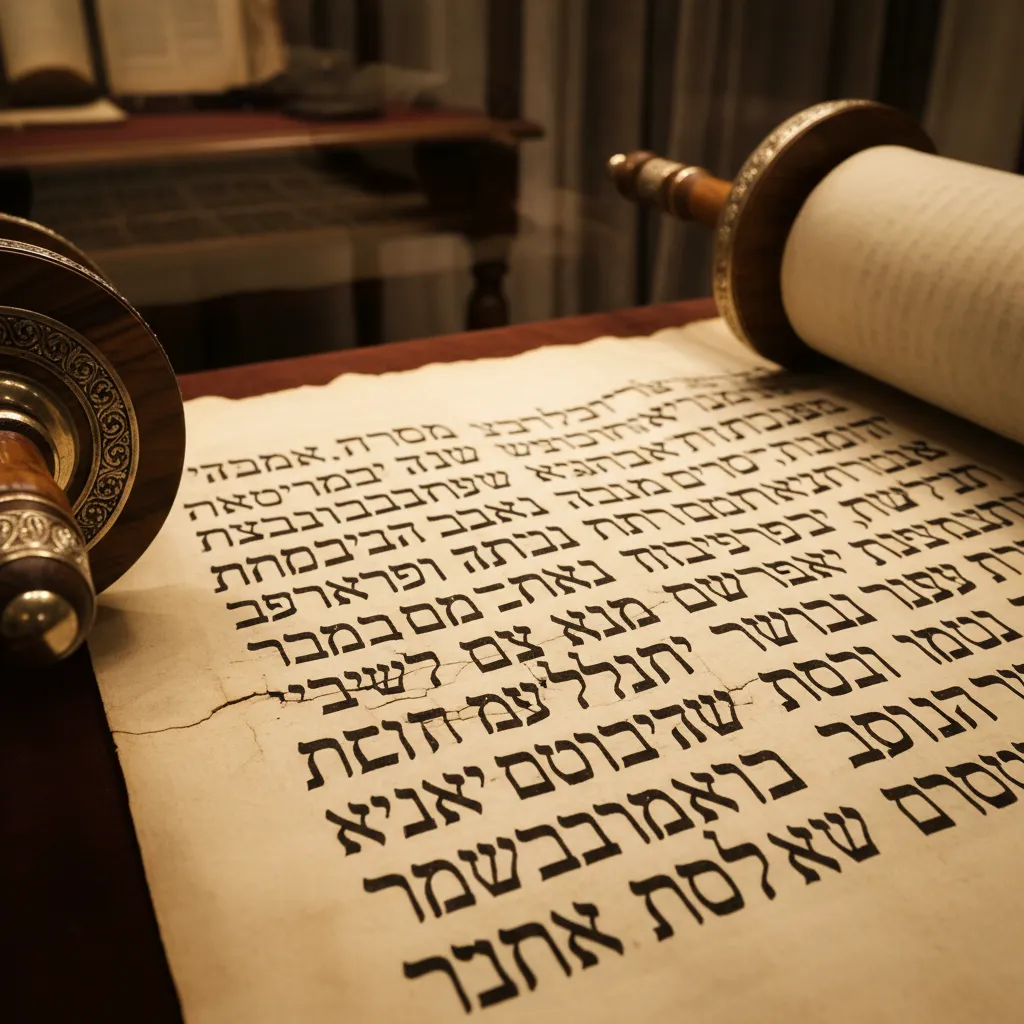
Hebrew Bible Study Resources and Tools
Hebrew Bible Editions
- Biblia Hebraica Stuttgartensia (BHS) - Standard critical edition based on Leningrad Codex
- Biblia Hebraica Quinta (BHQ) - Newer critical edition, still in progress
- Reader's Hebrew Bible - Includes vocabulary helps for words occurring less than 100 times
- Hebrew-English Interlinear - Shows Hebrew text with English word-by-word translation
- Westminster Hebrew Morphology - Fully parsed Hebrew text for digital study
Lexicons and Dictionaries
- HALOT (Hebrew and Aramaic Lexicon of the OT) - The standard scholarly lexicon
- BDB (Brown-Driver-Briggs) - Classic Hebrew lexicon, still widely used
- TWOT (Theological Wordbook of the OT) - Word studies with theological focus
- Strong's Concordance - Basic word study tool, accessible to beginners
- NIDOTTE (New International Dictionary of OT Theology) - Comprehensive theological dictionary
Grammars and Textbooks
- "Basics of Biblical Hebrew" by Pratico & Van Pelt - Most popular introductory grammar
- "A Grammar of Biblical Hebrew" by Joüon-Muraoka - Comprehensive reference grammar
- "Introduction to Biblical Hebrew Syntax" by Waltke & O'Connor - Advanced syntax reference
- "Hebrew for the Rest of Us" by Armstrong - For using tools without full language study
Digital Tools and Software
Modern technology makes Hebrew study more accessible than ever. Tools like Logos Bible Software, Accordance, and free resources like Blue Letter Bible and Bible Hub provide instant access to Hebrew texts, parsing, lexicons, and cross-references. Bible Way integrates Hebrew tools directly into your reading experience, whether you're studying Exodus, the Proverbs, or exploring the whole Bible in a year.
The Hebrew Text: History and Preservation
The Old Testament text has been remarkably preserved over millennia. Understanding this preservation strengthens confidence in the Scriptures we study today.
The Masoretic Text
The Masoretes were Jewish scribes (5th-10th century AD) who meticulously preserved the Hebrew Bible. They added vowel pointing, accent marks, and marginal notes while counting letters and words to ensure accurate copying. The Masoretic Text (MT) is the basis for most modern Old Testament translations. The oldest complete MT manuscript, the Leningrad Codex (1008 AD), underlies scholarly Hebrew Bibles today.
The Dead Sea Scrolls
Discovered in 1947, the Dead Sea Scrolls revolutionized Old Testament study. Dating from 250 BC to 68 AD, they include manuscripts of every Old Testament book except Esther. Remarkably, these texts from over 2,000 years ago align closely with the Masoretic Text, demonstrating extraordinary preservation. The Great Isaiah Scroll, for example, shows minimal variation from the MT despite a thousand-year gap.
The Septuagint Connection
The Septuagint (LXX) is the Greek translation of the Hebrew Old Testament, produced around 250-150 BC. Comparing LXX with the Hebrew text helps identify translation choices and occasional textual variations. The LXX was the Bible of the early church and is often quoted in the New Testament. For those also interested in Greek Bible study, the Septuagint bridges Hebrew and Greek study.
Frequently Asked Questions
Common questions about Hebrew Bible study
What is Biblical Hebrew and how is it different from Modern Hebrew?
Biblical Hebrew (also called Classical Hebrew) is the language of the Old Testament, written from approximately 1200-200 BC. Modern Hebrew (Ivrit) is the revived language spoken in Israel today, developed in the late 19th-20th centuries. While they share the same alphabet and many root words, they differ significantly in vocabulary, grammar, and pronunciation. Modern Hebrew has adopted thousands of new words for contemporary concepts, simplified some grammatical constructions, and uses different vowel patterns. Learning Biblical Hebrew specifically is best for Bible study, though Modern Hebrew speakers can often read Biblical texts with practice. Many seminaries and universities teach Biblical Hebrew specifically for scriptural study.
Do I need to learn Hebrew to study the Old Testament effectively?
No - excellent English translations make the Old Testament fully accessible for spiritual growth and understanding. However, Hebrew study adds valuable depth. Think of levels: (1) English-only study with good translations is sufficient for understanding God's message. (2) Word study tools like Strong's Concordance let you explore Hebrew words without learning the language. (3) Basic Hebrew grammar helps evaluate commentators and do independent research. (4) Advanced Hebrew enables direct reading and scholarly exegesis. Most believers find tremendous value at level 2 - using tools to look up key Hebrew words. Bible Way makes this accessible through integrated Hebrew tools. Levels 3-4 typically require seminary courses or systematic self-study programs.
What are the best resources for beginners learning Biblical Hebrew?
"Basics of Biblical Hebrew" by Pratico and Van Pelt is the most popular seminary textbook, with workbook, flashcards, and video lectures available. "Hebrew for the Rest of Us" by Lee Fields is designed for those who want to use Hebrew tools without formal language training. Online resources include Daily Dose of Hebrew (video lessons), HebrewPod101, and Aleph with Beth (YouTube). Free digital tools like Blue Letter Bible and Bible Hub provide interlinear texts and lexicons. Bible Way integrates Hebrew tools directly into your reading experience. Start with the alphabet, then vocabulary, then grammar - systematic progression is key to lasting success.
What is the Hebrew root system and why does it matter?
Hebrew words are typically built on three-consonant roots. Adding vowels, prefixes, and suffixes creates related words from the same root. For example, the root SH-L-M gives us shalom (peace), shalem (complete), shillem (to repay), and Yerushalayim (Jerusalem, "city of peace"). Understanding roots helps you: (1) Connect related concepts across Scripture, (2) Recognize wordplays the authors intended, (3) Remember vocabulary more easily, and (4) Understand how Hebrew "thinks" about concepts. When you see that "to hear" (shama) and "to obey" (shama) share a root, you understand the Hebrew concept that true hearing includes obedience - a theological insight invisible in English.
How do I do a Hebrew word study without knowing Hebrew?
Word studies are accessible with the right tools. Here's a method: (1) Find the Strong's number for your English word - Strong's assigns unique numbers to every Hebrew word. (2) Look up that number in a Hebrew lexicon like Strong's, BDB, or online tools. (3) Note the Hebrew word, its root, basic meaning, and semantic range. (4) Search for other verses using the same Hebrew word to see usage patterns. (5) Consider context - words mean different things in different settings. Tools like Blue Letter Bible, Bible Hub, and Bible Way make this straightforward with clickable Hebrew words and integrated lexicons. Be careful of "root fallacy" - a word's meaning comes from usage, not just etymology.
What is an interlinear Bible and how do I use it for Hebrew study?
An interlinear Bible displays Hebrew text with English words directly underneath each Hebrew word, providing literal word-by-word translation. Hebrew interlinears read right-to-left, matching the Hebrew direction. To use one: (1) Read English translation first to understand the passage. (2) Examine the interlinear to see Hebrew-English correspondence. (3) Notice where one Hebrew word requires multiple English words or vice versa. (4) Look up unfamiliar Hebrew words in a lexicon. (5) Pay attention to parsing information showing verb stems, forms, and noun states. Interlinears help you see original structure while depending on English for understanding. Bible Way provides interlinear tools integrated with your reading.
What are the Dead Sea Scrolls and why are they important for Hebrew Bible study?
The Dead Sea Scrolls, discovered 1947-1956 in caves near the Dead Sea, include manuscripts dating from 250 BC to 68 AD - over 1,000 years older than previously known Hebrew manuscripts. They contain portions of every Old Testament book except Esther. Their importance: (1) They confirm remarkable preservation of the Hebrew text - the Great Isaiah Scroll matches the medieval Masoretic Text with minimal variation. (2) They reveal textual diversity in the Second Temple period - some manuscripts align more with the Septuagint. (3) They illuminate Jewish interpretation and beliefs before Christ. (4) They strengthen confidence that our Bible accurately represents the original. These ancient witnesses demonstrate God's preservation of His Word through millennia.
How reliable is the Hebrew Old Testament text we have today?
The Hebrew Old Testament is remarkably well-preserved. The Masoretes (500-1000 AD) developed elaborate systems to ensure accurate copying, counting letters and words, marking center points of books. The Dead Sea Scrolls (250 BC-68 AD) confirm this preservation - despite a 1,000+ year gap, texts align remarkably. Minor variations exist between manuscript traditions but don't affect doctrine or meaning. Textual criticism helps identify the most likely original reading in disputed passages. The abundance of manuscripts (Hebrew, Septuagint, Samaritan Pentateuch, ancient versions) allows scholarly comparison. Far from undermining confidence, textual study reveals extraordinary preservation over three millennia.
What is the Masoretic Text and why is it important?
The Masoretic Text (MT) is the authoritative Hebrew text of the Jewish Bible, preserved by scribes called Masoretes from roughly 500-1000 AD. They added vowel points (nikkud) to the consonantal text, developed accent marks (cantillation) for reading, and created detailed notes (Masorah) to ensure accurate copying. Their meticulous methods included counting letters, marking unusual spellings, and noting variant readings. The oldest complete MT manuscript is the Leningrad Codex (1008 AD), which underlies modern Hebrew Bibles. Most English Old Testament translations are based on the MT. Understanding MT history helps you appreciate both the care taken in preservation and the significance of variations when they occur.
How long does it take to learn Biblical Hebrew?
Timeframes vary based on goals and intensity. Alphabet and pronunciation: 2-4 weeks. Using word study tools without grammar: ongoing learning, no formal study required. First-year Hebrew (basic vocabulary, verb system, noun patterns): 9-12 months of regular study. Reading with helps (lexicon and parsing): 2-3 years. Independent reading of easier texts: 3-4 years. Scholarly fluency: 5+ years plus ongoing practice. Hebrew is often considered harder than Greek due to the root system and verb patterns. Consistency trumps intensity - 30 minutes daily beats 3 hours weekly. Flashcard apps help with vocabulary; parsing practice builds grammar skills. Any Hebrew knowledge improves Bible study, even recognizing common words.
Which Hebrew Bible should I use for study?
For most students, Biblia Hebraica Stuttgartensia (BHS) is standard - based on the Leningrad Codex with critical apparatus noting variants. The newer Biblia Hebraica Quinta (BHQ) is in progress with updated scholarship. Reader's Hebrew Bible (similar concept to Reader's Greek NT) includes vocabulary helps. Hebrew-English interlinears are excellent for beginners. Digital platforms like Logos and Accordance offer searchable, parsed Hebrew texts. For text comparison, the Dead Sea Scrolls Biblical texts are available online and in print. Start with whatever your study tools support - the specific edition matters less for beginners than developing regular Hebrew exposure.
How do I begin studying an Old Testament book in Hebrew?
Here's a practical approach: (1) Read the book several times in English to understand content and structure. (2) Choose a short, manageable section to begin detailed Hebrew study. (3) Work through the Hebrew text slowly with an interlinear, identifying each word. (4) Look up unfamiliar vocabulary, making flashcards for words occurring multiple times. (5) Parse verbs - identify stem (binyan), form, person, gender, number. (6) Identify noun patterns and construct chains. (7) Note Hebrew features invisible in English - wordplays, chiasms, acrostics. (8) Consult commentary that interacts with the Hebrew. (9) Record insights in a study journal. Start with narrative (Genesis, Ruth) before tackling poetry (Psalms) or prophecy (Isaiah).
Helpful External Resources
Trusted Hebrew Bible study resources
Bible Gateway
Multiple translations with Hebrew study tools
biblegateway.com →Blue Letter Bible
Free interlinear, lexicons, and parsing
blueletterbible.org →Bible Hub
Hebrew interlinear and parallel texts
biblehub.com →Got Questions
Biblical answers to language questions
gotquestions.org →Daily Dose of Hebrew
Free video Hebrew lessons
dailydoseofhebrew.com →Logos Bible Software
Premium Hebrew study software
logos.com →Accordance
Professional original language tools
accordancebible.com →Dead Sea Scrolls Digital
High-res images of ancient manuscripts
deadseascrolls.org.il →Related Bible Studies
Greek Bible Study
New Testament in original language
Messianic Study
Jewish roots of Christian faith
Psalms Study
Hebrew poetry and worship
Exodus Study
Foundational Torah narrative
Explore More Bible Studies
Discover the Original Hebrew Old Testament
Whether you're looking up your first Hebrew word or working toward reading the Old Testament in its original language, Bible Way provides the tools you need. From Strong's numbers and interlinear texts to parsing guides and lexicons, explore the language of Moses, David, and the prophets.