Greek Bible Study
Go deeper into Scripture by studying the New Testament in its original Greek. From learning the Koine Greek alphabet to conducting word studies and parsing verb forms, Greek Bible study opens doors to understanding that English translations simply cannot provide. Discover the nuances, wordplays, and theological depths hidden in the original language of the apostles and early church.
Key Takeaways: Greek Bible Study
Koine Greek was the common language of the first-century Mediterranean world, making Scripture accessible to all
Greek verb tenses convey aspect (kind of action) more than time, revealing nuances lost in translation
Word studies reveal that single Greek words like agape, logos, and pistis carry rich theological meaning
Over 5,800 Greek New Testament manuscripts exist, more than any other ancient document
Interlinear Bibles and lexicons make Greek study accessible even without formal language training
The Septuagint (Greek Old Testament) illuminates how New Testament authors understood Hebrew concepts
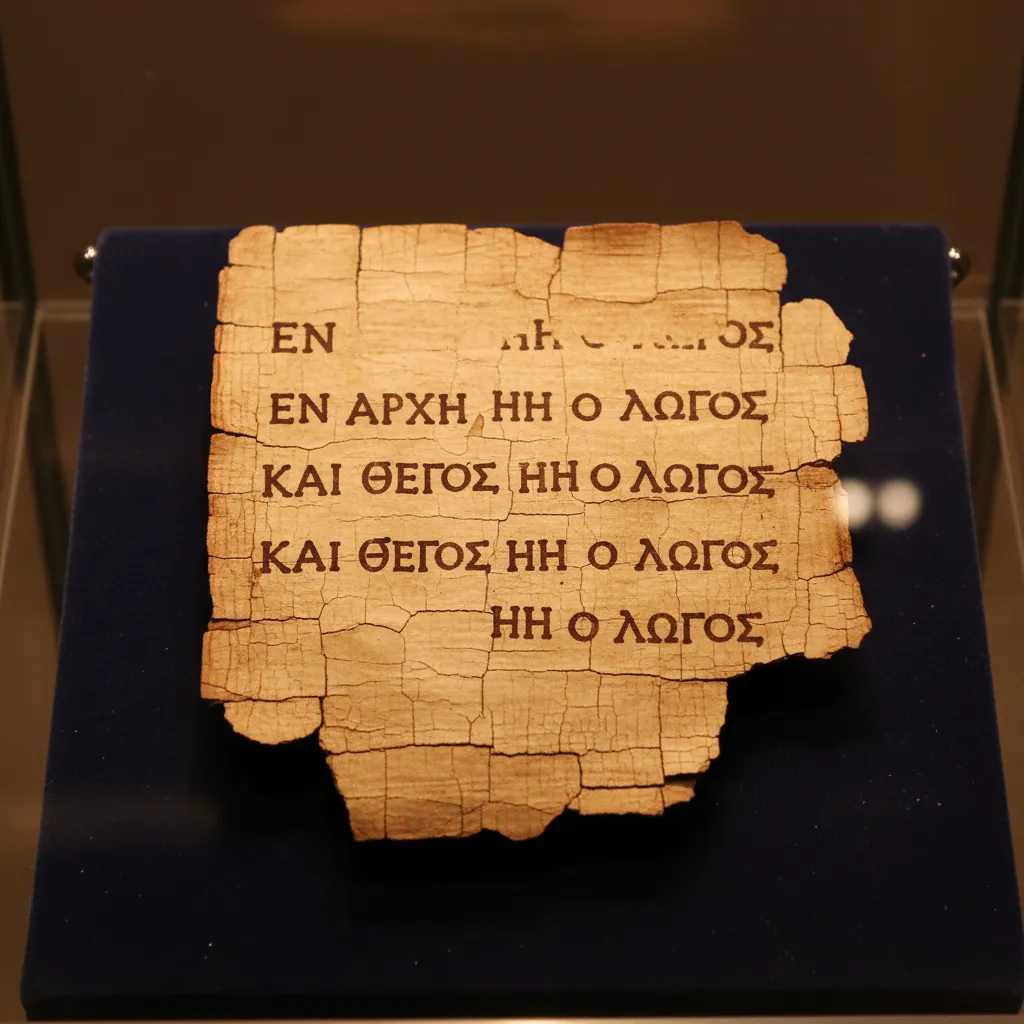
Imagine reading John 1:1 and seeing not just "In the beginning was the Word," but the majestic Greek: "En arche en ho logos" - where "logos" carries echoes of Greek philosophy meeting Hebrew wisdom, where the imperfect tense "en" (was) suggests the Word's eternal existence before creation. This is what Greek Bible study offers: a window into the original text that transforms how you understand Scripture.
The New Testament was written in Koine Greek - not the classical Greek of philosophers like Plato and Aristotle, but the "common" (koine) Greek spoken throughout the Roman Empire. This was the language of merchants, soldiers, and everyday people from Rome to Jerusalem to Egypt. God chose this universal language to spread the gospel message to every nation, tribe, and tongue.
Greek Bible study isn't just for scholars and seminarians. With modern tools like interlinear Bibles, Greek lexicons, and parsing guides, anyone can begin exploring the original language of the New Testament. Whether you want to do inductive Bible study with greater precision or prepare daily devotions with deeper insight, Greek study amplifies every aspect of your time in God's Word.

Why Study the Bible in Greek? The Power of Original Language
Every translation is an interpretation. When you read an English Bible, you're reading the translator's best effort to convey the meaning of Greek words and constructions. Most translations do this remarkably well. But studying Greek allows you to see what the translators saw - and sometimes catch nuances they couldn't fully convey.
Greek Reveals What English Conceals
Consider the word "love" in English. We use it for everything: "I love my wife," "I love pizza," "I love this song." Greek is far more precise. The New Testament uses multiple words for love:
- Agape (agaph) - Unconditional, sacrificial love; God's love for humanity
- Phileo (filew) - Brotherly love, friendship, warm affection
- Storge - Family love, natural affection (used in compound forms)
- Eros - Romantic love (not used in the New Testament)
When Jesus asks Peter three times "Do you love me?" in John 21, the Greek reveals a subtle but significant shift in vocabulary. Jesus first asks using "agapas" (do you agape me?), but Peter responds with "philo" (I have affection for you). The third time, Jesus shifts to Peter's word: "phileis me?" - "Do you even have affection for me?" This wordplay is invisible in English but profoundly meaningful in Greek.
Verb Tenses Tell Stories
Greek verbs convey not just time (past, present, future) but aspect - the kind of action being described. This distinction matters enormously for interpretation:
- Aorist tense - Point action, a simple fact (like a snapshot)
- Present tense - Ongoing or continuous action (like a video)
- Perfect tense - Completed action with continuing results (like a photo with ongoing implications)
In 1 John 3:9, John writes that whoever is born of God "does not sin" (ou hamartanei - present tense). He's not saying Christians never commit individual acts of sin (that would contradict 1 John 1:8-10). The present tense suggests they don't practice sin as a continuous lifestyle. Understanding Greek aspect resolves what appears to be a contradiction in English.
Articles and Word Order Create Emphasis
Greek word order is more flexible than English because case endings (not position) show a word's function. Authors used word order for emphasis - what comes first often carries emphasis. In John 1:1, "theos en ho logos" (God was the Word) places "theos" (God) first for emphasis, while the article with "logos" (the Word) identifies the subject. The construction affirms both that the Word was God and that the Word was with God - not confusing the persons.
"The Holy Scriptures in the original languages are the authentic source and the norm of all interpretation and translation."
- Martin Luther
Getting Started: The Greek Alphabet and Basics
The Greek alphabet has 24 letters, many of which are familiar from their use in mathematics, science, and fraternity/sorority names. Learning the alphabet is the first step in Greek Bible study - and it's easier than you might think.
The Greek Alphabet
Beginning Your Greek Journey
You don't need to master Greek to benefit from Greek Bible study. There are multiple levels of engagement:
- Level 1: Word Studies - Use Strong's Concordance or online tools to look up Greek words behind English translations. No Greek knowledge required.
- Level 2: Interlinear Reading - Follow along in an interlinear Bible that shows Greek with English underneath. Learn to recognize common words.
- Level 3: Basic Grammar - Learn verb tenses, noun cases, and basic sentence structure. Understand parsing guides.
- Level 4: Reading Greek - Work toward reading the Greek New Testament with helps, understanding syntax and discourse.
- Level 5: Fluency - Read Greek texts directly, conduct scholarly exegesis, translate independently.
Most believers find tremendous benefit at Levels 1-3 without years of formal study. Bible Way provides tools for each level, from simple word lookups to detailed parsing information, making Greek accessible regardless of your starting point.

Essential Greek Word Studies for Bible Study
Word studies are the entry point for most people into Greek Bible study. By examining key Greek words, you discover depths of meaning that enrich your understanding of Scripture. Here are some of the most significant Greek words every Bible student should know:
Logos (logos) - Word/Reason/Message
"Logos" appears over 300 times in the New Testament with rich meaning. In Greek philosophy, logos meant the rational principle governing the universe. For the Stoics, it was divine reason. When John opens his Gospel with "In the beginning was the Logos," he bridges Hebrew and Greek thought - the Word of God that spoke creation into existence (Genesis 1) is also the rational principle philosophers sought. Jesus is revealed as both the Hebrew "Davar" (word/thing) and the Greek "Logos" (word/reason) - the communication and wisdom of God made flesh.
Pistis (pistis) - Faith/Trust/Faithfulness
The Greek word "pistis" carries more weight than the English "faith" often suggests. It encompasses belief, trust, confidence, and faithfulness. When Paul writes that we are "justified by faith" (pistis), he means more than intellectual assent - he means a trusting commitment that shapes all of life. The related verb "pisteuo" (to believe/trust) and adjective "pistos" (faithful/ trustworthy) help complete the picture. Studying pistis word group illuminates passages in Romans and Galatians about salvation and sanctification.
Charis (caris) - Grace/Gift/Favor
"Charis" meant attractiveness, favor, or goodwill in classical Greek. In the New Testament, it becomes a technical term for God's unmerited favor toward sinners. Related words include "charisma" (grace-gift, spiritual gift), "charizomai" (to give freely, forgive), and "eucharistia" (thanksgiving, from which we get "Eucharist"). Understanding charis transforms passages like Ephesians 2:8-9: "For by grace (charis) you have been saved through faith (pistis)."
Soteria (swthria) - Salvation/Deliverance/Preservation
The Greek "soteria" and its verb form "sozo" (to save) carry broader meaning than spiritual salvation alone. In the Gospels, "sozo" is used for physical healing (Mark 5:34), rescue from danger (Matthew 8:25), and spiritual salvation (Luke 19:10). The root "sos" means "safe" or "whole." When studying Bible passages on salvation, understanding this fuller semantic range shows that God's saving work encompasses the whole person - body, soul, and spirit.
Ekklesia (ekklhsia) - Church/Assembly/Congregation
Our word "church" comes from a different Greek word (kyriakos, "belonging to the Lord"), but the New Testament uses "ekklesia" - literally "called out ones" or "assembly." In secular Greek, ekklesia referred to the assembly of citizens called out to conduct city business. This political term emphasizes that the church is a gathered community with a purpose, not merely a building or institution.
Parakletos (paraklhtos) - Helper/Advocate/Comforter
Jesus promised to send the "Parakletos" - the Holy Spirit (John 14:16, 26; 15:26; 16:7). English translations variously render this as Comforter, Counselor, Helper, or Advocate. The word literally means "one called alongside" - someone summoned to help, particularly in a legal context. Jesus himself is also called our "parakletos" (advocate) in 1 John 2:1. Understanding this term enriches study of the Holy Spirit's ministry.
Greek Bible Study Tools
Everything you need to study the original Greek
What Bible Way Offers
- Greek word lookup with Strong's numbers
- Interlinear Greek New Testament
- Verb parsing and grammatical analysis
- Greek lexicon with definitions
"I never thought I could access the Greek text without seminary training. Bible Way's tools let me look up any word and understand the original meaning. It's transformed my Bible study."
Michael R.
Small Group Leader
Greek Grammar for Bible Study
Understanding basic Greek grammar multiplies the return on your Bible study investment. Here are the key grammatical concepts that matter most for interpreting the New Testament:
Noun Cases: The Building Blocks
Greek nouns have different endings depending on their function in the sentence. This case system is crucial for understanding who is doing what to whom:
- Nominative - Subject of the verb ("The man sees")
- Genitive - Possession, source, description ("of the man")
- Dative - Indirect object, location, means ("to/for/by the man")
- Accusative - Direct object, extent ("The man [object]")
- Vocative - Direct address ("O man!")
Verb System: Tense, Voice, and Mood
Greek verbs pack enormous information into their forms. Understanding the verb system is perhaps the most rewarding aspect of Greek grammar study:
Tense (Aspect): As mentioned earlier, Greek "tenses" primarily convey aspect - the kind of action - rather than time. The present tense often shows continuous action; the aorist shows simple or summary action; the perfect shows completed action with ongoing results. In indicative mood, these tenses also convey time, but aspect remains primary.
Voice: Active voice - subject performs the action. Passive voice - subject receives the action. Middle voice - subject acts in its own interest or upon itself. The "divine passive" is a common construction where God is the implied agent (e.g., "sins are forgiven" implies God forgives).
Mood: Indicative - statement of fact. Subjunctive - possibility, probability, exhortation. Imperative - command. Optative - wish or possibility (rare in NT). Recognizing mood helps distinguish between commands, wishes, and statements of fact.
Particles and Conjunctions: The Connectors
Greek uses small words to show logical relationships between clauses. Key connectors include: "de" (but, and), "gar" (for, because), "oun" (therefore), "hoti" (that, because), "hina" (in order that), "alla" (but, rather). These words reveal the author's logical argument structure. When Paul writes "Therefore" (oun) in Romans 12:1, it connects to everything he's argued in chapters 1-11. Following these connectors is like following the thread of the author's thought.
Greek Bible Study Resources and Tools
Greek New Testament Editions
- Nestle-Aland 28th Edition (NA28) - Standard critical text used by scholars worldwide
- UBS5 (United Bible Societies 5th Ed.) - Same text as NA28 with different apparatus, designed for translators
- Textus Receptus - The Greek text behind the KJV, preferred by some traditional scholars
- Byzantine/Majority Text - Based on the majority of manuscripts, an alternative to critical text
- Reader's Greek New Testament - Includes vocabulary helps for words occurring less than 30 times
Lexicons and Dictionaries
- BDAG (Bauer-Danker-Arndt-Gingrich) - The standard scholarly Greek lexicon, essential reference
- Thayer's Greek-English Lexicon - Classic resource, now in public domain
- Louw-Nida Greek-English Lexicon - Organized by semantic domains rather than alphabetically
- Strong's Concordance - Basic word study tool, accessible to beginners
- Vine's Expository Dictionary - Accessible word studies for English readers
Grammars and Textbooks
- "Basics of Biblical Greek" by Mounce - Most popular introductory grammar
- "Greek Grammar Beyond the Basics" by Wallace - Intermediate/advanced reference
- "A Greek-English Lexicon of the New Testament" by Liddell-Scott - Classical and Koine usage
- "New Testament Greek for Beginners" by Machen - Classic introduction, still widely used
Digital Tools and Software
Modern technology has made Greek study more accessible than ever. Tools like Logos Bible Software, Accordance, and free resources like Blue Letter Bible and Bible Hub provide instant access to Greek texts, parsing, lexicons, and cross-references. Bible Way integrates Greek tools directly into your reading experience, whether you're doing systematic verse-by-verse study or thematic exploration across books.
The Greek New Testament: History and Manuscripts
The New Testament is the best-attested document of the ancient world. Over 5,800 Greek manuscripts exist, ranging from tiny fragments to complete codices. Understanding this manuscript tradition enriches Greek Bible study by showing how God preserved his Word through history.
Major Greek Manuscripts
- Codex Sinaiticus (4th century) - Contains entire New Testament plus some OT and apocrypha
- Codex Vaticanus (4th century) - Nearly complete Bible, housed in Vatican Library
- Codex Alexandrinus (5th century) - Almost complete Bible, in British Library
- Codex Bezae (5th century) - Greek-Latin parallel text of Gospels and Acts
- Papyrus P52 (c. 125 AD) - Earliest NT fragment, from John's Gospel, dated within a generation of the original
Textual Criticism and Variants
Because we have so many manuscripts, we can compare them and identify copying variations. While skeptics sometimes point to "thousands of variants," the vast majority are spelling differences, word order changes, and scribal errors that don't affect meaning. Only a tiny fraction of variants are both meaningful and uncertain, and none affects any major Christian doctrine.
Modern critical editions like NA28 use sophisticated methods to determine the most likely original reading. Footnotes in most English translations indicate where significant variants exist. Understanding textual criticism helps Bible students approach questions about authenticity with confidence rather than fear - the abundance of manuscripts is a testimony to God's preservation, not a cause for doubt.
The Septuagint: The Greek Old Testament
Greek Bible study isn't limited to the New Testament. The Septuagint (LXX) is the Greek translation of the Hebrew Old Testament, produced in Alexandria, Egypt, beginning around 250 BC. This translation is crucial for understanding how the New Testament authors read and quoted their Scriptures.
When New Testament writers quote the Old Testament, they typically quote the Septuagint rather than translating directly from Hebrew. This means that reading the LXX shows you what the apostles saw when they read Scripture. The theological vocabulary of the New Testament - words like "ekklesia" (church/assembly), "diatheke" (covenant), "nomos" (law), and "pistis" (faith) - was shaped by Septuagint usage.
For example, the Hebrew "almah" in Isaiah 7:14 (young woman of marriageable age) is translated "parthenos" (virgin) in the Septuagint. Matthew 1:23 quotes the Septuagint reading when applying this prophecy to Mary. Understanding the LXX illuminates how first-century Jews understood and applied their Scriptures.
For those interested in Hebrew Bible study, comparing the Hebrew Masoretic Text with the Greek Septuagint reveals fascinating translation choices and helps illuminate textual questions. The relationship between Hebrew and Greek is fundamental to serious Old Testament study.
Frequently Asked Questions
Common questions about Greek Bible study
What is Koine Greek and why was the New Testament written in it?
Koine (pronounced "koy-NAY") Greek was the "common" dialect of Greek spoken throughout the Mediterranean world from roughly 300 BC to 300 AD. Unlike Classical Greek of the philosophers, Koine was the everyday language of merchants, soldiers, and ordinary people. Alexander the Great's conquests spread Greek as a universal language, and it remained dominant even under Roman rule. God chose this common, accessible language for the New Testament so the gospel could reach everyone - not just the educated elite. The simplicity of Koine made Scripture accessible to all literacy levels. Today, learning Koine Greek specifically (rather than Classical or Modern Greek) is the most direct path to reading the New Testament in its original form.
Do I need to learn Greek to study the Bible effectively?
No - excellent translations make the Bible fully accessible without Greek. However, Greek study adds valuable depth. Think of it in levels: (1) English-only study with good translations is sufficient for understanding God's message and growing in faith. (2) Word study tools like Strong's Concordance let you look up Greek words without learning the language. (3) Basic Greek knowledge helps you evaluate commentators' claims and do independent research. (4) Advanced Greek enables direct reading and original exegesis. Most believers benefit greatly from level 2 - using tools to look up key words. Bible Way makes this accessible through integrated Greek tools. Levels 3-4 typically require more systematic study, such as seminary courses or self-study programs like "Basics of Biblical Greek."
What are the best resources for beginners learning Biblical Greek?
For self-study beginners, "Basics of Biblical Greek" by William Mounce is the most popular textbook, with accompanying workbook, video lectures, and flashcard apps. "Greek for the Rest of Us" (also by Mounce) is designed for those who want to use Greek tools without learning the full language. Online resources include Daily Dose of Greek (videos), NT Greek Institute (free course), and Master New Testament Greek (paid comprehensive course). Free tools like Blue Letter Bible, Bible Hub, and Logos Basic provide interlinear texts and lexicons. Bible Way integrates Greek tools directly into your study experience. For accountability, consider an online class or study group - many seminaries offer non-degree Greek courses. Start with the alphabet, then basic vocabulary, then grammar - systematic progression is key to success.
What is the difference between Greek verb tenses and English verb tenses?
English verb tenses primarily indicate time (past, present, future). Greek tenses primarily indicate aspect - the kind or quality of action. The present tense typically shows ongoing or continuous action. The aorist shows simple, undefined, or summary action (like a snapshot). The perfect shows completed action with continuing results. The imperfect shows ongoing past action. In the indicative mood (statements of fact), Greek tenses also convey time - but even there, aspect is primary. This distinction matters hugely for interpretation. For example, "keep on asking" (present imperative) differs from "ask" (aorist imperative) - one emphasizes persistence, the other the simple act. Understanding aspect prevents misreading commands and resolves apparent contradictions between passages.
How do I do a Greek word study without knowing Greek?
Word studies are accessible to anyone with the right tools. Here's a simple method: (1) Find the Strong's number for the English word you're interested in - Strong's Concordance assigns a unique number to every Greek word. (2) Look up that number in a Greek dictionary/lexicon like Strong's, Vine's, or online tools. (3) Note the Greek word, its basic meaning, and its range of uses. (4) Search for other verses using the same Greek word to see how it's used elsewhere. (5) Consider the context - words mean different things in different contexts. Tools like Blue Letter Bible, Bible Hub, and Bible Way make this process straightforward with clickable Greek words. Be cautious about "root word fallacies" - a word's meaning comes from usage, not etymology. Always prioritize context over dictionary definitions.
What is an interlinear Bible and how do I use it?
An interlinear Bible displays the Greek text with English words directly underneath (or beside) each Greek word, providing a literal word-by-word translation. This differs from regular translations, which rearrange words for readable English. To use an interlinear: (1) Read the English translation normally to understand the passage. (2) Examine the interlinear to see which Greek words correspond to which English words. (3) Notice where one Greek word requires multiple English words or vice versa. (4) Look up unfamiliar Greek words in a lexicon for fuller meaning. (5) Pay attention to parsing information showing verb tense, voice, mood, and noun cases. Interlinears are learning tools, not reading texts - they help you see the original Greek structure while depending on the English for understanding. Bible Way provides interlinear tools integrated with your reading experience.
What is the Septuagint and why does it matter for New Testament study?
The Septuagint (abbreviated LXX) is the Greek translation of the Hebrew Old Testament, produced in Alexandria, Egypt, around 250-150 BC for Greek-speaking Jews. It matters for several reasons: (1) New Testament authors usually quote the LXX rather than translating from Hebrew, so it shows what they read. (2) It established Greek theological vocabulary that the NT authors inherited - words like "ekklesia" (church), "diatheke" (covenant), and "soter" (savior). (3) Comparing LXX with the Hebrew reveals how ancient Jews interpreted Scripture. (4) Some NT quotations make better sense when you see the LXX version being cited. (5) It demonstrates how the OT was understood before Christ, showing genuine prophecy fulfillment rather than reinterpretation. Serious Greek study eventually leads to the LXX as a bridge between Hebrew and Greek Testaments.
How reliable is the Greek New Testament text we have today?
The Greek New Testament is extraordinarily well-attested - more than any other ancient document. We have over 5,800 Greek manuscripts, plus 10,000+ Latin manuscripts and thousands more in other ancient languages. The earliest fragments date within a generation of the originals. While no two handwritten manuscripts match perfectly (expect spelling variations and scribal errors), the text is remarkably stable. Textual scholars have identified the original reading with high confidence for the vast majority of the text. Only about 1% of variants are both meaningful and uncertain, and none affects any major doctrine. Modern critical editions like NA28 and UBS5 represent centuries of careful scholarship. Far from undermining confidence, the manuscript tradition demonstrates God's preservation of Scripture through history.
What are textual variants and should they concern me?
Textual variants are differences between manuscript copies. With thousands of handwritten copies, variations inevitably crept in - misspellings, word order changes, scribal additions, accidental omissions. Skeptics sometimes cite "hundreds of thousands of variants" to create doubt. In reality: (1) Most variants are trivial - spelling differences or word order that doesn't change meaning. (2) Most are easily identified as scribal errors with clear corrections. (3) Only a tiny fraction are both meaningful and uncertain. (4) None affects any major Christian doctrine - no fundamental teaching rises or falls on a disputed variant. Having many manuscripts with variations is actually better than having few manuscripts with no way to check - it allows scholars to reconstruct the original text confidently. Textual criticism is a friend to faith, not an enemy.
How long does it take to learn Biblical Greek?
Timeframes vary based on goals and intensity. Basic alphabet and pronunciation: 1-2 weeks. Word study tools without grammar: ongoing, no formal study needed. First-year Greek (vocabulary, noun cases, verb system basics): 9-12 months of regular study. Reading with helps (lexicon and parsing guide): 1-2 years. Independent reading of simpler texts: 2-3 years. Scholarly fluency with ability to do detailed exegesis: 4+ years plus ongoing practice. Many believers find the "sweet spot" at 1-2 years - enough to use advanced tools, follow scholarly discussions, and catch nuances translations miss. Consistency matters more than intensity; 30 minutes daily beats 3 hours weekly. Flashcard apps like Anki help with vocabulary retention. Remember: any Greek knowledge improves Bible study, even just learning the alphabet lets you recognize transliterated words.
Which Greek New Testament should I use?
For most students, the Nestle-Aland 28th Edition (NA28) or UBS5 is standard - they contain the same text with different critical apparatus. The NA28 apparatus is more detailed for textual criticism; UBS5 is designed for translators with fuller explanation of selected variants. Reader's editions (like Zondervan's Reader's Greek New Testament) include vocabulary helps and are excellent for those building fluency. The Textus Receptus underlies the KJV and is preferred by some who question modern critical methods. The Byzantine/Majority Text offers another alternative based on the majority of manuscripts. For beginners, the specific edition matters less than actually using it - start with whatever your study tools support. Bible Way provides access to critical Greek texts with integrated tools for looking up vocabulary, parsing, and cross-references.
How do I start studying a New Testament book in Greek?
Here's a practical approach for beginning Greek study of a Bible book: (1) Read the book several times in English to understand the overall message and structure. (2) Choose a short section (a paragraph or pericope) to begin detailed Greek study. (3) Work through the Greek text slowly with an interlinear Bible, identifying each word. (4) Look up unfamiliar vocabulary in a lexicon, making vocabulary cards for common words. (5) Parse the verbs - identify tense, voice, mood, person, and number using a parsing guide or software. (6) Identify noun cases and their functions in each sentence. (7) Note significant Greek features not visible in English translations. (8) Consult a good commentary that interacts with the Greek text. (9) Record insights in a study journal. Start with shorter letters (1 John, Philippians) or narrative sections before tackling Paul's dense theological arguments.
Helpful External Resources
Trusted Greek Bible study resources
Bible Gateway
Multiple translations and Greek study tools
biblegateway.com →Blue Letter Bible
Free interlinear, lexicons, and parsing
blueletterbible.org →Bible Hub
Greek interlinear and parallel texts
biblehub.com →Got Questions
Biblical answers to language questions
gotquestions.org →Bill Mounce
Greek grammar author resources
billmounce.com →Daily Dose of Greek
Free video Greek lessons
dailydoseofgreek.com →Logos Bible Software
Premium Greek study software
logos.com →Accordance
Professional original language tools
accordancebible.com →Related Bible Studies
Hebrew Bible Study
Old Testament in original language
Inductive Study
Observation, interpretation, application
Gospel of John
Rich theological Greek
Romans Study
Paul's theological masterwork
Explore More Bible Studies
Unlock the Original Greek New Testament
Whether you're looking up your first Greek word or working toward reading the New Testament in its original language, Bible Way provides the tools you need. From Strong's numbers and interlinear texts to parsing guides and lexicons, discover what the apostles wrote and how the early church understood the gospel message.