Exodus Bible Study - Experience God's Mighty Deliverance
Journey through the most dramatic rescue story ever told. The Book of Exodus reveals God as the great Deliverer who hears the cries of His oppressed people and acts with power to set them free. From Moses' burning bush encounter to the parting of the Red Sea, from the thunder of Sinai to the glory filling the tabernacle, Exodus establishes the pattern of redemption that echoes through all of Scripture. Whether you're seeking liberation from your own bondage or wanting to understand the foundations of biblical faith, Exodus Bible study will transform your understanding of who God is and what He does for His people.
Key Takeaways from Exodus Bible Study
God hears the cries of His oppressed people and acts powerfully to deliver them from bondage
Redemption comes through the blood of the lamb - the Passover points directly to Christ our Passover
God reveals His name "I AM WHO I AM" - the self-existent, eternal, covenant-keeping God
The Ten Commandments provide the moral foundation for loving God and loving neighbor
God desires to dwell among His people - the tabernacle shows how a holy God can live with sinful humans
God is patient with human failure - even the golden calf doesn't end the relationship
Why Study the Book of Exodus?
Exodus is the foundational story of redemption - understanding it unlocks the entire Bible's message of salvation
From Slavery to Freedom
Experience Israel's dramatic journey from 400 years of Egyptian bondage to liberation through God's mighty hand and outstretched arm.
The Burning Bush
Encounter God's revelation of His name "I AM WHO I AM" to Moses and His commission to deliver His people from Pharaoh's grip.
The Passover
Understand the foundational story of redemption through the blood of the lamb - the event that defines Israel and points to Christ.
Parting the Red Sea
Witness God's ultimate display of power as He divides the waters, delivers Israel, and defeats Egypt's army in one decisive act.
The Ten Commandments
Study God's moral law given at Mount Sinai - the foundation of ethics, justice, and covenant relationship with the Almighty.
The Tabernacle
Explore the detailed blueprint for God's dwelling place among His people - every element pointing to Christ and His work.
Understanding Exodus in Context
The Book of Exodus, meaning "departure" or "going out," is the second book of the Bible and tells the foundational story of Israel's birth as a nation. Written by Moses around 1400 BC, Exodus picks up where Genesis left off - Jacob's family of 70 has grown into a nation of millions, but they have become slaves in Egypt under a Pharaoh "who did not know Joseph." This dramatic narrative of oppression, deliverance, covenant, and God's presence defines Israel's identity and shapes the entire Bible's message of salvation. From the cry of the oppressed to the glory filling the tabernacle, Exodus reveals the God who sees, hears, and acts.
At the heart of Exodus is the revelation of God's name. When Moses encounters God at the burning bush and asks His name, God responds: "I AM WHO I AM" (Hebrew: YHWH, 3:14). This name reveals God as self-existent, eternal, and unchanging - the One who simply IS. This same name appears when Jesus declares "I AM" statements in John's Gospel, connecting the God of Exodus to Jesus Christ. The Passover night, when the angel of death passed over homes marked by lamb's blood while Egypt's firstborn died, becomes the defining event of Exodus. Paul explicitly connects this to Christ: "For Christ, our Passover lamb, has been sacrificed" (1 Corinthians 5:7). Whether studying daily Bible reading or diving deep into theology, understanding Exodus illuminates all of Scripture.
The Ten Commandments given at Mount Sinai form the ethical heart of Exodus and the entire biblical tradition. These ten words establish the foundation for loving God (commandments 1-4) and loving neighbor (commandments 5-10). Jesus summarized the entire law in these two principles (Matthew 22:37-40). The commandments aren't just rules - they're the charter of covenant relationship between God and His redeemed people. Israel received the law after being delivered, not as a means to earn salvation but as a response to grace already shown. This pattern continues in the New Testament where believers obey from gratitude, not to gain favor. For those seeking comprehensive online Bible study, Exodus provides essential background for understanding both Old and New Testaments.
The final third of Exodus focuses on the tabernacle - God's portable dwelling place among His people. The detailed instructions for construction, materials, furniture, and priesthood occupy chapters 25-40, demonstrating how much God wants to dwell with His people and how carefully this must be arranged given His holiness and human sinfulness. Every element points forward to Christ: the altar to His sacrifice, the laver to cleansing, the bread to His body, the lampstand to His light, the incense to prayer, the veil to His flesh, the mercy seat to propitiation. Hebrews extensively connects tabernacle imagery to Christ's better ministry. From women's Bible studies to academic seminaries, Exodus remains foundational for understanding redemption, covenant, and God's presence with His people. Let Bible Way guide your journey through this magnificent book.
Journey Through the Book of Exodus
From slavery in Egypt to God's glory in the tabernacle - all 40 chapters explored
Chapters 1-4: Oppression and Call
Israel's suffering in Egypt and Moses' calling
- Israel Multiplies in Egypt (1:1-7)
- Pharaoh's Oppression (1:8-22)
- Birth of Moses (2:1-10)
- Moses Flees to Midian (2:11-25)
- The Burning Bush (3:1-22)
- God's Name Revealed (3:13-15)
- Signs for Moses (4:1-17)
- Moses Returns to Egypt (4:18-31)
Chapters 5-11: Confrontation and Plagues
Moses vs. Pharaoh and the ten plagues
- First Audience with Pharaoh (5:1-23)
- God Promises Deliverance (6:1-30)
- Water to Blood (7:14-25)
- Frogs, Gnats, Flies (8:1-32)
- Livestock, Boils (9:1-12)
- Hail, Locusts (9:13-10:20)
- Darkness (10:21-29)
- Death of Firstborn Announced (11:1-10)
Chapters 12-18: Exodus and Journey
Passover, Red Sea, and wilderness journey
- The Passover Instituted (12:1-28)
- Death of Egyptian Firstborn (12:29-42)
- Exodus Begins (12:43-13:16)
- Pillar of Cloud and Fire (13:17-22)
- Crossing the Red Sea (14:1-31)
- Song of Moses (15:1-21)
- Manna and Quail (16:1-36)
- Water from the Rock (17:1-7)
- Victory over Amalek (17:8-16)
- Jethro's Wise Counsel (18:1-27)
Chapters 19-40: Covenant and Tabernacle
Sinai covenant, law, and God's dwelling
- Arrival at Sinai (19:1-25)
- The Ten Commandments (20:1-17)
- The Book of the Covenant (20:18-23:33)
- Covenant Ratified (24:1-18)
- Tabernacle Instructions (25:1-27:21)
- Priestly Garments (28:1-43)
- Ordination of Priests (29:1-46)
- Golden Calf Sin (32:1-35)
- Moses Sees God's Glory (33:1-34:35)
- Tabernacle Construction (35:1-39:43)
- Glory Fills the Tabernacle (40:1-38)
The Heart of Exodus
"I AM WHO I AM... Say this to the people of Israel: 'I AM has sent me to you.'" - Exodus 3:14
In these words, God reveals His eternal, self-existent nature to Moses and to all generations. The name YHWH (often rendered LORD in English Bibles) becomes the covenant name by which God relates to His people throughout Scripture. Jesus claimed this same identity when He declared "Before Abraham was, I AM" (John 8:58). Exodus reveals the God who exists in Himself, who sees the suffering of His people, who acts to deliver, and who desires to dwell among us.
From the bush that burned but was not consumed to the glory cloud filling the tabernacle, Exodus demonstrates that the holy God of the universe wants to be known by His people. Moses asked to see God's glory, and God proclaimed His character: "The LORD, the LORD, a God merciful and gracious, slow to anger, and abounding in steadfast love and faithfulness" (34:6). This self-revelation becomes the foundation for all biblical theology.
What Others Say About Our Exodus Study
How studying Exodus transformed their faith
"Exodus transformed our understanding of redemption. Bible Way's study helped our congregation see how every detail - from the plagues to the tabernacle - points to Christ. The Passover study alone revolutionized how we celebrate communion."
"As I studied Exodus, I finally understood why this book matters so much to both Jews and Christians. The way Bible Way connects the Red Sea crossing to baptism and the Passover to Christ opened my eyes to the unity of Scripture."
"Our men's group spent six months in Exodus. The study of Moses' leadership failures and God's patience gave us real hope. We learned that God uses broken people to accomplish His purposes. Life-changing."
Exodus Study Resources
Tools to help you experience God's deliverance and presence
Chapter Summaries
Clear, detailed summaries of all 40 chapters covering oppression, deliverance, law, and tabernacle.
Ten Plagues Study
In-depth exploration of each plague's significance - targeting Egyptian gods and demonstrating Yahweh's supremacy.
Ten Commandments Analysis
Careful study of each commandment with application for modern believers and connections to Jesus' teaching.
Key Verse Memory
Memorization guides for Exodus' greatest passages: 3:14, 14:14, 15:2, 19:5-6, 20:1-17, 33:14.
Tabernacle Studies
Visual guides to the tabernacle's structure, furniture, and priesthood - all pointing to Christ.
Discussion Questions
Thought-provoking questions for personal reflection or group Bible study discussion.
Exodus Study Visuals
Visual guides to help you understand the Book of Exodus
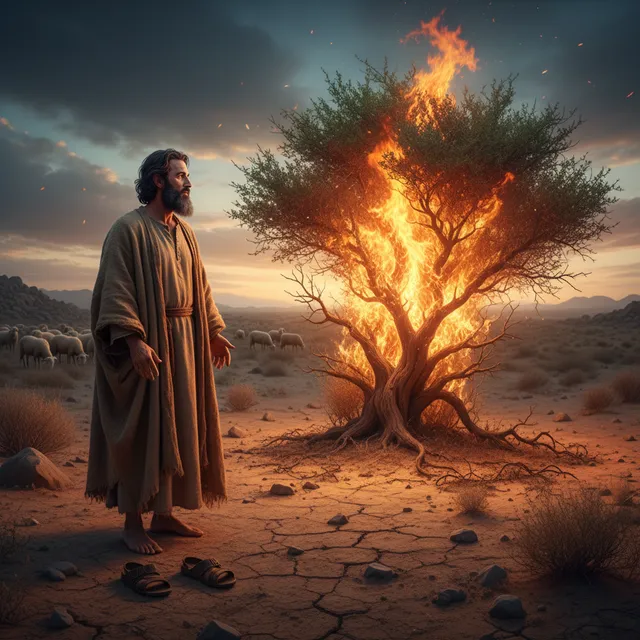
The Burning Bush
God reveals Himself to Moses and commissions him to deliver Israel from Egypt.
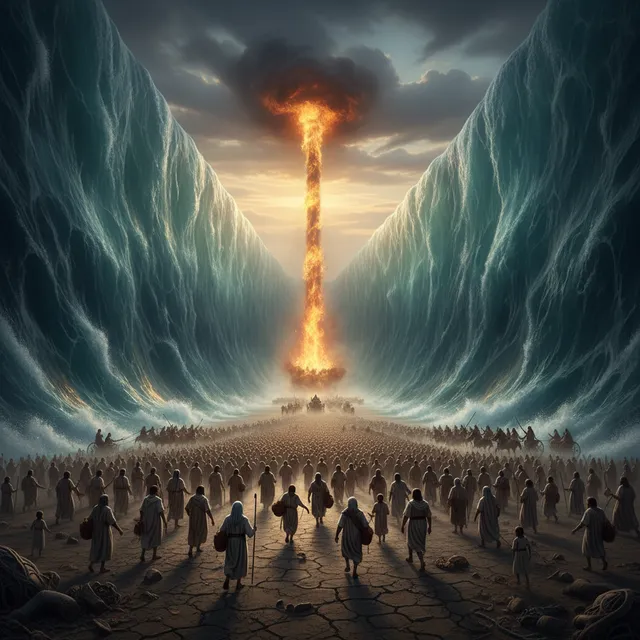
Crossing the Red Sea
God parts the waters for Israel's deliverance and Egypt's defeat.
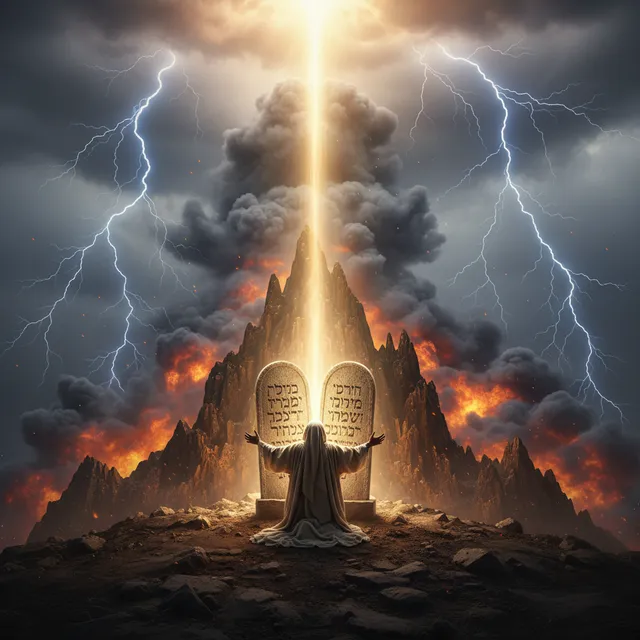
Ten Commandments
God gives His law to Moses on Mount Sinai - the foundation of covenant life.
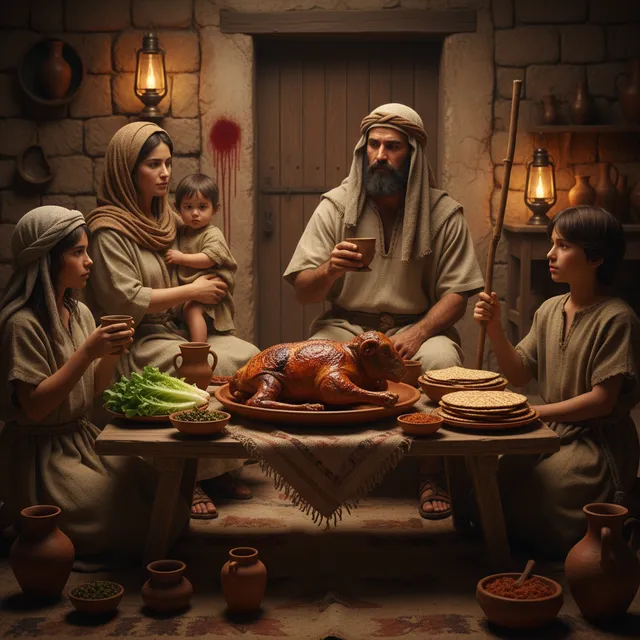
The Passover
Israel marks their doors with lamb's blood as death passes over.
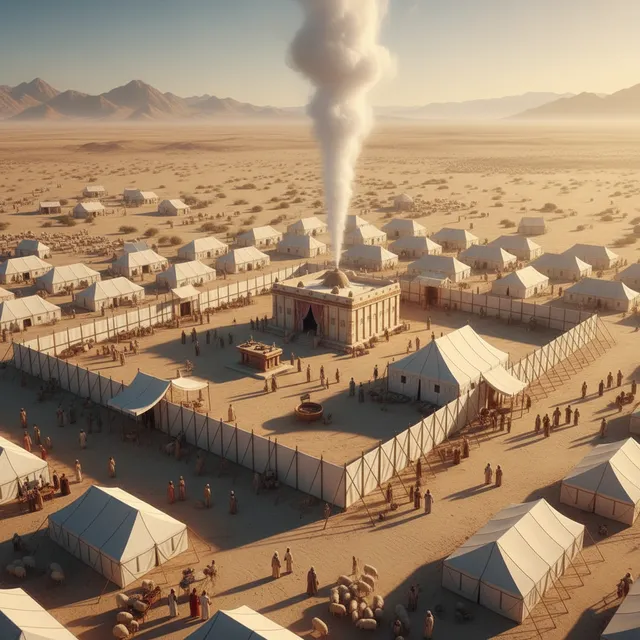
The Tabernacle
God's dwelling place among His people - every detail pointing to Christ.

Group Bible Study
Community study deepens understanding of Exodus through shared insights.
Join Our Exodus Study Community
Experience the God who delivers His people
What You'll Get
- Chapter-by-chapter study guides for all 40 chapters
- Deep dives into each of the ten plagues
- Complete Ten Commandments analysis with application
- Tabernacle visual guides showing connections to Christ
"Exodus changed everything for me. Understanding the Passover finally made sense of what Jesus did on the cross. The lamb's blood on the doorposts, the death passing over - it all clicked. Bible Way made ancient Scripture come alive."
Thomas H.
15-year believer, first time through Exodus
Frequently Asked Questions About Exodus Bible Study
Clear answers to common questions about the Book of Exodus
What is the main message of the Book of Exodus?
The Book of Exodus tells the foundational story of God's redemption and His desire to dwell with His people. Its main message is that God hears the cries of the oppressed and acts powerfully to deliver them. Through the exodus from Egypt, God reveals Himself as the covenant-keeping LORD (YHWH) who rescues, provides, guides, and establishes relationship with His people. The book shows that redemption comes through blood (the Passover lamb), that God's rescued people are called to obey His commands (the law at Sinai), and that the holy God can dwell among sinful people when proper provision is made (the tabernacle). Every major theme of Exodus - deliverance from bondage, redemption through blood, covenant relationship, and God's presence - finds its ultimate fulfillment in Jesus Christ and His work. The exodus becomes the pattern for understanding all of God's saving acts, including the ultimate "exodus" Jesus accomplished at the cross (Luke 9:31).
Who wrote the Book of Exodus and when?
The Book of Exodus was written by Moses, as attested by both Jewish and Christian tradition and Scripture itself. Jesus refers to "the book of Moses" (Mark 12:26) when quoting Exodus. Internal evidence includes references to Moses recording events (17:14, 24:4, 34:27). Moses was uniquely qualified as an eyewitness and participant in the events from the burning bush to Sinai. The book was likely written during the wilderness wandering period (around 1446-1406 BC, depending on the date of the exodus). Some scholars suggest later editorial work may have added explanatory notes, but the essential authorship and historical accuracy remain with Moses. As one trained in "all the wisdom of the Egyptians" (Acts 7:22), Moses had the education, access, and experience to write this detailed account. His forty years in Pharaoh's court gave him knowledge of Egyptian customs and geography, while his wilderness years prepared him for leading and recording Israel's journey from slavery to Sinai.
What are the ten plagues of Egypt and their significance?
The ten plagues of Egypt (Exodus 7-12) were divine judgments demonstrating YHWH's supremacy over Egypt's gods: (1) Water to blood - attacked Hapi, the Nile god; (2) Frogs - judged Heqet, frog goddess of fertility; (3) Gnats/Lice - showed God's power over Geb, earth god; (4) Flies - challenged Khepri, god of creation; (5) Livestock disease - struck Hathor, cow goddess, and Apis, bull god; (6) Boils - defeated Isis, goddess of medicine; (7) Hail - conquered Nut, sky goddess, and Seth, storm god; (8) Locusts - overcame Osiris, god of crops; (9) Darkness - devastated Ra, the supreme sun god; (10) Death of firstborn - destroyed the power of Pharaoh himself, considered divine. Each plague intensified, moving from inconvenience to devastation. The plagues served multiple purposes: convincing Pharaoh to release Israel, judging Egypt's false gods, and revealing YHWH to both Egyptians and Israelites as the one true God. Moses announced each plague beforehand, demonstrating God's sovereign control. The tenth plague - death of the firstborn - established the Passover, the central redemptive event of the Old Testament.
What is the significance of the Passover in Exodus?
The Passover (Exodus 12) is the defining redemptive event of the Old Testament and the foundation for understanding Christ's work. On the night of the tenth plague, each Israelite household was to select an unblemished lamb, sacrifice it at twilight, apply its blood to the doorposts and lintel, and roast and eat the lamb with unleavened bread and bitter herbs. When the LORD passed through Egypt striking the firstborn, He would "pass over" (Hebrew: pesach) homes marked by the blood. Key significance includes: (1) Redemption through substitutionary blood sacrifice - the lamb died in place of the firstborn; (2) Protection through faith - applying the blood showed trust in God's promise; (3) Haste for freedom - the unleavened bread symbolized urgency and separation from Egypt; (4) Annual remembrance - God commanded perpetual observance so each generation would know the story. The New Testament explicitly identifies Jesus as "our Passover lamb" (1 Corinthians 5:7). He was crucified during Passover, His blood provides redemption, and faith in Him means death "passes over" believers. The Lord's Supper directly connects to this meal, with Jesus transforming it into remembrance of His body and blood.
What are the Ten Commandments and why do they matter?
The Ten Commandments (Exodus 20:1-17) form the heart of God's covenant with Israel and the foundation of biblical ethics. Given by God Himself at Mount Sinai, they're divided into two tables: duties toward God (1-4) and duties toward neighbor (5-10). (1) "No other gods" - exclusive worship of YHWH; (2) "No idols" - worship God as He reveals Himself; (3) "Don't misuse God's name" - honor His character; (4) "Keep the Sabbath" - rest and worship weekly; (5) "Honor parents" - respect authority; (6) "Don't murder" - protect human life; (7) "Don't commit adultery" - preserve marriage; (8) "Don't steal" - respect property; (9) "Don't bear false witness" - speak truth; (10) "Don't covet" - guard your heart. Jesus summarized them as loving God completely and loving neighbor as self (Matthew 22:37-40). The commandments matter because they reveal God's character, define right relationship, convict of sin (showing our need for grace), and guide redeemed living. Christians are not saved by keeping them but are transformed by grace to delight in God's law. They remain the moral standard for all humanity and the basis for just society.
What happened at the burning bush?
At the burning bush (Exodus 3-4), God initiated His plan to deliver Israel through a dramatic encounter with Moses. After forty years as a shepherd in Midian, Moses saw a bush burning without being consumed on Mount Horeb. When he approached, God called him by name and commanded him to remove his sandals because he stood on holy ground. God revealed Himself as the God of Abraham, Isaac, and Jacob - the covenant God of Israel's fathers. He declared that He had seen Israel's affliction, heard their cries, and would deliver them through Moses. When Moses asked God's name, He replied with the mysterious and profound "I AM WHO I AM" (Hebrew: ehyeh asher ehyeh), revealing Himself as the self-existent, eternal, unchanging God. Despite Moses' many objections (inadequacy, lack of credentials, poor speaking), God promised His presence and gave signs: Moses' staff becoming a serpent, his hand becoming leprous and restored, and water turning to blood. God appointed Aaron as Moses' spokesman. This encounter transformed the failed prince and fugitive shepherd into God's instrument for the greatest rescue operation in history.
How did God part the Red Sea?
The crossing of the Red Sea (Exodus 14) stands as the most dramatic miracle in the Old Testament, demonstrating God's absolute power over nature and enemies. When Pharaoh pursued Israel with his army, God's people found themselves trapped between the sea and the Egyptian chariots. Moses told the terrified people: "Fear not, stand firm, and see the salvation of the LORD... The LORD will fight for you" (14:13-14). God commanded Moses to lift his staff and stretch his hand over the sea. The LORD then "drove the sea back by a strong east wind all night and made the sea dry land, and the waters were divided" (14:21). Israel walked through on dry ground with walls of water on their right and left. The pillar of cloud moved behind them, blocking the Egyptians. When Pharaoh's army followed, God threw them into confusion, clogging their chariot wheels. At dawn, Moses stretched his hand over the sea again, and the waters returned, covering the entire Egyptian army. "Not one of them remained" (14:28). This event became the defining act of God's power in Israel's memory, referenced throughout Scripture as proof that YHWH alone is God. It prefigures baptism (1 Corinthians 10:1-2) and demonstrates that God's deliverance is complete and irreversible.
What was the tabernacle and why was it important?
The tabernacle (Exodus 25-40) was God's portable sanctuary - His dwelling place among His people during their wilderness journey and early settlement in Canaan. God commanded Moses: "Let them make me a sanctuary, that I may dwell in their midst" (25:8). The structure included: (1) The outer court with the bronze altar for sacrifices and the bronze laver for washing; (2) The Holy Place containing the golden lampstand (menorah), the table of showbread, and the altar of incense; (3) The Most Holy Place (Holy of Holies) housing the Ark of the Covenant with the mercy seat and cherubim, where God's presence dwelt. Only the high priest could enter the Most Holy Place, and only once yearly on the Day of Atonement. The tabernacle taught that: the holy God desires to dwell with humans; sin creates a barrier requiring sacrifice; priests mediate between God and people; and detailed obedience matters. Hebrews explains that every element pointed to Christ: He is the sacrifice, the priest, the meeting place, the bread, the light, and the way into God's presence. When Jesus died, the temple veil tore, showing that through Him all believers have direct access to God. The tabernacle reveals God's gracious provision for sinful people to approach His holiness.
What happened with the golden calf?
The golden calf incident (Exodus 32) represents Israel's greatest apostasy and reveals both human sinfulness and divine mercy. While Moses was on Mount Sinai receiving the law for forty days, the people grew impatient. They pressured Aaron: "Make us gods who shall go before us. As for this Moses... we do not know what has become of him" (32:1). Aaron collected gold earrings and fashioned a calf idol. The people declared: "These are your gods, O Israel, who brought you up out of Egypt!" They offered sacrifices and "rose up to play" - engaging in pagan revelry. God informed Moses of the apostasy and offered to destroy Israel and make Moses into a great nation. Moses interceded, reminding God of His promises to Abraham, Isaac, and Jacob. God relented. Descending the mountain, Moses saw the idolatry, threw down the tablets (breaking them), ground the calf to powder, scattered it on water, and made the people drink it. The Levites executed about 3,000 idolaters. Moses returned to the mountain to intercede further, offering his own life for the people. God renewed the covenant and gave new tablets. This event shows the depth of human unfaithfulness, the necessity of faithful mediators, and God's willingness to forgive and restore despite grievous sin.
How does Exodus connect to Jesus Christ?
Exodus provides the essential framework for understanding Jesus Christ and His work. Key connections include: (1) Jesus is the greater Moses - like Moses, He came out of Egypt (Matthew 2:15), was a prophet, mediator, and deliverer, but infinitely superior (Hebrews 3:3); (2) Jesus is the Passover lamb - His blood saves from death, He was crucified during Passover, and Paul explicitly states "Christ, our Passover lamb, has been sacrificed" (1 Corinthians 5:7); (3) Jesus is the I AM - when Jesus claimed "Before Abraham was, I AM" (John 8:58), He identified Himself with the God of the burning bush; (4) Jesus fulfills the tabernacle - "The Word became flesh and dwelt (tabernacled) among us" (John 1:14); He is the sacrifice, the priest, the bread, the light, and the way into God's presence; (5) Jesus gives the new covenant - like Moses mediated the old covenant at Sinai, Jesus mediates a better covenant with better promises (Hebrews 8:6); (6) Jesus provides living water and manna from heaven - He is the rock that gives water and the true bread from heaven (John 4:14, 6:32-35). Luke records that Moses and Elijah discussed Jesus' "exodus" (death) on the Mount of Transfiguration (Luke 9:31), directly connecting His cross to Israel's deliverance. Understanding Exodus is essential for understanding the gospel.
What does "I AM WHO I AM" mean in Exodus 3:14?
When Moses asked God's name at the burning bush, God responded with the profound declaration "I AM WHO I AM" (Hebrew: ehyeh asher ehyeh, Exodus 3:14). This name reveals several truths about God: (1) Self-existence - God simply IS; He depends on nothing for His existence and is the source of all being; (2) Eternal nature - God has no beginning or end; He exists outside time while working within it; (3) Unchanging character - God is the same yesterday, today, and forever; His nature, promises, and purposes remain constant; (4) Personal presence - "I AM" implies active, present relationship; God is not distant or abstract but personally involved with His people; (5) Covenant faithfulness - The name YHWH (derived from the same Hebrew root) becomes God's covenant name, representing His commitment to His promises to Abraham, Isaac, and Jacob; (6) Sovereign mystery - "I AM WHO I AM" also suggests that God defines Himself and will not be manipulated or controlled by human knowledge of His name. This name became so sacred that Jews eventually stopped pronouncing it, substituting "Adonai" (Lord). When Jesus repeatedly uses "I AM" (ego eimi) in John's Gospel - "I am the bread of life," "I am the light of the world," and especially "Before Abraham was, I AM" (John 8:58) - He claims this divine identity, prompting attempts to stone Him for blasphemy.
What are the best commentaries on the Book of Exodus?
For accessible evangelical reading, Douglas Stuart's "Exodus" (NAC) provides thorough exegesis with practical application. John Durham's "Exodus" (WBC) offers scholarly depth while remaining accessible. Peter Enns' "Exodus" (NIVAC) bridges ancient context and modern application. For deeper study, Brevard Childs' "Book of Exodus" remains a landmark work. Nahum Sarna's "Exodus" (JPS Torah Commentary) provides invaluable Jewish perspective. For devotional use, Philip Ryken's "Exodus: Saved for God's Glory" offers sermonic richness. Warren Wiersbe's "Be Delivered" provides accessible exposition. J.A. Motyer's "The Message of Exodus" (BST) combines scholarship with devotion. For classic works, Umberto Cassuto's commentary rewards careful study. More technical options include William Propp's two-volume Anchor Bible commentary and Victor Hamilton's "Exodus: An Exegetical Commentary." For tabernacle studies, Andrew Bonar's classic work remains useful. Bible Way draws from these scholarly resources to provide accessible study guides, discussion questions, and theological summaries that help ordinary believers engage Exodus deeply without needing seminary training.
Helpful External Resources
Trusted resources for deeper Exodus Bible study
Bible Gateway
Exodus commentary with multiple translations and study tools
biblegateway.comBible Project
Visual overview of Exodus with animated explanations
bibleproject.comGotQuestions.org
Common questions about Exodus answered biblically
gotquestions.orgBibleHub
Parallel translations, commentaries, and concordance
biblehub.comBlue Letter Bible
David Guzik's verse-by-verse Exodus commentary
blueletterbible.orgChristianity Today
Articles on Exodus themes and theology
christianitytoday.comGospel Coalition
Scholarly articles on Exodus and redemption
thegospelcoalition.orgESV Study Bible
Scholarly introduction and notes on Exodus
esv.orgRelated Bible Studies
Genesis Study
The beginning of everything
John Study
Jesus the Son of God
Romans Study
The gospel explained
Revelation Study
The final exodus
Explore More Bible Studies
Ready to Begin Your Exodus Bible Study?
Experience the most dramatic rescue story ever told - God delivering His people from bondage to freedom. From the burning bush revelation of I AM to the parting of the Red Sea, from the thunder of Sinai to the glory filling the tabernacle, Exodus reveals the pattern of redemption fulfilled in Jesus Christ. Download Bible Way today and journey through all 40 chapters with study guides, plague analysis, Ten Commandments application, and tabernacle studies showing how every detail points to Christ. The God who delivered Israel from Egypt is the same God who delivers us from sin and death.