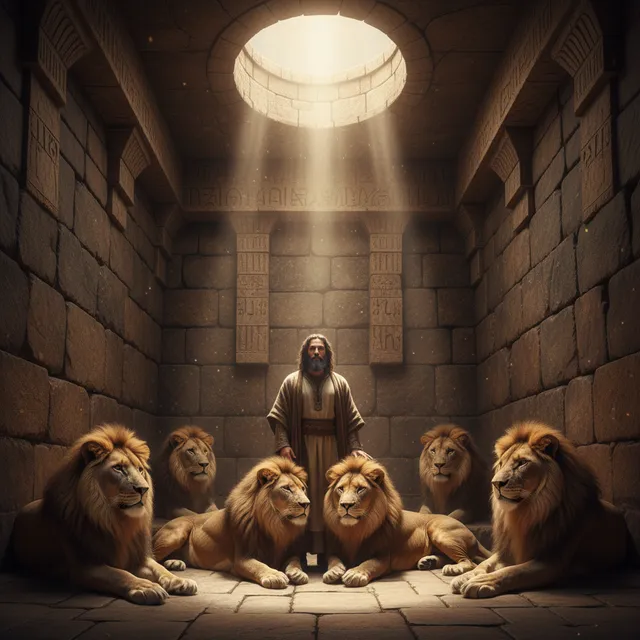
Daniel in the Lions' Den
God's miraculous protection of His faithful servant Daniel (Chapter 6).
Discover the powerful Book of Daniel with comprehensive verse-by-verse study of prophecy, visions, and unwavering faith. From the lions' den to the four kingdoms, from the fiery furnace to the seventy weeks, Daniel Bible study reveals God's sovereignty over history and His faithfulness to those who trust Him. Whether you're exploring apocalyptic prophecy or seeking courage to live faithfully in a hostile world, Daniel speaks powerfully to believers in every generation.
God's absolute sovereignty over all earthly kingdoms and human history
Faithful living in hostile environments without compromise or isolation
Messianic prophecies pointing to Jesus as the coming eternal King
Understanding apocalyptic prophecy and end times through Daniel's visions
Courage to stand firm when facing persecution and pressure to conform
God's protection and vindication of His faithful servants
The Book of Daniel stands as one of the most fascinating books in the entire Bible, uniquely combining gripping narrative stories with powerful apocalyptic visions. Written during Israel's exile in Babylon (6th century BC), Daniel addresses the burning question every displaced Israelite asked: Is God still in control when His people suffer under foreign oppression?
The book divides naturally into two halves. Chapters 1-6 contain beloved stories of faith: Daniel refusing the king's food, interpreting Nebuchadnezzar's dreams, Shadrach, Meshach, and Abednego in the fiery furnace, the handwriting on Belshazzar's wall, and Daniel in the lions' den. These stories demonstrate that God protects and vindicates His faithful servants even in the most dangerous circumstances.
Chapters 7-12 shift to apocalyptic visions that have captivated readers for millennia. The four beasts, the Ancient of Days, the Son of Man, the seventy weeks, and detailed prophecies about future kingdoms reveal God's sovereign control over history's trajectory. These visions provide essential background for understanding the Book of Revelation and Jesus' teachings about end times.
Whether you're a new believer exploring biblical prophecy for the first time or a seasoned student seeking deeper understanding, Daniel offers both accessible entry points through its memorable stories and profound depths through its complex visions. Bible Way provides the tools, context, and community to make your Daniel study both enriching and transformative.
A uniquely powerful combination of faith stories and prophetic visions
Walk through all 12 chapters of Daniel with detailed commentary, historical context, and practical applications.
Clear explanations of visions, dreams, and prophetic timelines including the 70 weeks and four kingdoms.
Deep dives into the fiery furnace, lions' den, handwriting on the wall, and Nebuchadnezzar's dreams.
Discover how Daniel points to Jesus as the coming Messiah, Son of Man, and eternal King.
Understand Babylonian and Persian empires, exile context, and ancient Near Eastern culture.
Learn from Daniel's example of unwavering faith and integrity in a hostile pagan environment.
Visual guides to understanding Daniel's prophecies and stories
God's miraculous protection of His faithful servant Daniel (Chapter 6).
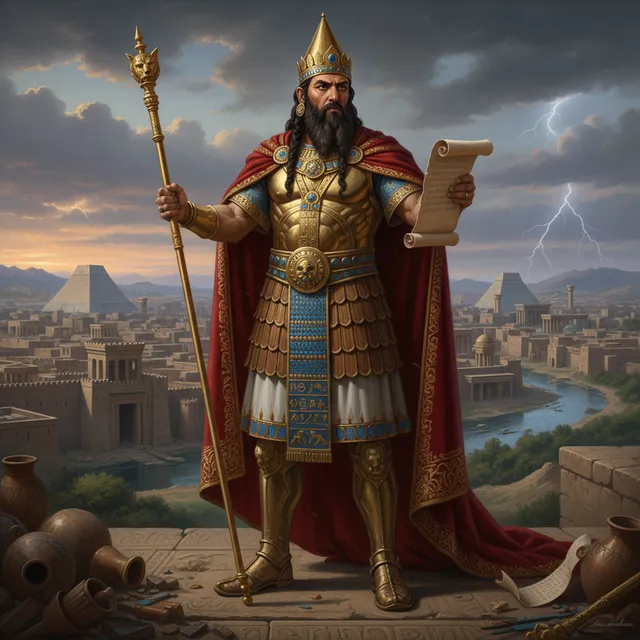
The prophetic statue representing Babylon, Persia, Greece, and Rome (Chapter 2).
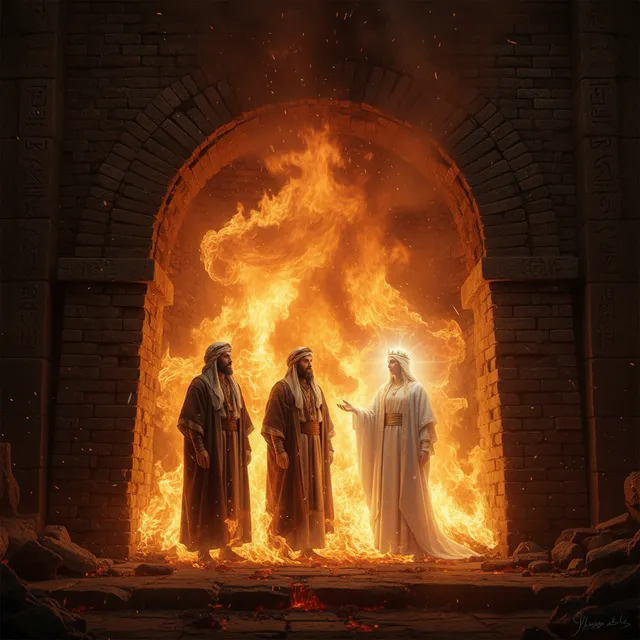
Shadrach, Meshach, and Abednego's faith tested and vindicated (Chapter 3).
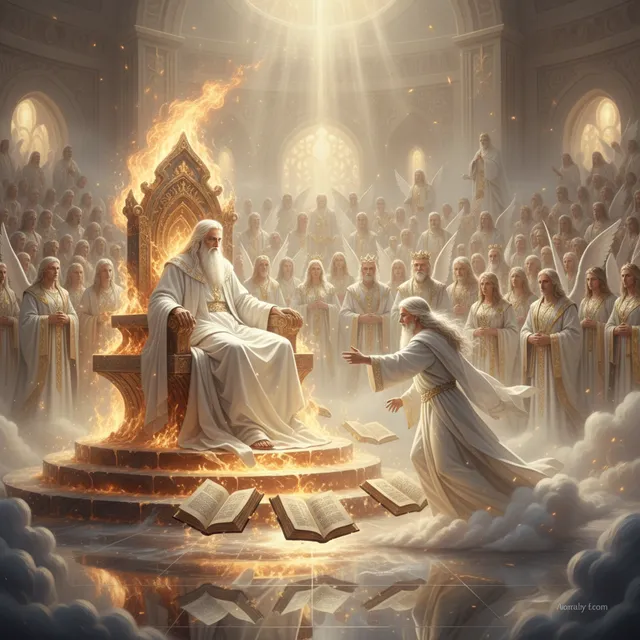
The heavenly throne room and Son of Man receiving eternal dominion (Chapter 7).

Community study helps unlock Daniel's complex prophecies through shared insights.
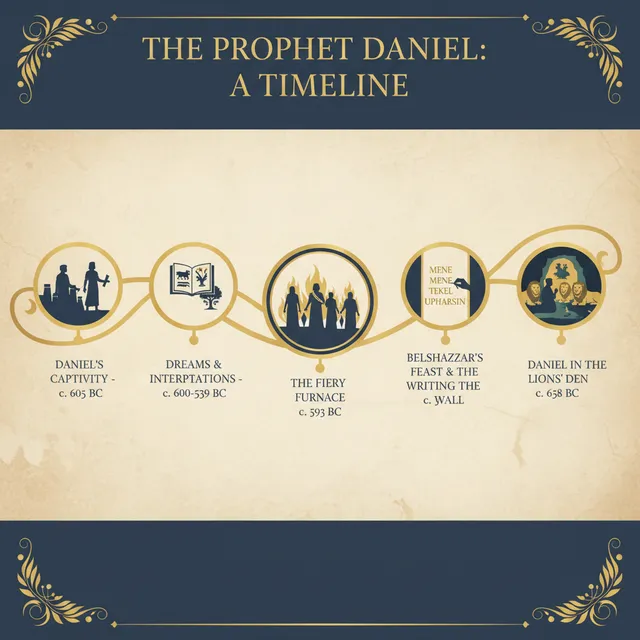
Visual charts showing how Daniel's prophecies unfold through history.
From Babylonian exile to eternal kingdom - all 12 chapters explained
Historical narratives of faith in Babylon
Apocalyptic prophecies of future kingdoms
Messianic timeline prophecy
Detailed prophecies of future events
How studying Daniel transformed their faith
"Bible Way's Daniel study strikes the perfect balance between scholarly depth and accessible presentation. My congregation finally understands the prophetic visions they'd always found confusing."
"Daniel's example of maintaining faith while excelling in a pagan environment transformed how I view my career. This study showed me how to be faithful without being obnoxious."
"The historical background material is excellent. Students appreciate seeing Daniel's prophecies in their ancient context while understanding ongoing scholarly debates about interpretation."
Tools to understand prophecy and faithful living
Visual charts showing fulfillment of Daniel's prophecies throughout history and into the future.
Side-by-side comparison of the four world empires in chapters 2 and 7.
Clear, concise summaries of each chapter's main themes and key verses.
Background on Babylon, Persia, exile, and ancient Near Eastern culture.
Connections to Revelation, Matthew 24, and other prophetic passages.
Thought-provoking questions for group study or personal reflection.
God Rules Over All!
Despite exile, persecution, and earthly kingdoms' apparent power, the Most High God is sovereign over all human history. He raises up and deposes kings at will. His kingdom alone endures forever. Those who remain faithful to Him will be vindicated and share in His eternal reign.
Daniel wasn't written merely to satisfy curiosity about the future, but to encourage God's people facing oppression: Trust God's sovereignty. Maintain your integrity. The kingdoms of this world will pass away, but God's kingdom stands forever. Whether you face lions, fire, or cultural pressure, your faithful God will see you through.
Clear answers to common questions about the Book of Daniel
The Book of Daniel delivers a powerful dual message: God is sovereign over all earthly kingdoms and human history, and His faithful people can trust Him even in the most hostile circumstances. Written during the Babylonian exile when Israel questioned whether God was still in control, Daniel demonstrates that Yahweh remains the Most High God who raises up and deposes kings at will. The book encourages believers to maintain unwavering faithfulness and moral integrity even when surrounded by pagan culture and facing persecution. Daniel and his friends model how to serve with excellence in secular positions while never compromising core convictions. The prophetic sections reveal that despite apparent chaos, history moves toward God's predetermined end when Messiah's eternal kingdom will replace all earthly powers. Whether facing lions, fire, or ridicule, God's people can stand firm knowing the final outcome is certain.
Daniel's prophecies require understanding both their historical context and their prophetic scope. The book employs apocalyptic literary style featuring symbolic visions, numbers, and imagery common in ancient Jewish literature. Key interpretive approaches include: Historical-grammatical reading starts with what the text meant to original readers before exploring further applications. Progressive fulfillment recognizes that prophecies may have near and far fulfillments - for example, Antiochus Epiphanes prefigures later antichrists. Christological focus sees Jesus as the 'Son of Man' (ch. 7), 'Anointed One' (ch. 9), and eternal King. The four kingdoms (Babylon, Medo-Persia, Greece, Rome) provide a framework for understanding subsequent visions. The seventy weeks prophecy in chapter 9 requires careful attention to Hebrew terminology and various scholarly calculations. Bible Way presents multiple interpretive options, showing where scholars agree and disagree, helping you form well-informed conclusions while focusing on clear themes all perspectives share.
Daniel 9:24-27 contains one of Scripture's most remarkable Messianic prophecies. After Daniel's prayer of confession, Gabriel reveals that seventy 'weeks' (Hebrew 'shabua' meaning 'sevens') are decreed for Israel. Most scholars interpret these as 490 years divided into periods: seven weeks (49 years) for Jerusalem's rebuilding, sixty-two weeks (434 years) until Messiah appears, and a final week involving covenant and sacrifice cessation. The prophecy predicts Messiah will be 'cut off' (crucified) after appearing, followed by Jerusalem's destruction (fulfilled in AD 70). Interpretations differ on calculating the starting decree, precise fulfillment timing, and whether the seventieth week is completed, interrupted, or future. Despite variations, the prophecy's precision in predicting Messiah's appearance and Jerusalem's destruction has amazed scholars for centuries. Whether you follow traditional, dispensational, or preterist calculations, Daniel 9 powerfully confirms God's sovereign orchestration of redemptive history and Jesus' identity as the promised Anointed One.
Traditional view holds Daniel himself wrote the book during the 6th century BC Babylonian exile, as internal evidence suggests. Daniel writes in first person from chapter 7 onward, demonstrates intimate knowledge of Babylonian and early Persian court protocols, and Jesus refers to 'Daniel the prophet' (Matthew 24:15). The book's placement in the Hebrew Bible's Writings section (rather than Prophets) may reflect its unique genre combining history and apocalyptic vision. Critical scholars since the 19th century have proposed a 2nd century BC date, arguing the precise predictions about Greece suggest post-event writing (vaticinium ex eventu). They point to Greek loanwords, Aramaic sections, and detailed knowledge of Hellenistic period as evidence of later composition. Conservative scholars respond that early manuscripts (including Dead Sea Scrolls), accurate Babylonian details unknown to later writers, and supernatural predictive prophecy explain these features. Bible Way presents both perspectives, noting that the book's theological authority and message remain unchanged regardless of compositional conclusions.
Daniel 2's statue and chapter 7's beasts describe successive world empires. The traditional identification widely accepted since early church is: Gold head/lion = Babylon under Nebuchadnezzar, silver chest/bear = Medo-Persia, bronze thighs/leopard = Greece under Alexander and successors, iron legs/terrifying beast = Rome. The statue's feet mixing iron and clay suggest Rome's divided weakness. Both visions culminate in God's eternal kingdom (the rock becoming a mountain in ch. 2, Son of Man receiving dominion in ch. 7) replacing earthly powers. This framework helps interpret later visions: chapter 8's ram and goat explicitly name Medo-Persia and Greece. Some interpreters see Rome continuing through papal Rome or revived form; others identify different empires. The theological point transcends specific identification: earthly kingdoms rise and fall, but God's kingdom endures forever. Daniel's first readers facing Babylonian exile found comfort knowing their captors would fall while God's purposes ultimately triumph.
Daniel and Revelation share extensive connections as the Old and New Testament's premier apocalyptic books. Revelation draws heavily on Daniel's imagery: four beasts, Ancient of Days/One like a Son of Man throne room vision, time periods (time, times, half a time = 3.5 years = 42 months = 1260 days), abomination of desolation, ten horns/kings, little horn figure, and resurrection/judgment. Jesus explicitly links Daniel's 'abomination of desolation' to end-times events (Matthew 24:15). Both books share themes of cosmic warfare between good and evil, divine sovereignty over history, persecution of saints followed by vindication, coming eternal kingdom, and ultimate defeat of evil. Daniel provides foundational prophecies that Revelation expands and applies to the church's situation. Studying Daniel enhances Revelation understanding, while Revelation illuminates Daniel's ultimate fulfillment. Together they assure believers that despite apparent chaos and evil's temporary triumph, God controls history's outcome and will establish His eternal kingdom through the victorious Son of Man.
Daniel's example provides a timeless model for faithful living in hostile environments. First, he maintained personal conviction while choosing wise battles - refusing food that compromised his faith while serving pagan kings excellently. This demonstrates that faithfulness doesn't require unnecessary conflict but does require firm boundaries. Second, Daniel developed exceptional competence in secular domains, becoming invaluable because of excellence, not despite his faith. His skill earned platform to influence kings and nations. Third, he practiced consistent spiritual disciplines - praying three times daily toward Jerusalem even when outlawed, demonstrating that persecution shouldn't disrupt devotional habits. Fourth, Daniel remained humble, always crediting God for his abilities and revelations. Fifth, he maintained hope in God's promises despite decades in exile without seeing fulfillment. Sixth, Daniel built community - his three friends provided mutual support and accountability. Modern believers facing secular workplaces, academic settings, or hostile cultures find in Daniel a practical pattern: excel without compromising, engage without assimilating, witness without withdrawing.
Daniel 7:13-14 presents 'one like a son of man' approaching the Ancient of Days and receiving eternal dominion over all peoples and nations. This figure contrasts with beastly empires rising from the chaotic sea - he comes with clouds of heaven, suggesting divine origin and authority. In Hebrew/Aramaic, 'son of man' typically means human being, so this divine-human figure represents someone both genuinely human and transcendently divine. Jesus' favorite self-designation was 'Son of Man,' directly claiming this Daniel 7 identity. When the high priest asked if Jesus was Messiah, Jesus replied by quoting Daniel 7:13 (Mark 14:62), which the priest understood as blasphemous divine claim. The Son of Man receives worship, exercises judgment, and possesses eternal kingdom - prerogatives belonging to God alone. Early Christians recognized Jesus fulfilling Daniel's vision: fully human yet divine, receiving authority from the Father, destined to reign forever. Daniel 7 thus provides crucial background for understanding Jesus' identity claims and Christianity's high Christology rooted in Old Testament revelation.
Major interpretive traditions approach Daniel's prophecies distinctively. Premillennialists (especially dispensationalists) see much of Daniel's prophecy as yet unfulfilled, including the seventieth week (seven-year tribulation), future antichrist, and literal restored Israel. They emphasize prophetic specificity and future fulfillment. Amillennialists view Daniel's prophecies as substantially fulfilled in Christ's first coming and the church age, with symbolic rather than literal interpretations of numbers and timelines. The kingdom stone in chapter 2 represents Christ's spiritual kingdom growing throughout history. Postmillennialists similarly see ongoing fulfillment but emphasize progressive kingdom expansion transforming culture before Christ's return. Preterists focus on historical fulfillment in Antiochus Epiphanes and Rome, with Jerusalem's AD 70 destruction completing most prophecies. Historic premillennialists combine elements, seeing partial fulfillment while awaiting literal future consummation. Despite differences, all traditions affirm Daniel's divine inspiration, Messianic prophecies pointing to Jesus, and core message of God's sovereignty. Bible Way presents these perspectives fairly, helping readers understand their own tradition while appreciating others.
Archaeological and historical discoveries have repeatedly confirmed Daniel's accuracy despite earlier scholarly skepticism. Belshazzar, once dismissed as fictional since Nabonidus appeared in records as Babylon's last king, was vindicated by tablets showing Belshazzar ruled as co-regent while Nabonidus was absent - explaining why Daniel was offered 'third' position (5:29). The Nabonidus Chronicle confirms Babylon's fall as Daniel describes. Details about Babylonian wise men, court procedures, and titles match cuneiform sources. The book's Aramaic sections (2:4-7:28) fit the Imperial Aramaic of the 6th-5th centuries BC. Persian loanwords are appropriate for the setting. Darius the Mede, though still debated, may reference Gubaru/Gobryas or be a throne name for Cyrus. Dead Sea Scroll manuscripts demonstrate Daniel existed well before the 2nd century, with copies showing textual development requiring earlier composition. While debates continue, the trend has been archaeological vindication of details once dismissed as errors. Daniel's historical reliability strengthens confidence in its prophetic reliability.
Daniel offers practical application for modern believers. In hostile environments: Like Daniel refusing king's food, identify your non-negotiable convictions while remaining gracious and seeking win-win alternatives where possible. In workplace ethics: Pursue excellence in your field like Daniel mastering Babylonian literature, earning influence through competence. Your faith should enhance your work, not hinder it. In facing pressure: When laws or culture demand compromise, remember Daniel praying despite the edict. Some battles require visible stands regardless of cost. In uncertainty: Daniel didn't understand everything (8:27, 12:8) but trusted God anyway. We can faithfully serve without complete clarity. In prayer life: Daniel's consistent discipline (6:10) and honest confession (ch. 9) model devotional practices. In hope: Despite decades in exile, Daniel maintained eschatological hope. When circumstances seem hopeless, remember God controls history's end. In community: Daniel's friends provided support and accountability. Build relationships with fellow believers for mutual encouragement in difficult environments.
Daniel introduces several figures that later biblical and Christian tradition connects to antichrist concepts. The 'little horn' of chapters 7 and 8 speaks boastfully against the Most High, persecutes saints, and attempts to change times and laws before being destroyed by divine judgment. Chapter 8 explicitly identifies this horn as arising from the Greek kingdom, fulfilled partially in Antiochus IV Epiphanes (167-164 BC), who desecrated the temple, banned Jewish practice, and sparked the Maccabean revolt. However, Jesus and New Testament writers see further fulfillment beyond Antiochus: Jesus references the 'abomination of desolation' as still future (Matthew 24:15), and Paul's 'man of lawlessness' (2 Thessalonians 2) echoes Daniel's blasphemous king. The pattern suggests prophetic typology: Antiochus prefigures the ultimate antichrist, just as David prefigures Messiah. Daniel 11's 'king who exalts himself' and 'willful king' also contribute to antichrist expectations. Whether interpreting these primarily historically, typologically, or futuristically, Daniel establishes the pattern of God's enemy opposing His people before divine judgment brings deliverance.
Trusted resources for deeper Daniel study
Read Daniel in multiple translations with commentary
biblegateway.com →Verse-by-verse commentaries and original languages
biblehub.com →Common questions about Daniel answered biblically
gotquestions.org →Visual overview of Daniel with animated explanations
bibleproject.com →Articles on Daniel and biblical prophecy
christianitytoday.com →David Guzik's Daniel commentary with cross-references
blueletterbible.org →Sermons and articles on Daniel by John Piper
desiringgod.org →Scholarly introduction and notes on Daniel
esv.org →New Testament apocalyptic prophecy
Understanding prophetic literature
Major prophet & Messianic prophecy
Exile prophet & visions
Don't be intimidated by Daniel's visions any longer. Bible Way makes this powerful book accessible, understandable, and deeply relevant for your life today. Download now and discover how Daniel's message of God's sovereignty and faithful endurance speaks directly to your circumstances. Whether facing workplace pressures, cultural opposition, or personal trials, Daniel shows the way forward: trust the Most High God who rules over all.