Why Bible Study is Essential for Recovery
Faith-based recovery programs have shown remarkable effectiveness because they address the spiritual dimension of addiction. Explore our comprehensive features designed specifically for those on the recovery journey.
Freedom in Christ
Discover how Jesus offers true freedom from the chains of addiction through His transforming power and unconditional love.
Daily Strength
Access Scripture-based tools for daily strength, including morning devotionals and evening reflections for your recovery journey.
Community Support
Connect with others in faith-based recovery through group study guides designed for accountability and mutual encouragement.
Biblical Foundation
Build your recovery on the solid rock of Scripture with studies exploring God's promises for those struggling with addiction.
Prayer Resources
Find guided prayers, serenity prayer studies, and scriptural prayers for every stage of your recovery journey.
Hope & Renewal
Experience the hope of new beginnings through studies on God's restoration, forgiveness, and plans for your future.
Recovery Bible Study in Action
See how believers are finding freedom and lasting sobriety through faith-based recovery

Personal Recovery Devotions
Starting each day grounded in Scripture builds spiritual strength for the recovery journey.
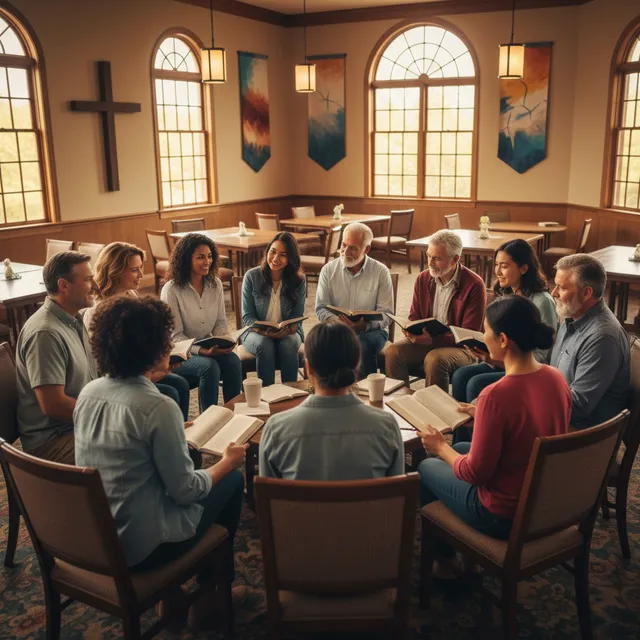
Faith-Based Recovery Groups
Small group Bible studies provide accountability and encouragement essential for lasting sobriety.

Sponsor Relationships
One-on-one discipleship and accountability rooted in biblical principles.

Milestone Celebrations
Celebrating God's faithfulness at each milestone strengthens faith and inspires others.

Family Restoration
Recovery heals relationships as families study Scripture together and experience reconciliation.
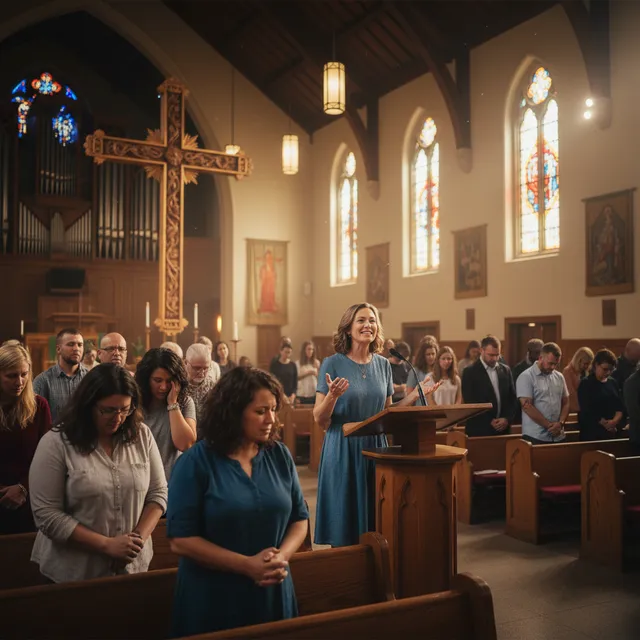
Sharing Your Story
God transforms stories of addiction into powerful testimonies of His redemptive grace.
Recovery Bible Study Topics
Comprehensive biblical studies addressing every aspect of recovery. Combine with our healing Bible study for deeper exploration of God's restorative power.
Foundations of Recovery
Biblical principles that form the basis of lasting freedom from addiction
- Admitting Powerlessness - Strength in Weakness (2 Corinthians 12:9-10)
- Surrendering to God - The First Step to Freedom
- Taking Moral Inventory - Examining Our Hearts (Psalm 139:23-24)
- Making Amends - Biblical Reconciliation (Matthew 5:23-24)
- Continued Growth - Daily Renewal in Christ
- Serving Others - Finding Purpose in Recovery
Scripture for Strength
Key passages for daily encouragement and maintaining sobriety
- Philippians 4:13 - Finding Strength Through Christ
- Romans 8:1-2 - Freedom from Condemnation
- Isaiah 41:10 - God's Promise to Strengthen You
- 1 Corinthians 10:13 - Resisting Temptation
- Psalm 34:17-18 - God Hears the Broken
- Jeremiah 29:11 - Hope for Your Future
Healing from the Past
Processing trauma, shame, and pain through Scripture
- Understanding Shame vs. Guilt (Romans 8:1)
- Healing from Trauma Through God's Word
- Breaking Generational Patterns of Addiction
- Forgiving Yourself - God's Gift of Grace
- Releasing Resentment - Freedom Through Forgiveness
- Finding Identity in Christ, Not Addiction
Building a New Life
Practical biblical wisdom for sustained recovery and growth
- Establishing Healthy Boundaries (Proverbs 4:23)
- Building Godly Relationships in Recovery
- Dealing with Triggers - Scripture Strategies
- Creating New Habits Rooted in Faith
- Finding Purpose After Addiction
- Sharing Your Story - Testimony and Ministry
What Our Recovery Community Says
Real testimonials from believers finding freedom through faith-based recovery
"Bible Way's recovery study gave me the spiritual foundation I needed. After multiple failed attempts at sobriety, I finally found lasting freedom through studying God's Word daily. The recovery devotionals kept me grounded when temptation came."
"As someone leading a faith-based recovery group, I've found Bible Way's resources invaluable. The studies are biblically solid, recovery-informed, and speak to the real struggles people face. Our group has grown stronger because of these materials."
"We've integrated Bible Way into our Celebrate Recovery program with tremendous results. The app makes it easy for participants to do daily devotionals, and the recovery-specific studies complement our 12-step work perfectly."
Recovery Bible Study Resources
Everything you need for a Scripture-centered recovery journey. Access alongside our daily Bible study for consistent spiritual growth.
Daily Recovery Devotional
365 days of Scripture-based encouragement specifically for those in recovery, with morning and evening readings.
12-Step Scripture Guide
Biblical foundation for each of the 12 steps, with supporting verses and reflection questions.
Recovery Scripture Cards
Printable cards with key verses for moments of temptation, anxiety, or discouragement.
Trigger Response Plan
Biblical strategies and Scripture-based responses for dealing with cravings and triggers.
Amends Workbook
Guided study for making amends based on biblical principles of reconciliation and forgiveness.
Recovery Testimony Guide
Framework for sharing your story of God's deliverance in a way that honors Him and helps others.
The Biblical Foundation of Recovery
A Bible study for recovery addresses one of the most profound needs in our world today. Addiction affects millions of individuals and families, leaving devastation in its wake. Yet Scripture offers hope that goes far deeper than willpower alone. The 12-step recovery model, which has helped countless people achieve lasting sobriety, was founded on spiritual principles that find their fullest expression in biblical truth. The first step - admitting powerlessness - echoes Paul's confession in Romans 7:18: "I have the desire to do what is good, but I cannot carry it out." The call to surrender to a higher power finds its answer in Jesus' invitation: "Come to me, all you who are weary and burdened, and I will give you rest" (Matthew 11:28). Making amends reflects the biblical command to reconcile with those we've wronged before bringing our gifts to God (Matthew 5:23-24). These connections aren't coincidental - the original 12-step program drew heavily from Christian principles.
Faith-based recovery programs show consistently higher success rates than secular alternatives. Why? Because they address the spiritual root of addiction - the human heart's longing for something to fill the God-shaped void within us. As Augustine famously prayed, "Our hearts are restless until they find rest in You." Addiction is often an attempt to fill that void with substances or behaviors that can never truly satisfy. Only Christ can fill that emptiness. A Bible study for recovery helps participants discover their true identity in Christ, replacing the shame-based identity of addiction with the grace-based identity of being God's beloved children. Studies on forgiveness, grace, and salvation provide the theological foundation for understanding God's unconditional love that empowers lasting change.
Recovery Through Scripture:
Begin Your Recovery Journey Today
Whether you're just starting or years into recovery, there's always more freedom to experience in Christ. Join thousands finding lasting sobriety through faith. Our new believers study is perfect for those beginning their faith journey alongside recovery.
What You'll Experience
- Daily Scripture for strength and encouragement
- Biblical framework for each step of recovery
- Freedom from shame through God's grace
- Tools for handling triggers and temptation
"I tried rehab three times before finding Bible Way. The difference? This time I wasn't just trying to stop a behavior - I was pursuing Jesus. The daily devotionals kept me in the Word, and when temptation came, I had Scripture ready. Two years sober now, and my relationship with God has never been stronger."
David M.
2 Years Sober, Atlanta
Frequently Asked Questions
Common questions about faith-based recovery and Bible study
What does the Bible say about addiction and recovery?
While the Bible doesn't use modern terms like "addiction," it speaks extensively about bondage, freedom, and the human struggle with sin. Paul describes this battle in Romans 7:15: "I do not do what I want to do, but I do the very thing I hate." Scripture acknowledges that humans can become enslaved to destructive patterns - whether drunkenness (Ephesians 5:18), gluttony (Proverbs 23:20-21), or other harmful behaviors. More importantly, the Bible offers hope for freedom. Jesus declared, "If the Son sets you free, you will be free indeed" (John 8:36). The Gospel message is fundamentally about liberation - from sin's penalty, power, and ultimately its presence. Galatians 5:1 proclaims, "It is for freedom that Christ has set us free." A Bible study for recovery helps people understand addiction through a biblical lens and access the transformative power of the Gospel for lasting change.
Can Bible study really help with addiction recovery?
Research consistently shows that faith-based recovery programs produce excellent outcomes. Studies have found that spirituality is a protective factor against addiction and a significant predictor of recovery success. Programs like Celebrate Recovery, which explicitly integrate biblical principles with recovery steps, have helped millions find lasting sobriety. There are several reasons why Bible study is so effective in recovery: First, it addresses the spiritual dimension that secular programs often ignore - the deep emptiness that addiction tries to fill. Second, Scripture renews the mind (Romans 12:2), essential since addiction involves distorted thinking patterns. Third, the Bible provides a new identity in Christ, replacing shame-based self-perception. Fourth, Christian community offers accountability and support. Fifth, Scripture provides practical wisdom for daily living. Hebrews 4:12 says God's Word is "alive and active, sharper than any two-edged sword" - it has power to penetrate and transform the deepest places of human brokenness.
How do the 12 steps relate to the Bible?
The original 12-step program, developed by Alcoholics Anonymous founders Bill Wilson and Dr. Bob Smith, was heavily influenced by Christian principles, particularly from the Oxford Group, a Christian movement. Many of the steps directly parallel biblical teachings: Step 1 (admitting powerlessness) reflects 2 Corinthians 12:9-10 and Romans 7:18. Step 2 (believing a Higher Power can restore) points to Jesus' words in Mark 9:23 and God's power throughout Scripture. Step 3 (surrendering to God) echoes Romans 12:1 and Matthew 16:24. Step 4 (moral inventory) mirrors Psalm 139:23-24 and Lamentations 3:40. Step 5 (admitting wrongs) reflects James 5:16 and 1 John 1:9. Steps 6-7 (readiness for change and asking God for help) align with Philippians 2:12-13. Steps 8-9 (making amends) follow Matthew 5:23-24 and Luke 19:8. Steps 10-12 (continued growth and service) reflect 2 Corinthians 13:5, Galatians 6:1-2, and Matthew 28:19-20. A Bible study for recovery deepens understanding of these connections, showing how the spiritual principles that make recovery possible are rooted in God's Word.
What key Bible verses help with addiction recovery?
Several passages are particularly powerful for those in recovery. Philippians 4:13 ("I can do all things through Christ who strengthens me") reminds us that our strength comes from God, not ourselves. Romans 8:1 ("There is now no condemnation for those who are in Christ Jesus") addresses the shame that often accompanies addiction. 1 Corinthians 10:13 promises God won't allow temptation beyond what we can bear and will provide a way out. 2 Corinthians 5:17 ("If anyone is in Christ, the new creation has come; the old has gone, the new is here!") offers hope for a completely new identity. Isaiah 41:10 ("Fear not, for I am with you") reminds us of God's constant presence. Psalm 34:17-18 assures us God hears the cries of the broken and is close to the brokenhearted. Jeremiah 29:11 reveals God's good plans for our future. James 5:16 encourages confession and mutual prayer. Galatians 5:1 proclaims the freedom Christ offers. These verses, meditated on daily, provide spiritual ammunition against temptation and discouragement.
How can I start a faith-based recovery Bible study?
Starting a faith-based recovery Bible study requires careful planning and sensitivity. First, consider partnering with established programs like Celebrate Recovery, which provides curriculum, training, and support. If starting independently, find a co-leader (ideally someone also in recovery) for accountability and shared leadership. Create a safe environment: establish confidentiality guidelines, emphasize that participation is voluntary, and avoid pressure to share. Use recovery-informed materials that integrate biblical truth with understanding of addiction. Structure meetings consistently: opening prayer, reading Scripture, study content, sharing time (optional), prayer requests, and closing. Welcome people at all stages - those newly sober, long-term recovery, and those still struggling. Avoid judgmentalism while maintaining biblical standards. Connect with local counselors and treatment resources for referrals when needed. Remember that you're not a therapist; your role is facilitating encounter with God's Word. Be patient - recovery is a journey, and some will relapse. Continue to show grace as God does.
Does faith-based recovery work for all types of addiction?
Faith-based recovery principles apply to all forms of addiction - not just substance abuse. The same spiritual dynamics that drive alcohol or drug addiction underlie behavioral addictions like gambling, pornography, food, shopping, or technology. In each case, the addiction represents a misplaced attempt to meet legitimate needs (comfort, escape, connection, pleasure) through destructive means. The Gospel addresses the root issue: the human heart's tendency to seek fulfillment apart from God. Whether the addiction involves a substance or behavior, recovery requires: admitting powerlessness, surrendering to God, honest self-examination, making amends, ongoing accountability, and spiritual growth. Different addictions may require different practical approaches - someone recovering from alcohol addiction needs different lifestyle changes than someone recovering from pornography addiction - but the biblical principles remain constant. A comprehensive recovery Bible study addresses the common spiritual roots while acknowledging that specific applications may vary by addiction type.
How does God view people struggling with addiction?
God views people struggling with addiction the same way He views all His children - with profound love, compassion, and desire for their restoration. Jesus consistently showed particular care for those society marginalized, including those trapped in sinful patterns. He ate with "tax collectors and sinners" (Mark 2:15-17), saying "It is not the healthy who need a doctor, but the sick. I have not come to call the righteous, but sinners." This doesn't mean God approves of addiction - it causes real harm and grieves Him. But God separates the sin from the sinner. He hates what addiction does while loving the person caught in its grip. The Prodigal Son story (Luke 15:11-32) beautifully illustrates this: a father who never stops longing for his wayward son's return and runs to embrace him when he comes home. God isn't waiting to punish those who struggle with addiction - He's waiting to welcome them home, restore them, and transform them. Understanding this truth is often the turning point in recovery: discovering that shame can be replaced with grace.
What role does community play in recovery?
Christian community is absolutely essential for lasting recovery. Scripture never presents the Christian life as an individual endeavor. Galatians 6:2 commands, "Carry each other's burdens, and in this way you will fulfill the law of Christ." James 5:16 instructs, "Confess your sins to each other and pray for each other so that you may be healed." Ecclesiastes 4:9-10 reminds us, "Two are better than one... If either of them falls down, one can help the other up. But pity anyone who falls and has no one to help them up!" Addiction thrives in isolation and secrecy; recovery flourishes in honest community. The body of Christ provides accountability partners who ask hard questions, sponsors who offer guidance, fellow travelers who understand the struggle, and a church family that celebrates victories and supports through setbacks. This is why recovery programs emphasize group meetings, sponsorship relationships, and connection to a local church. Faith-based recovery without community rarely succeeds; with community, lasting transformation becomes possible.
How do I deal with relapse from a biblical perspective?
Relapse, while serious, doesn't have to derail recovery. Scripture offers wisdom for responding biblically. First, remember that God's grace is greater than our failures. Proverbs 24:16 says, "Though the righteous fall seven times, they rise again." 1 John 1:9 promises, "If we confess our sins, he is faithful and just and will forgive us our sins and purify us from all unrighteousness." Peter denied Jesus three times yet was restored and used powerfully. A relapse is not the unforgivable sin. Second, relapse should prompt honest examination. What led to it? What can be learned? Were there warning signs? Third, reach out immediately - don't isolate in shame. Contact your sponsor, recovery group, or trusted friend. Confess, receive prayer, and get back on track. Fourth, strengthen your recovery plan. What needs to change? More meetings? Better boundaries? Additional support? Fifth, guard against shame spiraling into more use. Satan wants you to believe recovery is hopeless; God says His mercies are new every morning (Lamentations 3:22-23). A relapse can become a setback or a setup for deeper growth - the choice depends on your response.
Can family members benefit from recovery Bible study?
Absolutely. Addiction is often called a "family disease" because it affects everyone connected to the person struggling. Family members experience their own trauma, codependency patterns, enabling behaviors, broken trust, and emotional wounds. They need their own recovery journey. Bible study helps family members in several ways: understanding addiction biblically rather than through shame or blame; establishing healthy boundaries (Proverbs 4:23 - "Guard your heart"); releasing control to God when they can't control their loved one; finding their own healing from wounds caused by the addiction; learning to respond redemptively rather than reactively; processing emotions like anger, grief, and disappointment before God; and discovering how to support their loved one without enabling. Studies like Al-Anon provide community specifically for family members. Bible Way's family-focused recovery resources help entire families heal together. Programs like Celebrate Recovery include groups for family members alongside groups for those in recovery. Healing the whole family is often essential for the recovering person's long-term success.
How can I use my recovery story to help others?
God specializes in transforming our stories of brokenness into instruments of blessing. 2 Corinthians 1:4 explains that God "comforts us in all our troubles, so that we can comfort those in any trouble with the comfort we ourselves receive from God." Your recovery story - honestly told - can provide hope to someone who feels hopeless, prove that change is possible to someone who doubts it, and show the power of God to someone who has never experienced it. To share your story effectively: Focus on God's work, not just your struggle - the testimony is ultimately about His grace. Be honest without glorifying past behaviors - share enough to connect, not so much that it becomes a "war story." Include the transformation, not just the struggle - people need to hear how God changed you. Respect others' privacy - don't share details that expose family members or others. Time it appropriately - early recovery should focus on your own growth before ministry to others. Most programs suggest being stable in recovery for a year before leading others. Connect your story to Scripture - show how biblical truths became real in your experience. Be available for follow-up - people moved by your story may want to talk more.
What's the difference between secular and faith-based recovery?
Both secular and faith-based recovery programs can be effective, and many people benefit from combining elements of both. However, several key differences exist. The Higher Power: Secular programs intentionally leave "Higher Power" undefined, allowing participants to understand it however they choose. Faith-based programs specifically identify the Higher Power as the God of the Bible revealed in Jesus Christ. This specificity provides a relational foundation - not just belief in something greater, but relationship with Someone who loves us. The source of power: Secular approaches may emphasize finding inner strength or group support. Faith-based recovery emphasizes that lasting power comes from outside ourselves - from God working in us (Philippians 2:13). The basis of identity: Secular programs may identify participants primarily by their addiction ("I am an alcoholic"). Faith-based programs affirm that our primary identity is as God's beloved children; addiction is something we've struggled with, not who we fundamentally are. The goal: Secular recovery often focuses on sobriety and functional living. Faith-based recovery pursues these goals plus spiritual transformation, growth in Christlikeness, and ultimate purpose. Both approaches take addiction seriously and offer structured support; faith-based recovery adds the eternal dimension.
Trusted Recovery Resources
Additional external resources for faith-based recovery support
Celebrate Recovery
Christ-centered 12-step program with groups in thousands of churches worldwide
celebraterecovery.com →Got Questions - Addiction
Biblical answers to common questions about addiction and recovery
gotquestions.org →BibleGateway Topics
Scripture passages related to freedom, bondage, and transformation
biblegateway.com →Saddleback Resources
Recovery resources from the church that birthed Celebrate Recovery
saddleback.com →Freedom is Possible Through Christ
A Bible study for recovery isn't just about stopping destructive behavior - it's about experiencing the freedom Jesus promised: "If the Son sets you free, you will be free indeed" (John 8:36). Whether you're taking your first step toward recovery or celebrating years of sobriety, God's Word has power to strengthen, heal, and transform. You don't have to walk this journey alone. Join thousands of men, women, and families finding lasting freedom through faith-based recovery. Download Bible Way today and discover the hope that's available in Christ. Your story isn't over - it's being rewritten by grace.