Something's broken in modern masculinity. Men are drowning in confusion about what it means to be a man, surrounded by cultural messages that either demand toxic aggression or dismiss masculine strength entirely. The statistics tell a devastating story: men commit suicide at four times the rate of women, comprise the vast majority of addiction cases, lead most violent crimes, yet also suffer the deepest loneliness, with many men reporting zero close friendships. Churches watch men drift away while women fill pews. Marriages crumble under the weight of absent or passive husbands. Children grow up without engaged fathers.
Into this crisis, Scripture speaks with authority and hope. The Bible doesn't present masculinity as either domineering tyrant or passive pushover. Instead, it reveals men created in God's image, called to lead through service, protect through sacrifice, and build through patient faithfulness. Biblical masculinity combines strength with gentleness, courage with compassion, leadership with humility. It's found in Jesus weeping over Jerusalem while also clearing the temple, in David writing tender poetry while fighting giants, in Paul proclaiming truth boldly while nurturing churches with motherly care.
Men's Bible study matters because transformation happens through truth. The lies men believe about identity, worth, and purpose get dismantled as Scripture reveals who God designed men to be. The isolation that destroys men's souls gets replaced by brotherhood that sharpens and sustains. The confusion about how to be a husband, father, leader, and friend gets clarified through biblical examples and wisdom. Through daily Bible study, men discover they're not alone in their struggles - and they're not without resources for victory.
This page explores why Bible study transforms men's lives, what Scripture reveals about biblical manhood, how men throughout history have shaped nations through faith, and how you can build or join a men's Bible study community that provides accountability, encouragement, and lasting brotherhood. Whether you're a young man figuring out your identity, a husband struggling in marriage, a father failing with kids, or a senior wondering if it's too late, Scripture has words for you - and brothers waiting to walk alongside you.

The Men Who Shaped Scripture's Story
Scripture's pages are filled with men who failed spectacularly yet found redemption, who struggled with the same temptations modern men face yet discovered God's power sufficient. These aren't sanitized superheroes but flawed men whose stories teach precisely because they stumbled. Studying these biblical men reveals patterns for navigating challenges that haven't changed in millennia.
Abraham, the father of faith, waited twenty-five years for God's promise while making spectacular mistakes along the way. He lied about his wife twice to protect himself, fathered a child through Hagar when patience ran thin, yet ultimately believed God against all evidence. His story teaches men that faith isn't perfection but persistent trust despite failures. God doesn't require flawless performance but a heart that keeps returning.
Joseph's story spans chapters in Genesis, showing a young man whose arrogance earned brothers' hatred, yet whose integrity in slavery and imprisonment positioned him to save nations. Falsely accused by Potiphar's wife, forgotten by the cupbearer, Joseph could have become bitter or compromised. Instead, he stewarded every season faithfully. His story teaches men that adversity is preparation, not punishment, and that integrity maintained in hidden seasons produces public influence.
Moses murdered an Egyptian, fled to the wilderness, spent forty years as a shepherd before God called him to lead Israel's exodus. His protests of inadequacy - "Who am I?" "I'm not eloquent" "Send someone else" - resonate with men who feel unqualified for God's calling. Yet God's presence proved sufficient. Moses' story teaches that leadership begins not with confidence but with encounter with God, and that reluctant obedience accomplishes more than bold self-promotion.
David stands as Scripture's most complex male figure - warrior and poet, king and fugitive, "man after God's own heart" yet adulterer and murderer. His psalms give voice to every emotion men experience but often suppress: fear, anger, despair, worship, longing, celebration. His failures with Bathsheba and the subsequent cover-up show sin's devastating progression. His restoration shows repentance's power. David's story teaches men that failure isn't final, that emotional honesty isn't weakness, and that a heart pursuing God matters more than a perfect record.

Daniel served in Babylon's hostile culture for decades without compromising his convictions. He rose to prominence through excellence while maintaining prayer disciplines that eventually led to the lion's den. His story speaks to men navigating secular workplaces where faith seems irrelevant or threatening. Daniel shows that professional excellence and spiritual faithfulness aren't contradictory but complementary. You can succeed in the world's system without surrendering to the world's values.
Nehemiah heard about Jerusalem's broken walls and wept. Then he planned, prayed, and acted. His rebuilding project faced opposition from enemies and discouragement from workers, yet his combination of strategic thinking and spiritual dependence accomplished what seemed impossible. Nehemiah's story teaches men that godly leadership involves both practical wisdom and prayerful trust, both careful planning and courageous action.
Peter's story might comfort modern men most. His bold declarations ("I'll never deny you!") collapsed under pressure as he denied Jesus three times. Yet the resurrected Jesus sought him specifically, restored him publicly, and commissioned him to lead the early church. Peter's transformation from impulsive failure to stable leader shows that Jesus specializes in rebuilding broken men. Your worst failures don't disqualify you from God's purposes.
Paul, formerly Saul, persecuted Christians with murderous passion before his Damascus road encounter. His past should have disqualified him permanently, yet God transformed him into the gospel's greatest ambassador. Paul's letters reveal a man who continued struggling with weakness while experiencing God's sufficient grace. His example teaches men that radical transformation is possible, that past doesn't determine future, and that weakness becomes the stage for God's power.
What Scripture Reveals About Biblical Manhood
Cultural confusion about masculinity reaches fever pitch as competing voices demand men be either dominant or deferent, aggressive or passive, emotionless or emotive. Into this chaos, Scripture speaks with clarity about what God designed masculinity to be. Not cultural stereotypes baptized with Bible verses, but the authentic vision of manhood embodied in Christ and taught throughout Scripture.
Genesis establishes man's foundational identity: created in God's image, commissioned to cultivate and keep creation, designed for relationship with God and others. Man isn't merely biological male but image-bearer with purpose. Adam's task - naming animals, tending the garden, partnering with Eve - shows masculinity expressed through creative work, protective care, and relational partnership. Before the fall, masculinity meant strength deployed for flourishing, authority exercised for service.

Jesus embodies perfect masculinity, yet His example shatters superficial stereotypes. He was tender with children, compassionate with outcasts, patient with slow learners, yet fierce against injustice, fearless before powerful enemies, and unflinching on the cross. He wept openly yet commanded storms. He served by washing feet yet drove out money changers. He submitted to the Father's will yet led disciples with authority. Jesus shows masculinity that integrates strength and gentleness, courage and compassion, leadership and servanthood. To study Jesus is to discover what biblical manhood looks like in practice.
Paul's instructions to Timothy reveal masculine mentorship: "The things you have heard me say in the presence of many witnesses entrust to reliable men who will also be qualified to teach others" (2 Timothy 2:2). Biblical masculinity reproduces itself through intentional investment. Older men teaching younger men creates chains of faithfulness spanning generations. This vision of discipleship through relationships forms the heart of men's Bible study.
Ephesians 5 describes husbands loving wives as Christ loved the church - not through domination but through sacrifice, not demanding service but providing it. Biblical headship means taking initiative in loving, leading in serving, and accepting greater responsibility. The husband's leadership looks like Jesus leaving heaven's glory to rescue His bride, not like demanding personal comfort. This sacrificial love transforms marriages when men actually practice it.
Fathers receive specific instruction: "Do not provoke your children to anger, but bring them up in the discipline and instruction of the Lord" (Ephesians 6:4). Biblical fatherhood balances nurture with training, encouragement with correction. Fathers shape children's image of God through how they exercise authority. Patient, present, engaged fatherhood creates security that enables children to trust their heavenly Father. Absent or harsh fatherhood wounds souls for generations.
Proverbs repeatedly addresses young men with wisdom for navigating life's challenges: warnings about sexual temptation, instructions about work ethic, guidance for choosing friends, principles for managing money, counsel about controlling anger. These aren't arbitrary rules but hard-won wisdom from generations of men who learned through experience. Studying Proverbs equips men with practical wisdom for daily decisions that accumulate into life direction. Explore deeper Bible studies to strengthen your theological foundation.
Why Men Need Other Men
"As iron sharpens iron, so one man sharpens another" (Proverbs 27:17). This verse captures a fundamental truth: men need other men for growth. The sharpening process isn't comfortable - iron grinding against iron produces friction, heat, sparks. But it also produces sharper edges. Men who isolate remain dull, ineffective, stuck in patterns that destroy relationships and derail purpose. Men who engage with other men in honest relationship get sharpened into useful instruments.
Modern men face an epidemic of isolation. Research consistently shows men have fewer close friendships than women and struggle more to maintain them. Many men reach middle age with no one they could call at 2 AM in crisis, no one who knows their real struggles, no one asking hard questions about their marriage, purity, parenting, or spiritual life. This isolation proves fatal - to marriages, to faith, to mental health, sometimes to life itself.
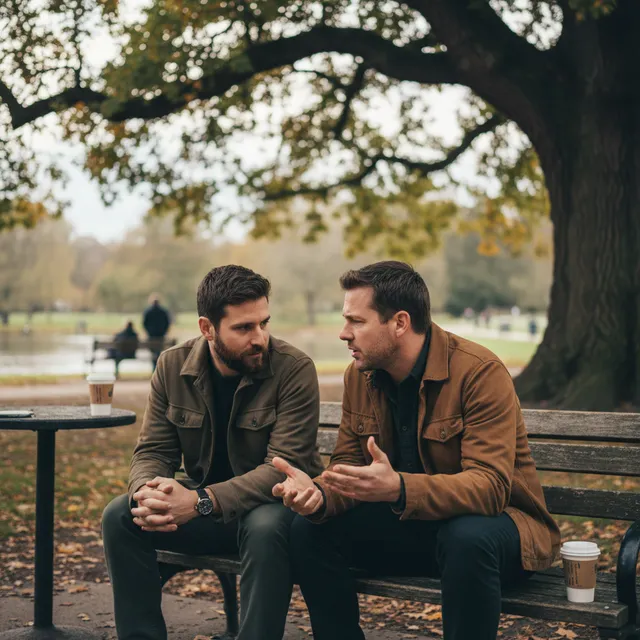
Men's Bible study addresses this isolation directly. Regular gathering around Scripture creates natural context for relationship. Shared study leads to shared struggle as men discover others face similar temptations, failures, and fears. What seemed shameful in isolation becomes manageable when spoken in community. Men discover they're not uniquely broken - every man battles similar demons. This normalization doesn't excuse sin but removes the shame that keeps men hiding.
Accountability emerges naturally from relationship. Men who know your story, who've heard your confessions, who care about your marriage and kids - these men earn the right to ask hard questions: "How's your thought life this week?" "Are you being honest with your wife?" "Did you follow through on what you said last time?" "How's your time with God?" This isn't intrusive interrogation but loving concern expressed through direct questions. Men need this. Willpower alone fails; accountability sustains.
Men's Bible study also models biblical manhood across generations. Younger men need to see older men who've navigated marriage difficulties, raised children through turbulent seasons, maintained faith through career setbacks, and grown in character over decades. Older men need younger men's energy, fresh questions, and honest challenges. The multigenerational dynamic Paul described to Timothy happens naturally when men study Scripture together across age differences. Connect with diverse perspectives through community-focused Bible studies.
The early church described this brotherhood beautifully: "They devoted themselves to the apostles' teaching and to fellowship, to the breaking of bread and to prayer" (Acts 2:42). Notice the elements: teaching (Bible study), fellowship (relationship), shared meals (life together), and prayer (spiritual partnership). Men's Bible study recreates this early church pattern, building communities where men know and are known, where faith gets expressed in daily life, where struggles get shared and victories celebrated.
Practical Bible Study Methods for Busy Men
"I don't have time" ranks as men's most common excuse for avoiding Bible study. Yet the same men who claim time scarcity find hours for sports, social media, news consumption, and entertainment. The issue isn't time availability but priority assignment. Men who treat Bible study as optional will always find reasons to skip it. Men who treat it as essential will find ways to make it happen.
The most effective method for busy men combines consistency with flexibility. Rather than demanding lengthy sessions that busy schedules can't accommodate, commit to brief daily encounters that build over time. Ten minutes reading Scripture every morning accomplishes more over a year than occasional marathon sessions. The goal isn't checking boxes but building relationship with God through regular time in His word.

Audio Bible transforms dead time into study time. Listen during commutes, workouts, yard work, or household tasks. Bible Way's audio features let you absorb Scripture while doing activities that occupy hands but not mind. Many men find audio Bible helps them cover more Scripture than reading alone. Variable speed settings let you slow challenging passages or accelerate familiar sections. Download chapters for offline listening without data usage.
Morning routines set the day's trajectory. Men who wake fifteen to thirty minutes earlier than necessary create margin for Bible study before the day's demands begin. This requires discipline - earlier bedtimes, phone alarms rather than snooze buttons, treating the appointment as non-negotiable. But men who establish this habit report transformed days. Starting with Scripture creates perspective that carries through challenges.
Lunch breaks offer midday study opportunities. Rather than scrolling social media or eating alone, use thirty minutes for Scripture and prayer. Some men join noon Bible studies at work or nearby churches. Others create informal groups with Christian coworkers. Even reading alone during lunch provides spiritual refreshment that sustains through afternoon demands.
Study plans provide structure that eliminates decision fatigue. Rather than wondering what to read next, follow a plan that guides daily reading. Bible Way offers numerous men's study plans: reading through the Bible in a year, studying biblical men, exploring Proverbs, examining Jesus' interactions with men, and topical studies on leadership, marriage, fatherhood, and integrity. The plan does the planning so you can focus on the studying. Try the one-year Bible reading plan to build consistent habits.
The SOAP method provides simple structure for any passage: Scripture (read it), Observation (what does it say?), Application (how does this apply to me?), Prayer (respond to God). This takes five to fifteen minutes and produces genuine engagement rather than mere reading. Keep a journal to record insights, track patterns, and review growth over time. What you write, you remember longer than what you merely read.
Men's Bible Study Features in Bible Way
Bible Way designed men's Bible study features understanding that men need community, accountability, and practical application. The men's community includes thousands of active participants across all life stages, creating diverse perspectives and mutual support. Whether you're a young professional establishing career and faith, a husband navigating marriage challenges, a father raising children, or a senior investing in the next generation, you'll find men walking similar journeys who understand your specific struggles.
Men-specific study plans address topics uniquely relevant to masculine experiences: biblical manhood beyond cultural stereotypes, integrity at work, sexual purity in a pornographic culture, leadership at home and church, managing anger, handling failure, building friendships, stewarding finances, and facing mortality. Studies on biblical men explore David's failures and restoration, Joseph's integrity, Daniel's faith in hostile culture, Nehemiah's leadership, and Paul's transformation. These studies combine solid biblical teaching with practical life application.
Men's groups form around interest, life stage, or geographic location. Join established groups or create new ones. Meet virtually via video calls accommodating busy schedules and distant locations, or connect with local men for in-person study over breakfast, lunch, or evening meetings. Private groups allow confidential sharing without public exposure. Discussion features enable asynchronous participation - contribute when your schedule allows without requiring simultaneous attendance. Access the same powerful features available to all Bible Way users.
Accountability partnerships connect men intentionally. Find an accountability partner committed to asking hard questions, praying regularly, and walking alongside you through challenges. These one-on-one relationships go deeper than group settings allow. Partners check in between meetings through messaging, pray specifically for each other's stated struggles, and celebrate victories together. Many men find accountability partners become their closest friends.
The platform includes resources addressing men's specific struggles. Studies on pornography and sexual integrity provide biblical framework and practical strategies. Marriage studies help husbands love wives sacrificially. Fatherhood resources equip dads to disciple children. Career and calling materials help men integrate faith and work. These targeted resources meet men where they actually struggle rather than offering only generic spiritual content.
Multiple Bible translations available instantly let you compare versions for clarity. The ESV offers accurate, readable translation many men prefer. The NIV provides accessible language. The CSB offers contemporary readability with accuracy. The Message paraphrase provides fresh perspective on familiar passages. Study tools include commentaries, cross-references, and original language insights making serious study accessible without seminary training. Download the Bible Way app today to begin your men's Bible study journey.