Key Takeaways
God specializes in bringing purpose from prison - Joseph went from dungeon to palace, Paul wrote Scripture from chains
Physical imprisonment cannot imprison the soul - "Where the Spirit of the Lord is, there is freedom" (2 Corinthians 3:17)
Jesus identifies with prisoners - "I was in prison and you came to visit me" (Matthew 25:36)
God's grace extends to all sins - the thief on the cross entered paradise that very day (Luke 23:43)
Incarceration can become transformation - many find Christ and life purpose during imprisonment
Successful reentry requires spiritual foundation - faith-based programs show lower recidivism rates
Why Bible Study Transforms Lives Behind Bars
Faith-based prison programs consistently show remarkable outcomes - lower recidivism, greater family reunification, and genuine life transformation. Explore our comprehensive features designed to support prison ministry at every level.
Freedom in Christ
Experience true freedom in Christ even behind bars. Physical walls cannot contain the spiritual liberation found in Jesus.
Daily Scripture
Access daily devotionals and Scripture readings designed for the unique challenges and schedules of prison life.
Fellowship Groups
Connect with other believers through structured Bible study groups led by chaplains and trained volunteers.
Prayer Resources
Find guided prayers for inmates, families, victims, and reentry preparation rooted in Scripture.
Hope & Renewal
Discover God's promises of redemption, second chances, and new beginnings no matter your past.
Family Connection
Resources to help maintain spiritual connection with family members during incarceration and prepare for reunion.
Prison Bible Study in Action
See how Scripture transforms lives behind bars and prepares people for successful reentry

Chapel Services
Regular chapel services provide community worship and biblical teaching for incarcerated believers.
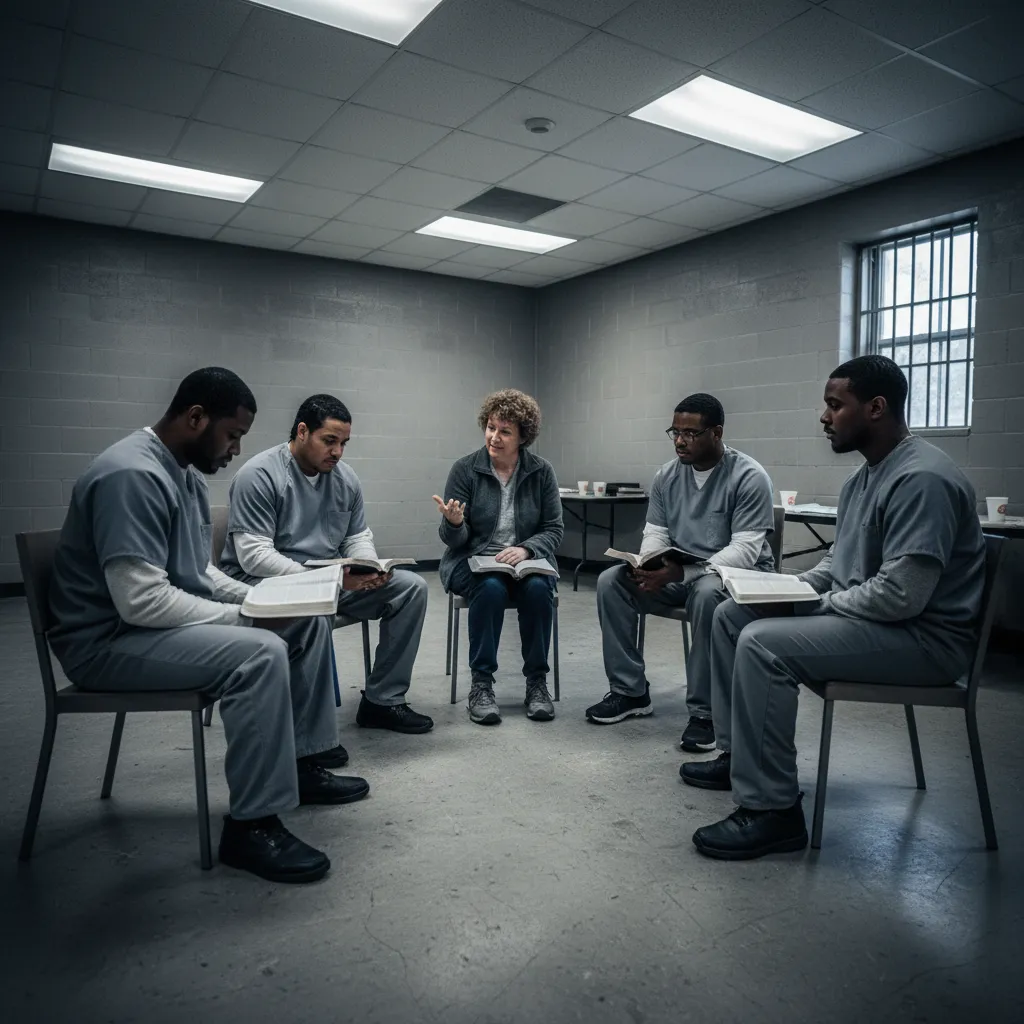
Small Group Studies
Intimate Bible study groups foster deep discussion, accountability, and spiritual growth.
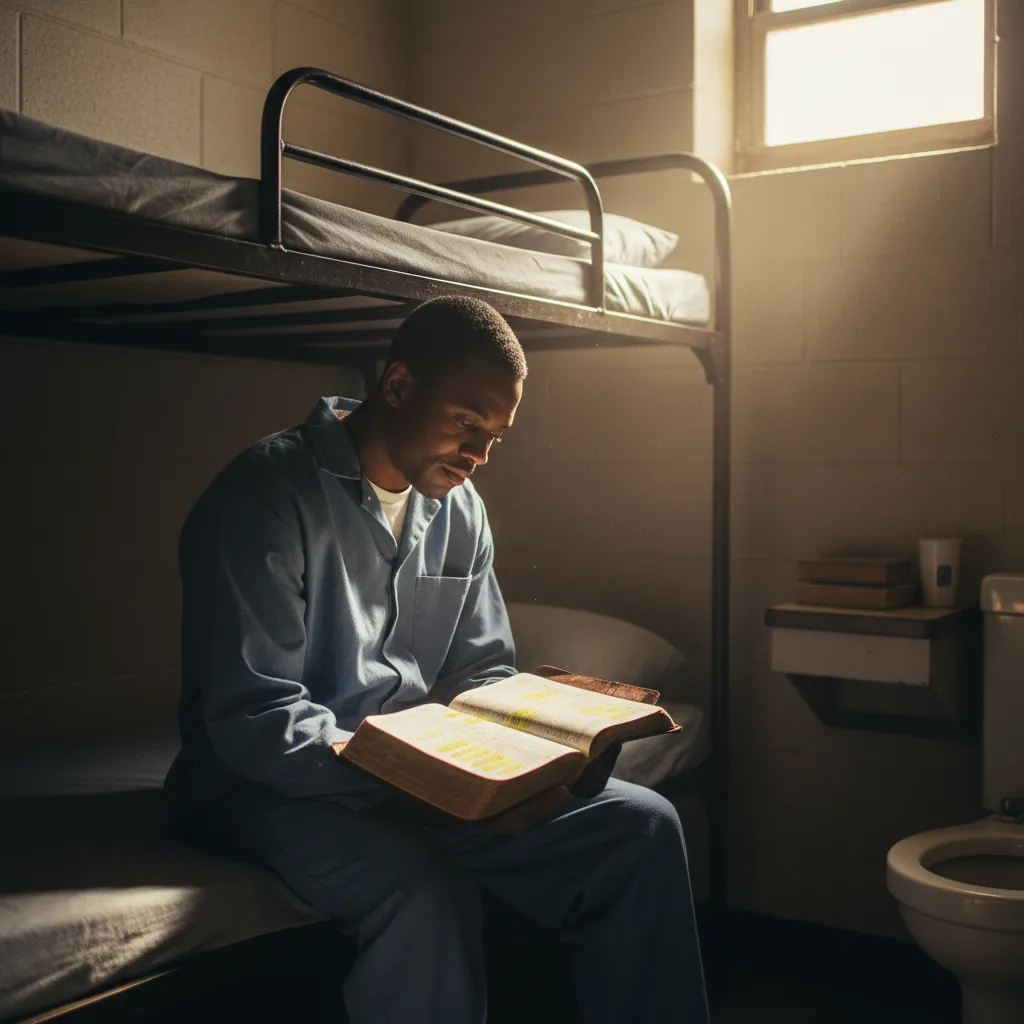
Personal Devotions
Daily Scripture reading and prayer transform cell time into sacred space.
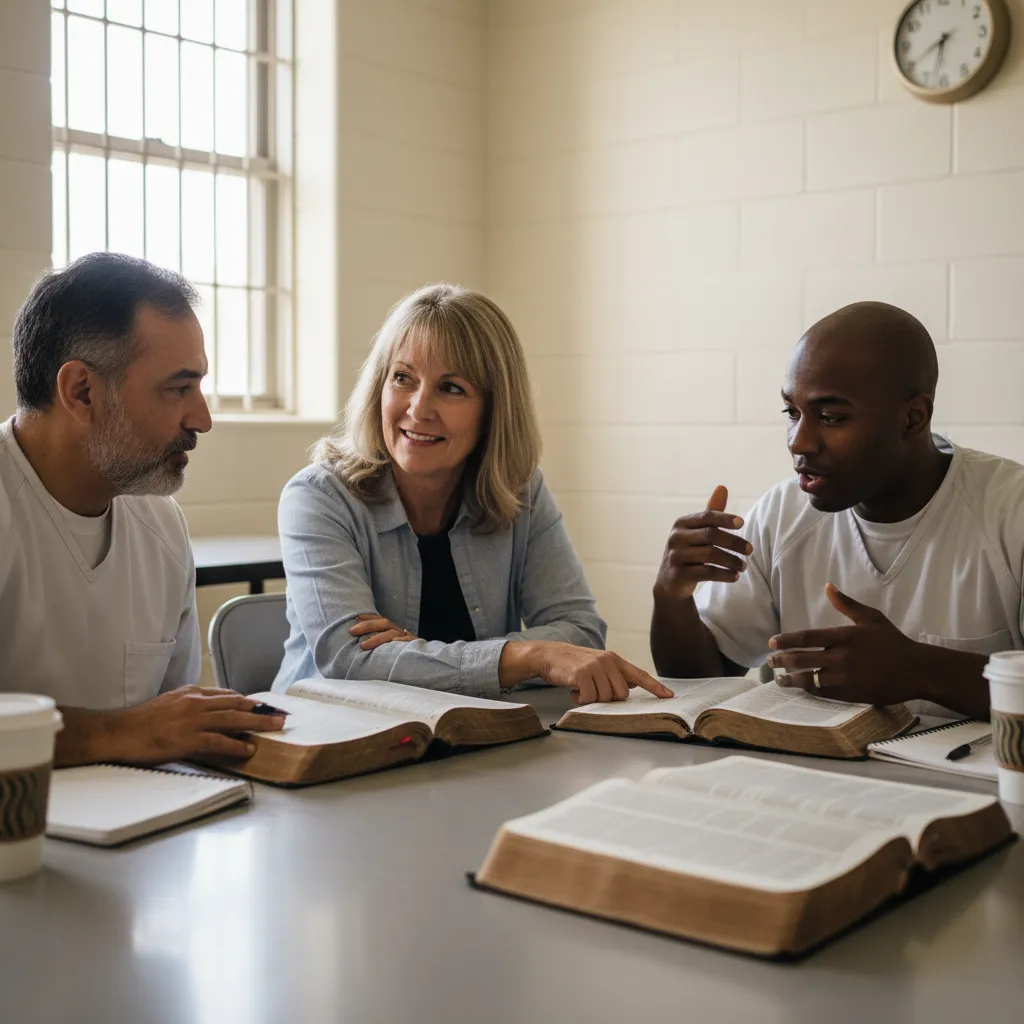
Volunteer Ministry
Dedicated volunteers bring the outside church inside, building lasting mentoring relationships.
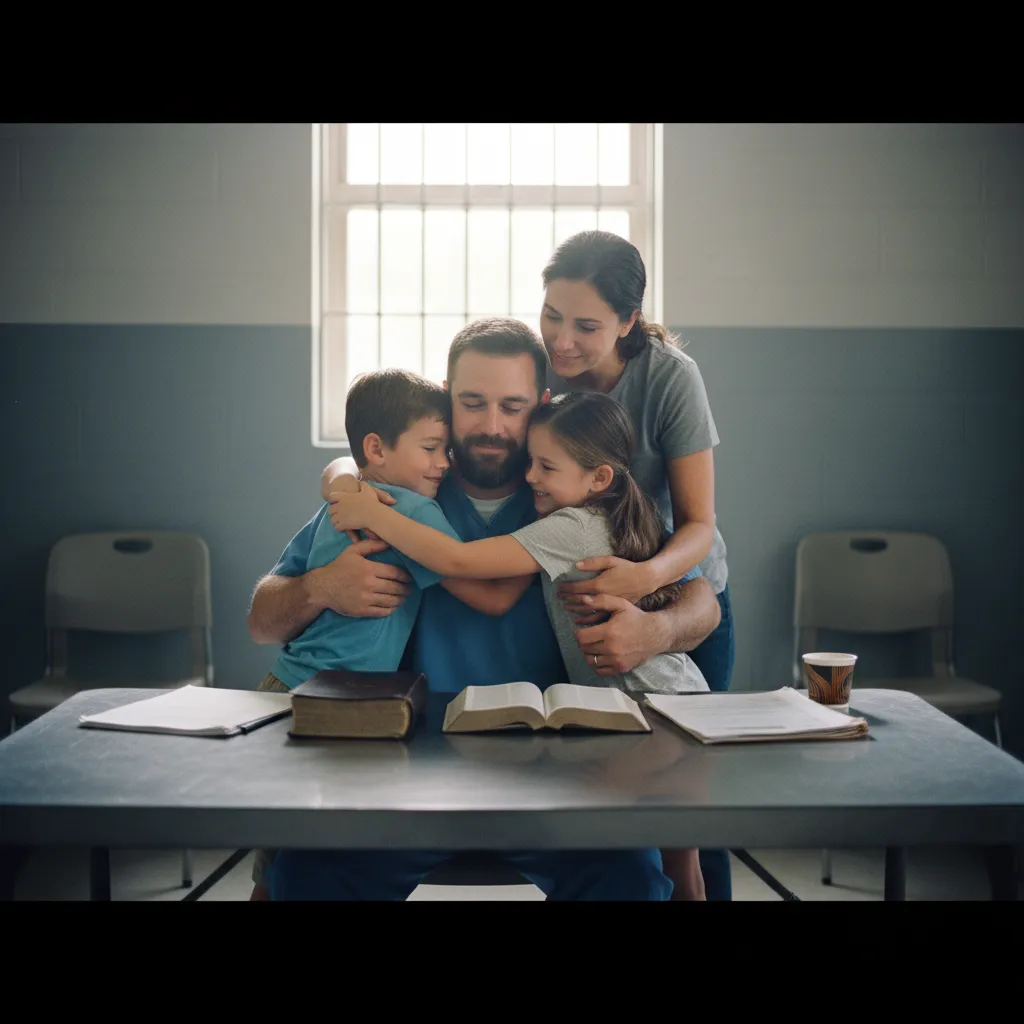
Family Connection
Faith strengthens family bonds during separation and prepares for healthy reunion.
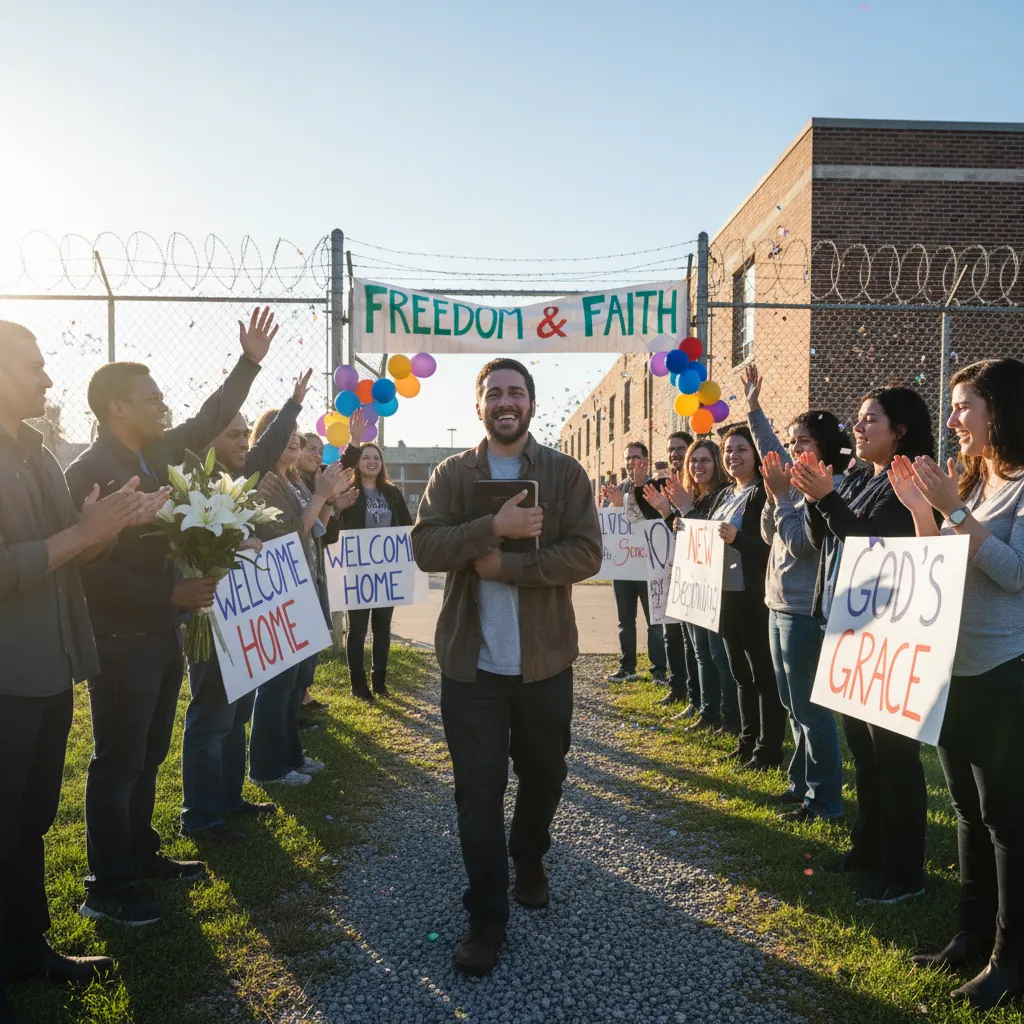
Reentry Support
Church communities welcome returning citizens with practical help and spiritual support.
Prison Bible Study Topics
Comprehensive biblical studies addressing every aspect of incarceration and reentry. Combine with our forgiveness Bible study for deeper exploration of God's redemptive grace.
Finding God Behind Bars
Biblical foundations for faith during incarceration
- Joseph in Prison - From Dungeon to Purpose (Genesis 39-41)
- Paul and Silas - Worship in Chains (Acts 16:16-34)
- The Apostle Paul's Prison Letters - Hope from Confinement
- Jeremiah's Imprisonment - Faithfulness Under Persecution
- Peter's Release - God's Miraculous Deliverance (Acts 12)
- Jesus Identifies with Prisoners (Matthew 25:36)
Scripture for Daily Strength
Key passages for encouragement during incarceration
- Psalm 142 - A Prayer from Confinement
- Psalm 107:10-16 - God Breaks Chains and Opens Doors
- Isaiah 61:1 - Good News for Captives
- Romans 8:38-39 - Nothing Separates Us from God's Love
- 2 Corinthians 4:8-9 - Pressed but Not Crushed
- Philippians 4:11-13 - Contentment in Any Circumstance
Dealing with Prison Realities
Biblical wisdom for daily prison challenges
- Managing Anger and Conflict (James 1:19-20)
- Overcoming Loneliness and Isolation (Psalm 68:6)
- Handling Regret and Guilt (Psalm 51)
- Forgiving Those Who Wronged You (Matthew 6:14-15)
- Dealing with Family Separation (Psalm 27:10)
- Finding Purpose in Difficult Circumstances (Romans 8:28)
Preparing for Reentry
Biblical principles for successful transition back to society
- Making Things Right - Biblical Restitution (Luke 19:1-10)
- Rebuilding Trust with Family (Proverbs 12:22)
- Finding Employment - Work as Worship (Colossians 3:23)
- Avoiding Old Patterns - Walking in Newness (Ephesians 4:22-24)
- Building a Supportive Community (Hebrews 10:24-25)
- Staying Strong in Faith Post-Release (1 Peter 5:8-10)
What Our Prison Ministry Community Says
Real testimonials from inmates, chaplains, and ministry volunteers
"I found Jesus in a prison chapel during year three of my sentence. Bible Way's daily devotionals gave me structure and hope. The studies on Joseph helped me see that God can use even prison for His purposes. I'm now leading a reentry ministry myself."
"Bible Way has transformed our chapel programs. The app works well in our restricted environment, and the content speaks directly to the struggles inmates face. Men who never opened a Bible are now studying Scripture daily."
"I've been volunteering in women's prisons for 15 years. Bible Way gives us excellent study materials that address real issues - shame, broken families, and finding identity in Christ. The women connect deeply with the content."
Prison Ministry Bible Study Resources
Everything you need for effective prison ministry. Access alongside our daily Bible study for consistent spiritual growth.
Inmate Daily Devotional
365 days of Scripture-based encouragement specifically written for the incarcerated, addressing prison realities with biblical hope.
Prison Bible Study Curriculum
Complete 12-week study guides for chaplains and volunteers, with discussion questions and application points.
Reentry Preparation Study
Biblical framework for successful reintegration into society, covering employment, relationships, and faith maintenance.
Family Connection Guide
Resources for maintaining spiritual connection with family during incarceration and preparing for reunion.
Letters from Prison (Paul)
In-depth study of Ephesians, Philippians, Colossians, and Philemon - written from prison, for prisoners.
Chaplain Resources
Training materials, sermon outlines, and ministry frameworks for prison chaplains and volunteers.
The Biblical Foundation of Prison Ministry
A Bible study for prison ministry is rooted in Scripture's consistent call to care for the imprisoned. Jesus declared that ministry to prisoners is ministry to Him: "I was in prison and you came to visit me" (Matthew 25:36). The early church continued this emphasis - Hebrews 13:3 commands, "Remember those in prison as if you were together with them." The Bible contains remarkable stories of God working through imprisonment. Joseph spent years in Pharaoh's dungeon yet emerged to save nations (Genesis 39-41). Jeremiah was imprisoned for speaking truth yet his prophetic words still speak today. The Apostle Paul wrote much of the New Testament from various prisons, declaring, "What has happened to me has actually served to advance the gospel... I have learned to be content whatever the circumstances" (Philippians 1:12, 4:11). These examples show that God can use even incarceration for His redemptive purposes.
Modern research confirms what Scripture teaches - faith makes a difference in prison outcomes. Studies consistently show that inmates who participate in faith-based programs have significantly lower recidivism rates. A landmark study found that graduates of faith-based prison programs were 50% less likely to be rearrested and 60% less likely to be reincarcerated. Why? Because true transformation addresses the heart, not just behavior. As Paul wrote, "Do not conform to the pattern of this world, but be transformed by the renewing of your mind" (Romans 12:2). Prison ministry connects inmates with the only One who can truly change hearts - Jesus Christ, who proclaimed, "The Spirit of the Lord is on me, because he has anointed me to proclaim good news to the poor. He has sent me to proclaim freedom for the prisoners" (Luke 4:18, quoting Isaiah 61:1). Studies on grace, recovery, and salvation provide the theological foundation for understanding God's redemptive love that reaches behind every wall and bar.
Scripture's Promise for Prisoners:
Begin Your Prison Ministry Journey
Whether you're incarcerated and seeking God, a chaplain needing resources, or a volunteer called to prison ministry, Bible Way provides the biblical tools you need. Our new believers study is perfect for those beginning their faith journey.
What You'll Experience
- Daily Scripture specifically for prison realities
- Studies on biblical prisoners - Joseph, Paul, Peter
- Reentry preparation rooted in Scripture
- Resources for family connection and healing
"I came to prison at 22, angry at God and everyone. A volunteer gave me a Bible and showed me Bible Way. Studying Joseph's story changed everything - God had a plan even for my imprisonment. I'm being released next month with a seminary degree I earned inside and a calling to help others."
James K.
8 Years Incarcerated, California
Frequently Asked Questions
Common questions about prison ministry and Bible study for the incarcerated
What does the Bible say about prisoners and prison ministry?
The Bible repeatedly calls believers to care for the imprisoned. Jesus declared that ministry to prisoners is ministry to Him: "I was in prison and you came to visit me" (Matthew 25:36). Hebrews 13:3 commands, "Remember those in prison as if you were together with them." Isaiah 61:1, quoted by Jesus in Luke 4:18, proclaims the Messiah's mission to "proclaim freedom for the captives." The early church understood this mandate - Peter was miraculously freed from prison (Acts 12), and Paul continued his ministry even while incarcerated, writing letters that became Scripture. Throughout the Bible, God demonstrates His particular concern for the vulnerable, marginalized, and imprisoned. This isn't because sin is excused, but because God's grace extends to all who turn to Him. The thief on the cross received Jesus' promise of paradise (Luke 23:43), demonstrating that no one is beyond redemption.
How effective is faith-based programming in prisons?
Research consistently demonstrates the effectiveness of faith-based prison programs. A Baylor University study of Prison Fellowship's InnerChange Freedom Initiative found graduates were 50% less likely to be rearrested and 60% less likely to be reincarcerated compared to a matched comparison group. Multiple studies have shown similar results. Why does faith-based programming work? It addresses the root causes of criminal behavior - broken relationships, lack of purpose, distorted values, and spiritual emptiness. Biblical teaching provides a moral framework, personal accountability, hope for the future, and community support. Moreover, faith-based programs typically continue after release, providing ongoing support during the critical reentry period when recidivism risk is highest. While program quality varies, well-designed faith-based prison ministries represent one of the most effective interventions available for reducing recidivism and promoting genuine life transformation.
How can inmates access Bible study resources?
Access to Bible study resources varies by facility. Most prisons and jails have chaplains who can provide Bibles, study materials, and lead group studies. Many facilities allow religious organizations to send approved materials. Bible Way works with prison ministries to provide resources through approved channels. Inmates can also request materials through prison libraries, correspondence courses from organizations like Prison Fellowship or Crossroads Prison Ministries, or through approved volunteer visitors. Some facilities have tablet programs that include religious content. Family members can often send approved religious materials through facility mailrooms. For specific facilities, inmates should consult with the chaplain about available resources and approved methods for receiving additional materials. The important thing is to start with what's available - even a simple Bible can be a powerful tool for transformation when studied with an open heart.
What Bible passages are most helpful for inmates?
Several Scripture portions speak powerfully to the incarcerated experience. Psalm 142, written when David hid in a cave, expresses the feeling of being trapped with no one to help - yet finding hope in God. Psalm 107:10-16 describes God bringing people out of darkness and breaking their chains. The story of Joseph (Genesis 37-50) shows how God can bring purpose even from unjust imprisonment. Paul's prison letters (Ephesians, Philippians, Colossians, Philemon) demonstrate maintaining faith and purpose while incarcerated. Philippians 4:11-13 teaches contentment in any circumstance. Romans 8:1 ("no condemnation for those in Christ") addresses shame and guilt. Romans 8:28 assures that God works all things for good for those who love Him. 2 Corinthians 5:17 promises that in Christ, anyone can become a new creation. Isaiah 43:18-19 speaks of God doing a new thing. These passages, among many others, offer hope, perspective, and practical wisdom for those behind bars.
How can I get involved in prison ministry as a volunteer?
Prison ministry volunteering begins with prayer and discernment about your calling. Contact established organizations like Prison Fellowship, Chuck Colson Center, Kairos Prison Ministry, or local ministries in your area. Most require background checks, training, and commitment to regular visitation. You might lead Bible studies, provide one-on-one mentoring, participate in special programs like Kairos weekends, or support reentry efforts. Contact your local prison or jail chaplain to learn about specific needs and opportunities. Churches often have prison ministry teams you can join. Consider your gifts - teaching, encouraging, administration, or practical helps like providing transportation for families visiting loved ones. The commitment is significant - prisons have rules, schedules can change, and relationship-building takes time. But the rewards are profound. As one volunteer said, "I went in thinking I'd help them, but they've taught me more about faith and gratitude than I ever imagined."
How does Bible study help with prison challenges like anger and loneliness?
Prison presents unique challenges that Scripture directly addresses. For anger, James 1:19-20 teaches being "quick to listen, slow to speak, slow to anger." Proverbs offers extensive wisdom about controlling anger and avoiding conflict. The Psalms model bringing raw emotions honestly to God rather than acting on them destructively. For loneliness and isolation, Scripture assures that God is always present (Psalm 139, Matthew 28:20). Psalm 68:6 declares that God "sets the lonely in families." For regret and guilt, Psalm 51 models confession and receiving forgiveness. For dealing with other inmates, Romans 12:18 teaches living at peace with all people as far as possible. For maintaining hope, Jeremiah 29:11 reveals God's good plans even in exile. For finding purpose, Romans 8:28 assures that God can work even imprisonment for good. Regular Bible study rewires thinking patterns, provides coping strategies rooted in eternal truth, and connects inmates to a community of faith that transcends prison walls.
What role does family play in faith-based prison rehabilitation?
Family connection is crucial for both spiritual growth during incarceration and successful reentry. Studies show that inmates who maintain family ties have significantly lower recidivism rates. Bible study can strengthen these bonds - families can study the same passages and discuss them during visits or through letters. Programs like Angel Tree (providing Christmas gifts from incarcerated parents to their children) maintain connections. Bible Way's family resources help incarcerated parents study parenting from prison, prepare for family reunification, and work through forgiveness on both sides. Family members also need support - dealing with shame, financial strain, and the challenges of maintaining relationships across prison walls. Churches can play a vital role by welcoming families of the incarcerated, providing practical support, and facilitating communication. When the whole family engages in spiritual growth, the foundation for successful reentry is dramatically strengthened.
How can Bible study help prepare for successful reentry?
Reentry is one of the most challenging transitions a person can face. Bible study helps in several ways. First, it builds the spiritual foundation needed to resist old patterns - Ephesians 4:22-24 describes putting off the old self and putting on the new. Second, Scripture provides practical wisdom for rebuilding life - Proverbs addresses work, relationships, and integrity. Third, the story of Zacchaeus (Luke 19) models making restitution while receiving grace. Fourth, Bible study often connects inmates to church communities that will support them after release. Fifth, studying passages like 1 Peter 5:8-10 prepares for the spiritual warfare that accompanies reentry. Sixth, Scripture addresses the shame that can accompany returning to society - Romans 8:1's "no condemnation" applies fully to formerly incarcerated believers. Effective reentry Bible studies also cover practical topics like employment, family reconciliation, avoiding triggers, and finding housing, all through a biblical lens that provides both wisdom and hope.
How should churches welcome formerly incarcerated members?
Churches have a biblical mandate to welcome returning citizens. Jesus said His mission included proclaiming freedom for prisoners (Luke 4:18). Yet many formerly incarcerated individuals feel unwelcome in churches due to stigma, judgment, or practical barriers. Churches can take several steps: Train congregation members about the challenges of reentry and the call to welcome those with criminal backgrounds. Create specific reentry ministries that provide practical support - housing assistance, job connections, mentoring. Ensure that past criminal history doesn't automatically disqualify people from serving in appropriate ministry roles. Connect with local prisons and jails so relationships begin before release. Celebrate milestones like sobriety anniversaries or years without reincarceration. Address safety concerns thoughtfully without blanket exclusion. Partner with reentry organizations already doing this work. Perhaps most importantly, preach the full gospel that includes restoration for all sinners - because everyone in the pew is a sinner saved by grace, regardless of whether their sins resulted in incarceration.
What unique challenges do women face in prison ministry?
Women's prison ministry requires attention to distinct challenges. Approximately 80% of incarcerated women are mothers, and separation from children is often their most significant source of pain. Many have histories of trauma, abuse, and exploitation that preceded their incarceration. Substance abuse rates are high. Women's facilities often have fewer programming options than men's prisons. Bible study for incarcerated women should address these realities - studies on God as Father for those with absent or abusive fathers, healing from trauma, identity beyond past abuse or exploitation, and parenting from prison. Women particularly benefit from female volunteers who can model healthy relationships and femininity. Programs like Rahab's Daughters or Kairos Outside specifically serve women. Women also face unique reentry challenges - often returning to relationships that contributed to their incarceration, struggling to regain custody of children, and facing limited housing options. Effective women's prison ministry addresses both spiritual needs and these practical realities with compassion and practical support.
How can I support a family member in prison spiritually?
Supporting an incarcerated loved one spiritually requires patience, consistency, and creativity within facility rules. Send approved religious materials if permitted - check with the facility about what's allowed. Write letters that include Scripture, encouragement, and prayer. Many facilities allow you to share devotional thoughts in correspondence. Discuss the same Bible passages and books during visitation, creating shared spiritual growth. Pray faithfully and let your loved one know you're praying. Connect them with prison ministry resources available in their facility. Model forgiveness and grace even when trust has been broken. Work on your own healing and spiritual growth - the Al-Anon principle applies here too, that you can't control another person's choices but you can tend to your own wellbeing. Prepare for their return by connecting with reentry ministries and church communities that will welcome them. Remember that transformation is a process - setbacks may occur, but God's grace is sufficient. Your consistent spiritual support can be a lifeline that makes an eternal difference.
What is the role of chaplains in prison Bible study?
Prison chaplains play a vital role as the primary spiritual caregivers within correctional facilities. They coordinate all religious programming, including Christian, Jewish, Muslim, and other faith services. For Bible study specifically, chaplains often lead studies themselves, recruit and train volunteer leaders, select and approve curriculum, ensure programming meets facility security requirements, and provide pastoral care to inmates seeking spiritual guidance. Chaplains serve all inmates regardless of faith tradition while often being the only full-time religious staff. They face unique challenges - limited resources, diverse faith needs, security constraints, and the intensity of crises in prison settings. Many chaplains report being understaffed and underfunded. Churches can support chaplains by providing volunteers, donating approved materials, and advocating for adequate chaplaincy staffing. Bible Way partners with chaplains by providing resources designed for prison use, training materials for volunteer leaders, and content that addresses the specific challenges inmates face. Quality chaplaincy is essential for effective prison ministry.
Trusted Prison Ministry Resources
Additional external resources for prison ministry and support
Prison Fellowship
Largest prison ministry organization, founded by Chuck Colson with programs in facilities nationwide
prisonfellowship.org →Got Questions - Prison
Biblical answers to common questions about incarceration and prison ministry
gotquestions.org →BibleGateway
Free access to Scripture in multiple translations for study and reference
biblegateway.com →Kairos Prison Ministry
Weekend retreat programs bringing Christ's love into prisons worldwide
kairosprisonministry.org →