Luke Bible Study - Discover the Compassionate Savior
Experience the Gospel of the Great Physician through the eyes of Luke, a Gentile physician and careful historian. The Gospel of Luke uniquely reveals Jesus as the compassionate Savior who came to seek and save the lost. Through unforgettable parables like the Prodigal Son and Good Samaritan, Jesus\' tender interactions with women, outcasts, and sinners, and the most complete account of His birth and childhood, Luke Bible study will transform your understanding of God\'s heart for the marginalized and His salvation for all people.
Key Takeaways from Luke Bible Study
Jesus came to seek and save the lost - the tax collectors, sinners, and outcasts are His priority
Salvation is offered to all people - Jew and Gentile, rich and poor, men and women, slave and free
Prayer is essential - Jesus prayed before every major decision and taught His disciples to pray
The Holy Spirit empowers Jesus\' ministry and will empower believers to be His witnesses
True discipleship requires counting the cost and following Jesus wholeheartedly
Heaven rejoices over every sinner who repents - this is the heart of God revealed
Why Study the Gospel of Luke?
Luke presents Jesus through the lens of a physician and historian - with compassion, precision, and universal scope
Jesus for the Marginalized
Luke uniquely emphasizes Jesus' ministry to the poor, women, Samaritans, and social outcasts - demonstrating God's heart for those society rejects.
Parables of Grace
Explore Luke's treasure trove of parables including the Prodigal Son, Good Samaritan, and Lost Sheep - stories found only in this Gospel.
Salvation for All Nations
Luke traces salvation history from Israel to all peoples, showing Jesus as the Savior of the world, not just one nation.
Jesus at Prayer
More than any other Gospel, Luke shows Jesus praying at every major moment - modeling intimate communion with the Father.
The Holy Spirit's Work
From John's conception to Jesus' ministry to Pentecost (Acts), Luke emphasizes the Spirit's essential role in salvation.
Joy and Celebration
Luke overflows with joy - angels singing, shepherds rejoicing, the prodigal welcomed home, Zacchaeus celebrating salvation.
Understanding Luke in Context
The Gospel of Luke is the longest book in the New Testament and forms the first volume of a two-part work, with Acts as its sequel. Written by Luke, a Gentile physician and traveling companion of the apostle Paul (Colossians 4:14), this Gospel was composed around AD 60-70 and addressed to "Theophilus" - either a specific patron or a symbolic "lover of God" representing all who seek truth. Luke states his purpose clearly in the prologue: to write "an orderly account" based on careful investigation of eyewitness testimonies "so that you may know the certainty" of what you have been taught (1:1-4). This Bible study will guide you through Luke\'s carefully researched Gospel that presents Jesus as the Savior of all humanity.
Luke\'s Gospel stands out for its literary excellence and universal scope. As a Gentile writing primarily for Gentile readers, Luke emphasizes that salvation is for all people - not just Jews. He traces Jesus\' genealogy all the way back to Adam (not just Abraham as Matthew does), demonstrating Jesus\' connection to all humanity. Luke includes more stories involving women than any other Gospel: Elizabeth, Mary, Anna, the widow of Nain, the sinful woman who anointed Jesus, Mary and Martha, the widow with two mites, and the women at the tomb. He also highlights Jesus\' ministry to Samaritans, tax collectors, and other outcasts. For those seeking online Bible study, Luke\'s Gospel offers profound insights into God\'s heart for the marginalized and excluded.
One of Luke\'s distinctive features is his collection of parables - many found nowhere else in Scripture. The Parable of the Good Samaritan (10:25-37) challenges us to love our neighbor without boundaries. The Parable of the Prodigal Son (15:11-32) reveals the Father\'s heart for lost children who come home. The Rich Man and Lazarus (16:19-31) warns of the danger of ignoring the poor at our gates. Luke chapter 15 alone - containing the parables of the Lost Sheep, Lost Coin, and Lost Son - provides the Bible\'s clearest picture of God\'s joy when sinners repent. Whether you follow a daily Bible study routine or prefer deep dives, Luke\'s parables will reshape your understanding of grace and salvation.
Luke also provides the most complete account of Jesus\' birth and childhood (chapters 1-2). The annunciation to Mary, the visitation to Elizabeth, the Magnificat, the birth in Bethlehem, the angels announcing to shepherds, Simeon and Anna in the temple, and the twelve-year-old Jesus in His Father\'s house - all these beloved narratives come from Luke alone. This Gospel shows Jesus\' life of prayer more than any other, recording Him praying at His baptism, before choosing the twelve, at the transfiguration, and teaching the disciples how to pray. From women\'s Bible studies to pastoral preaching, Luke remains essential for understanding Jesus\' compassion and God\'s salvation offered to all. Let Bible Way guide your exploration of this magnificent Gospel of grace.
Journey Through Luke\'s Gospel
From Bethlehem to Jerusalem to the ends of the earth - all 24 chapters explored
Chapters 1-4: Preparation and Beginning
Birth narratives, Jesus' preparation, and early Galilean ministry
- Luke's Prologue and Purpose (1:1-4)
- Birth of John Announced (1:5-25)
- Annunciation to Mary (1:26-38)
- Mary Visits Elizabeth (1:39-56)
- Birth of John the Baptist (1:57-80)
- Birth of Jesus in Bethlehem (2:1-20)
- Presentation at the Temple (2:21-40)
- Boy Jesus in the Temple (2:41-52)
- John's Ministry and Jesus' Baptism (3:1-22)
- Genealogy of Jesus (3:23-38)
- Temptation in the Wilderness (4:1-13)
- Rejection at Nazareth (4:14-30)
- Early Galilean Ministry (4:31-44)
Chapters 5-9: Ministry in Galilee
Disciples called, miracles performed, teachings given
- Calling of the First Disciples (5:1-11)
- Healings and Controversy (5:12-6:11)
- Choosing the Twelve (6:12-16)
- Sermon on the Plain (6:17-49)
- Centurion's Faith (7:1-10)
- Widow of Nain's Son Raised (7:11-17)
- Jesus and John the Baptist (7:18-35)
- Sinful Woman Forgiven (7:36-50)
- Women Who Supported Jesus (8:1-3)
- Parables of the Kingdom (8:4-18)
- True Family of Jesus (8:19-21)
- Calming the Storm (8:22-25)
- Healing of the Demoniac (8:26-39)
- Jairus's Daughter & Woman Healed (8:40-56)
- Sending of the Twelve (9:1-9)
- Feeding the 5,000 (9:10-17)
- Peter's Confession (9:18-27)
- Transfiguration (9:28-36)
- Healing of Boy with Demon (9:37-45)
Chapters 9-19: Journey to Jerusalem
The longest section - Jesus' teaching journey
- Cost of Discipleship (9:46-62)
- Sending of the Seventy-Two (10:1-24)
- Parable of the Good Samaritan (10:25-37)
- Mary and Martha (10:38-42)
- Teaching on Prayer (11:1-13)
- Controversy with Pharisees (11:14-54)
- Warnings and Encouragements (12:1-59)
- Call to Repentance (13:1-9)
- Healing on the Sabbath (13:10-17)
- Narrow Door (13:18-35)
- Sabbath Dinner Teachings (14:1-24)
- Cost of Discipleship (14:25-35)
- Parables of the Lost (15:1-32)
- Parable of the Shrewd Manager (16:1-18)
- Rich Man and Lazarus (16:19-31)
- Teaching on Faith and Duty (17:1-10)
- Ten Lepers Healed (17:11-19)
- Coming of the Kingdom (17:20-37)
- Persistent Widow (18:1-8)
- Pharisee and Tax Collector (18:9-14)
- Little Children and Rich Ruler (18:15-30)
- Third Passion Prediction (18:31-34)
- Blind Man Near Jericho (18:35-43)
- Zacchaeus the Tax Collector (19:1-10)
- Parable of the Ten Minas (19:11-27)
Chapters 19-24: Jerusalem and Beyond
Final week, death, resurrection, and ascension
- Triumphal Entry (19:28-44)
- Cleansing of the Temple (19:45-48)
- Authority Questioned (20:1-8)
- Parable of the Tenants (20:9-19)
- Taxes to Caesar (20:20-26)
- Question About Resurrection (20:27-40)
- Whose Son Is the Messiah? (20:41-47)
- Widow's Offering (21:1-4)
- Signs of the End (21:5-38)
- Last Supper (22:1-38)
- Garden of Gethsemane (22:39-46)
- Arrest and Peter's Denial (22:47-65)
- Before the Sanhedrin (22:66-71)
- Trial Before Pilate and Herod (23:1-25)
- Crucifixion (23:26-49)
- Burial of Jesus (23:50-56)
- Empty Tomb (24:1-12)
- Road to Emmaus (24:13-35)
- Appearances and Ascension (24:36-53)
The Heart of Luke\'s Gospel
"For the Son of Man came to seek and to save the lost." - Luke 19:10
This single verse captures the essence of Luke\'s message: Jesus is the divine seeker who pursues lost humanity. Unlike other ancient teachers who waited for disciples to come to them, Jesus actively searches for sinners. From Levi the tax collector to Zacchaeus in the tree, from the woman caught in sin to the thief on the cross - Luke shows Jesus finding and saving those everyone else had written off.
The three parables of Luke 15 - the Lost Sheep, Lost Coin, and Lost Son - paint the clearest picture of God\'s searching love in all Scripture. A shepherd leaves ninety-nine safe sheep to find one lost. A woman lights a lamp and sweeps her house to find one coin. A father scans the horizon daily, then runs to embrace his returning prodigal. Heaven rejoices when just one sinner repents. This is the God Luke reveals.
What Others Say About Our Luke Study
How studying Luke transformed their faith
"Luke's Gospel has been my primary text for teaching Jesus' heart for the marginalized. Bible Way's study guides help students connect Luke's themes of mercy, prayer, and inclusive salvation in ways that transform their understanding of ministry."
"The parables of the lost in Luke 15 have brought more men to tears than any other Scripture I teach. When inmates hear that the Father runs to embrace prodigals, lives change. Bible Way helps me teach Luke's message of radical grace."
"Luke gives women a dignity no other ancient writer did. Mary, Elizabeth, Anna, the sinful woman, Mary and Martha - all are honored. Our women's group found themselves in Luke's pages and encountered Jesus' compassion firsthand."
Luke Study Resources
Tools to help you encounter the Savior who seeks the lost
Chapter Summaries
Clear, detailed summaries of all 24 chapters highlighting key events, parables, and theological themes.
Parables Deep Dive
In-depth study of Luke's unique parables: Good Samaritan, Prodigal Son, Rich Man and Lazarus, and more.
Prayer in Luke
Study every instance of Jesus praying and His teachings on prayer, including the Lord's Prayer.
Key Verse Memory
Memorization guides for Luke's greatest passages: 1:37, 2:10-11, 4:18-19, 9:23, 15:7, 19:10.
Birth Narratives
Extended study of Luke 1-2 - the fullest account of Jesus' birth and childhood in Scripture.
Discussion Questions
Thought-provoking questions for personal reflection or group Bible study discussion.
Luke Study Visuals
Visual guides to help you understand the Gospel of Luke

Birth of Jesus
Luke alone provides the full nativity account - from Bethlehem\'s manger to angels and shepherds.

The Good Samaritan
Jesus\' famous parable about loving our neighbor regardless of differences.

The Prodigal Son
The father runs to embrace his returning son - a picture of God\'s grace.

Zacchaeus in the Tree
Jesus finds the seeking tax collector and brings salvation to his house.
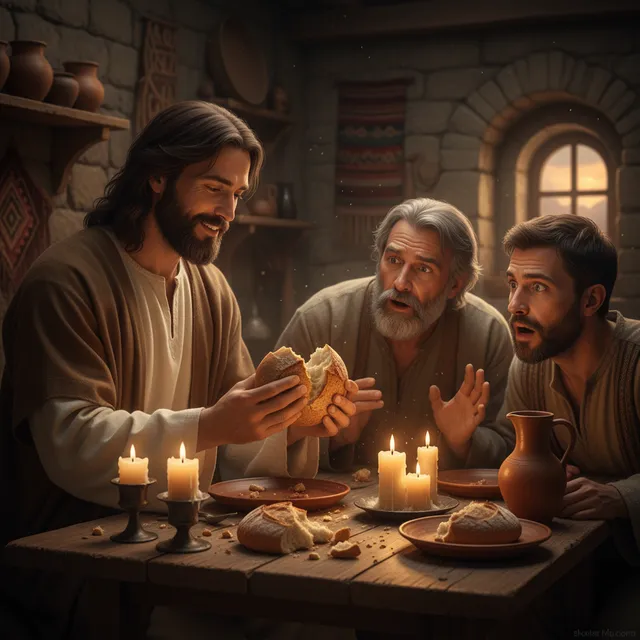
Road to Emmaus
The risen Jesus reveals Himself in the breaking of bread.

Group Bible Study
Community study deepens understanding of Luke through shared insights.
Join Our Luke Study Community
Encounter Jesus the compassionate Savior
What You\'ll Get
- Chapter-by-chapter study guides for all 24 chapters
- Deep dives into Luke\'s unique parables
- Prayer study - Jesus\' model and teachings
- Birth narratives extended study (chapters 1-2)
"Luke\'s Gospel helped me see God\'s heart for people like me - broken, lost, and in need of grace. The prodigal son story became my story. Bible Way\'s study showed me the Father runs toward us, not away."
Marcus D.
Found faith through Luke 15
Frequently Asked Questions About Luke Bible Study
Clear answers to common questions about the Gospel of Luke
Who wrote the Gospel of Luke and why?
The Gospel of Luke was written by Luke, a Gentile physician and companion of the apostle Paul (Colossians 4:14, Philemon 24, 2 Timothy 4:11). Luke is the only non-Jewish author of a New Testament book. He was not an eyewitness to Jesus\' ministry but carefully investigated eyewitness accounts to write "an orderly account" (1:3). Luke wrote to Theophilus - either a specific patron or a symbolic representation of all seekers ("lover of God"). His purpose was evangelistic: "that you may know the certainty of the things you have been taught" (1:4). Luke wrote around AD 60-70, likely from Rome or Caesarea. His Gospel forms part one of a two-volume work, with Acts as the sequel continuing the story from Jesus\' ascension to Paul\'s ministry in Rome. Luke\'s Greek is the most polished in the New Testament, and his historical accuracy has been repeatedly confirmed by archaeology. As a physician, he shows special interest in healings and records more miracle stories than any other Gospel.
What makes Luke\'s Gospel unique among the four Gospels?
Luke\'s Gospel has several distinctive features: (1) Universal scope - Luke emphasizes that salvation is for all people, tracing Jesus\' genealogy to Adam (not just Abraham) and including stories about Gentiles, Samaritans, women, and outcasts. (2) Most complete birth narrative - Only Luke records the annunciation, Mary\'s visit to Elizabeth, the shepherds, the presentation in the temple, and Jesus at age 12. (3) Unique parables - The Good Samaritan, Prodigal Son, Rich Fool, Rich Man and Lazarus, Pharisee and Tax Collector, and Persistent Widow appear only in Luke. (4) Emphasis on prayer - Luke shows Jesus praying more than any other Gospel (at baptism, before choosing apostles, at transfiguration, teaching disciples to pray). (5) Holy Spirit prominence - From John\'s conception to Jesus\' ministry to Pentecost (Acts), the Spirit is central. (6) Women\'s stories - Elizabeth, Mary, Anna, the widow of Nain, the sinful woman, Mary and Martha, and others receive significant attention. (7) Joy theme - Angels sing, shepherds rejoice, the prodigal is welcomed with celebration. (8) Concern for poor and marginalized - Jesus\' mission to "proclaim good news to the poor" (4:18) permeates Luke.
What is the Parable of the Prodigal Son about?
The Parable of the Prodigal Son (Luke 15:11-32) is considered by many the greatest short story ever told. A younger son demands his inheritance early (essentially wishing his father dead), squanders it in wild living, hits bottom feeding pigs (the ultimate disgrace for a Jew), comes to his senses, and returns home planning to be a servant. But the father - who has been watching and waiting - runs to embrace him, restores him as a son, and throws a celebration. The older brother refuses to join, revealing his own pride and lack of grace. Key themes include: (1) God\'s initiative - The father runs, unusual for a dignified Middle Eastern patriarch. (2) Complete restoration - Not servanthood but sonship; not probation but celebration. (3) Two kinds of "lost" - The younger son\'s obvious rebellion and the older son\'s self-righteous religion both miss the father\'s heart. (4) Heaven\'s joy - "There is more rejoicing in heaven over one sinner who repents" (15:7). (5) Human choice - The invitation stands; the older brother chooses whether to enter the celebration. This parable answers the Pharisees\' complaint that Jesus welcomes sinners (15:2) with a devastating picture of God\'s searching, restoring love.
What is the meaning of the Good Samaritan parable?
The Parable of the Good Samaritan (Luke 10:25-37) is Jesus\' answer to a lawyer\'s question "Who is my neighbor?" A man traveling from Jerusalem to Jericho is robbed, beaten, and left half dead. A priest passes by on the other side. A Levite likewise avoids him. But a Samaritan - despised by Jews as racial and religious half-breeds - stops, binds his wounds, takes him to an inn, and pays for his care. Jesus then asks, "Which was a neighbor?" The answer is obvious: the one who showed mercy. Key teachings: (1) Neighbor has no boundaries - The question isn\'t "who qualifies as my neighbor" but "am I being a neighbor." (2) Religious role doesn\'t guarantee compassion - The priest and Levite, who should have helped, didn\'t. (3) Enemies can teach us - A hated Samaritan models love better than religious leaders. (4) Love is action - The Samaritan\'s love cost time, money, and inconvenience. (5) "Go and do likewise" - Jesus commands imitation, not just admiration. The shocking hero - a Samaritan helping a Jew - would have offended Jesus\' original audience while powerfully illustrating that love transcends all human divisions.
Why does Luke emphasize Jesus\' prayer life?
Luke records Jesus praying at every major moment in His ministry more than any other Gospel. Examples include: (1) At His baptism (3:21) - The Spirit descends and the Father speaks while Jesus prays. (2) Before choosing the Twelve (6:12) - Jesus spent the whole night in prayer before this crucial decision. (3) Before Peter\'s confession (9:18) - The pivotal recognition came from a time of prayer. (4) At the Transfiguration (9:28-29) - His appearance changed while praying. (5) Teaching the Lord\'s Prayer (11:1-4) - Disciples asked "teach us to pray" after watching Him pray. (6) In Gethsemane (22:39-46) - Intensely praying until His sweat was like drops of blood. Luke also includes unique parables about prayer: the Friend at Midnight (11:5-8) encouraging persistence, and the Persistent Widow (18:1-8) teaching us to "always pray and not give up." The Pharisee and Tax Collector (18:9-14) contrasts self-righteous prayer with humble confession. Luke shows that Jesus\' entire ministry flowed from His prayer relationship with the Father, providing a model for His followers. If the Son of God needed to pray, how much more do we?
How does Luke present women differently than other Gospels?
Luke includes more stories about women than any other Gospel, a remarkable feature for an ancient document. Women featured prominently include: (1) Elizabeth (1:5-80) - Zechariah\'s wife, filled with the Spirit, mother of John the Baptist. (2) Mary (1:26-56, 2:1-52) - More about Mary\'s perspective than any other Gospel; her Magnificat is preserved. (3) Anna (2:36-38) - An 84-year-old prophetess who recognized Jesus. (4) Widow of Nain (7:11-17) - Jesus raises her only son, moved by compassion. (5) Sinful woman (7:36-50) - Anoints Jesus\' feet, forgiven much and loving much. (6) Mary and Martha (10:38-42) - Mary\'s choice to learn from Jesus is validated. (7) Crippled woman (13:10-17) - Healed on the Sabbath, called "daughter of Abraham." (8) Widow with two mites (21:1-4) - Her sacrificial giving is commended. (9) Women of Jerusalem (23:27-31) - Jesus addresses them on the way to the cross. (10) Women at the tomb (24:1-12) - First witnesses of the resurrection. Luke presents women as full participants in God\'s redemptive work, not second-class disciples. This was revolutionary in the ancient world.
What is the "travel narrative" in Luke?
Luke\'s "travel narrative" or "journey to Jerusalem" section (9:51-19:27) is the longest unique section in Luke\'s Gospel, comprising about 40% of the book. It begins with Jesus setting His face "like flint" toward Jerusalem and contains the bulk of Luke\'s unique parables and teachings. This section shows Jesus as a traveling teacher moving deliberately toward the cross. Major content includes: the Parable of the Good Samaritan, the Lord\'s Prayer teaching, the Lost parables (sheep, coin, son), the Rich Man and Lazarus, the healing of the ten lepers, the Pharisee and Tax Collector parable, Zacchaeus\'s conversion, and extensive teaching on discipleship, money, prayer, and the coming kingdom. The journey motif emphasizes: (1) Jerusalem\'s importance - The city of destiny where prophets die (13:33). (2) Determined purpose - Jesus moves toward the cross willingly. (3) Discipleship cost - Following requires counting the cost. (4) Teaching priority - Jesus uses the journey for intensive instruction. This section is geographically loose (the journey itself is not traced precisely) but theologically intentional, showing Jesus preparing His disciples for His departure and their mission to come.
What does Luke 19:10 mean - "seek and save the lost"?
Luke 19:10 is often called Luke\'s "purpose statement" for Jesus\' entire ministry: "For the Son of Man came to seek and to save the lost." This verse appears at the climax of the Zacchaeus story. Key elements: (1) "Son of Man" - Jesus\' preferred self-designation, connecting Him to Daniel 7\'s divine figure while emphasizing His humanity. (2) "Came" - Jesus\' incarnation was purposeful, not accidental; He left heaven to accomplish a mission. (3) "To seek" - Unlike religious teachers who waited for disciples to come to them, Jesus actively pursues the lost. He climbed a tree to find Zacchaeus. He left 99 sheep to find one. (4) "And to save" - Seeking isn\'t enough; Jesus accomplishes salvation. He doesn\'t just point the way but becomes the Way. (5) "The lost" - Tax collectors, sinners, outcasts, the marginalized - those religious people had given up on. This verse encapsulates Luke\'s entire Gospel: Jesus is the divine seeker who pursues lost humanity not to condemn but to save. It explains why He ate with sinners (5:30), welcomed the immoral (7:37), sought Zacchaeus (19:5), and promised paradise to a crucified thief (23:43). Luke 15\'s three parables are extended commentary on this mission.
What is unique about Luke\'s birth narrative?
Luke provides the most detailed account of Jesus\' birth and childhood (chapters 1-2), including events found nowhere else in Scripture: (1) Zechariah\'s temple vision and the announcement of John\'s birth (1:5-25) - including his disbelief and resulting muteness. (2) The Annunciation to Mary (1:26-38) - Gabriel\'s visit, Mary\'s question, and her faithful acceptance: "I am the Lord\'s servant." (3) Mary\'s visit to Elizabeth (1:39-45) - John leaps in the womb, Elizabeth is filled with the Spirit. (4) The Magnificat (1:46-55) - Mary\'s song praising God for reversing social orders. (5) Birth of John the Baptist (1:57-80) - Including Zechariah\'s prophecy (the Benedictus). (6) Census and journey to Bethlehem (2:1-5) - Historical context for the humble birth. (7) Birth in a manger (2:6-7) - "No room in the inn." (8) Angels appearing to shepherds (2:8-20) - "Good news of great joy for all people." (9) Circumcision and presentation (2:21-38) - Simeon\'s prophecy and Anna\'s proclamation. (10) Jesus at twelve in the temple (2:41-52) - "I must be in my Father\'s house." These narratives establish Jesus\' identity, fulfill Old Testament hopes, and introduce Luke\'s themes of joy, Spirit, prayer, women, and salvation for all.
What is the Road to Emmaus story about?
The Road to Emmaus (Luke 24:13-35) is one of the most beautifully crafted resurrection appearances, found only in Luke. Two discouraged disciples (Cleopas and an unnamed companion) walk from Jerusalem to Emmaus, about seven miles. The risen Jesus joins them but they don\'t recognize Him. When asked what they\'re discussing, they explain their shattered hopes: "We had hoped he was the one who was going to redeem Israel" (v.21). Jesus responds by explaining how all Scripture - Moses and the Prophets - pointed to the Messiah\'s suffering and glory. Their hearts "burned" as He taught. At dinner, Jesus takes bread, blesses it, and breaks it - and suddenly their eyes are opened. He vanishes. They rush back to Jerusalem to share the news. Key themes: (1) Scripture interpretation - Jesus Himself shows how the Old Testament points to Him. (2) Recognition in breaking bread - Eucharistic overtones suggest Jesus is known in the Lord\'s Supper. (3) Burning hearts - Scripture rightly understood ignites passion. (4) Shattered hopes transformed - The cross seemed defeat but was victory. (5) Witness - Those who encounter the risen Christ must tell others. This story beautifully portrays how Jesus meets us in our disappointments and opens our understanding.
What are the best commentaries on Luke\'s Gospel?
For accessible reading, Darrell Bock\'s two-volume "Luke" (BECNT) is thorough yet readable - the standard evangelical commentary. His single-volume IVPNTC Luke is more concise. Joel Green\'s "The Gospel of Luke" (NICNT) offers excellent literary and theological analysis. For laypeople, Craig Evans\'s "Luke" (NIBC) and R. Kent Hughes\'s "Luke: That You May Know the Truth" (Preaching the Word) provide sermonic richness. I. Howard Marshall\'s "The Gospel of Luke" (NIGTC) is technical but indispensable for serious study. For historical background, Joseph Fitzmyer\'s two-volume Anchor Bible commentary is unmatched in scope (though more critical). Classic works include Norval Geldenhuys\'s NICNT commentary and Leon Morris\'s Tyndale commentary. For devotional reading, William Hendriksen\'s exposition rewards careful study. More recent works include David Garland\'s "Luke" (ZECNT) and Alan Thompson\'s "Luke" (EGGNT). N.T. Wright\'s "Luke for Everyone" offers accessible theological reflection. For Greek students, John Nolland\'s three-volume Word Biblical Commentary provides detailed exegesis. Bible Way draws from these scholarly resources to provide accessible study guides, discussion questions, and theological summaries that help ordinary believers engage Luke\'s Gospel deeply.
How do Luke and Acts connect?
Luke and Acts were written as a two-volume work - "Luke-Acts" - constituting about 27% of the New Testament. The connection is clear: both address Theophilus (Luke 1:3, Acts 1:1), Acts references "my former book" (Acts 1:1), and the narrative flows seamlessly from Jesus\' ascension (Luke 24, Acts 1). Key connections include: (1) Promise and fulfillment - Luke ends with Jesus promising Spirit-empowered witness; Acts begins with that promise fulfilled at Pentecost. (2) Geographic expansion - Luke\'s "orderly account" traces Jesus\' ministry, while Acts continues to "the ends of the earth" (Acts 1:8). (3) Holy Spirit emphasis - The Spirit who empowers Jesus in Luke empowers the church in Acts. (4) Prayer pattern - The prayer emphasis in Luke continues throughout Acts. (5) Universal salvation - Luke shows Jesus for all people; Acts shows the gospel going to all nations. (6) Women\'s participation - Both volumes highlight women\'s roles. (7) Joy and celebration - The joy at Jesus\' birth continues in the church\'s growth. (8) Rejection by religious leaders - Both show opposition from Jewish authorities while Gentiles often respond positively. Understanding Luke requires understanding Acts; together they tell the story from Bethlehem to Rome, from Jesus\' birth to Paul\'s preaching.
Helpful External Resources
Trusted resources for deeper Luke Bible study
Bible Gateway
Luke commentary with multiple translations and study tools
biblegateway.comBible Project
Visual overview of Luke with animated explanations
bibleproject.comGotQuestions.org
Common questions about Luke answered biblically
gotquestions.orgBlue Letter Bible
Original language tools and verse-by-verse study
blueletterbible.orgChristianity Today
Articles on Luke\'s Gospel and theology
christianitytoday.comBibleHub
Parallel translations, commentaries, and concordance
biblehub.comGospel Coalition
Scholarly articles on Luke themes and theology
thegospelcoalition.orgESV Study Bible
Scholarly introduction and notes on Luke
esv.orgRelated Bible Studies
Matthew Study
Jesus the King of Israel
Mark Study
Jesus the Servant in action
John Study
Jesus the Son of God
Acts Study
Luke\'s sequel continues
Explore More Bible Studies
Ready to Begin Your Luke Bible Study?
Encounter Jesus as the compassionate Savior who seeks and saves the lost. Through Luke\'s carefully researched Gospel, discover God\'s heart for the marginalized, the power of prayer, and salvation offered to all people. From the humble manger in Bethlehem to the empty tomb and beyond, Luke traces the greatest story ever told. Explore the parables of grace, follow Jesus on His journey to Jerusalem, and meet the Father who runs to embrace returning prodigals. Download Bible Way today and begin your journey through the Gospel of the Great Physician.