Acts Bible Study - Witness the Birth of the Church
Experience the explosive birth of the Christian church through the Acts Bible study. Written by Luke as a sequel to his Gospel, Acts records how a small band of disciples became a world-changing movement through the Holy Spirit's power. From Pentecost's flames to Paul's arrival in Rome, witness ordinary believers doing extraordinary things. Acts is not merely church history - it's a blueprint for Spirit-empowered living that still transforms lives today. Whether you're a new believer seeking to understand your faith's roots or a seasoned Christian wanting deeper insight into God's mission, this Acts Bible study will ignite your passion for the gospel.
Key Takeaways from Acts Bible Study
The Holy Spirit empowers believers to be witnesses from Jerusalem to the ends of the earth
The early church devoted themselves to teaching, fellowship, breaking bread, and prayer
Salvation is available to all people - Jews and Gentiles alike - through faith in Jesus Christ
Persecution and opposition cannot stop the gospel - they only spread it further
God uses ordinary people - fishermen, tentmakers, physicians - to accomplish His extraordinary mission
The book ends with Paul preaching boldly and unhindered - the story continues in us today
Why Study the Book of Acts?
Acts is the essential bridge between the Gospels and the Epistles - showing how Jesus' mission continued through His Spirit-empowered followers
Pentecost & The Spirit's Power
Experience the dramatic outpouring of the Holy Spirit at Pentecost and discover how the same power is available to believers today.
The Gospel Goes Global
Trace the gospel's expansion from Jerusalem to Judea, Samaria, and the uttermost parts of the earth - God's master plan fulfilled.
The Early Church Model
Learn from the first Christians who devoted themselves to teaching, fellowship, breaking bread, and prayer - a pattern for today.
Paul's Missionary Journeys
Follow the apostle Paul across three remarkable journeys that planted churches throughout the Roman Empire.
Persecution & Triumph
Witness how early believers faced opposition with courage, and how persecution only spread the gospel further.
Powerful Sermons & Speeches
Study Peter's Pentecost sermon, Stephen's defense, Paul's Mars Hill address, and other life-changing proclamations.
Understanding Acts in Context
The Book of Acts stands as the pivotal historical link between Jesus' earthly ministry and the establishment of the worldwide church. Written by Luke the physician - the same author who penned the Gospel of Luke - Acts was composed around AD 62 as a continuation of his "orderly account" (Luke 1:3). While the Gospels tell us what Jesus "began to do and teach" (Acts 1:1), Acts shows what Jesus continued to do through His Spirit-empowered followers. This Bible study will guide you through Luke's masterful narrative of how a small Jewish sect became a global movement that would reshape human history. Understanding Acts is essential for anyone seeking to grasp how Christianity emerged and spread.
Luke structures Acts around Jesus' programmatic statement in Acts 1:8: "You will be my witnesses in Jerusalem, and in all Judea and Samaria, and to the ends of the earth." This geographic outline shapes the entire book: chapters 1-7 focus on Jerusalem, chapters 8-12 cover Judea and Samaria (including Gentile inclusion), and chapters 13-28 trace the gospel's expansion to Rome, representing "the ends of the earth." The book features two main figures: Peter dominates the first half (chapters 1-12), while Paul becomes central in the second half (chapters 13-28). Yet the true protagonist is the Holy Spirit, mentioned over 50 times. For those engaging in online Bible study, Acts provides both compelling narrative and profound theology of the Spirit's work.
Acts presents the early church as a dynamic, Spirit-led community that serves as a model for believers today. The Jerusalem church's devotion to "the apostles' teaching and to fellowship, to the breaking of bread and to prayer" (2:42) establishes patterns still followed. We witness the first deacons appointed to serve (chapter 6), the first church council resolving theological disputes (chapter 15), and the first missionary journeys establishing new congregations throughout the Roman Empire. The speeches in Acts - comprising about 30% of the book - reveal early Christian preaching and apologetics. Peter's Pentecost sermon, Stephen's defense, and Paul's Mars Hill address model how to communicate the gospel to different audiences. Those following a daily Bible study routine will find Acts provides endless practical insight for Christian living and witness.
Perhaps most significantly, Acts demonstrates that the gospel is for everyone. The conversion of the Ethiopian eunuch (chapter 8), Cornelius the Roman centurion (chapter 10), and countless Gentiles throughout Paul's journeys shows God's salvation extending to all peoples. The Jerusalem Council's decision that Gentiles need not become Jews to follow Jesus (chapter 15) was a watershed moment in church history. Acts ends with Paul in Rome, preaching "boldly and without hindrance" (28:31) - an open ending suggesting the mission continues through every generation of believers. From women's Bible studies to pastoral training, Acts remains foundational for understanding God's mission and our role in it. Let Bible Way guide your exploration of this powerful testimony to the Spirit's work.
Journey Through the Book of Acts
From Pentecost to Rome - all 28 chapters explored
Chapters 1-7: Jerusalem Church
The Spirit comes and the church is born in Jerusalem
- The Ascension & Great Commission (1:1-11)
- Choosing Matthias (1:12-26)
- Pentecost - The Spirit Poured Out (2:1-13)
- Peter's Pentecost Sermon (2:14-41)
- The Early Church Community (2:42-47)
- Healing at the Temple Gate (3:1-26)
- Peter & John Before the Sanhedrin (4:1-31)
- All Things in Common (4:32-5:11)
- Signs, Wonders & Growth (5:12-42)
- The Seven Servants Chosen (6:1-7)
- Stephen's Arrest & Defense (6:8-7:53)
- Stephen's Martyrdom (7:54-60)
Chapters 8-12: Expansion to Gentiles
The gospel spreads beyond Jerusalem to surprising people
- Saul's Persecution & Scattering (8:1-3)
- Philip in Samaria (8:4-25)
- Philip & the Ethiopian (8:26-40)
- Saul's Conversion on Damascus Road (9:1-19)
- Saul Begins Preaching (9:20-31)
- Peter's Healing Ministry (9:32-43)
- Cornelius's Vision (10:1-23)
- Peter Preaches to Gentiles (10:24-48)
- Peter Defends Gentile Ministry (11:1-18)
- The Church at Antioch (11:19-30)
- James Killed, Peter Imprisoned (12:1-19)
- Herod's Death (12:20-25)
Chapters 13-20: Paul's Missionary Journeys
Three journeys that changed the world
- First Journey Begins - Cyprus (13:1-12)
- Pisidian Antioch Sermon (13:13-52)
- Iconium, Lystra & Derbe (14:1-28)
- Jerusalem Council on Gentiles (15:1-35)
- Second Journey Begins (15:36-16:5)
- Macedonian Call & Philippi (16:6-40)
- Thessalonica & Berea (17:1-15)
- Paul at Athens - Mars Hill (17:16-34)
- Corinth Ministry (18:1-17)
- Third Journey - Ephesus Revival (18:18-19:41)
- Farewell to Ephesian Elders (20:1-38)
Chapters 21-28: Journey to Rome
Paul's arrest, trials, and journey to Caesar
- Paul's Return to Jerusalem (21:1-26)
- Arrest in the Temple (21:27-40)
- Paul's Defense to the Crowd (22:1-29)
- Before the Sanhedrin (22:30-23:11)
- Plot Against Paul (23:12-35)
- Trial Before Felix (24:1-27)
- Appeal to Caesar - Festus (25:1-12)
- Paul Before Agrippa (25:13-26:32)
- Voyage to Rome Begins (27:1-12)
- Shipwreck at Malta (27:13-44)
- Malta & Journey to Rome (28:1-16)
- Paul Preaches in Rome (28:17-31)
The Heart of Acts
"But you will receive power when the Holy Spirit comes on you; and you will be my witnesses in Jerusalem, and in all Judea and Samaria, and to the ends of the earth." - Acts 1:8
This single verse provides the outline for the entire book and the mission statement for every believer. Jesus promises His followers supernatural power through the Spirit - not for personal gain, but for witness. The scope is nothing less than global: starting where you are (Jerusalem), expanding to neighboring regions (Judea and Samaria), and ultimately reaching the whole world. Acts shows this prophecy being fulfilled step by step.
From 120 disciples in an upper room to thousands throughout the Roman Empire, Acts chronicles the unstoppable advance of God's kingdom. Opposition only scattered seeds further. Persecution only multiplied believers. The Spirit who empowered Peter, Stephen, Philip, and Paul is the same Spirit available to believers today. The book's abrupt ending - with Paul still preaching - is intentional: Acts chapter 29 is being written through the church today.
What Others Say About Our Acts Study
How studying Acts transformed their faith and ministry
"Studying Acts through Bible Way revolutionized how I approach church planting. The patterns of the early church - prayer, community, bold witness - became our blueprint. We've seen God move in remarkable ways following Acts' model."
"Acts used to feel like ancient history until Bible Way brought it to life. Seeing how ordinary fishermen became world-changers through the Spirit's power gave our group incredible hope. If God could use them, He can use us!"
"The depth of Acts Bible study resources here rivals my seminary courses. The historical context, theological themes, and practical applications helped me understand not just what happened but why it matters for the church today."
Acts Study Resources
Tools to help you experience the Spirit's power in Acts
Chapter Summaries
Detailed summaries of all 28 chapters highlighting key events, speeches, and the Spirit's work.
Sermon Analysis
In-depth study of Peter's, Stephen's, and Paul's sermons - structure, content, and application.
Missionary Journey Maps
Visual guides tracing Paul's three journeys with city details and church planting notes.
Key Verse Memory
Memorization guides for Acts' greatest passages: 1:8, 2:38-39, 4:12, 16:31, 17:26-27.
Early Church Practices
Study the devotion, fellowship, communion, and prayer patterns that defined the first believers.
Discussion Questions
Thought-provoking questions for personal reflection or group Bible study discussion.
Acts Study Visuals
Visual guides to help you understand the Book of Acts
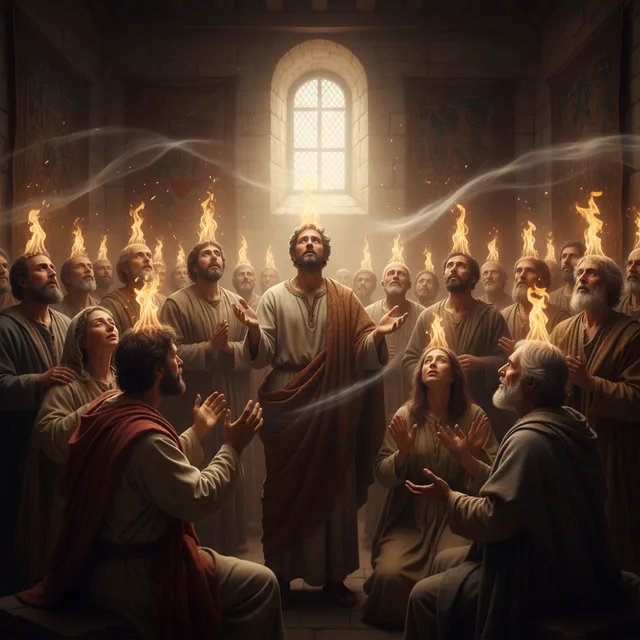
Pentecost
The Holy Spirit descends with tongues of fire, empowering believers to witness.
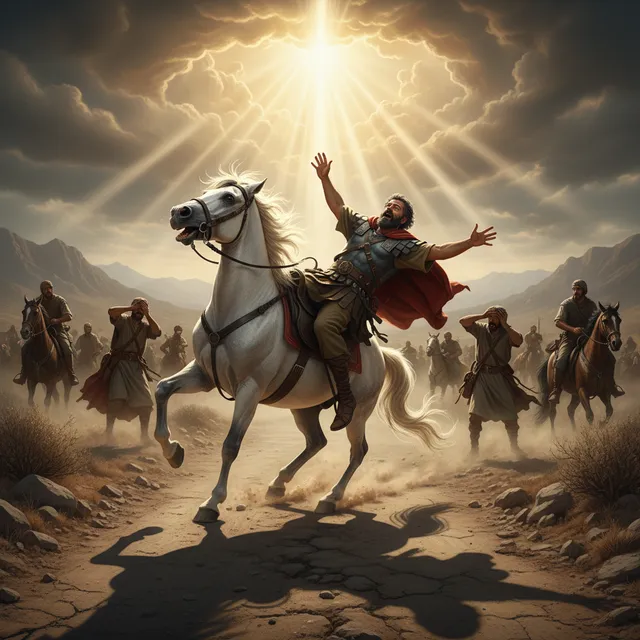
Paul's Conversion
Saul the persecutor encounters Christ and becomes Paul the apostle.
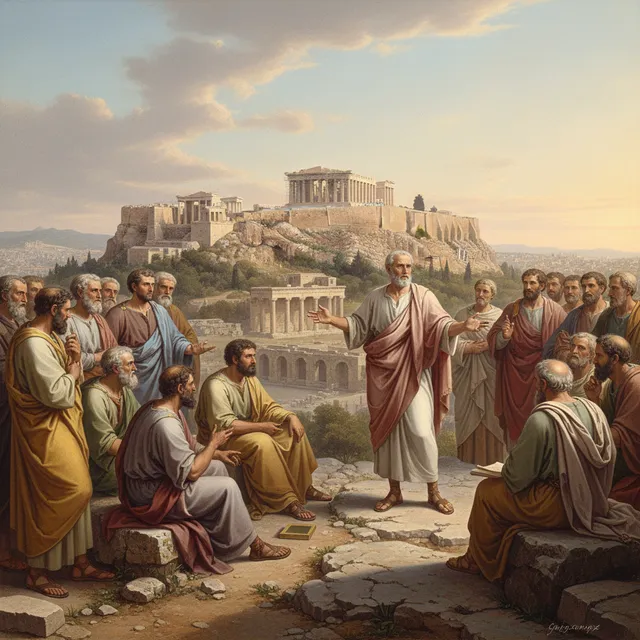
Mars Hill Sermon
Paul addresses Greek philosophers about the unknown God in Athens.
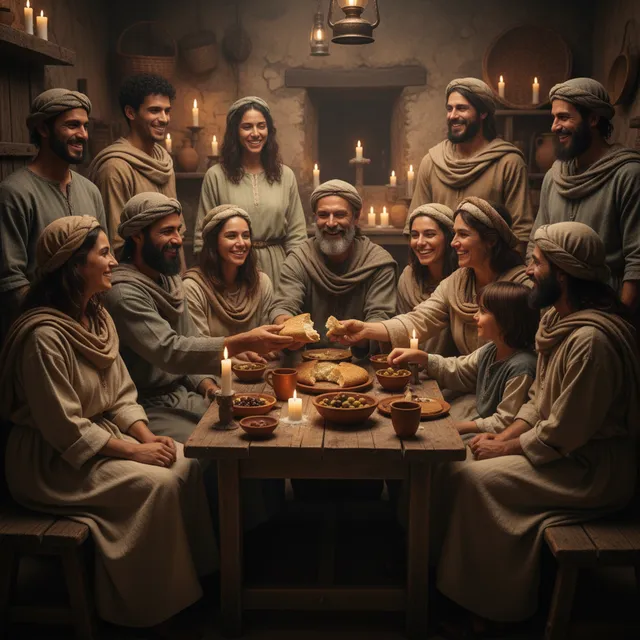
Early Church Fellowship
Believers devoted to teaching, fellowship, breaking bread, and prayer.

Shipwreck at Malta
Paul survives shipwreck on his journey to Rome, witnessing to all aboard.

Group Bible Study
Community study deepens understanding of Acts through shared insights.
Join Our Acts Study Community
Experience the Spirit's power for witness today
What You'll Get
- Chapter-by-chapter study guides for all 28 chapters
- Analysis of all major sermons and speeches
- Maps and guides to Paul's three missionary journeys
- Early church practices study for application today
"Acts became personal when I realized the same Spirit who empowered Peter and Paul is at work in my life. Bible Way's study helped me see that ordinary people can do extraordinary things when filled with God's Spirit."
Marcus T.
Youth pastor, Houston TX
Frequently Asked Questions About Acts Bible Study
Clear answers to common questions about the Book of Acts
Who wrote the Book of Acts and when was it written?
The Book of Acts was written by Luke, a physician and companion of the apostle Paul. Luke is the only Gentile author of any New Testament book. He identifies himself indirectly through the "we" passages (Acts 16:10-17; 20:5-21:18; 27:1-28:16) where he accompanied Paul on portions of his journeys. Acts is the second volume of a two-part work - the first being the Gospel of Luke - both addressed to "Theophilus" (Luke 1:3; Acts 1:1). Most scholars date Acts to around AD 62, shortly after the events at the end of the book, since Luke doesn't mention Paul's death (AD 67), the destruction of Jerusalem (AD 70), or the Neronian persecution (AD 64-68). This early date suggests Luke wrote while Paul was still under house arrest in Rome, giving us an eyewitness account of the early church's first three decades.
What is the main purpose of the Book of Acts?
Acts serves multiple purposes that scholars continue to discuss. Primarily, Luke provides a historical account of how the Christian movement spread from Jerusalem to Rome, fulfilling Jesus' commission in Acts 1:8. Acts also serves as an apologetic work, defending Christianity to Roman authorities by showing believers as law-abiding citizens and Paul's innocence before Roman courts. Theologically, Acts demonstrates that the Gentile mission was God's plan from the beginning, not a deviation from Jewish faith. It shows the Holy Spirit as the driving force behind the church's expansion - hence it's often called "Acts of the Holy Spirit" rather than "Acts of the Apostles." For the church today, Acts provides patterns for community life, worship, leadership, mission, and handling conflict that remain relevant.
What happened at Pentecost in Acts 2?
Pentecost was a Jewish harvest festival occurring 50 days after Passover. In Acts 2, it became the birthday of the Christian church. About 120 believers were gathered in Jerusalem when suddenly "a sound like the blowing of a violent wind came from heaven" and "they saw what seemed to be tongues of fire that separated and came to rest on each of them" (2:2-3). Filled with the Holy Spirit, they began speaking in languages they had never learned - languages that visiting Jews from across the Roman Empire could understand. Peter explained this as fulfillment of Joel's prophecy about God's Spirit being poured out on all people (Joel 2:28-32). His sermon proclaimed Jesus as Messiah, risen from the dead, and called hearers to repent and be baptized. About 3,000 people responded and were baptized that day. Pentecost marks the Spirit's permanent indwelling of believers and empowerment for witness.
What were Paul's three missionary journeys?
Paul conducted three major missionary journeys that established churches across the Roman Empire. The First Journey (Acts 13-14, c. AD 47-49) took Paul and Barnabas through Cyprus and southern Asia Minor (modern Turkey), including Pisidian Antioch, Iconium, Lystra, and Derbe. The Second Journey (Acts 15:36-18:22, c. AD 50-52) expanded into Europe: Paul and Silas traveled through Asia Minor, received the Macedonian call, and established churches in Philippi, Thessalonica, Berea, Athens, and Corinth. The Third Journey (Acts 18:23-21:17, c. AD 53-57) focused on strengthening established churches, with an extended stay in Ephesus lasting nearly three years. Each journey faced opposition - from Jewish leaders, pagan crowds, and local authorities - yet resulted in flourishing communities of faith. Paul's journey to Rome as a prisoner (chapters 27-28) is sometimes considered a fourth journey.
What was the significance of the Jerusalem Council in Acts 15?
The Jerusalem Council (Acts 15) was arguably the most important meeting in church history, resolving whether Gentile converts must become Jews (through circumcision and law-keeping) to be saved. Some Jewish believers argued Gentiles must "be circumcised and required to keep the law of Moses" (15:5). After much debate, Peter testified how God gave the Spirit to uncircumcised Gentiles at Cornelius's house. James, Jerusalem's leader, cited Amos 9:11-12 showing God always planned to include Gentiles. The council's decision was revolutionary: salvation is by grace through faith alone, not works of the law. They asked Gentiles only to abstain from food sacrificed to idols, blood, strangled animals, and sexual immorality - practical measures for fellowship between Jewish and Gentile believers. This decision preserved gospel freedom and enabled Christianity's global expansion without requiring Gentiles to become culturally Jewish.
What does Acts teach about the Holy Spirit?
Acts is fundamentally a book about the Holy Spirit's work - mentioned over 50 times. Key teachings include: (1) The Spirit empowers believers for witness (1:8) - this is His primary purpose in Acts. (2) The Spirit is poured out on all believers regardless of ethnicity, gender, or social status (2:17-18). (3) The Spirit guides the church's mission - directing Philip to the Ethiopian (8:29), sending Peter to Cornelius (10:19), calling Barnabas and Saul (13:2), and leading Paul's journeys (16:6-7). (4) The Spirit enables bold preaching even under persecution (4:31). (5) The Spirit confirms God's acceptance of Gentiles by falling on them as on Jewish believers (10:44-47; 11:15-17). (6) The Spirit provides supernatural signs and wonders that authenticate the gospel message. (7) The Spirit creates unity in the church (4:32). Acts shows the Spirit as a person who speaks, sends, forbids, and can be lied to (5:3) - not merely a force or influence.
How did the early church handle persecution?
The early church faced constant opposition yet responded in ways that only spread the gospel further. When Peter and John were arrested, the church gathered to pray - not for deliverance but for boldness to keep preaching (4:29-31). When Stephen was martyred, the resulting persecution scattered believers who "preached the word wherever they went" (8:4). Saul's persecution campaign was interrupted by his own conversion to become the gospel's greatest missionary. When Herod killed James and imprisoned Peter, the church prayed earnestly (12:5), and God delivered Peter miraculously. Paul and Silas sang hymns in prison at Philippi, leading to the jailer's conversion (16:25-34). Throughout Acts, believers counted suffering for Christ an honor (5:41), refused to stop preaching despite threats (5:29), and saw opposition as an opportunity for witness. Their example shows that the gospel advances not despite persecution but often through it.
What was the early church like according to Acts 2:42-47?
Acts 2:42-47 provides the foundational portrait of Christian community life. The early believers devoted themselves to four things: (1) The apostles' teaching - they prioritized learning doctrine and Scripture. (2) Fellowship (koinonia) - they shared life together in deep community. (3) Breaking of bread - both communion and shared meals. (4) Prayer - corporate intercession was central. The results were remarkable: everyone was "filled with awe" (2:43), signs and wonders occurred, believers "had everything in common" (2:44) and sold possessions to help those in need. They met daily in the temple courts (public worship) and from house to house (intimate fellowship), "ate together with glad and sincere hearts, praising God" (2:46-47). The outcome? "The Lord added to their number daily those who were being saved." This pattern - teaching, fellowship, communion, and prayer - remains the model for healthy church life today.
Why does Acts end so abruptly with Paul under house arrest?
Acts ends with Paul in Rome for two years, "proclaiming the kingdom of God and teaching about the Lord Jesus Christ - with all boldness and without hindrance" (28:31). This seemingly incomplete ending is actually deliberate and significant. First, Luke may have completed Acts before Paul's trial concluded (supporting an early AD 62 date). Second, the ending fulfills Acts 1:8 - the gospel has reached "the ends of the earth" (Rome, the empire's capital). Third, "without hindrance" emphasizes that despite chains, the gospel cannot be bound. Fourth, the open ending suggests the mission continues - we are all living in "Acts chapter 29." The book doesn't end with Paul's biography complete because Acts is not primarily about Paul but about the unstoppable advance of God's kingdom through His Spirit-empowered people. The story continues through every generation of believers until Christ returns.
How is the Gospel of Luke connected to Acts?
Luke and Acts form a two-volume work by the same author, totaling more words than Paul's letters combined - making Luke the New Testament's most prolific writer. Both are addressed to "most excellent Theophilus" (Luke 1:3; Acts 1:1), likely a Roman official or patron. Acts 1:1 explicitly refers to Luke's Gospel as "my former book" about "all that Jesus began to do and teach." The key word is "began" - Acts continues what Jesus started through His Spirit and church. The Gospel ends where Acts begins: Jesus' ascension (Luke 24:50-51; Acts 1:9-11). Themes connect seamlessly: prayer, the Spirit, concern for marginalized peoples, Jerusalem's centrality, and God's sovereign plan. Luke's Gospel shows Jesus' journey to Jerusalem; Acts shows the gospel's journey from Jerusalem to Rome. Together they tell the complete story of salvation history from Jesus' birth through the church's establishment - essentially a single narrative in two parts.
What can we learn from Paul's sermon at Mars Hill (Acts 17)?
Paul's sermon at the Areopagus (Mars Hill) in Athens is a masterclass in contextual evangelism. Rather than starting with Jewish Scripture (his usual approach), Paul began where his pagan audience was: their own altar "to an unknown god" and their poets' writings ("We are his offspring" - 17:28). Key principles emerge: (1) Know your audience - Paul "walked around and looked carefully" at Athenian religion (17:23). (2) Find common ground - he acknowledged their religiosity and quoted their literature. (3) Correct wrong thinking graciously - idolatry, false concepts of God. (4) Proclaim core gospel truths - God as Creator, Jesus' resurrection, coming judgment. (5) Call for response - "Now he commands all people everywhere to repent" (17:30). The response was mixed: some sneered, some wanted to hear more, and "some believed" (17:32-34). Paul didn't compromise the message but contextualized its presentation - a model for reaching secular, pluralistic cultures today.
What are the best commentaries and resources for studying Acts?
For accessible yet thorough study, F.F. Bruce's "The Book of Acts" (NICNT) remains a classic. Darrell Bock's two-volume commentary (BECNT) provides comprehensive evangelical scholarship. For application, Ajith Fernando's "Acts" (NIVAC) bridges ancient text and modern practice. John Stott's "The Message of Acts" (BST) offers pastoral insight. I. Howard Marshall's "Acts" (Tyndale) is excellent for beginners. For advanced study, C.K. Barrett's two-volume ICC commentary rewards careful readers, as does Ben Witherington III's socio-rhetorical approach. Craig Keener's four-volume commentary provides exhaustive background information. The Bible Project offers excellent video overviews. For maps of Paul's journeys, the ESV Study Bible and Zondervan Atlas of the Bible are invaluable. Bible Way draws from these scholarly resources to provide accessible study guides that help ordinary believers engage Acts deeply without requiring seminary training.
Helpful External Resources
Trusted resources for deeper Acts Bible study
Bible Gateway
Acts commentary with multiple translations and study tools
biblegateway.comBible Project
Visual overview of Acts with animated explanations
bibleproject.comGotQuestions.org
Common questions about Acts answered biblically
gotquestions.orgBlue Letter Bible
Original language tools and verse-by-verse study
blueletterbible.orgChristianity Today
Articles on Acts and early church history
christianitytoday.comBibleHub
Parallel translations, commentaries, and concordance
biblehub.comGospel Coalition
Scholarly articles on Acts themes and theology
thegospelcoalition.orgESV Study Bible
Scholarly introduction and notes on Acts
esv.orgRelated Bible Studies
Romans Study
Paul's gospel explained systematically
John Study
Jesus the Son of God revealed
Revelation Study
The church's ultimate triumph
Exodus Study
God delivers His people
Explore More Bible Studies
Ready to Begin Your Acts Bible Study?
Experience the explosive birth of the church through the Holy Spirit's power. Acts is not ancient history - it's a blueprint for Spirit-empowered living that transforms lives today. From Pentecost's flames to Paul preaching in Rome, witness how ordinary believers became world-changers. The same Spirit who empowered Peter, Stephen, and Paul is available to you. Download Bible Way today and begin your journey through Acts with chapter-by-chapter guides, sermon analysis, and missionary journey maps. You will receive power when the Holy Spirit comes on you - and you will be His witnesses.