
Studying Daniel's Prophecies
Believers discovering the detailed accuracy of Daniel's historical prophecies.
Biblical prophecy reveals God's sovereign control over history and His redemptive plan for humanity. A Bible study on prophecy takes you through Scripture's amazing predictions - many already fulfilled with perfect accuracy, others pointing to events yet to come. Whether you're fascinated by fulfilled Messianic prophecies, seeking to understand end times teaching, or wanting to interpret the prophetic books correctly, our comprehensive Bible study resources will guide you through this profound topic with biblical balance and scholarly depth.
Understanding prophecy strengthens faith, reveals God's plan, and prepares us for the future. Explore our comprehensive features designed to help you understand prophetic Scripture.
Study hundreds of prophecies already fulfilled in Scripture, demonstrating God's perfect foreknowledge and the Bible's divine inspiration.
Explore what the Bible reveals about the last days, Christ's return, and the ultimate culmination of God's redemptive plan.
Discover over 300 Old Testament prophecies fulfilled by Jesus Christ, confirming His identity as the promised Messiah.
Journey through Daniel, Isaiah, Ezekiel, Revelation, and other prophetic writings that reveal God's sovereign plan.
Understand the prophetic significance of Israel's history, restoration, and future role in God's end-times plan.
Learn to recognize prophetic signs in current events while maintaining proper biblical interpretation and balance.
See how believers are discovering God's prophetic plan through intentional Scripture study
Believers discovering the detailed accuracy of Daniel's historical prophecies.

Exploring how Jesus fulfilled hundreds of Old Testament predictions.

Small groups navigating the book of Revelation together with biblical guidance.

Understanding Israel's prophetic significance past, present, and future.
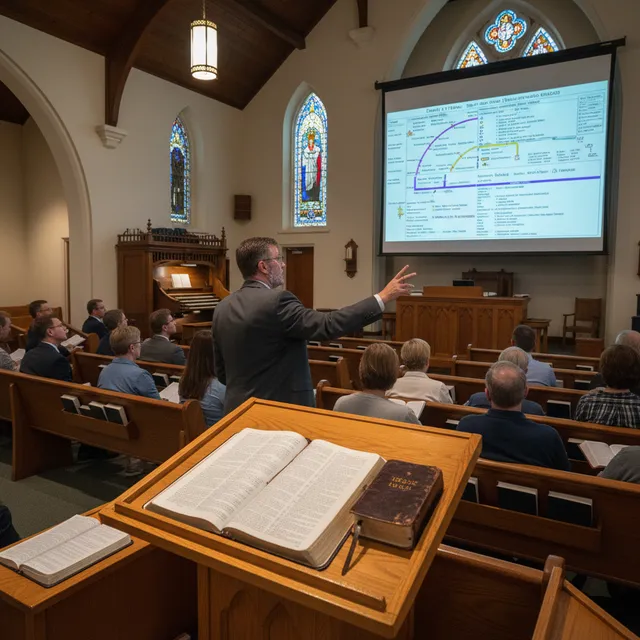
Churches teaching biblical prophecy in balanced, Christ-centered ways.

Individuals growing in understanding of God's prophetic Word.
Comprehensive biblical studies covering every aspect of prophecy. Combine with our Revelation Bible study for deeper understanding of end times.
Foundations for interpreting prophetic Scripture correctly
Old Testament predictions fulfilled by Jesus Christ
What Scripture reveals about the future
Deep studies in the prophetic writings
Real testimonials from believers transformed by studying biblical prophecy
"Bible Way's prophecy study transformed how I teach this often-confusing subject. The balanced approach, clear explanations, and focus on Christ made prophecy accessible and practical for my entire congregation."
"We were hesitant to lead a prophecy study - it can be so divisive. But this resource kept us grounded in Scripture without getting lost in speculation. Our group grew tremendously in understanding God's plan."
"Finally, a prophecy study that's scholarly yet accessible, comprehensive yet balanced. It answers the hard questions while maintaining humility about what Scripture doesn't make clear. Highly recommended."
Everything you need to understand biblical prophecy. Access alongside our online Bible study platform.
Visual guide showing 50+ Old Testament prophecies fulfilled by Jesus with Scripture references.
Comprehensive timeline of Daniel's visions with historical fulfillments and future prophecies.
Chapter-by-chapter guide through Revelation with cross-references and interpretation notes.
Fair comparison of major eschatological positions with Scripture support for each view.
Glossary of prophetic terms: rapture, tribulation, millennium, and more explained biblically.
Geographic study of prophetic events related to Israel, Jerusalem, and the Middle East.
A Bible study on prophecy reveals that approximately 27% of Scripture contains prophetic content - making prophecy essential to understanding God's Word. The purpose of biblical prophecy is multifaceted: it demonstrates God's sovereignty over history, proves the divine inspiration of Scripture through fulfilled predictions, reveals God's redemptive plan culminating in Christ, and calls believers to holy living in light of future events. The remarkable accuracy of fulfilled prophecy - from Babylon's fall to Christ's birth, ministry, death, and resurrection - provides confident assurance that unfulfilled prophecy will be accomplished with equal precision.
Scripture teaches that "the testimony of Jesus is the spirit of prophecy" (Revelation 19:10). This means Christ is the central theme of all biblical prophecy - His first coming fulfilled hundreds of predictions, and His second coming will complete God's prophetic program. Studying prophecy should never produce fear, speculation, or date-setting. Instead, it should inspire worship of our sovereign God, confident hope in His promises, and holy living as we await Christ's return. Whether exploring Daniel's visions, strengthening faith through fulfilled prophecy, or understanding end times events, our prophecy studies maintain biblical balance while providing scholarly depth.
Whether you're new to prophecy or seeking deeper understanding, discover God's plan. Great for new believers and experienced students alike.
"I avoided prophecy for years - it seemed too confusing and controversial. Bible Way's balanced approach changed everything. Now I understand how prophecy points to Christ and why it matters for my faith. The fulfilled prophecy evidence alone transformed my confidence in Scripture."
Michael R.
Software Engineer, Austin
Common questions about biblical prophecy
Biblical prophecy is divine revelation about future events and God's messages to His people. It encompasses two aspects: foretelling (predicting the future) and forthtelling (proclaiming God's truth). Approximately 27% of the Bible contains prophetic content, making it essential to understanding Scripture. Prophecy matters for several reasons: it demonstrates God's sovereignty over all history, proves the Bible's divine inspiration through fulfilled predictions, reveals God's redemptive plan culminating in Christ, and calls believers to holy living. Over 2,000 prophecies have already been fulfilled with perfect accuracy - from the rise and fall of kingdoms to specific details about the Messiah. This track record gives us confidence that unfulfilled prophecy will be accomplished with equal precision. Studying prophecy strengthens faith, provides hope, and helps us understand where history is heading according to God's plan.
Jesus fulfilled over 300 Old Testament prophecies - a statistical impossibility unless He truly was the promised Messiah. The most significant include: His virgin birth (Isaiah 7:14), birth in Bethlehem (Micah 5:2), flight to Egypt (Hosea 11:1), ministry in Galilee (Isaiah 9:1-2), triumphal entry on a donkey (Zechariah 9:9), betrayal for 30 pieces of silver (Zechariah 11:12-13), crucifixion details including piercing of hands and feet, garments divided by lots, and no bones broken (Psalm 22, Isaiah 53), death among criminals yet buried in rich man's tomb (Isaiah 53:9, 12), and resurrection (Psalm 16:10). Mathematician Peter Stoner calculated the probability of one person fulfilling just 8 of these prophecies as 1 in 10^17 (one hundred quadrillion). Fulfilling 48 prophecies: 1 in 10^157. Jesus fulfilled over 300. This mathematical evidence demonstrates beyond reasonable doubt that Jesus is who He claimed to be and that Scripture is divinely inspired.
Interpreting prophecy requires careful attention to context, genre, and biblical principles. Key guidelines include: First, interpret literally unless context clearly indicates symbolic language. Many prophecies were fulfilled literally (Bethlehem birth, crucifixion details), guiding our approach to unfulfilled ones. Second, recognize that some prophecy uses symbolic imagery - beasts, numbers, colors - requiring comparison with Scripture's own explanations (Daniel 7, Revelation often explains its symbols). Third, consider historical context: what did it mean to the original audience? Fourth, look for the Christocentric focus - Revelation 19:10 states "the testimony of Jesus is the spirit of prophecy." Fifth, compare Scripture with Scripture - later revelation often clarifies earlier prophecy. Sixth, distinguish between near and far fulfillment - some prophecies had immediate partial fulfillment and future complete fulfillment. Seventh, maintain humility about details Scripture doesn't make clear, avoiding speculation. Good prophecy study focuses on what is clearly revealed, not dates or details God hasn't disclosed.
Scripture reveals a comprehensive picture of end times events, though Christians differ on timing and sequence. Key elements include: Signs preceding Christ's return - wars, earthquakes, famines, false prophets, gospel preached worldwide, increasing wickedness (Matthew 24). The rapture - believers meeting Christ in the air (1 Thessalonians 4:16-17). A period of tribulation - unprecedented distress on earth (Daniel 12:1, Matthew 24:21). Rise of the Antichrist - a world leader opposing God (2 Thessalonians 2, Revelation 13). Christ's visible return - every eye will see Him (Revelation 1:7, Matthew 24:30). The Battle of Armageddon (Revelation 16:16, 19:11-21). A millennial kingdom - Christ's earthly reign (Revelation 20). Final judgment at the Great White Throne (Revelation 20:11-15). New heaven and new earth - God's eternal dwelling with His people (Revelation 21-22). While Christians hold different views on the sequence (premillennial, amillennial, postmillennial) and rapture timing (pre-, mid-, post-tribulation), all agree that Christ will return, evil will be judged, and God's people will dwell with Him forever.
Revelation (Greek: apokalupsis, meaning "unveiling") is primarily a revelation of Jesus Christ (1:1) - not merely future events but the glorified Lord Himself. Written by the apostle John around 95 AD, it addresses seven churches in Asia Minor while revealing God's plan for history's culmination. Understanding Revelation requires: recognizing its genre as apocalyptic literature using symbolic imagery common in that genre; noting that it often interprets its own symbols; reading it alongside Old Testament prophecy (especially Daniel, Ezekiel, Zechariah); focusing on the main themes rather than getting lost in details; and keeping Christ central - He is the Lamb worthy to open the scroll (ch. 5), the victorious King (ch. 19), and the one making all things new (ch. 21-22). Major themes include: Christ's sovereignty over history, the church's perseverance through tribulation, God's judgment on evil, Satan's ultimate defeat, and the glorious future awaiting believers. The book's purpose is to encourage faithful endurance (1:3 promises blessing to those who read and keep it), not to satisfy curiosity about timing. It assures believers that regardless of present suffering, Christ wins.
Daniel's prophecies provide an astonishing overview of world history from the Babylonian Empire to Christ's eternal kingdom. In chapter 2, Nebuchadnezzar's dream reveals four successive kingdoms (Babylon, Medo-Persia, Greece, Rome) followed by God's everlasting kingdom. Daniel 7 parallels this with four beasts representing the same empires. These prophecies were written in the 6th century BC but accurately describe events centuries later - Alexander's conquest of Persia (chapter 8), the division of his kingdom, and even the Maccabean revolt (chapter 11). Most remarkably, Daniel 9:24-27 predicts the exact timing of Messiah's coming and death. Starting from Artaxerxes' decree to rebuild Jerusalem (445 BC), Daniel's "seventy weeks" (490 years using prophetic years) culminate precisely when Jesus entered Jerusalem and was "cut off" (crucified). This mathematical precision demonstrates supernatural inspiration. Daniel also prophesies end-times events including the tribulation period, Antichrist's reign, and Israel's restoration. Jesus quoted Daniel extensively in His Olivet Discourse (Matthew 24). Understanding Daniel is essential for interpreting biblical prophecy as a whole.
Israel occupies a central role in biblical prophecy from Genesis to Revelation. God made unconditional promises to Abraham and his descendants (Genesis 12, 15, 17) that remain valid. Key prophetic themes regarding Israel include: the scattering and preservation of the Jewish people among nations (Deuteronomy 28, Ezekiel 36) - remarkably fulfilled throughout history; the return to the land (Isaiah 11:11-12, Ezekiel 37) - partially fulfilled in 1948 and continuing; future national salvation as Israel recognizes their Messiah (Zechariah 12:10, Romans 11:25-27); Jerusalem's significance in end-times events (Zechariah 12-14); and Israel's role in the millennial kingdom. The modern restoration of Israel after nearly 2,000 years of dispersion is unprecedented in human history and seen by many as prophetic fulfillment. While Christians differ on specifics, Scripture clearly indicates God has not abandoned His promises to Israel (Romans 11:1-2). The church has not replaced Israel but is grafted into God's covenant people. Understanding Israel's prophetic significance helps interpret major portions of both Old and New Testament prophecy.
The rapture refers to the catching up of believers to meet Christ in the air, described in 1 Thessalonians 4:16-17: "For the Lord himself will descend from heaven with a cry of command... And the dead in Christ will rise first. Then we who are alive, who are left, will be caught up together with them in the clouds to meet the Lord in the air." The Greek word "harpazo" (caught up) means to seize or snatch away suddenly. This event involves: Christ's descent from heaven, resurrection of dead believers, transformation of living believers (1 Corinthians 15:51-52), and reunion with Christ. Christians hold different views on timing relative to the tribulation: pretribulation (before), midtribulation (middle), and posttribulation (after). Each position has scriptural arguments. Pretribulationists emphasize passages about deliverance from wrath (1 Thessalonians 5:9); posttribulationists note Jesus's statements about gathering His elect after tribulation (Matthew 24:29-31). Despite disagreement on timing, all Bible-believing Christians affirm the rapture will occur as promised. Jesus taught us to be ready at any moment (Matthew 24:42-44), living in watchful holiness regardless of when this blessed hope is fulfilled.
The Antichrist is a future world leader who will oppose God and deceive humanity during the end times. Scripture uses various titles: "man of lawlessness" (2 Thessalonians 2:3), "the beast" (Revelation 13), and implies his nature through "antichrist" (1 John 2:18). Characteristics revealed in Scripture include: he will oppose and exalt himself above God (2 Thessalonians 2:4); perform counterfeit miracles (2 Thessalonians 2:9); make a covenant with Israel but break it (Daniel 9:27); demand worship and persecute those who refuse (Revelation 13:7-8, 15); implement an economic system requiring his mark (Revelation 13:16-17); and ultimately be destroyed by Christ at His coming (2 Thessalonians 2:8, Revelation 19:20). Scripture warns against premature identification - throughout history, many candidates have been wrongly named. The restrainer (likely the Holy Spirit working through the church) currently holds back his full manifestation (2 Thessalonians 2:6-7). When revealed, he will initially appear as a peace-maker and problem-solver, deceiving many. Rather than speculation about identity, believers are called to spiritual discernment, knowing Scripture's warnings about deception, and maintaining faithful witness regardless of who leads earthly kingdoms.
Studying prophecy should produce practical transformation, not mere intellectual knowledge or speculation. Scripture indicates several proper responses: First, holy living - "Since everything will be destroyed... what kind of people ought you to be? You ought to live holy and godly lives" (2 Peter 3:11). Knowledge of Christ's return motivates purity. Second, watchfulness - Jesus repeatedly urged "Keep watch" (Matthew 24:42). We should live in readiness, not caught off guard. Third, hope and comfort - Paul taught prophecy "that you may not grieve like the rest of mankind, who have no hope" (1 Thessalonians 4:13). Prophecy provides hope in suffering and loss. Fourth, evangelistic urgency - knowing judgment is coming should motivate sharing the gospel. Fifth, resistance to deception - understanding prophecy helps identify false teachers and movements. Sixth, worship - seeing God's sovereignty over all history produces awe and praise. Seventh, patient endurance - Revelation repeatedly encourages perseverance, knowing God wins. Prophecy study that breeds fear, date-setting, withdrawal from society, or mere curiosity has missed the point. The purpose is transformed living: "Everyone who has this hope in Him purifies himself" (1 John 3:3).
Jesus and the apostles described signs characterizing the last days. In Matthew 24, Jesus mentioned: wars and rumors of wars, famines and earthquakes (birth pains), persecution of believers, false prophets deceiving many, increased wickedness and love growing cold, and the gospel preached worldwide. Paul added: people will be lovers of self, money, and pleasure rather than God; holding a form of godliness but denying its power (2 Timothy 3:1-5). Other signs include: scoffers questioning Christ's return (2 Peter 3:3-4), apostasy within the church (1 Timothy 4:1), knowledge increasing (Daniel 12:4), and Israel's restoration (often seen in 1948's events). However, several cautions are necessary: Jesus said "no one knows the day or hour" (Matthew 24:36); similar signs have occurred throughout history; and these signs indicate the general season, not specific timing. The early church lived in expectation of Christ's return - every generation should do likewise. Rather than obsessing over sign-watching, Jesus calls us to faithful stewardship: "Occupy till I come" (Luke 19:13 KJV). We live as if He could return today while planning as if we have lifetimes to serve.
The millennium refers to the thousand-year period mentioned six times in Revelation 20, during which Satan is bound and Christ reigns with resurrected saints. Christians hold three main views: Premillennialism teaches Christ returns before the millennium to establish a literal earthly kingdom. This was the dominant view in the early church and has strong support in Old Testament kingdom prophecies. Amillennialism interprets the thousand years symbolically, representing the church age between Christ's two advents. Satan's binding means his defeat at the cross, limiting his deception of nations. This view became dominant through Augustine and remains common in Reformed traditions. Postmillennialism sees Christ returning after a golden age of Christian influence, with the gospel progressively transforming society. Each position has godly, scholarly proponents who affirm Scripture's authority. They differ on whether certain passages should be read literally or symbolically, how Old Testament promises to Israel relate to the church, and how to sequence events in Revelation. These are secondary issues - all agree that Christ reigns, will return visibly, will judge the living and dead, and will make all things new. Unity in essentials, liberty in interpretations, charity in all.
Additional external resources to deepen your study of biblical prophecy
Encyclopedia articles on biblical prophecy and prophetic books
biblegateway.com →Biblical answers to prophecy and end times questions
gotquestions.org →Articles on end times from evangelical scholars
thegospelcoalition.org →Contemporary articles on prophecy and eschatology
christianitytoday.com →