
Personal Scripture Meditation
Finding strength and peace through daily Bible reading during treatment.
A cancer diagnosis changes everything. Suddenly, mortality feels real, medical terms become daily vocabulary, and fear can seem overwhelming. But in the midst of this storm, Scripture offers an anchor. A Bible study for cancer patients provides hope that doesn't depend on scan results, peace that transcends circumstances, and the comforting presence of a God who promises to never leave or forsake us. Whether you're newly diagnosed, in active treatment, in remission, or supporting a loved one with cancer, our comprehensive Bible study resources will guide you to the hope and comfort found only in God's Word.
Cancer challenges everything - your health, your plans, your faith. But Scripture provides what no treatment can: eternal perspective, spiritual comfort, and a hope that death itself cannot destroy. Explore our comprehensive features designed to support you through every stage of your cancer journey.
When you first hear the word "cancer," fear and uncertainty flood in. Scripture offers an anchor for your soul - hope that doesn't depend on test results but on God's unchanging character.
Chemotherapy, radiation, surgery - treatment is grueling. Discover Scripture that sustains you through the physical challenges and provides spiritual strength for each session.
What does the Bible really say about praying for healing? Learn to pray with faith while trusting God's wisdom, whether healing comes now or in eternity.
Paul discovered that God's power is made perfect in weakness. Cancer strips away our self-sufficiency, creating space for God's strength to shine through our vulnerability.
No one should face cancer alone. Scripture calls the church to bear one another's burdens and provides a framework for meaningful spiritual support.
The future feels uncertain with cancer. But God offers a peace that "surpasses all understanding" - not because we know outcomes, but because we know Him.
See how cancer patients and their families are finding hope and strength through Scripture
Finding strength and peace through daily Bible reading during treatment.

Cancer patients studying Scripture together for mutual encouragement.

Family members sharing Scripture and prayer with their loved ones.

Using Scripture during chemotherapy sessions for spiritual strength.
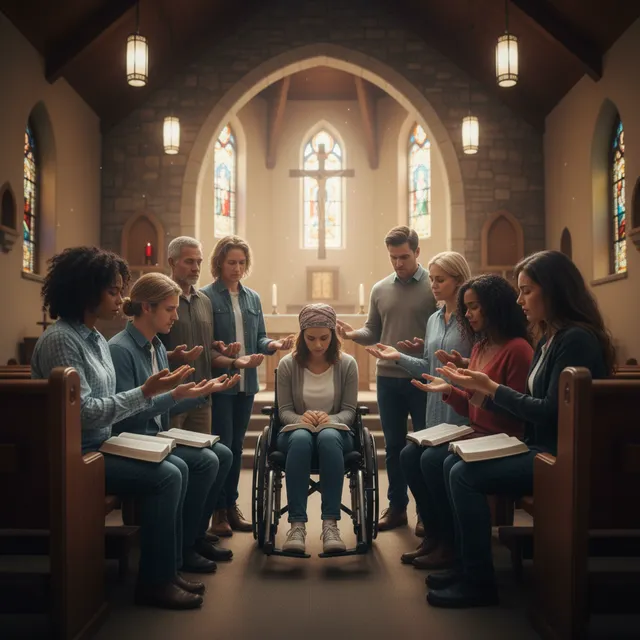
Church community gathering to pray for those fighting cancer.
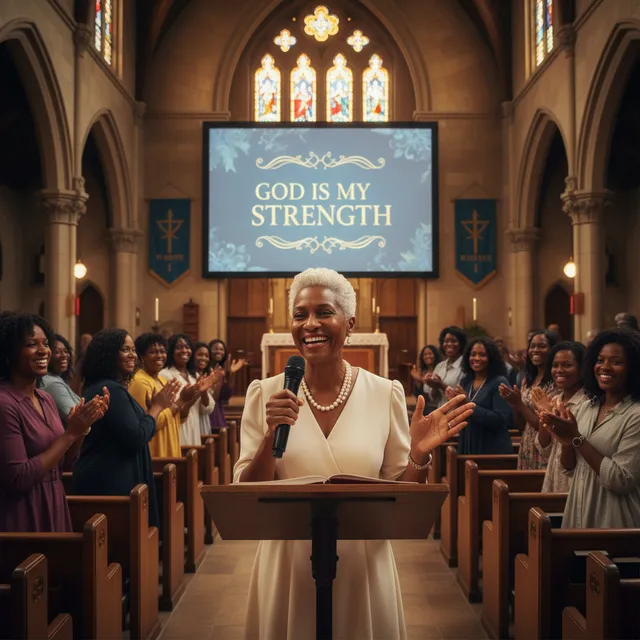
Cancer survivors sharing how faith sustained them through treatment.
Comprehensive biblical studies addressing every aspect of the cancer journey. Pair with our healing Bible study for complete spiritual support.
Understanding that God doesn't abandon us when cancer strikes
Stories of those who experienced health crises and God's faithfulness
Biblical guidance for praying through cancer
Discovering meaning and hope in the cancer journey
Real testimonials from those who found hope through Scripture during their cancer journey
"When I was diagnosed with breast cancer, my faith was the first thing I grabbed onto. Bible Way's study for cancer patients helped me find Scripture that spoke directly to my fears. During chemotherapy, I would listen to healing verses and feel God's presence in the treatment room. I'm now five years cancer-free, and my faith is stronger than ever."
"Our church uses these cancer Bible study resources for our cancer support group. The material doesn't offer false promises but provides genuine biblical hope. It acknowledges the fear and pain while pointing to God's faithfulness. Many in our group have said this study was their lifeline during treatment."
"When David was diagnosed with stage 4 cancer, we were devastated. This Bible study helped us process our emotions biblically. We learned that faith isn't about having all the answers but about trusting God in the unknown. Whether David has months or years, we face each day together with Scripture as our guide."
Everything you need for Bible study during your cancer journey. Access alongside our online Bible study platform.
Scripture and prayers for the first days after hearing "you have cancer" - when you need God's Word most urgently.
Specific prayers and verses for chemotherapy, radiation, and surgery days - Scripture to meditate on during procedures.
Guided journal combining Scripture meditation with space to process your emotions, prayers, and God's faithfulness.
Biblical resources for those caring for cancer patients - how to provide spiritual support while caring for yourself.
Comprehensive collection of Bible verses about healing, hope, and God's presence - organized for easy reference.
Biblical encouragement for when cancer persists, treatments fail, or the prognosis is difficult to hear.
A Bible study for cancer patients reveals that God has always been close to those who suffer. When King Hezekiah received a terminal diagnosis, he turned his face to the wall and prayed, and God extended his life (2 Kings 20). Job, though not with cancer, experienced devastating physical suffering, and his honest wrestling with God in the midst of it provides a model for cancer patients today. Paul had a "thorn in the flesh" that God chose not to remove, teaching Paul that "My grace is sufficient for you, for my power is made perfect in weakness" (2 Corinthians 12:9). These stories don't promise that every cancer patient will be healed in this life, but they show a God who is present, powerful, and purposeful in the midst of illness. Combined with our prayer Bible study, you'll learn how to bring your cancer journey honestly before God.
The Bible's most famous passage for those facing mortality is Psalm 23. "Even though I walk through the valley of the shadow of death, I will fear no evil, for you are with me." Notice: David doesn't walk around the valley or over it - he walks through it. Cancer often feels like walking through that valley. But the promise isn't that we won't face the valley; it's that we won't face it alone. God's rod and staff comfort us. His goodness and mercy follow us. And ultimately, we "will dwell in the house of the Lord forever." For the Christian cancer patient, death isn't the end but a doorway into eternal life with Christ. This doesn't minimize the pain of cancer or the desire to live, but it provides a hope that transcends the disease.
Whether you're newly diagnosed or years into your cancer journey, Scripture offers comfort you won't find anywhere else. Perfect for daily Bible study and cancer support groups.
"I was diagnosed with stage 3 colon cancer at 42. The Bible Way cancer study became my daily anchor. When I couldn't sleep at 3 AM, I would open the app and read Scripture about God's presence. I'm now in remission, but even more precious than healing was learning that God was with me all along."
Robert K.
Cancer Survivor, Chicago
Common questions about faith, healing, and cancer
While the Bible doesn't mention cancer specifically by that name, Scripture speaks extensively about illness, suffering, and God's response to both. Psalm 34:18 promises that "The Lord is close to the brokenhearted and saves those who are crushed in spirit." Psalm 147:3 declares, "He heals the brokenhearted and binds up their wounds." Jesus spent much of His ministry healing the sick, showing God's compassion for those who suffer physically. James 5:14-15 instructs believers to call church elders to pray for the sick, promising that "the prayer offered in faith will make the sick person well." At the same time, Scripture is honest that not everyone receives physical healing in this life - Paul's thorn remained despite prayer (2 Corinthians 12:7-9), and faithful believers throughout history have died from illness. What Scripture consistently teaches is that God is present with those who suffer, His grace is sufficient, and ultimate healing is certain for believers in the resurrection. Cancer patients can approach God with confidence, knowing He cares deeply about their suffering.
This is one of the most difficult questions cancer patients face, and Scripture doesn't give us a simple answer. What the Bible makes clear is that cancer is NOT a punishment from God for specific sins. When Jesus' disciples asked about a man born blind - "who sinned, this man or his parents?" - Jesus replied, "Neither" (John 9:1-3). We live in a fallen world where disease, including cancer, exists because sin entered creation. Random cellular mutations affect Christians and non-Christians alike. Job, described as "blameless and upright" (Job 1:1), suffered catastrophically through no fault of his own. What God does promise is His presence in suffering (Psalm 23:4), His ability to work good even from terrible circumstances (Romans 8:28), and His sufficient grace for whatever we face (2 Corinthians 12:9). Many cancer patients testify that while they wouldn't have chosen cancer, they've experienced God's presence and grown spiritually through the journey in ways they couldn't have otherwise. The "why" question often has no satisfying answer this side of heaven, but we can trust God's character even when we don't understand His ways.
Scripture encourages bold, honest prayer about cancer. First, pray for healing - James 5:14-16 instructs calling church elders to pray for healing with anointing oil. Jesus taught that we should ask, seek, and knock (Matthew 7:7-8). It's appropriate to ask God for complete healing. Second, pray for strength - Paul asked God for healing but received "My grace is sufficient for you" (2 Corinthians 12:9). Sometimes strength to endure is the answer. Third, pray honestly - the Psalms model raw, honest prayer. It's okay to tell God you're scared, angry, or confused. Psalm 22 begins "My God, my God, why have you forsaken me?" - and Jesus prayed these words on the cross. Fourth, pray with others - invite your church family to pray with and for you. Fifth, submit to God's will as Jesus did in Gethsemane: "Not my will, but yours be done" (Luke 22:42). This isn't passive resignation but active trust that God's wisdom exceeds ours. Sixth, thank God for His presence regardless of outcome. Prayer during cancer isn't about having the right words but about bringing your heart to a God who loves you.
Several passages are particularly meaningful for those facing cancer: Psalm 23 - "Even though I walk through the valley of the shadow of death, I will fear no evil, for you are with me." This promises God's presence through life's darkest valley. Isaiah 41:10 - "Fear not, for I am with you; be not dismayed, for I am your God; I will strengthen you, I will help you." A powerful promise of God's help. Romans 8:38-39 - Nothing, not even death, can separate us from God's love. Philippians 4:6-7 - God offers peace that surpasses understanding when we bring our anxieties to Him in prayer. 2 Corinthians 12:9 - God's power is made perfect in weakness. Psalm 46:1 - "God is our refuge and strength, a very present help in trouble." Jeremiah 29:11 - God has plans for good, for a future and a hope. Hebrews 13:5 - "I will never leave you nor forsake you." Revelation 21:4 - The promise of no more death, mourning, crying, or pain. Joshua 1:9 - "Be strong and courageous. Do not be frightened, for the Lord your God is with you wherever you go."
Feeling angry is a normal human response to cancer, and Scripture shows us that bringing that anger to God is actually an act of faith. The Psalms are filled with raw complaints to God - "Why, O Lord, do you stand far away?" (Psalm 10:1), "How long, O Lord? Will you forget me forever?" (Psalm 13:1). Job expressed bitter complaints, yet God said Job spoke rightly (Job 42:7). Jeremiah accused God of deceiving him (Jeremiah 20:7). These honest expressions are included in Scripture because God can handle our anger. What matters is bringing it to God rather than away from Him. Anger brought to God in prayer can become part of the healing process. God would rather have your honest anger than polite distance. As you express your feelings to Him, you may find, like the Psalmists often did, that the anger shifts to trust as you remember God's character. Psalm 13 begins in despair but ends "I will sing to the Lord, for he has dealt bountifully with me." Bring your anger to God - He's big enough to handle it and tender enough to comfort you through it.
Philippians 4:6-7 offers a remarkable promise: "Do not be anxious about anything, but in everything by prayer and supplication with thanksgiving let your requests be made known to God. And the peace of God, which surpasses all understanding, will guard your hearts and your minds in Christ Jesus." Notice Paul doesn't say peace that makes sense - but peace that surpasses understanding. This peace isn't based on good test results but on God's presence and promises. Practical ways to experience this peace during treatment: Meditate on Scripture before and during procedures - many patients use the Bible Way app with headphones during chemotherapy. Focus on God's presence rather than the procedure - "You are with me" (Psalm 23:4). Surround yourself with praying believers. Keep a gratitude journal alongside your treatment journal. Remember that God is working even when you can't see or feel it. Take one day at a time - "Sufficient for the day is its own trouble" (Matthew 6:34). Accept that fear and peace can coexist - peace doesn't mean absence of fear but the presence of God in the midst of it.
This is perhaps the most difficult question cancer patients face. Scripture is honest that not everyone receives physical healing in this life. Paul prayed three times for his "thorn" to be removed, and God's answer was "My grace is sufficient for you" (2 Corinthians 12:9). Faithful believers throughout Scripture died from illness or other causes. What Scripture promises to every believer is: God's presence in suffering - "I will never leave you nor forsake you" (Hebrews 13:5). Sufficient grace for whatever comes - "My grace is sufficient for you." Ultimate healing guaranteed - in the resurrection, there will be "no more death or mourning or crying or pain" (Revelation 21:4). For believers, death is not the end but a doorway. Paul wrote, "For to me to live is Christ, and to die is gain... I am hard pressed between the two. My desire is to depart and be with Christ, for that is far better" (Philippians 1:21-23). This doesn't minimize the desire for physical healing or the grief when it doesn't come. But it provides a hope that transcends even death. Whether you're healed in this life or the next, you win.
Supporting someone with cancer is sacred work. Scripture provides guidance: Be present - sometimes just sitting with someone means more than words. Job's friends did well when they "sat with him on the ground seven days and seven nights, and no one spoke a word to him" (Job 2:13). It was only when they started explaining suffering that they failed. Listen more than you speak - avoid clichés like "everything happens for a reason." Validate their feelings rather than trying to fix them. Pray with them and for them - ask how you can pray specifically. Offer practical help - meals, rides to appointments, childcare. Send encouraging Scripture - but be sensitive to timing and their spiritual state. Don't disappear after the initial diagnosis - long-term cancer treatment is isolating. Respect their process - everyone handles cancer differently. Care for yourself too - Galatians 6:9 warns against growing weary in doing good. Let them grieve and be honest - don't require positivity. Point them to Christ without preaching at them. Your consistent, loving presence is a powerful testimony to God's love.
Romans 8:28 promises that "in all things God works for the good of those who love him." This doesn't mean cancer is good - it's not. Cancer is part of the brokenness of our fallen world. But God has the power to bring good from even terrible circumstances. Joseph told his brothers who sold him into slavery, "You intended to harm me, but God intended it for good" (Genesis 50:20). Many cancer patients testify to ways God has worked through their diagnosis: Deepened faith and relationship with God. Reprioritized life - focusing on what truly matters. Reconciled relationships. Ministry to other cancer patients - 2 Corinthians 1:4 says God "comforts us in all our affliction, so that we may be able to comfort those who are in any affliction, with the comfort with which we ourselves are comforted by God." Witness to medical staff and others watching how you face cancer. Growth in character and trust. None of this makes cancer worth having - but it shows God's redemptive power. You don't have to see the good to trust it exists. Some purposes may only become clear later or in eternity. Your role is to trust God's character even when you can't see His plan.
Talking to children about a parent's cancer is challenging but important. Scripture calls us to truth-telling while also providing age-appropriate care. Be honest at their level - children sense when something is wrong, and secrecy creates anxiety. Use simple, accurate language appropriate to their age. Reassure them of your love and that cancer isn't contagious or their fault. Children often have magical thinking that they somehow caused bad things. Let them ask questions and express feelings - don't require them to be strong. Maintain routines as much as possible for security. Include them appropriately - sometimes children want to help, whether making cards or helping with small tasks. Model faith without faking it - it's okay for children to see you pray and trust God while also being sad. This teaches authentic faith. Connect them with other trusted adults who can support them. If age-appropriate, read Scripture together about God's presence and care. Books like "Because I Love You" by Max Lucado can help communicate God's care. Many churches have resources specifically for families facing cancer. Most importantly, let your children see you turn to God in crisis - this models faith that will serve them throughout their lives.
Absolutely yes. Seeking medical treatment is not a lack of faith - it's wisdom. Throughout Scripture, we see God working through human means alongside direct intervention. Luke, who wrote a Gospel and Acts, was a physician (Colossians 4:14). Jesus said, "It is not the healthy who need a doctor, but the sick" (Mark 2:17) - acknowledging that sick people rightly seek doctors. Paul advised Timothy to "use a little wine for your stomach" - a medicinal recommendation (1 Timothy 5:23). Isaiah prescribed a poultice for Hezekiah's boil (Isaiah 38:21) even though God was the one healing him. God gave humans the intelligence to develop medicine, and using that medicine honors Him. At the same time, our ultimate trust is in God, not medicine. Medicine is a means God may use, but healing comes from Him. You can both receive chemotherapy and pray for healing - these aren't contradictory but complementary. Some suggest that seeking medical treatment shows lack of faith, but this misunderstands how God often works: through ordinary means like doctors, combined with prayer. Trust God fully while also using the medical resources He's provided. Your doctors' skill is itself a gift from God.
A terminal diagnosis is devastating, but Scripture offers hope that transcends any prognosis. For believers, death is not the end but a transition. Paul wrote, "For to me to live is Christ, and to die is gain... My desire is to depart and be with Christ, for that is far better" (Philippians 1:21-23). Jesus promised the thief on the cross, "Today you will be with me in paradise" (Luke 23:43). 2 Corinthians 5:8 says to be absent from the body is to be present with the Lord. Revelation 21:4 promises a future with no more death, mourning, crying, or pain. This hope is not escapism - it's reality for those in Christ. Jesus' resurrection proves that death is defeated. Meanwhile, medical prognoses are not always accurate - God can extend life beyond any prediction, as He did for Hezekiah. But even if He doesn't, death leads to glory. The time we have is precious regardless of length. Focus on living fully whatever days God gives, on relationships and faith and service. Many who've faced terminal diagnoses testify that those final months, lived in God's presence with clear priorities, were among the most meaningful of their lives. Our salvation Bible study ensures you're confident of eternity with Christ.
Additional external resources combining faith and cancer support
Comprehensive collection of Bible verses about healing and God's comfort
biblegateway.com →Biblical perspectives on cancer, suffering, and maintaining faith
gotquestions.org →Comprehensive cancer support resources and patient services
cancer.org →Articles on faith, suffering, and navigating cancer as a Christian
christianitytoday.com →