Baptist Bible Study
Study Scripture the Baptist way - with the Bible as your sole authority, personal faith as your foundation, and believer's baptism as your testimony. Access tools designed for Baptist distinctives: verse-by-verse study, expository teaching, and the evangelical conviction that every believer can encounter God directly through His Word.
Key Takeaways: Baptist Bible Study
Scripture alone (sola scriptura) is the final authority for faith and practice - no creeds above the Bible
Believer's baptism by immersion symbolizes death to sin and resurrection to new life in Christ
Priesthood of all believers means every Christian has direct access to God through Christ
Local church autonomy - each congregation governs itself under the lordship of Christ
Soul competency - individuals are responsible before God to interpret Scripture for themselves
Religious liberty and separation of church and state are foundational Baptist principles
Walk into any Baptist church on Sunday morning and you'll likely see something distinctive: people carrying their own Bibles. Not a shared hymnal with Scripture readings printed inside. Not a prayer book with prescribed passages. Their own, well-worn, personally-annotated Bibles. Many Baptists can tell you exactly where they got their Bible, who gave it to them, and what verses they've underlined over the years.
This isn't accidental. This is Baptist DNA. For over 400 years, Baptists have insisted that every believer can and should read the Bible for themselves, interpret it through the guidance of the Holy Spirit, and apply it to their own lives without requiring a priest, pastor, or institution to mediate between them and God's Word.
The result? A tradition that has produced some of the most Bible-saturated Christians in history. From the great preachers like Charles Spurgeon and Billy Graham, to the millions of Sunday School teachers and daily Bible readers in Baptist churches worldwide, there's something about the Baptist approach that creates deep, personal engagement with Scripture.
What is the Baptist Tradition? A 400-Year Story of Scripture and Freedom
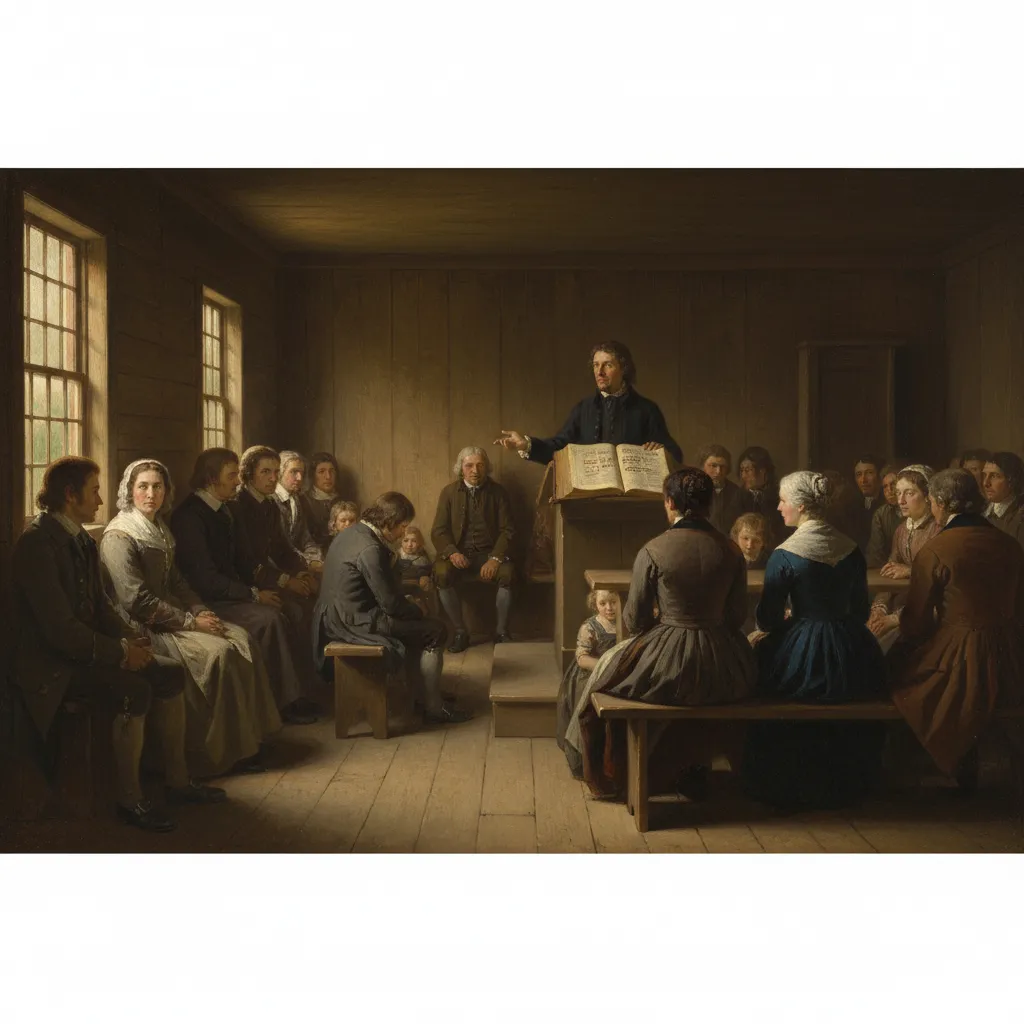
The year was 1609. In Amsterdam, a small group of English Christians gathered around a man named John Smyth. They had fled persecution in England, seeking a place where they could worship according to their conscience. And Smyth had become convinced of something radical: that infant baptism wasn't biblical. That baptism should be reserved for those who had made a conscious, personal decision to follow Christ.
So Smyth did something audacious. He baptized himself (because who else could do it if no properly baptized believer existed?), then baptized the others. It was messy, theologically controversial, and sparked debates that continue to this day. But it was the beginning of the Baptist movement - a movement that would eventually become the largest Protestant denomination in America and influence Christianity worldwide.
Thomas Helwys, one of Smyth's followers, returned to England in 1612 and established the first Baptist church on English soil. He promptly wrote a book demanding religious freedom for all people - including Catholics, Muslims, and heretics. The king threw him in prison, where he likely died. But the ideas wouldn't die. Baptist convictions about soul liberty and religious freedom would later influence the American founding fathers and become enshrined in the First Amendment.
Roger Williams established the first Baptist church in America in Providence, Rhode Island, around 1638. The colony became a refuge for those seeking religious liberty. Meanwhile, Baptist churches spread throughout the American colonies, particularly in the South where the Great Awakening of the 1700s sparked massive Baptist growth.
Today, there are over 100 million Baptists worldwide. The Southern Baptist Convention alone has roughly 47,000 churches and 13 million members, making it the largest Protestant denomination in the United States. But Baptists are incredibly diverse - American Baptist Churches USA, National Baptist Convention, Progressive National Baptist Convention, Independent Baptists, Reformed Baptists, and many others all carry the Baptist name while differing significantly in theology, politics, and practice.
What unites them? A commitment to the authority of Scripture, believer's baptism by immersion, the autonomy of the local church, the priesthood of all believers, and religious liberty. These distinctives emerged in the 1600s and have remained remarkably consistent across centuries and continents. As Baptists often say: "We have no creed but the Bible."
Baptist Distinctives: What Makes Baptist Bible Study Unique?
Ask a Baptist what makes them Baptist, and you'll likely hear about the "Baptist distinctives" - a set of principles that have defined the tradition since its earliest days. These aren't just theological abstractions. They fundamentally shape how Baptists approach Scripture and what Bible study looks like in Baptist churches.
1. Biblical Authority (Sola Scriptura)
The Bible alone is the final authority for faith and practice. Not church tradition. Not denominational statements. Not pastoral opinion. The Bible. Period. This means Baptist Bible study emphasizes going directly to the text, examining what Scripture actually says, and letting it speak for itself.
The Baptist Faith and Message (2000), the Southern Baptist Convention's confessional statement, puts it this way: "The Holy Bible was written by men divinely inspired and is God's revelation of Himself to man. It is a perfect treasure of divine instruction. It has God for its author, salvation for its end, and truth, without any mixture of error, for its matter."
2. Believer's Baptism by Immersion
This is the distinctive that gives Baptists their name. Unlike traditions that practice infant baptism, Baptists insist that baptism is only for those who have made a personal decision to follow Christ. And it must be by immersion - being fully submerged in water - because that's what "baptizo" (the Greek word) literally means, and because immersion best symbolizes dying with Christ and rising to new life (Romans 6:3-4).
Baptist Bible study often focuses heavily on passages about baptism: Matthew 28:19, Acts 2:38-41, Acts 8:36-38, Romans 6:1-11. Understanding baptism's meaning in Scripture is fundamental to Baptist identity.
3. Priesthood of All Believers
Every Christian has direct access to God through Jesus Christ - no human mediator required. This democratizes Bible study. You don't need a priest to explain Scripture to you. You don't need clergy approval to interpret the Bible. The Holy Spirit illuminates Scripture for every believer who reads it faithfully.
This is why Baptists historically emphasized literacy and education. If every believer can approach God directly, every believer needs to be able to read God's Word directly. The emphasis on personal Bible reading in Baptist churches flows directly from this doctrine.
4. Autonomy of the Local Church
Each Baptist church governs itself. There's no bishop, no hierarchy, no denominational headquarters that can dictate what a local congregation does. Churches cooperate voluntarily through conventions and associations, but each congregation makes its own decisions about doctrine, practice, and leadership.
This means Baptist Bible studies can vary significantly from church to church. One congregation might use LifeWay curriculum, another might do verse-by-verse expository study, another might follow a topical approach. Local autonomy creates diversity and flexibility.
5. Soul Competency and Religious Liberty
Every person is competent to deal with God directly and is responsible for their own religious choices. No government, church, or institution can coerce religious belief. Baptists have historically been fierce defenders of religious freedom - not just for themselves but for everyone.
This shapes Bible study by emphasizing personal responsibility. You must read and interpret Scripture for yourself. You must make your own decisions about what you believe. No one can believe for you. This creates both freedom and accountability in Baptist Bible study.

How Baptist Bible Study Works in Practice
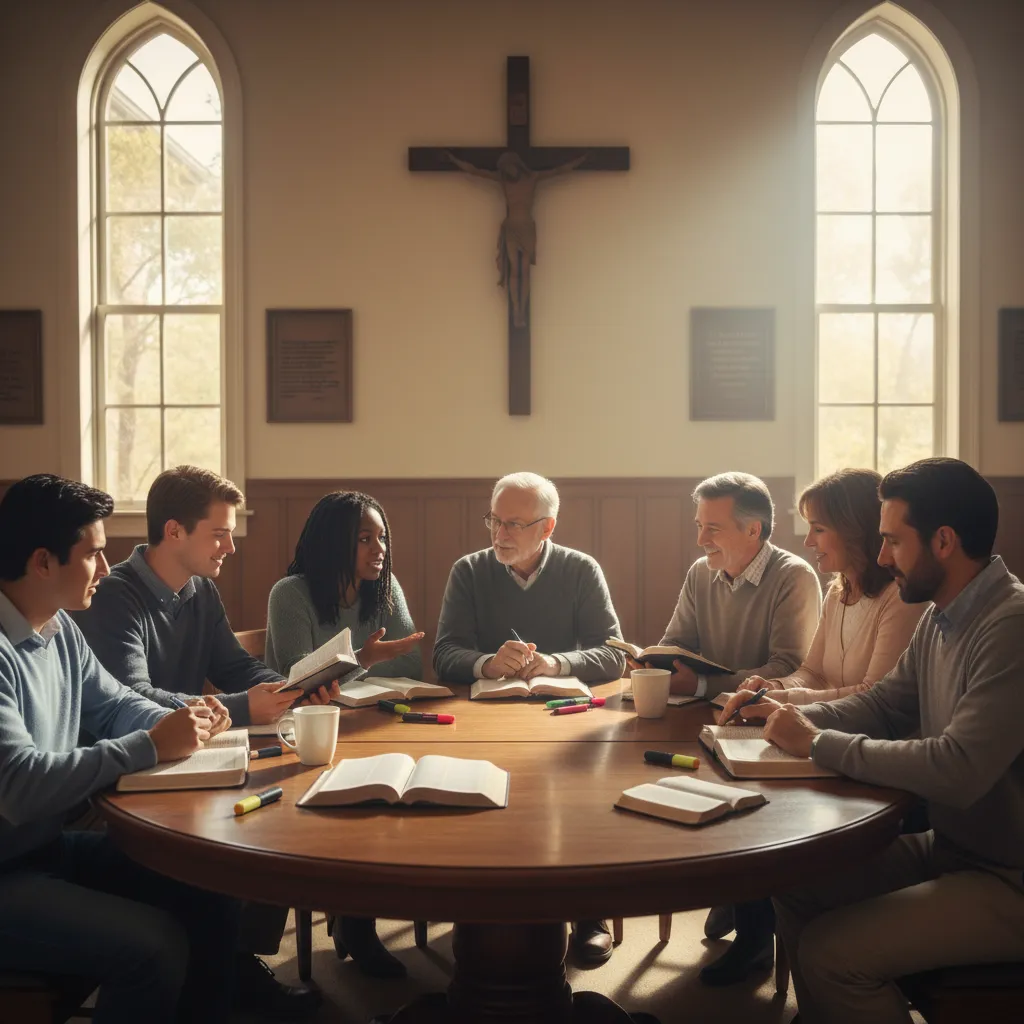
If you've ever attended Sunday School at a Baptist church, you've experienced one of the most distinctive aspects of Baptist life. Sunday School isn't just for children - it's age-graded Bible study for everyone, from toddlers to seniors. Most Baptist churches offer classes before or after the main worship service, dividing the congregation into smaller groups for in-depth Scripture study.
The typical Baptist Sunday School class follows curriculum - often from LifeWay Christian Resources (the SBC's publishing arm), though many churches use The Gospel Project, Explore the Bible, or independent publishers. These curricula guide teachers and students through books of the Bible, theological topics, or character studies over weeks or months.
But Sunday School is just the beginning. Baptist churches often offer midweek Bible studies, women's Bible studies, men's Bible studies, home groups, and one-on-one discipleship focused on Scripture. The emphasis is always on getting people into God's Word - not just hearing it preached on Sunday, but studying it throughout the week.
Expository Preaching and Verse-by-Verse Study
Many Baptist churches practice expository preaching - systematically working through books of the Bible, explaining each passage in context, and applying it to contemporary life. This isn't topical preaching where the pastor picks a theme and finds verses to support it. It's letting Scripture set the agenda, preaching what the text says rather than what the preacher wants to say.
Charles Spurgeon, the great 19th-century Baptist preacher, exemplified this approach. His sermons were deeply rooted in biblical text, rich with exposition, and practically applied. Today, preachers like John MacArthur, David Platt, and many Southern Baptist pastors continue this tradition of verse-by-verse, book-by-book preaching.
Small Groups and Fellowship
Baptist Bible study thrives in small group settings. Home groups, connect groups, life groups - whatever the name, the format is similar: 8-15 people gathering weekly in homes to study Scripture together, share prayer requests, and build community. This reflects the Baptist emphasis on the local congregation as a gathered community of believers.
These groups often use study guides or video curriculum, with discussion questions prompting group members to share insights, ask questions, and apply Scripture to their lives. The goal isn't just information transfer - it's transformation through community engagement with God's Word.
Discipleship and Scripture Memory
Baptists take seriously the Great Commission's call to "make disciples" (Matthew 28:19-20). Discipleship often includes systematic Bible study, Scripture memorization, and one-on-one mentoring. Programs like the Navigators' Topical Memory System and Baptist-specific discipleship curricula help believers internalize Scripture and grow in faith.
The emphasis on Scripture memory reflects Baptist convictions about the Bible's power. When you've hidden God's Word in your heart (Psalm 119:11), you carry it with you everywhere - available for guidance, comfort, and witness at any moment.
"All Scripture is breathed out by God and profitable for teaching, for reproof, for correction, and for training in righteousness, that the man of God may be complete, equipped for every good work."
- 2 Timothy 3:16-17 (ESV)
Popular Baptist Bible Study Resources
Baptists have produced an enormous amount of Bible study material over the centuries. Here are some of the most popular and influential resources for Baptist Bible study today:
LifeWay Bible Studies
LifeWay Christian Resources, owned by the Southern Baptist Convention, produces the most widely used Baptist curriculum. Series include:
- Explore the Bible - Book-by-book study through Scripture
- The Gospel Project - Christ-centered, chronological Bible study
- Bible Studies for Life - Topical studies addressing real-life issues
- MasterLife - Intensive discipleship curriculum
Popular Baptist Bible Translations
Baptists don't mandate a single Bible translation, but some are particularly popular:
- King James Version (KJV) - Traditional choice, especially in older and Independent Baptist churches
- New International Version (NIV) - Popular for readability and accuracy
- English Standard Version (ESV) - Increasingly popular among Reformed Baptists
- Christian Standard Bible (CSB) - Published by LifeWay, balances accuracy and readability
- New American Standard Bible (NASB) - Valued for literal translation accuracy
Baptist Study Bibles
Several study Bibles cater specifically to Baptist readers:
- The Study Bible for Women - CSB translation with contributions from Baptist women leaders
- The Tony Evans Study Bible - Popular Southern Baptist pastor's commentary
- The MacArthur Study Bible - Reformed Baptist perspective with extensive notes
- The Holman Christian Standard Bible Study Bible - Comprehensive Baptist-produced resource
Digital Resources
Modern Baptist Bible study increasingly happens online and through apps. Bible Way joins resources like the YouVersion Bible App, Blue Letter Bible, and Logos Bible Software in providing digital tools for Scripture study. The emphasis remains the same - getting believers directly into God's Word - but the delivery method has evolved.
Baptist Bible Study Fellowship
Scripture-centered community for believers
What We Offer
- Verse-by-verse expository Bible study
- Multiple translation comparisons for deeper understanding
- Scripture memory tools and reading plans
- Small group discussion resources
"As a deacon and Sunday School teacher, I need tools that help me prepare solid, Scripture-centered lessons. Bible Way gives me verse-by-verse resources that respect Baptist convictions about the Bible's authority."
James T.
Deacon, First Baptist Church
Frequently Asked Questions
Real questions about Baptist Bible study
What makes Baptist Bible study different from other denominations?
Baptist Bible study is distinguished by several key principles. First, sola scriptura - the Bible alone is the final authority, with no church tradition or denominational hierarchy having authority over Scripture. Second, soul competency means every believer is responsible and capable of interpreting Scripture for themselves through the Holy Spirit's guidance. Third, there's strong emphasis on personal Bible reading and memorization, not just hearing it preached. Fourth, Baptist study often uses verse-by-verse expository methods rather than topical approaches. Fifth, the priesthood of all believers means you don't need a priest or special intermediary to understand God's Word. These distinctives create a Bible study culture that's deeply personal, Scripture-centered, and accessible to every believer regardless of education or background.
What Bible translation do Baptists use?
Baptists don't mandate any single translation - local church autonomy means each congregation decides for itself. That said, several translations are particularly popular. The King James Version (KJV) remains beloved, especially in traditional, older, and Independent Baptist churches - many consider it the "gold standard" of English translations. The New International Version (NIV) is widely used for its balance of accuracy and readability. The English Standard Version (ESV) has gained significant ground, especially among Reformed Baptists and younger evangelicals. The Christian Standard Bible (CSB), published by LifeWay, is increasingly popular in SBC churches. The New American Standard Bible (NASB) is valued for its literal, word-for-word accuracy. Most Baptist pastors encourage members to use whatever translation helps them engage with Scripture most effectively, and many recommend comparing multiple translations for deeper understanding.
What is the Baptist Faith and Message?
The Baptist Faith and Message (BFM) is a confessional statement adopted by the Southern Baptist Convention. It's been revised several times (1925, 1963, 2000), with the current BFM 2000 being the most widely referenced version. It outlines Baptist beliefs on Scripture, God, salvation, the church, and other doctrines. However - and this is crucial - Baptists don't consider the BFM to have authority over the Bible. As the preamble states, "confessions are only guides in interpretation, having no authority over the conscience." The BFM summarizes what most Southern Baptists believe, but Scripture remains the final authority. Other Baptist groups have their own confessional statements (like the New Hampshire Confession or the 1689 London Baptist Confession for Reformed Baptists), and many Baptist churches have no formal confession beyond "the Bible is our only rule of faith and practice."
What is believer's baptism and why do Baptists emphasize it?
Believer's baptism is the practice of baptizing only those who have made a personal, conscious decision to follow Jesus Christ - as opposed to baptizing infants. Baptists believe this is the biblical pattern: in the New Testament, people heard the gospel, believed, and then were baptized (Acts 2:41, 8:12, 16:31-33). Baptism is an outward symbol of an inward reality - it doesn't save you, but it publicly declares that you've already trusted Christ for salvation. The mode is also important: Baptists practice baptism by immersion (fully going under the water), because the Greek word "baptizo" means to dip or immerse, and because immersion best symbolizes what baptism represents - dying to sin (going under), being buried with Christ, and rising to new life (coming up). Romans 6:3-4 is the key text: "We were buried with him by baptism into death, in order that, just as Christ was raised from the dead... we too might walk in newness of life."
How do I start a Baptist Bible study group?
Starting a Baptist Bible study is relatively simple because Baptist polity emphasizes local initiative. First, talk to your pastor - most will be thrilled and can provide resources, meeting space, and promotion. Second, choose your format: Will you use curriculum (LifeWay's Explore the Bible, The Gospel Project, etc.) or study a book verse-by-verse? Third, decide on logistics: home or church, weekly or biweekly, morning or evening. Fourth, recruit participants through church announcements, personal invitation, and social media. Fifth, keep it simple at first - you need Bibles, a meeting space, and willing hearts. Most Baptist groups open with prayer, read the passage together, discuss it using prepared questions or open conversation, and close with prayer requests. Don't feel pressure to have all the answers as a leader - Baptist study emphasizes everyone engaging Scripture together, not one expert lecturing. Resources like LifeWay's SmallGroup.com provide training for new leaders.
What's the difference between Southern Baptist and other Baptist groups?
Baptist diversity can be confusing! The Southern Baptist Convention (SBC) is the largest Protestant denomination in America, generally conservative and evangelical, with strong emphasis on biblical inerrancy and the Great Commission. American Baptist Churches USA (formerly Northern Baptist) tends to be more theologically diverse and moderate. National Baptist Convention and Progressive National Baptist Convention are historically African-American denominations with strong civil rights heritage. Independent Baptists are not affiliated with any convention and can range from fundamentalist to moderate. Reformed Baptists emphasize Calvinist theology (TULIP) and often use the 1689 London Baptist Confession. Free Will Baptists emphasize Arminian theology and human free will in salvation. What unites all these groups? Believer's baptism by immersion, local church autonomy, and the authority of Scripture. What divides them? Views on Calvinism vs. Arminianism, social issues, worship style, and cooperation with other denominations. Despite differences, most Baptists can fellowship around shared core convictions.
Do Baptists follow a lectionary or church calendar?
Generally, no - and this is a significant difference from liturgical traditions like Catholic, Orthodox, or Anglican churches. Most Baptist churches don't follow a lectionary (prescribed readings for each Sunday) or observe the full liturgical calendar. Pastors typically choose their own sermon texts, often preaching through books of the Bible verse-by-verse. That said, many Baptist churches do observe major Christian holidays: Christmas, Easter, and sometimes Advent. Some churches have added Ash Wednesday services or Lenten devotions in recent years. The reasoning behind not using a lectionary goes back to Baptist distinctives: local church autonomy (no outside body tells us what to preach) and sola scriptura (the whole Bible is available for preaching, not just selected portions). Some Baptists argue this allows the Holy Spirit to guide pastors to preach what their congregation needs to hear. Critics note it can lead to neglecting certain parts of Scripture. Bible Way supports both lectionary-based and free-form Bible study approaches.
What is Sunday School and why is it important to Baptists?
Sunday School is age-graded Bible study for the entire church, typically held before or after the main worship service. It originated in 18th-century England to educate working-class children and was adopted enthusiastically by Baptists. Today, Sunday School remains central to Baptist church life for several reasons. First, it provides systematic Bible teaching beyond Sunday sermons - you can go deeper into Scripture in a small group than in a large worship service. Second, it creates community - Sunday School classes become tight-knit groups that support each other through life's challenges. Third, it develops leaders - teaching Sunday School trains laypeople in Bible study and communication skills. Fourth, it accomplishes discipleship - moving people from passive worship attenders to active Bible students. The SBC has invested heavily in Sunday School, with LifeWay producing curriculum for every age group. While some churches have rebranded as "Bible Fellowships" or "Connect Groups," the model of small-group Bible study before worship remains distinctively Baptist.
What resources does LifeWay offer for Baptist Bible study?
LifeWay Christian Resources is the publishing and resource arm of the Southern Baptist Convention, and it offers an enormous range of Bible study materials. For Sunday School: Explore the Bible (verse-by-verse study), Bible Studies for Life (topical life application), and The Gospel Project (Christ-centered chronological study). For women: popular studies by Beth Moore, Priscilla Shirer, Kelly Minter, and Jen Wilkin. For men: studies by Tony Evans, Robby Gallaty, and others. For students: Lifeway Students curriculum and events. For kids: LifeWay Kids curriculum, Vacation Bible School materials, and TeamKID discipleship program. For discipleship: MasterLife intensive training. They also publish study Bibles (CSB Study Bible, She Reads Truth Bible), devotionals, and the Christian Standard Bible translation. Most materials are available in print, digital, and video formats. While LifeWay primarily serves Southern Baptists, their resources are used by churches of many denominations. Access at lifeway.com or through the LifeWay app.
How do Baptists interpret the Bible differently than other Christians?
Baptist hermeneutics (interpretation method) emphasizes several principles. First, the grammatical-historical method: understand what the text meant to its original audience before applying it to today. Second, Scripture interprets Scripture: unclear passages are understood in light of clearer ones. Third, the perspicuity (clarity) of Scripture: the Bible's essential message is understandable to ordinary people, not just scholars. Fourth, the priesthood of believers: every Christian can interpret Scripture through the Holy Spirit's guidance, not just clergy. Fifth, practical application: Bible study should result in changed lives, not just accumulated knowledge. Where Baptists differ from Catholics and Orthodox is the rejection of church tradition as authoritative for interpretation. Where some Baptists differ from other Protestants is on specific doctrines - like baptism (immersion only) and church polity (congregational). Reformed Baptists and Arminian Baptists interpret certain passages differently, especially regarding predestination and free will. Despite interpretive differences, Baptists generally agree on essential doctrines: the Trinity, Christ's deity, salvation by grace through faith, and Scripture's authority.
What's the best way to study the Bible as a Baptist?
Baptist tradition offers several effective approaches to personal and group Bible study. First, systematic reading: follow a reading plan that takes you through the entire Bible (Bible Way offers several). Second, verse-by-verse study: work through a book slowly, examining each passage in context. Third, SOAP method: Scripture (read it), Observation (what does it say?), Application (how does it apply to me?), Prayer (respond to God). Fourth, inductive study: observe the text (who, what, when, where), interpret (what does it mean?), apply (what should I do?). Fifth, Scripture memory: hide God's Word in your heart through memorization. Sixth, compare translations: reading the same passage in KJV, NIV, and ESV reveals nuances. Seventh, use study aids: concordances, commentaries, and Bible dictionaries help with difficult passages. Eighth, study in community: join or lead a small group for accountability and diverse perspectives. The Baptist emphasis on personal responsibility means you need to develop your own consistent practice, not rely solely on Sunday sermons. Daily time in God's Word is the goal.
Why do Baptists emphasize personal salvation and the gospel?
The emphasis on personal salvation is central to Baptist identity and directly shapes Bible study priorities. Baptists believe that every person must make an individual decision to trust Christ for salvation - you can't be saved by your parents' faith, your church membership, or your baptism. This comes from passages like John 3:16 ("whoever believes"), Romans 10:9 ("if you confess... and believe"), and Ephesians 2:8-9 ("by grace through faith"). Because salvation is personal, Baptists are intensely evangelistic - sharing the gospel is priority one. The Southern Baptist Convention's emphasis on missions (International Mission Board, North American Mission Board) flows from this conviction. In Bible study, this means passages about the gospel, salvation, and sharing faith receive significant attention. It also means Baptist study emphasizes application: "What will you do with what you've learned?" The end goal isn't just knowledge - it's transformed lives and people coming to faith in Christ. Every Bible study should ultimately point to the gospel and call for response.
Helpful External Resources
Trusted Baptist Bible study resources
Southern Baptist Convention
Official SBC resources, Baptist Faith and Message, and news
sbc.net →LifeWay Christian Resources
Sunday School curriculum, Bible studies, and books
lifeway.com →Bible Gateway
Multiple translations, study tools, and verse search
biblegateway.com →Got Questions
Biblical answers to faith and doctrine questions
gotquestions.org →North American Mission Board
Church planting resources and evangelism tools
namb.net →Blue Letter Bible
Greek/Hebrew tools, commentaries, and lexicons
blueletterbible.org →Southern Baptist Seminary
Academic resources and theological training
sbts.edu →The Bible Project
Animated videos explaining Bible books and themes
bibleproject.com →Related Bible Studies
New Believers
Foundations of faith
Romans Study
Gospel foundations
Gospel of John
Believe and have life
Salvation Study
Grace through faith
Explore More Bible Studies
Study Scripture the Baptist Way
For over 400 years, Baptists have insisted that every believer can read, understand, and apply God's Word for themselves. Join millions who have discovered the joy of personal Bible study - with Scripture as your sole authority, the Holy Spirit as your guide, and a community of believers walking alongside you.