Old Testament Reading Plan
Journey through all 39 books of the Old Testament. From creation to the prophets, discover God's covenant story and the foundations of the Christian faith.
~310
Days
3
Chapters/Day
15-20
Minutes Daily
929
Total Chapters
Discover the Foundation of Faith: The Old Testament Journey
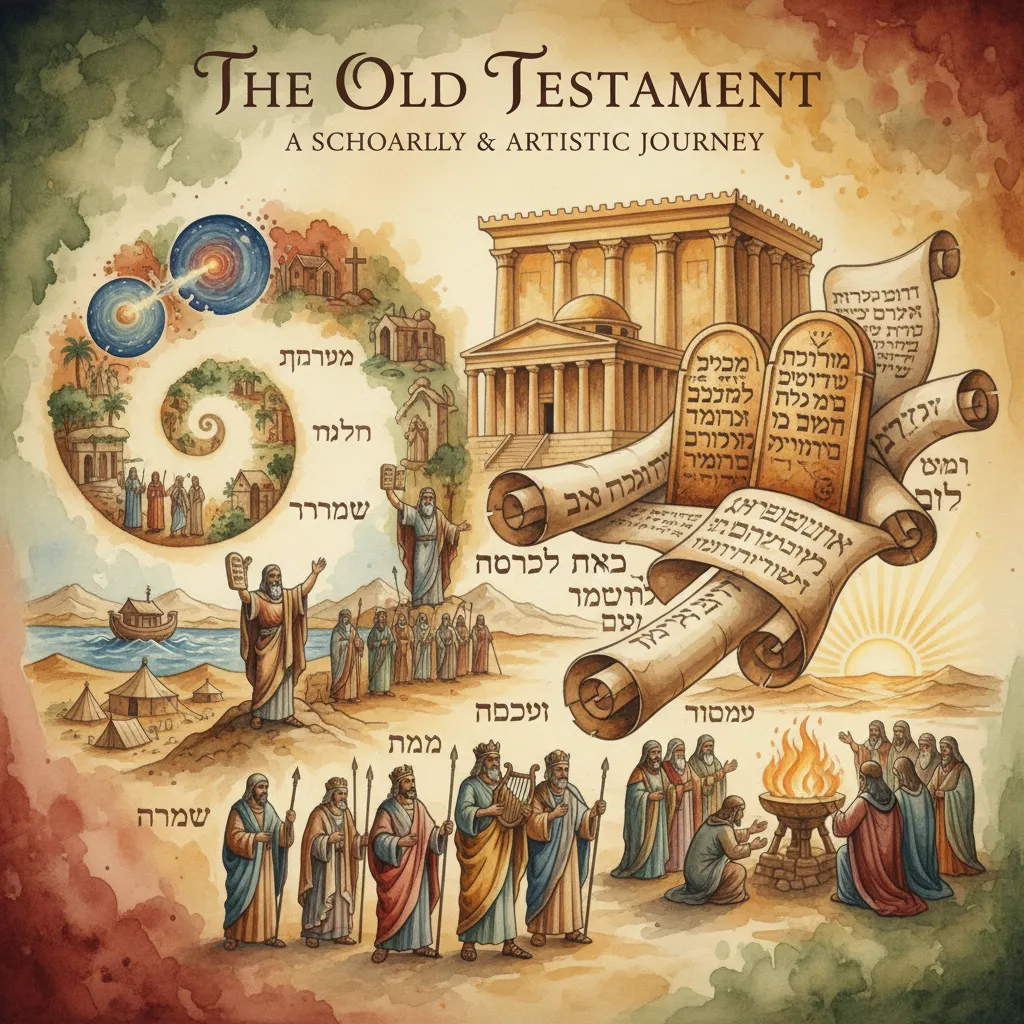
The Old Testament Reading Plan guides you through all 39 books of the Hebrew Scriptures—from the creation account in Genesis to the prophetic expectations in Malachi. These 929 chapters form the foundation upon which the New Testament is built, containing the covenants, prophecies, wisdom, and history that shaped God's people and point toward the coming Messiah.
Key Takeaways
- Complete coverage: Read all 39 books from Genesis to Malachi
- Manageable pace: 3 chapters per day (~15-20 minutes of reading)
- 929 chapters: The entire Old Testament in approximately 310 days
- Foundational understanding: Grasp the context for the New Testament
- Covenant theology: Understand God's promises from Abraham to Christ
- Messianic prophecies: See how the Old Testament points to Jesus
Why Read the Old Testament?
Many Christians know the New Testament well but have only surface familiarity with the Old Testament. Yet understanding the Old Testament transforms your reading of the Gospels and Epistles. When Jesus says "I am the good shepherd," the imagery echoes Psalm 23 and Ezekiel 34. When Paul writes about justification by faith, he's building on Abraham's story in Genesis 15. The Old Testament provides the vocabulary, themes, and expectations that the New Testament fulfills.
What You'll Discover:
- Creation and fall: The origin of humanity, sin, and God's redemption plan
- Patriarchal promises: Abraham, Isaac, Jacob—the covenants that shape history
- Exodus and Law: Israel's deliverance and the Sinai covenant
- Conquest and monarchy: Judges, kings, and the temple
- Wisdom literature: Job, Psalms, Proverbs—poetry and practical wisdom
- Prophetic voices: Isaiah, Jeremiah, Ezekiel, and the twelve minor prophets
- Exile and return: Judgment, hope, and anticipation of the Messiah
Your Journey Through the Old Testament
📚 The Pentateuch (Days 1-62)
Genesis, Exodus, Leviticus, Numbers, Deuteronomy—creation, patriarchs, exodus, law, and wilderness.
⚔️ Historical Books (Days 63-145)
Joshua through Esther—conquest, judges, united and divided kingdoms, exile, and return.
🎶 Wisdom & Poetry (Days 146-227)
Job, Psalms, Proverbs, Ecclesiastes, Song of Solomon—suffering, worship, wisdom, meaning, and love.
🔮 Major Prophets (Days 228-290)
Isaiah, Jeremiah, Lamentations, Ezekiel, Daniel—judgment, hope, visions of restoration and the Messiah.
📬 Minor Prophets (Days 291-310)
Hosea through Malachi—twelve prophets addressing Israel, Judah, and the nations with calls to repentance and promises of future restoration.
Tips for Old Testament Reading
- Get a study Bible: Historical notes and cross-references illuminate difficult passages. The ESV Study Bible, NIV Study Bible, and CSB Study Bible are excellent options.
- Don't skip the "boring" parts: Genealogies connect generations. Laws reveal God's character. Even census numbers show God's faithfulness to His promises.
- Look for Jesus: The Old Testament points forward to Christ. Watch for messianic prophecies, sacrificial imagery, and themes of redemption.
- Understand the context: Knowing the historical situation helps interpret prophetic books. Our Bible character stories provide helpful background.
- Read the Psalms devotionally: These ancient prayers express every human emotion. Let them shape your own prayer life.
- Journal key insights: Write down questions, themes, and connections you notice. You'll see patterns emerge over time.
Enhance Your Old Testament Journey
While this printable plan provides structure, the Bible Way app brings the Old Testament to life. Explore beautifully illustrated Bible character stories that help you understand figures like Moses, David, and Elijah. Access daily devotionals and track your progress with achievements.
Download Bible Way AppWho Should Use This Plan?
- New Testament-familiar believers: Those who know the Gospels and Epistles but want deeper Old Testament understanding
- Jewish-Christian dialogue participants: Those engaging in interfaith conversations
- Seminary students: Building foundational knowledge of Hebrew Scriptures
- Old Testament teachers: Refreshing comprehensive knowledge before teaching
- Those doing two-part study: Pair this with our New Testament Plan for complete coverage
Comparing Old Testament Plan Options
| Plan | Chapters | Duration | Coverage |
|---|---|---|---|
| Old Testament (This Plan) | 929 | ~310 days | Genesis to Malachi |
| New Testament | 260 | ~90 days | Matthew to Revelation |
| One Year Plan | 1,189 | 365 days | Entire Bible |
| Psalms & Proverbs | 181 | 90 days | Wisdom literature only |
Explore More Bible Reading Plans
- One Year Plan — Complete Bible in 365 days
- New Testament Plan — Matthew to Revelation in 90 days
- Chronological Plan — Bible in historical order
- Psalms & Proverbs — Wisdom literature focus
Resources for Old Testament Study
- Bible Gateway — Compare translations and read with commentary
- Bible Hub — Hebrew word studies and verse-by-verse commentary
- Got Questions: Old Testament — Answers to common Old Testament questions
Ready to Begin Your Old Testament Journey?
Scroll down to access your personalized Old Testament Reading Plan. Select your start date, click "Print / Save PDF," and begin discovering the foundational texts of the Christian faith.
"All Scripture is God-breathed and is useful for teaching, rebuking, correcting and training in righteousness." — 2 Timothy 3:16
Frequently Asked Questions About Old Testament Reading
How long does the Old Testament reading plan take?
Our Old Testament reading plan takes approximately 310 days at 3 chapters per day. The Old Testament contains 929 chapters across 39 books, from Genesis through Malachi. At this pace, you'll spend about 15-20 minutes daily reading through the foundational texts of the Christian faith and the Hebrew Scriptures.
What books are included in the Old Testament?
The Old Testament contains 39 books organized into several categories: the Pentateuch (Genesis-Deuteronomy), Historical Books (Joshua-Esther), Wisdom Literature (Job, Psalms, Proverbs, Ecclesiastes, Song of Solomon), Major Prophets (Isaiah, Jeremiah, Lamentations, Ezekiel, Daniel), and Minor Prophets (Hosea-Malachi). Together these books span from creation to approximately 400 BC.
Why focus on just the Old Testament?
Focusing on the Old Testament allows for deep engagement with the foundational texts of Christianity. Many believers are more familiar with the New Testament and benefit from dedicated Old Testament study to understand the covenants, prophecies, and history that form the backdrop for Jesus' ministry. It's also valuable for interfaith dialogue and understanding Jewish Scriptures.
Is the Old Testament difficult to read?
Some parts are challenging—genealogies, laws, and prophetic visions can be dense. However, the Old Testament also contains some of Scripture's most beloved stories (David and Goliath, Daniel in the lion's den), profound poetry (Psalms), and practical wisdom (Proverbs). A good study Bible with notes can help navigate difficult passages.
What's the difference between Old Testament and Hebrew Bible?
The Christian Old Testament and Hebrew Bible (Tanakh) contain the same books but are organized differently. The Hebrew Bible groups books as Torah (Law), Nevi'im (Prophets), and Ketuvim (Writings)—hence the acronym TaNaKh. The Christian Old Testament arranges them by genre: Law, History, Poetry, and Prophecy. Our plan follows the traditional Christian order.
Should I read the Old Testament before the New Testament?
There's value to both approaches. Reading Old Testament first provides historical and theological foundation for understanding Jesus and the New Testament writers. However, many find starting with the Gospels more accessible. Our plan works well for those who've already read the New Testament and want deeper Old Testament knowledge, or for those doing a comprehensive two-part study.
How do I understand prophetic books like Isaiah or Ezekiel?
Prophetic books can be challenging because they address specific historical situations. Tips: use a study Bible with historical context, remember prophets often spoke to their immediate audience AND future generations, look for themes of judgment and restoration, and don't try to decode every symbol on first reading. The Bible Way app's character stories provide helpful context for prophetic figures.
What Bible translation is best for Old Testament reading?
Choose a translation balancing accuracy and readability. Popular options include: ESV or NASB for literal accuracy, NIV for balanced readability, NLT for contemporary language, or CSB as a newer balanced option. For poetry (Psalms, Proverbs), some prefer NKJV or ESV for their literary quality. Compare translations using Bible Gateway or Bible Hub.