Chronological Bible Reading Plan
Read Scripture in the order events actually happened. Experience the biblical timeline from creation to revelation, seeing how God's story unfolds through history.
365
Days
3
Chapters/Day
15-20
Minutes Daily
1189
Total Chapters
Experience Scripture in Historical Order
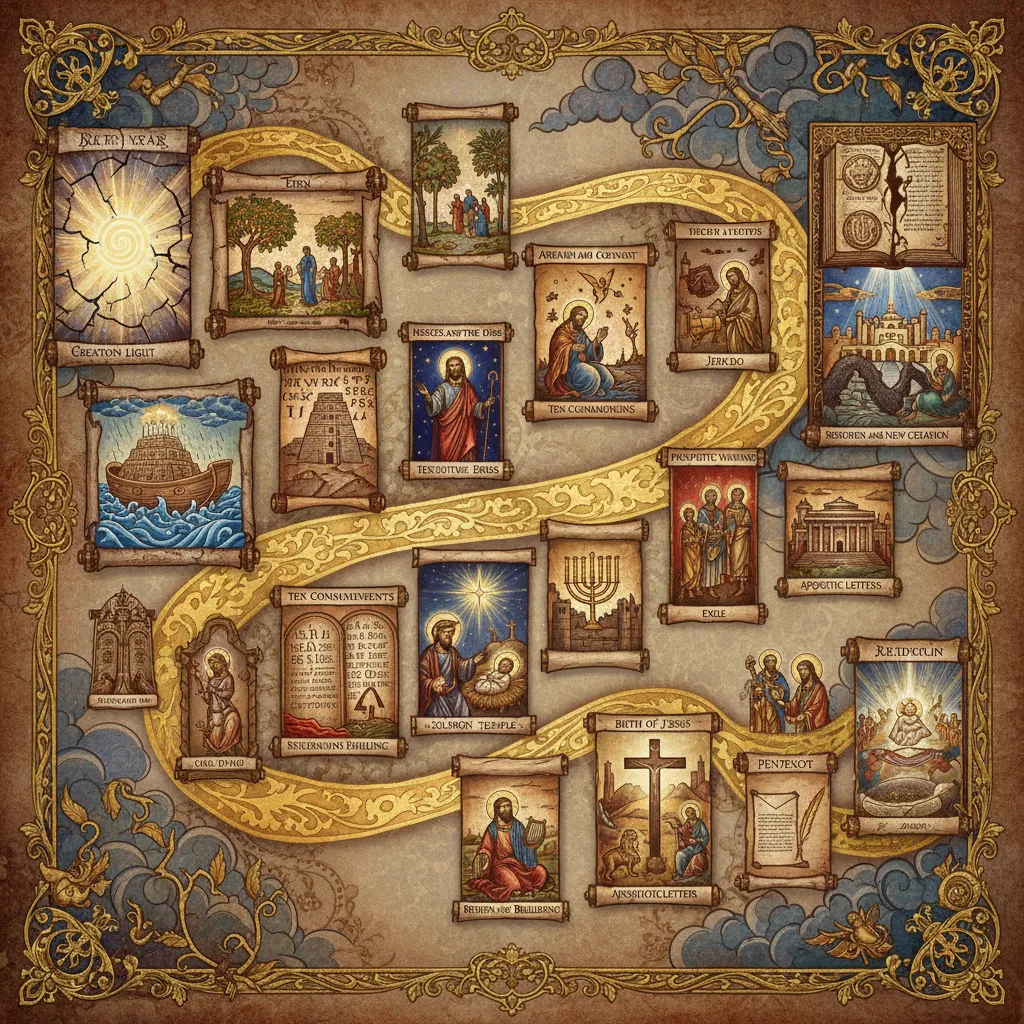
The Chronological Bible Reading Plan transforms how you experience Scripture by arranging passages in the order events actually occurred. Rather than reading books in their traditional sequence, you'll journey through biblical history as it unfolded—from creation through the patriarchs, the exodus, the monarchy, the exile, the life of Jesus, and the early church.
Key Takeaways
- Historical context: Read prophets alongside the kings they addressed
- Timeline clarity: Understand when biblical events occurred relative to each other
- Job placement: Read Job during the patriarchal period where scholars place it
- Psalms in context: Experience David's psalms during his actual life events
- Prophetic connections: See how prophecies relate to contemporary history
- Unified narrative: Grasp the Bible as one continuous story of redemption
Why Read the Bible Chronologically?
Traditional Bible reading (Genesis to Revelation) has tremendous value, but chronological reading offers unique insights. When you read Isaiah during the reign of the kings he addressed, his warnings come alive. When you experience David's psalms of despair while reading about his flight from Saul, the emotional depth transforms your understanding. The chronological approach reveals the Bible not as 66 separate books but as one unified story.
Benefits of Chronological Reading:
- Historical understanding: See how events connect across different books
- Prophetic clarity: Understand what prophets were addressing in their time
- Emotional depth: Experience psalms and poetry in their original context
- Unified narrative: Grasp Scripture as one continuous story of redemption
- Timeline mastery: Build a mental framework of biblical history
- Fresh perspective: Discover new insights even if you've read the Bible before
How the Chronological Plan Works
Our chronological plan rearranges the Bible's content based on when events occurred and when passages were likely written. Here's what to expect in your journey:
Your Journey Through Biblical History
Weeks 1-4: Beginnings
Creation, the Fall, the Flood, and Job (placed in the patriarchal era). The foundational stories that set the stage for everything that follows.
Weeks 5-12: Patriarchs to Exodus
Abraham, Isaac, Jacob, Joseph, then Moses and the exodus. The Law given at Sinai, wilderness wanderings, preparing for the Promised Land.
Weeks 13-20: Conquest to Monarchy
Joshua's conquest, the judges' cycles, Ruth's love story, Samuel's ministry, and the rise of Israel's monarchy under Saul and David.
Weeks 21-28: United and Divided Kingdom
Solomon's wisdom and temple, kingdom divides, prophets Elijah and Elisha, early prophetic books (Amos, Hosea, Jonah) in historical context.
Weeks 29-36: Prophets and Exile
Isaiah, Jeremiah, Ezekiel alongside the kings they addressed. The fall of Israel, then Judah. Lamentations, Daniel in Babylon.
Weeks 37-42: Return and Silence
Return from exile with Ezra and Nehemiah, post-exilic prophets (Haggai, Zechariah, Malachi), Esther's courage, and the 400 years of silence.
Weeks 43-48: Life of Jesus
The four Gospels harmonized chronologically—Jesus' birth, ministry, teachings, miracles, death, and resurrection seen as one unified narrative.
Weeks 49-52: Early Church
Acts and Paul's letters in the order they were written, showing how the church grew. General epistles and Revelation conclude the journey.
Key Chronological Placements Explained
Several books appear in unexpected places in chronological reading:
- Job (Days 4-15): Placed early, during the patriarchal period. Job doesn't mention the Law, Israel, or the tabernacle—suggesting it predates Moses. His role as family priest and extraordinary lifespan point to an early date.
- Psalms (scattered throughout): David's psalms appear during his life events in Samuel. Asaph's psalms appear during the monarchy. Exilic psalms appear during 2 Kings and Ezekiel.
- Proverbs, Ecclesiastes, Song of Solomon (Days 155-167): Placed during Solomon's reign, when he wrote them.
- Prophets with their kings: Isaiah, Jeremiah, Ezekiel, and the minor prophets appear alongside the historical books covering their era.
Enhance Your Chronological Journey
While this printable plan provides structure, the Bible Way app brings chronological reading to life. Explore beautifully illustrated Bible character stories that show how figures relate across time, access daily devotionals, and track your progress with achievements.
Download Bible Way AppWho Should Use the Chronological Plan?
The chronological approach is particularly valuable for:
- Second-time readers: Those who've read Genesis-to-Revelation and want fresh perspective
- History lovers: Readers who appreciate understanding events in sequence
- Students preparing for ministry: Seminary students or leaders building historical framework
- Bible study groups: Groups wanting to trace themes through biblical history
- Those confused by prophets: Readers who've struggled to place prophetic books in context
If you're brand new to the Bible, consider starting with our traditional One Year Plan to learn the basic structure, then return to chronological reading for deeper understanding.
Comparing Bible Reading Plan Options
| Plan | Duration | Order | Best For |
|---|---|---|---|
| Chronological (This Plan) | 365 days | Historical | Understanding biblical timeline |
| One Year Plan | 365 days | Traditional | First-time readers, building habits |
| Old Testament Plan | 310 days | Traditional | Deep dive into Hebrew Scriptures |
| New Testament Plan | 90 days | Traditional | Focus on Jesus and early church |
Explore More Bible Reading Plans
- One Year Plan — Traditional Genesis-to-Revelation in 365 days
- Old Testament Plan — All 39 books from Genesis to Malachi
- Life of Jesus — All four Gospels in 30 days
- Greatest Stories — Famous biblical narratives in 30 days
Resources for Chronological Study
These resources help deepen your chronological reading experience:
- Bible Hub Timeline — Visual timeline of biblical events with dates
- Bible Gateway — Compare translations and access study notes
- Got Questions: Bible Chronology — Answers about biblical dating and order
Ready to Journey Through Biblical History?
Scroll down to access your personalized Chronological Bible Reading Plan. Select your start date, click "Print / Save PDF," and begin experiencing Scripture as the unfolding story of God's redemption through human history.
"Remember the former things, those of long ago; I am God, and there is no other; I am God, and there is none like me." — Isaiah 46:9
Frequently Asked Questions About Chronological Bible Reading
What is a chronological Bible reading plan?
A chronological Bible reading plan arranges Scripture in the order events actually occurred, not the order books appear in the Bible. For example, Job is read during the patriarchal period (near Genesis), Psalms are integrated when David wrote them during his reign, and prophetic books are placed alongside the historical events they address. This approach helps you understand the biblical timeline and see how God's story unfolds through history.
Why read the Bible chronologically instead of Genesis to Revelation?
Reading chronologically helps you see the prophets in their historical context, understand why certain psalms were written, and grasp the flow of biblical history. You'll notice connections between events that span multiple books, see how prophecies were fulfilled, and better understand the circumstances surrounding each writing. It's like watching history unfold rather than jumping between time periods.
How is the chronological order determined?
Biblical scholars use internal evidence (dates mentioned in texts, references to kings and events), archaeological findings, historical records, and literary analysis to determine approximate dates. While some dates are certain (like the fall of Jerusalem in 586 BC), others require educated estimates. Our plan follows widely accepted scholarly consensus while acknowledging that some placements are approximate.
Where does Job fit in the chronological Bible?
Job is typically placed during the patriarchal period, around the time of Genesis, before Moses and the Exodus. The book doesn't mention the Law, the tabernacle, or Israel as a nation—suggesting it occurred before these existed. Job's long lifespan (140 additional years after his trials) and his role as family priest also suggest an early date, contemporary with Abraham, Isaac, or Jacob.
How are the Psalms arranged chronologically?
The Psalms are distributed throughout the chronological plan based on their historical context. Psalms written by David during his flight from Saul appear during 1 Samuel. Psalms of the exile appear during 2 Kings and Ezekiel. Some Psalms have clear historical superscriptions; others are placed based on content and scholarly analysis. This approach lets you experience the Psalms as responses to real historical situations.
Is the chronological plan good for beginners?
The chronological plan works well for those with some Bible familiarity who want deeper understanding. First-time readers might prefer a traditional Genesis-to-Revelation plan to learn the basic structure first. However, many beginners find the chronological approach more engaging because it reads more like a continuous narrative. Consider your learning style and goals when choosing.
How long does the chronological Bible plan take?
Our chronological plan takes approximately 365 days at 3 chapters per day (about 15-20 minutes of reading). Some days include shorter passages with more context, while others cover longer narrative sections. The pace allows time to absorb the historical connections that make chronological reading so valuable.
What Bible translation works best for chronological reading?
Any readable translation works well. NIV, ESV, NLT, and CSB are popular choices. Some readers prefer study Bibles with historical notes that enhance the chronological experience. Avoid paraphrases for your primary reading, but they can supplement understanding. The Bible Way app offers multiple translations to compare as you read.