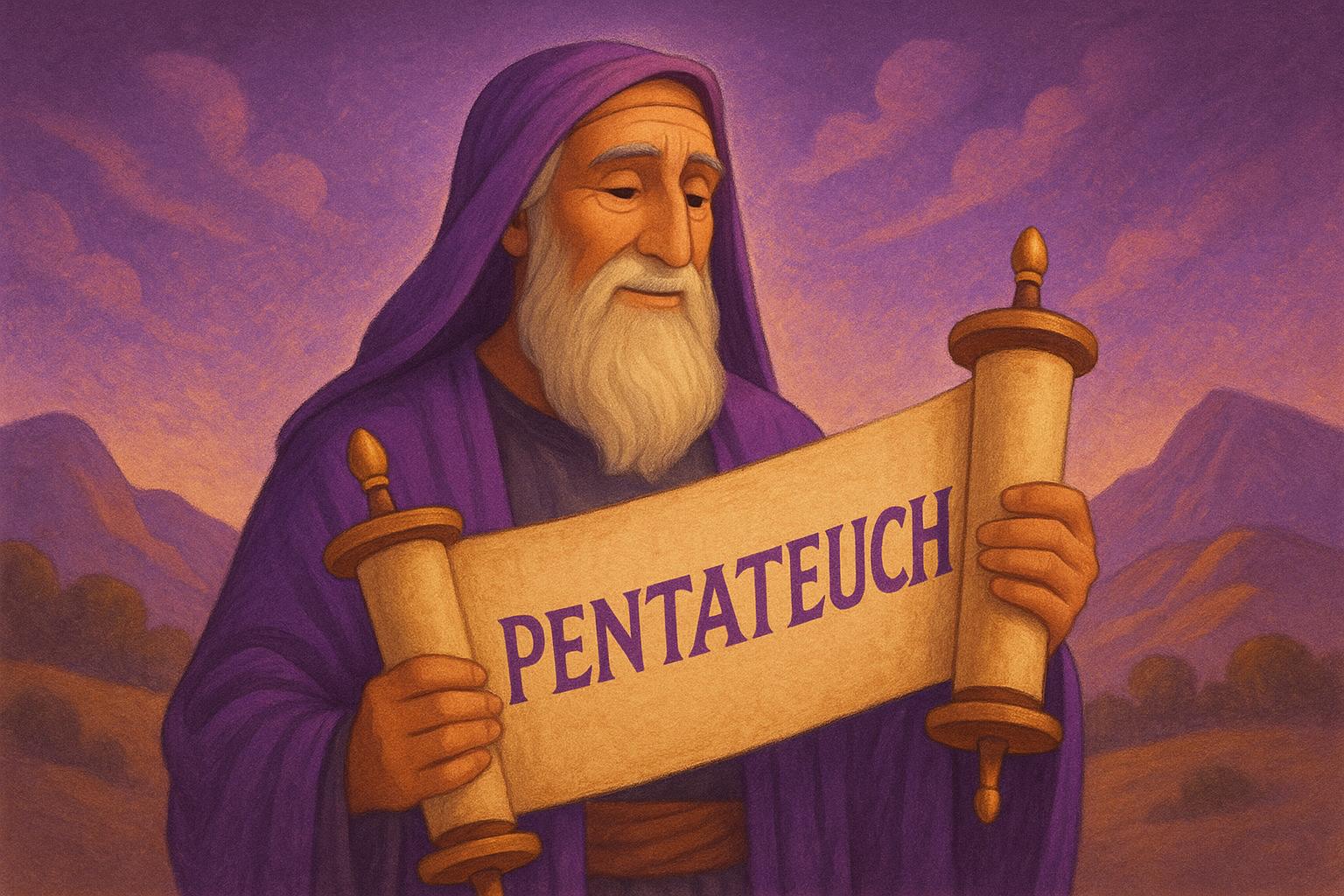
The Pentateuch
The first five books of the Bible: Genesis, Exodus, Leviticus, Numbers, and Deuteronomy.
Key Takeaways
- The Pentateuch contains the first five books of the Bible written by Moses
- These books establish the foundation for understanding God's relationship with humanity
- Key themes include creation, covenant, law, and the promise of redemption
- The Torah is central to both Jewish and Christian faith traditions
- Bible Way's interactive tools make studying these ancient texts accessible and engaging
Understanding The Pentateuch
The Pentateuch, also known as the Torah or the Books of Moses, contains the foundational stories and laws of the Jewish and Christian faiths. Beginning with creation and ending with the Israelites poised to enter the Promised Land, these five books establish the covenant relationship between God and His people.
These five books form the theological and historical foundation for the rest of Scripture. They trace the origins of humanity, the entrance of sin into the world, God's plan of redemption through Abraham's family, and the formation of Israel as a nation set apart for God's purposes.
The Pentateuch holds immense significance for Jewish and Christian traditions. In Judaism, these books form the Torah, the most sacred texts, which are read in synagogues throughout the year. In Christianity, they provide the foundation for understanding sin, law, covenant, and the need for salvation fulfilled in Jesus Christ.
Related Bible Studies
Books in The Pentateuch
Genesis
Genesis, meaning "origin" or "beginning," recounts the creation of the world, the fall of humanity, the great flood, and the establishment of God's covenant with Abraham, Isaac, and Jacob. It concludes with Joseph bringing his family to Egypt.
Key Events:
- Creation
- The Fall
- Noah's Ark
- Abraham's Call
- Joseph in Egypt
Exodus
Exodus describes Israel's deliverance from slavery in Egypt, their journey to Mount Sinai, and the giving of the Law. It details the construction of the Tabernacle as God establishes a way to dwell among His people.
Key Events:
- Moses' Birth
- Burning Bush
- Ten Plagues
- Passover
- Red Sea Crossing
Leviticus
Leviticus provides detailed instructions for worship, sacrifice, and holy living. It emphasizes God's holiness and the importance of Israel maintaining ritual and moral purity as God's covenant people.
Key Events:
- Sacrificial System
- Priestly Consecration
- Day of Atonement
- Clean and Unclean Laws
- Festivals and Holy Days
Numbers
Numbers records Israel's thirty-eight years of wandering in the wilderness due to their lack of faith. It includes two censuses of the Israelites, various laws, and the preparation of the new generation to enter the Promised Land.
Key Events:
- Census Taking
- Twelve Spies
- Rebellion of Korah
- Bronze Serpent
- Balaam's Prophecy
Deuteronomy
Deuteronomy, meaning "second law," contains Moses' farewell addresses to Israel. He recounts their journey, restates the Law, and renews the covenant before his death and their entry into Canaan.
Key Events:
- Law Restated
- Covenant Renewal
- Blessings and Curses
- Song of Moses
- Moses' Final Blessing
Related Reading Plans
Frequently Asked Questions
What does Pentateuch mean?
Pentateuch comes from the Greek words "pente" (five) and "teuchos" (book or scroll), literally meaning "five scrolls." It refers to the first five books of the Bible: Genesis, Exodus, Leviticus, Numbers, and Deuteronomy. In Hebrew tradition, these books are called the Torah, meaning "instruction" or "law."
Who wrote the Pentateuch?
The Pentateuch is traditionally attributed to Moses, which is why these books are also called the "Books of Moses." While Moses is credited as the primary author, the final chapter of Deuteronomy, which describes his death, was likely added by a later editor, possibly Joshua.
Why is the Pentateuch important for Christians?
The Pentateuch establishes foundational concepts that are essential for understanding the rest of Scripture and Christian theology, including creation, sin, covenant, redemption, and the law. Jesus frequently quoted from these books and said He came to fulfill the Law (Matthew 5:17). Understanding the Pentateuch helps Christians appreciate the significance of Christ's sacrifice and the new covenant.
How long does it take to read the Pentateuch?
The Pentateuch contains 187 chapters across five books. At an average reading pace, it takes approximately 12-15 hours to read through completely. Bible Way's reading plans offer structured approaches, from a focused 30-day deep study to integration within a one-year Bible reading plan.
What is the difference between Torah and Pentateuch?
Torah and Pentateuch refer to the same five books but come from different languages and traditions. "Pentateuch" is the Greek term used primarily in Christian contexts, while "Torah" is the Hebrew term used in Jewish tradition. Torah also carries the additional meaning of "instruction" or "teaching," emphasizing the books' purpose as divine guidance for life.
Key Information
Alternative Names
Torah, Books of Moses, Law
Author
Traditionally attributed to Moses
Time Period
Creation to approximately 1406 BC
Total Chapters
187 chapters across five books
Key Themes
Creation and Fall
God's Covenant with Abraham
Deliverance and Redemption
Law and Holiness
Promise and Fulfillment
External Resources
Start Studying Today
Download Bible Way for interactive study tools, reading plans, and community features.
Related Topics
Explore More Bible Study Resources
Ready to Dive Deeper into The Pentateuch?
Download Bible Way for interactive study tools, structured reading plans, and a supportive community of believers.