
Personal Worship Time
Beginning each day with Scripture-guided worship that connects your heart with God's presence and glory.
Worship is the highest calling of every believer, yet many Christians struggle to understand what true biblical worship looks like beyond singing songs on Sunday. A Bible study on worship opens God's Word to reveal His design for praise that engages heart, mind, soul, and strength. Whether you're seeking to deepen personal devotion, understand corporate worship better, or lead others in authentic praise, our comprehensive Bible study resources will guide you into deeper understanding of worship as a lifestyle that honors God in every area of life.
Learning worship from Scripture itself ensures your praise life is built on solid foundation. Explore our comprehensive features designed to help you grow as a worshiper.
Study the worship practices of David, the Levites, the early church, and heavenly beings to discover patterns of authentic praise that transform your relationship with God.
Deep dive into key worship passages like Psalms of praise, John 4, Romans 12, and Revelation's heavenly worship scenes with contextual understanding and application.
Explore different expressions of biblical worship: singing, prayer, giving, serving, silence, physical postures, and the sacrifice of praise.
Learn to apply biblical worship principles in daily life with exercises that cultivate a lifestyle of worship beyond Sunday services.
Designed for both personal devotion and small group discussion with questions about congregational worship that build church community.
Digital tools to record worship experiences, document spiritual growth, and develop consistent patterns of personal praise.
See how believers are transforming their worship through biblical study
Beginning each day with Scripture-guided worship that connects your heart with God's presence and glory.

Communities gathering to study worship together and practice genuine praise in intimate fellowship.
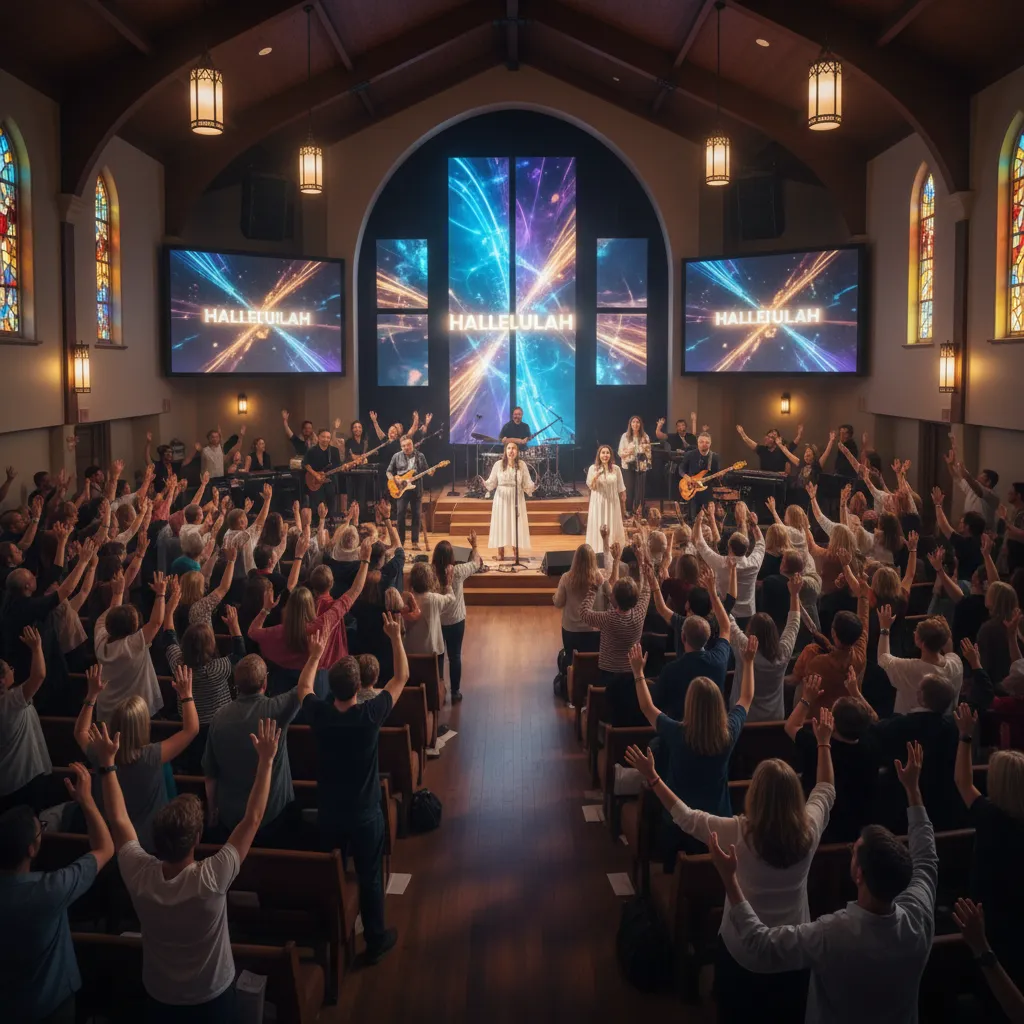
Churches experiencing deeper worship as members learn biblical principles of authentic praise.

Documenting worship experiences, recording praise, and tracking spiritual growth through structured reflection.

Parents teaching children to worship through Scripture, building family altars that shape the next generation.

Experiencing God's presence in nature, letting creation inspire praise as the Psalms teach us.
Comprehensive biblical studies on every aspect of worship. Combine with our daily Bible study for consistent growth.
Master the essentials of biblical worship with these core studies
Learn to worship through Israel's hymnal and prayer book
Discover worship in the life of Jesus and early church
Glimpse eternal worship as revealed in Scripture
Real testimonials from believers whose worship has been transformed
"Bible Way's worship study transformed how I lead our congregation. Understanding biblical worship principles has deepened both our corporate gatherings and my personal devotion. Our church has never been more alive in praise."
"I used to just sing songs. Now I understand what worship really means from Scripture. This study helped me move from performance to genuine heart-worship, and the difference is profound both for me and our congregation."
"We did this worship study as a family and it completely changed how we approach both church and daily life. Our kids now understand that worship isn't just singing - it's how we live every moment for God's glory."
Everything you need to develop a rich, biblical worship life. Access alongside our online Bible study platform.
Comprehensive guide to every major worship passage in Scripture with context, meaning, and application points.
Structured journaling prompts based on biblical worship patterns to deepen your praise practice.
Learn to use the Psalms as your worship guide with exercises for personal and corporate praise.
Digital tool to record worship moments, track spiritual growth, and build a testimony of God's faithfulness.
Ready-to-use materials for leading worship studies in small groups, Bible studies, or Sunday school.
Scripture-based reflections connected to hymns and worship songs to enrich your musical praise.
The Bible reveals worship as far more than singing songs or attending church services. Scripture presents worship as the fundamental purpose for which humanity was created, the ultimate expression of recognizing God's worth and responding appropriately to His character and works. Through studying worship in the Bible, we discover that true worship engages the whole person: heart, mind, soul, and strength. The Old Testament shows us how Israel worshiped through tabernacle and temple rituals, psalms and festivals, offerings and observances. The prophets called Israel back to genuine worship when their hearts had wandered while their external forms remained.
In the New Testament, Jesus revolutionized worship by teaching that God seeks worshipers who worship in spirit and truth, transcending location and ritual to embrace heart-posture and authenticity. The apostles continued this emphasis, describing the Christian life itself as worship, with every act of obedience, service, and sacrifice becoming an offering to God. A Bible study on worship isn't merely academic; it's transformational, equipping believers to live as continuous worshipers whose every breath glorifies the Creator.
Connect with believers committed to growing as worshipers. Find or start a small group Bible study focused on worship.
"The worship community transformed my understanding of praise. I went from going through the motions to genuinely encountering God. This study has revolutionized not just my Sunday worship but my entire approach to life."
Michelle T.
Worship team member, Dallas
Common questions about studying worship through Scripture
The Bible presents worship as the primary purpose of human existence and the appropriate response to God's character and works. In John 4:23-24, Jesus teaches that the Father seeks worshipers who worship in spirit and truth, engaging genuine hearts with accurate understanding of God. Romans 12:1-2 expands worship beyond religious services to lifestyle, calling believers to offer their bodies as living sacrifices as their spiritual act of worship. The Psalms provide 150 songs of worship covering every human emotion. Revelation shows heaven's eternal worship around God's throne, revealing our ultimate destiny. Throughout Scripture, worship includes praise, thanksgiving, sacrifice, service, obedience, prayer, and surrender. True worship recognizes God's worth (the word "worship" comes from "worth-ship") and responds appropriately with all we are and have. The Bible warns against false worship that honors God with lips while hearts are far from Him (Isaiah 29:13, Matthew 15:8-9), emphasizing that God looks at the heart, not external performance.
When Jesus told the Samaritan woman that true worshipers worship the Father in spirit and truth (John 4:23-24), He was addressing two essential dimensions of authentic worship. Worshiping in spirit means engaging the inner person, the genuine self, not merely performing external rituals. It involves the Holy Spirit enabling and empowering our worship, connecting us to God spiritually rather than relying on location, form, or ceremony. Worshiping in truth means approaching God based on accurate understanding of who He is as revealed in Scripture, not our own imagination or cultural preferences. It means worshiping according to the truth of His Word, through Jesus Christ who is the way, truth, and life. Many worship either in spirit without truth (emotionally but without biblical foundation) or in truth without spirit (theologically correct but dry and lifeless). Jesus calls for both: genuine hearts engaged emotionally and spiritually, grounded in accurate knowledge of God from His Word. This combination produces worship that truly honors God.
Old Testament worship centered on the tabernacle and later the temple, where God's presence dwelt among His people. Worship involved animal sacrifices as offerings for sin, thanksgiving, and fellowship (Leviticus 1-7). The Levitical priesthood mediated between God and people, offering sacrifices and leading ceremonies. Annual festivals, including Passover, Pentecost, and Tabernacles, brought Israel together in corporate worship remembering God's mighty acts. The Psalms provided hymns for temple worship and personal devotion. Physical expressions like bowing, kneeling, and raising hands were common. Instruments including lyres, harps, cymbals, and trumpets accompanied singing. The Sabbath provided weekly rhythms of rest and worship. Tithing expressed worship through giving. However, the prophets repeatedly warned that God desired heart transformation over ritual performance. Amos declared that God hated Israel's religious festivals because they lacked justice and righteousness (Amos 5:21-24). Micah summarized what God truly required: justice, mercy, and humble walking with God (Micah 6:8). The Old Testament establishes foundational worship principles while pointing forward to the fuller worship available through Christ.
Jesus both practiced and taught worship in transformative ways. He regularly attended synagogue worship on the Sabbath (Luke 4:16) and celebrated Jewish festivals in Jerusalem. He spent extended time in prayer and communion with the Father, sometimes all night (Luke 6:12). He quoted Psalms in worship, including from the cross (Matthew 27:46, Psalm 22:1). Jesus established the Lord's Supper as a worship ordinance for His church (Luke 22:19-20). Most significantly, Jesus transformed worship theology. He declared that true worship isn't bound to physical locations like temples or mountains, but happens wherever people worship in spirit and truth (John 4:21-24). He cleansed the temple, emphasizing that worship spaces should foster prayer, not commerce (Matthew 21:12-13). He criticized religious leaders who honored God with lips while hearts remained distant (Matthew 15:7-9). He taught that love for God and neighbor summarizes worship requirements (Mark 12:29-31). Jesus presented Himself as the object of worship, accepting worship from His disciples (Matthew 28:9, John 9:38) and teaching that honoring the Son honors the Father (John 5:23). Through His death and resurrection, Jesus became the way by which we approach God in worship.
Revelation provides vivid glimpses of heavenly worship that inform and inspire our earthly praise. In chapter 4, the four living creatures worship God continuously, crying "Holy, holy, holy, is the Lord God Almighty" day and night without ceasing. The twenty-four elders fall before God's throne, casting their crowns before Him and proclaiming His worthiness to receive glory, honor, and power. Chapter 5 expands worship to include the Lamb who was slain, Jesus Christ, as the hosts sing "Worthy is the Lamb" and declare that He has redeemed people from every tribe, language, people, and nation. The number of worshipers grows exponentially until every creature in heaven, on earth, under the earth, and in the sea joins the cosmic choir. Revelation 7 shows a great multitude no one could count worshiping before the throne, having come out of tribulation. Chapters 15 and 19 include the Song of Moses and the Lamb and the thunderous "Hallelujah" chorus. These scenes reveal that worship is eternal, that Jesus is worthy of worship equal to the Father, that worship is multicultural and multilingual, and that our highest destiny is joining this eternal celebration.
Scripture presents worship not primarily as a religious activity but as a lifestyle encompassing all of life. Romans 12:1-2 is foundational: offering our bodies as living sacrifices is our "spiritual worship" or "reasonable service." This means work, relationships, recreation, eating, and sleeping can all be worship when done for God's glory. Colossians 3:17 commands that whatever we do in word or deed, we do in the name of Jesus, giving thanks to God. First Corinthians 10:31 instructs believers to do everything, even eating and drinking, for God's glory. This understanding transforms how we view all of life. The workplace becomes a place of worship as we work heartily for the Lord (Colossians 3:23). Parenting becomes worship as we raise children in the Lord. Serving others becomes worship as we minister to Jesus through them (Matthew 25:40). This doesn't eliminate the importance of corporate worship gatherings, but it prevents compartmentalizing worship to one day or one activity. The mature believer lives as a continuous worshiper, offering every moment and action as an expression of recognizing God's worth and living for His glory.
Scripture reveals multiple elements that characterized gathered worship in both Old and New Testaments. Reading Scripture was central, with public reading commanded in both testaments (Nehemiah 8:1-8, 1 Timothy 4:13). Preaching and teaching expounded God's Word (Acts 2:42, 2 Timothy 4:2). Prayer, including intercession, confession, and thanksgiving, featured prominently (Acts 2:42, 1 Timothy 2:1-2). Singing of psalms, hymns, and spiritual songs expressed praise (Ephesians 5:19, Colossians 3:16). Giving offerings acknowledged God's provision and supported ministry (1 Corinthians 16:2, 2 Corinthians 8-9). The Lord's Supper commemorated Christ's death (1 Corinthians 11:23-26). Baptism publicly identified believers with Christ (Acts 2:38-41). Fellowship and shared meals built community (Acts 2:42-46). Confession of faith declared core beliefs (Romans 10:9-10). Blessing and benediction concluded gatherings (Numbers 6:24-26, 2 Corinthians 13:14). Physical expressions included standing, lifting hands, bowing, and kneeling. Various instruments accompanied singing. While forms vary across traditions, these biblical elements remain foundational for gathered worship.
The Bible affirms that worship is not dependent on feelings and even provides vocabulary for worshiping through difficulty. The Psalms of lament teach us to worship authentically through pain, doubt, and confusion. Psalm 42 shows the psalmist preaching to his downcast soul, commanding it to hope in God while honestly expressing distress. Habakkuk 3:17-19 declares worship even when circumstances appear devastating. The "sacrifice of praise" in Hebrews 13:15 implies that sometimes praise costs something and requires willpower. Job worshiped after losing everything, declaring "The Lord gave and the Lord has taken away; blessed be the name of the Lord" (Job 1:21). Practical approaches include: worship by faith, choosing to praise based on truth regardless of emotions; meditate on God's character and past faithfulness; use the Psalms to give voice to your feelings while directing them toward God; worship in community where others' faith can encourage yours; be honest with God about your struggle while still offering what you can; remember that feelings often follow action rather than preceding it. God honors the offering of worship that costs something, and often the choice to worship despite feelings leads to breakthrough.
Music holds a prominent place in biblical worship from beginning to end. The Psalms, Scripture's largest book, are song lyrics designed for musical accompaniment. David appointed Levitical musicians for tabernacle worship (1 Chronicles 16:4-6). Solomon's temple dedication featured singers and instrumentalists (2 Chronicles 5:12-14). The New Testament commands singing psalms, hymns, and spiritual songs (Ephesians 5:19, Colossians 3:16). Heaven's worship includes singing (Revelation 5:9, 14:3, 15:3). Musical instruments mentioned in Scripture include lyres, harps, tambourines, flutes, cymbals, trumpets, and the human voice. Music serves multiple purposes in worship: expressing emotion words alone cannot convey, teaching theology through memorable lyrics, creating unity as congregations sing together, engaging the whole person (mind, heart, body), and creating atmosphere for God's presence. However, Scripture warns against prioritizing musical excellence over heart sincerity. God listens to hearts, not just harmonies. The key question is whether music facilitates genuine engagement with God or becomes entertainment that distracts from Him. At its best, worship music carries God's truth deep into our hearts while enabling emotional expression of devotion.
Hebrews 13:15 exhorts believers to "continually offer to God a sacrifice of praise, the fruit of lips that openly profess his name." This concept connects to Old Testament sacrificial worship while transforming it for New Testament believers. Under the old covenant, worshipers brought animal sacrifices at significant cost. Now, having access through Christ's ultimate sacrifice, we offer ourselves and our praise. The "sacrifice" aspect implies several things: praise sometimes costs us something when circumstances make it difficult; praise requires intentional choice, not just emotional response; praise involves self-denial when we'd rather complain or focus on problems; praise can be counter-cultural in a complaining world. The "fruit of lips" emphasizes verbal expression, speaking and singing praise rather than merely thinking it. "Openly professing his name" suggests public declaration that takes courage. This sacrifice is offered "continually," not just during designated worship times but as an ongoing lifestyle. The sacrifice of praise is especially powerful during trials, as demonstrated in Acts 16 when Paul and Silas sang hymns in prison, and God responded with miraculous deliverance.
The Psalms are God's inspired worship songbook, providing vocabulary for every type of praise. To use them effectively: read Psalms aloud, as they were meant to be sung and spoken; personalize them by inserting your name and circumstances; pray Psalms back to God, making them your own prayers; meditate on phrases that resonate, expanding them in your own words; sing Psalms, either using hymns based on Psalms or creating your own melodies; use different Psalm types for different needs, including praise Psalms (145, 150), thanksgiving Psalms (103, 136), lament Psalms (13, 22, 88), penitential Psalms (32, 51), wisdom Psalms (1, 119), and royal Psalms (2, 110). The Psalms give permission to express the full range of human emotion to God, including anger, fear, confusion, and despair, not just joy and gratitude. They model moving from honest struggle to faithful trust. Many Christians pray through all 150 Psalms monthly. The early church used Psalms extensively in worship, and they remain foundational for Christian praise today. Bible Way's study guides help you understand and apply each Psalm for personal and corporate worship.
While often used interchangeably, praise and worship have distinct emphases in Scripture. Praise is the verbal and physical expression of admiration for God, declaring His attributes and acts. Hebrew words for praise include "hallal" (to shine, boast, celebrate), "yadah" (to throw or extend hands), "towdah" (thanksgiving, confession), "zamar" (to sing with instruments), "tehillah" (song of praise), and "barak" (to kneel, bless). Praise tends to be exuberant, active, and demonstrative. Worship, from the Hebrew "shachah" (to bow down, prostrate) and Greek "proskuneo" (to kiss toward, do reverence), emphasizes reverence, submission, and awe before God's majesty. Worship is often quieter, more intimate, and focused on God's presence rather than proclamation. In practice, praise might characterize the beginning of a worship service as we declare God's worthiness, while worship deepens as we move into intimate communion. Both are biblical and valuable. A complete expression of devotion to God includes both the celebration of praise and the reverence of worship, both public proclamation and private intimacy, both joyful demonstration and quiet submission.
Additional external resources to deepen your study of biblical worship
Comprehensive collection of worship verses and passages across translations
biblegateway.com →Biblical answers to common questions about worship and its practice
gotquestions.org →Articles, sermons, and devotionals on worship from John Piper's ministry
desiringgod.org →Contemporary articles and features on worship in the Christian life
christianitytoday.com →Don't settle for going through the motions when God invites you into transformative, life-giving worship. A Bible study on worship will equip you with biblical foundations, heavenly patterns, and practical applications that transform your praise from routine to revolutionary. Whether you're a new believer discovering worship for the first time or a seasoned Christian seeking deeper dimensions of praise, studying worship through Scripture will revolutionize your relationship with God. Download Bible Way today and begin the journey of becoming the worshiper God is seeking.