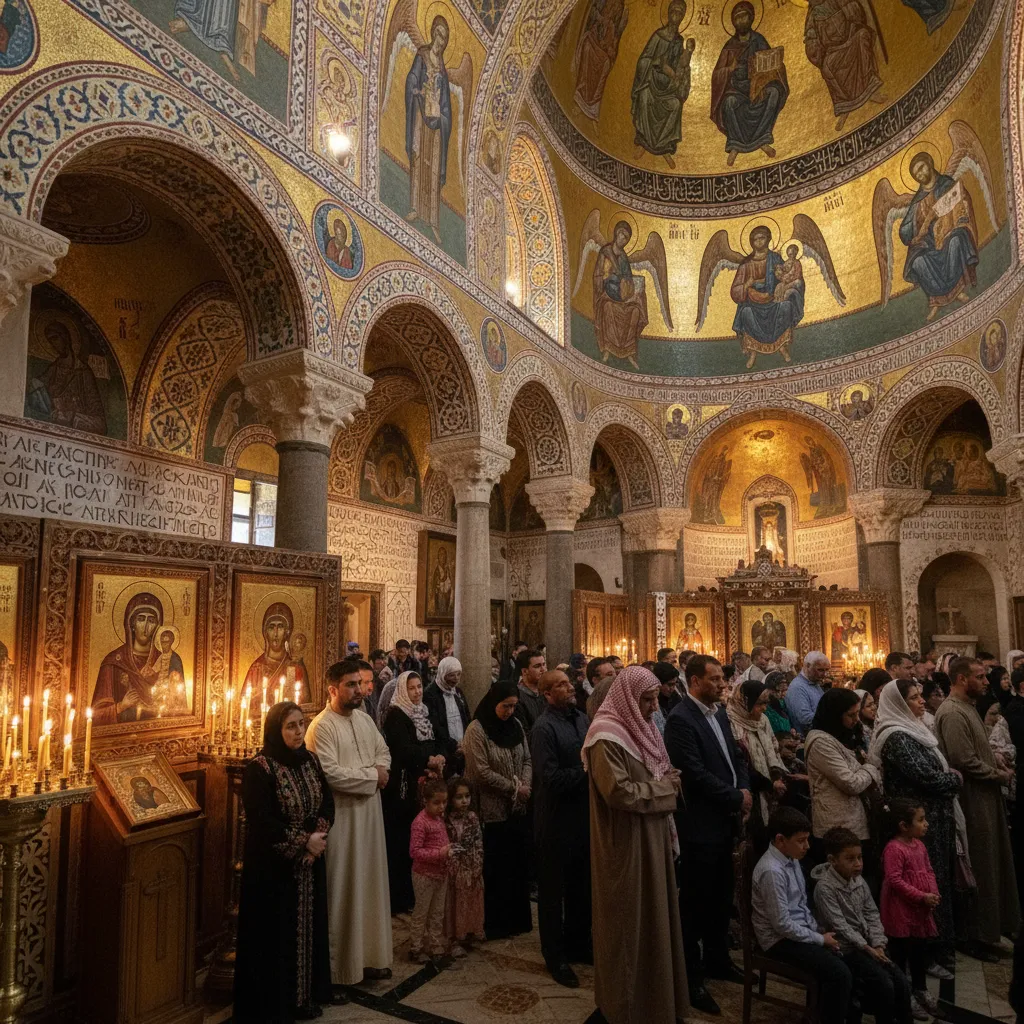
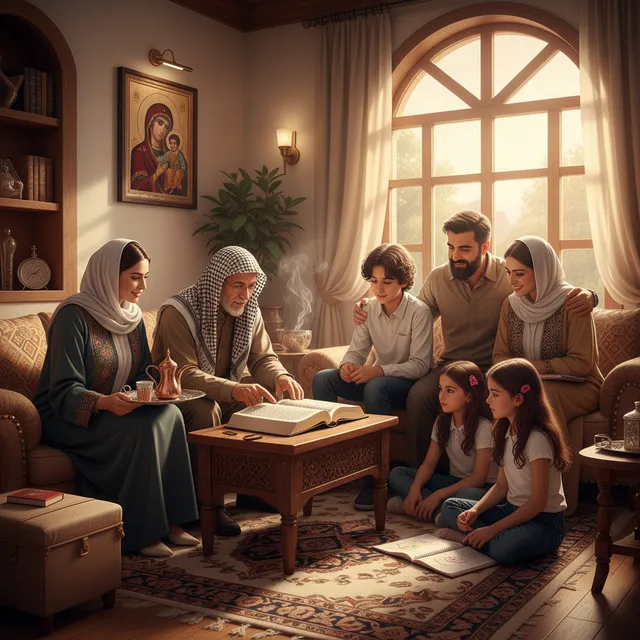
Bible study for Middle Eastern Christians honors the extraordinary heritage of Christianity in its birthplace. The Middle East is not merely where Christianity began - it is where vibrant Christian communities have maintained unbroken witness for two thousand years. From the Coptic Orthodox of Egypt to the Maronites of Lebanon, from the Chaldean Catholics of Iraq to the Syrian Orthodox of Damascus, from the Armenian Apostolic Church to the ancient communities in Palestine - Middle Eastern Christians are heirs to the apostles in the very lands where Jesus walked. Whether you are in the Middle East or the diaspora communities worldwide, these resources help you explore Scripture through your ancient heritage, Aramaic linguistic traditions, Eastern liturgical richness, and the persevering faith that has sustained believers through centuries of challenge. For those interested in exploring the original languages, our Hebrew Bible study and Greek Bible study resources provide deeper linguistic engagement with Scripture.
Why Middle Eastern Christians Choose Bible Way
Bible study that honors your ancient heritage, connects with Eastern traditions, and equips your community with biblical truth for today.
Ancient Heritage
Study resources honoring 2,000 years of Christianity in the lands where Jesus walked and the church was born.
Aramaic Roots
Connect with Scripture in the language Jesus spoke, exploring the richness of Aramaic Christian tradition.
Eastern Liturgy
Resources integrating the beautiful liturgical traditions of Eastern Christianity - Coptic, Maronite, Chaldean, and more.
Diaspora Connection
Connect Middle Eastern Christians worldwide - from ancestral homelands to diaspora communities.
Persevering Faith
Draw strength from believers who have maintained faith through centuries of challenge and persecution.
Family Traditions
Pass on the faith through family-centered study honoring Middle Eastern Christian customs and values.
Study Topics & Themes
Explore Scripture through Middle Eastern experience and heritage
Christianity in Its Birthplace
Exploring faith where it all began
- The Holy Land - Walking Where Jesus Walked
- Antioch - Where Believers Were First Called Christians
- Damascus Road - Paul's Conversion on Middle Eastern Soil
- The Early Church in Jerusalem and Judea
- Mesopotamian Christianity - One of the Oldest Churches
- Egypt and the Coptic Christian Heritage
Middle Eastern Christian Traditions
The rich diversity of Eastern Christianity
- The Maronite Church - Lebanon's Ancient Faith
- Chaldean and Assyrian Christianity in Iraq
- Syrian Orthodox - The Syriac Christian Heritage
- Coptic Orthodox - Egypt's Christian Witness
- Armenian Christianity - First Christian Nation
- Melkite Greek Catholic Traditions
Scripture Through Eastern Eyes
Biblical insights from Middle Eastern perspective
- Aramaic - The Language Jesus Spoke
- Middle Eastern Hospitality in Biblical Context
- Honor and Shame Dynamics in Scripture
- Desert Spirituality and the Bible
- Biblical Family Structures and Middle Eastern Culture
- Feast Traditions - Biblical Roots, Eastern Expression
Faith Under Challenge
Perseverance and witness in difficult contexts
- The Witness of Middle Eastern Martyrs
- Maintaining Faith as a Minority
- Christian-Muslim Relations - Building Bridges
- Diaspora Identity - Faith Far from Homeland
- Hope and Resilience in Suffering
- Praying for the Persecuted Church
Stories from Middle Eastern Christians
See how Bible Way is impacting believers from the Middle East and diaspora
"These resources help our parish connect biblical study with our Maronite heritage. Our young people understand they belong to an unbroken chain of faith stretching back to the earliest Christians."
"As an Iraqi Christian in the diaspora, I wanted my children to know our ancient faith tradition. This Bible study helps them see their heritage is not foreign but foundational to Christianity itself."
"The Coptic church has preserved the faith for two millennia. Bible Way understands our traditions and provides resources that honor our ancient heritage while making Scripture accessible today."
Available Resources
Everything your community needs for meaningful Bible study
Heritage Devotionals
Daily devotionals connecting Middle Eastern Christian history with personal spiritual growth.
Eastern Tradition Studies
Explore Scripture through Coptic, Maronite, Chaldean, and other Eastern Christian perspectives.
Aramaic Insights
Discover the richness of Scripture through its original Middle Eastern languages and context.
Family Faith Resources
Pass on the faith with resources designed for Middle Eastern Christian families.
Diaspora Community
Connect with Middle Eastern Christians worldwide maintaining faith in new contexts.
Liturgical Guides
Integrate the rich liturgical traditions of Eastern Christianity into Bible study.
Where Christianity Was Born
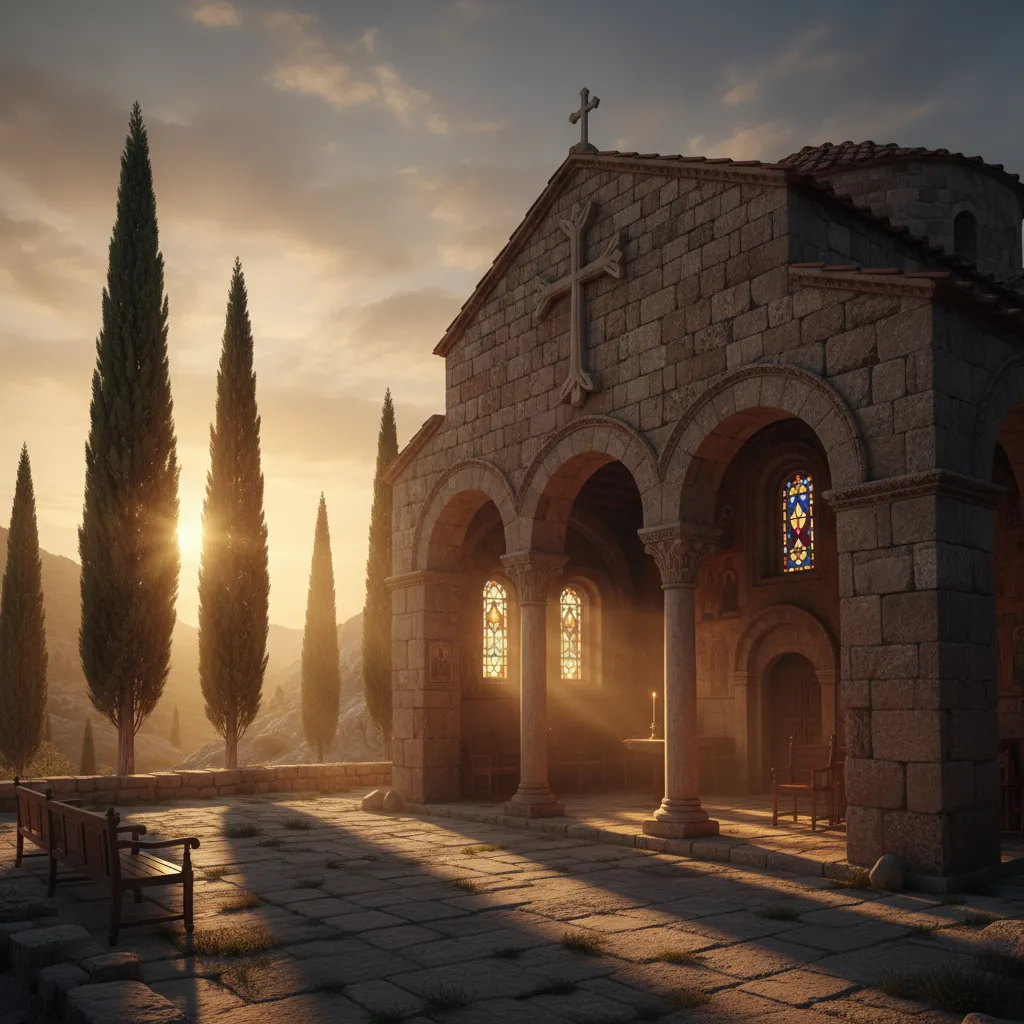
The Middle East is Christianity's birthplace - the land where Jesus was born, taught, died, and rose again. The first Christians were Middle Eastern. The first churches were founded in Jerusalem, Antioch, Alexandria, and throughout the Levant and Mesopotamia. Middle Eastern Christians today are heirs to this apostolic heritage, maintaining faith where it began.
From the Coptic martyrs of Egypt to the Assyrian missionaries who brought Christianity to China, from the theological giants of Antioch and Alexandria to the persevering believers of today, Middle Eastern Christianity has shaped global Christianity while maintaining distinct traditions in the most challenging circumstances.
"The disciples were called Christians first at Antioch."
- Acts 11:26
Middle Eastern Christian Heritage
- ✓2,000 years of unbroken Christian witness in the birthplace of faith
- ✓Aramaic - the language Jesus spoke, preserved in living liturgy
- ✓Ancient patriarchates tracing succession to the apostles
- ✓Rich diversity: Coptic, Maronite, Chaldean, Syrian, Armenian traditions
- ✓Faith refined through centuries of challenge and persecution
Key Takeaways
Christianity was born in the Middle East - it is not a Western religion but indigenous to the region
Aramaic, the language Jesus spoke, is preserved in Middle Eastern Christian liturgy and scholarship
Middle Eastern Christians offer unique cultural insight into Scripture written in their cultural context
Eastern Christian traditions - Coptic, Maronite, Chaldean, Syrian - preserve ancient apostolic heritage
Middle Eastern Christians have persevered through centuries of challenge, offering wisdom on faith under pressure
The global church is enriched by Middle Eastern Christian contributions to theology, worship, and biblical interpretation
Middle Eastern Christian Community
Ancient faith for modern believers
What We Offer
- Heritage devotionals connecting Middle Eastern Christian history with daily faith
- Eastern tradition-informed study guides for family and community groups
- Aramaic insights and Eastern liturgical context
- Global diaspora community connection
"Our church has used Bible Way to help young people understand that being Christian is not being Western. Our faith comes from the Middle East, where our families have believed for two thousand years!"
Fr. Boutros H.
Chaldean Catholic, San Diego
Frequently Asked Questions
Common questions about Bible study for Middle Eastern Christians
What is the history of Christianity in the Middle East?
Christianity was born in the Middle East. Jesus was born in Bethlehem, raised in Nazareth, ministered throughout Palestine, was crucified and rose in Jerusalem. The first Christian communities were Middle Eastern - the church in Jerusalem, the believers scattered throughout Judea and Samaria, the church in Antioch where followers were first called Christians (Acts 11:26). From these Middle Eastern centers, Christianity spread throughout the world. The Aramaic-speaking churches in Syria and Mesopotamia (modern Iraq) are among the oldest continuous Christian communities, tracing their origins to the apostolic era. Thomas traditionally brought Christianity to Persia (Iran) and beyond. Egypt's Coptic Church was founded by Mark the Evangelist around 42 AD. The Middle East produced many Church Fathers who shaped Christian theology: Ephrem the Syrian, John of Damascus, Isaac of Nineveh, and others. Despite centuries of Islamic rule, Christian communities have persisted throughout the Middle East. Lebanon's Maronites, Egypt's Copts, Iraq's Chaldeans and Assyrians, Syria's various Orthodox and Catholic communities, Palestine's Orthodox and Catholic Christians, and others maintain living witness to an unbroken 2,000-year Christian presence in the region. Recent decades have brought tremendous challenges - conflict, persecution, and emigration have dramatically reduced Middle Eastern Christian populations. Yet these communities remain, and their diaspora maintains connections to their ancestral faith and lands.
What are the main Middle Eastern Christian denominations?
Middle Eastern Christianity includes remarkable diversity, reflecting the region's complex history. The Oriental Orthodox churches include the Coptic Orthodox Church of Egypt (perhaps 10-15 million members, one of the largest Christian communities in the Middle East), the Syriac Orthodox Church with roots in Antioch, and the Armenian Apostolic Church (Armenia was the first nation to adopt Christianity, in 301 AD). The Church of the East, sometimes called Assyrian or Nestorian, was historically one of the world's largest churches, spreading across Persia to India and China; its descendants include the Assyrian Church of the East and the Chaldean Catholic Church. Eastern Orthodox churches in the region include the Greek Orthodox Patriarchates of Antioch, Jerusalem, and Alexandria, and the Melkite Greek Catholic Church (in communion with Rome). The Maronite Church, centered in Lebanon, has been in communion with Rome since the Crusades while maintaining its own Syriac liturgical tradition. Various other Eastern Catholic churches exist, including Syriac Catholics, Coptic Catholics, and Armenian Catholics. Additionally, Protestant and evangelical communities have grown in the Middle East over the past two centuries. Each tradition carries unique liturgical practices, theological emphases, and cultural expressions developed over centuries of witness in challenging environments. Despite their differences, these communities share deep roots in the biblical lands and often work together in matters affecting Middle Eastern Christians collectively.
Why is Aramaic significant for Bible study?
Aramaic holds unique significance because it was the everyday language of Jesus and his disciples. While the New Testament was written in Greek for wider distribution, Jesus likely taught, prayed, and conversed primarily in Aramaic. Several Aramaic words and phrases are preserved in the Greek New Testament: "Talitha koum" (Mark 5:41), "Ephphatha" (Mark 7:34), "Eloi, Eloi, lema sabachthani" (Mark 15:34), "Abba" (Mark 14:36), and "Maranatha" (1 Corinthians 16:22). When Jesus prayed in Gethsemane or taught the Lord's Prayer, he used Aramaic. Understanding Aramaic can illuminate Scripture's meaning. The Aramaic word "Abba" carries intimate connotations that the Greek "Pater" (Father) doesn't fully capture. The Peshitta, the Syriac (Aramaic) translation of the Bible, offers insights sometimes obscured in Greek transmission. Some scholars argue certain New Testament passages are clearer when understood through Aramaic idioms and thought patterns. Middle Eastern Christian communities preserved Aramaic as a liturgical and sometimes spoken language for two millennia. The Maronite, Syriac Orthodox, Chaldean, and Assyrian churches maintain Aramaic/Syriac in their worship. This living connection to Jesus' language offers unique perspectives on Scripture unavailable elsewhere. For Middle Eastern Christians, Aramaic study isn't merely academic but connects them directly to the linguistic world of Jesus himself.
How have Middle Eastern Christians maintained faith as minorities?
Middle Eastern Christians have maintained faith as minorities through remarkable resilience developed over fourteen centuries since the Islamic conquests. Several factors have sustained them. First, strong community bonds - Middle Eastern Christian communities are tightly knit, with the church serving as social, cultural, and spiritual center. Families maintain faith across generations through intentional transmission of traditions, language, and beliefs. Second, distinctive identity markers - liturgical languages (Coptic, Syriac/Aramaic, Armenian), unique calendars and feast days, distinct dress and customs in some communities, and endogamous marriage patterns preserved community identity. Third, institutional continuity - ancient patriarchates, monasteries, and church structures provided stability across centuries. The Coptic Orthodox patriarchate traces unbroken succession for nearly two millennia. Fourth, geographic concentration in certain areas (Lebanese mountains for Maronites, Upper Egypt for Copts, Nineveh Plain for Chaldeans/Assyrians) created communities with critical mass. Fifth, negotiated coexistence - the dhimmi system, while discriminatory, provided legal framework for Christian survival under Islamic rule. Christians often filled roles as administrators, merchants, physicians, and artisans. Sixth, spiritual depth - persecution refines faith. Middle Eastern Christians developed profound spirituality centered on the cross, martyrdom witness, and hope beyond earthly suffering. Desert spirituality, monasticism, and mystical traditions flourished. Finally, connection to biblical lands gave Middle Eastern Christians identity as heirs to the apostles in Christianity's birthplace. Despite recent devastation - Iraq's Christian population dropped from 1.5 million to under 250,000 since 2003; Syria's conflict displaced millions - communities persist, and diaspora churches maintain connection to homeland faith traditions.
What challenges do Middle Eastern Christians face today?
Middle Eastern Christians face interrelated challenges threatening their continued presence in ancestral homelands. Violence and persecution have devastated communities, particularly since 2003. Iraq's Christian population has dropped by over 80%. ISIS specifically targeted Christians for elimination from Nineveh Plain. Syria's civil war displaced millions of Christians. Egypt's Copts face periodic attacks on churches and believers. Even in relatively stable Lebanon, economic collapse and political dysfunction drive emigration. Discrimination persists in many countries - blasphemy laws can criminalize Christian witness; conversion from Islam remains dangerous or illegal; Christians face limitations in employment, education, and political participation. Economic pressures compound these challenges. Middle Eastern Christians, often urban and educated, find limited opportunities in struggling economies. The result is massive emigration, draining communities of youth, professionals, and leaders. Political marginalization leaves Christians vulnerable. As small minorities, they lack political power to protect their interests. Regional conflicts often cast Christians as outsiders regardless of their ancient roots. In diaspora, challenges differ but remain significant. Maintaining community cohesion, transmitting faith and culture to new generations, navigating between assimilation and isolation, processing trauma from displacement, and maintaining connection to homelands all require intentional effort. Yet Middle Eastern Christians demonstrate remarkable resilience. Churches remain open amid war zones. Communities rebuild after attacks. Diaspora churches preserve traditions while adapting to new contexts. International advocacy networks raise awareness. And believers continue witnessing to Christ in the lands where he walked. Supporting persecuted Middle Eastern Christians through prayer, advocacy, and practical assistance remains an important calling for the global church.
How does Middle Eastern hospitality relate to biblical practice?
Middle Eastern hospitality directly reflects and illuminates biblical hospitality, which was itself Middle Eastern. The elaborate hospitality codes found throughout the Middle East today - where guests must be welcomed, fed, and protected - echo practices described throughout Scripture. When Abraham welcomed three visitors at Mamre (Genesis 18), his response - rushing to prepare food, offering the best portions, standing while guests ate - mirrors traditional Middle Eastern hospitality to this day. The unannounced visitors received immediate, generous welcome. This wasn't unusual but expected. Lot's willingness to protect his guests at any cost (Genesis 19) reflects the sacred duty of protecting those under your roof. Laban welcoming Abraham's servant (Genesis 24), Jethro hosting Moses (Exodus 2), the Shunammite woman preparing a room for Elisha (2 Kings 4), Rahab sheltering the spies (Joshua 2) - all demonstrate hospitality as sacred obligation. Jesus' parables frequently invoke hospitality: the wedding feast, the great banquet, the friend at midnight requesting bread for an unexpected guest. His critique of Simon the Pharisee (Luke 7:44-46) centers on hospitality failures - no water for feet, no kiss of greeting, no oil for head. The early church practiced radical hospitality: "Do not forget to show hospitality to strangers" (Hebrews 13:2). Middle Eastern Christians understand these texts not as foreign customs requiring explanation but as their own cultural practice. The coffee ritual, the insistence that guests eat first and abundantly, the offering of one's best room - these living traditions illuminate Scripture's hospitality commands. Studying Bible with Middle Eastern Christians helps all believers recover the hospitality emphasis that modern individualist cultures often miss.
What resources exist for Middle Eastern Christian Bible study?
Resources for Middle Eastern Christian Bible study have expanded as diaspora communities grow and global awareness increases. For Aramaic/Syriac resources, the Peshitta (Syriac Bible) is available in various editions, and the Comprehensive Aramaic Lexicon project provides scholarly tools. George Lamsa's translation from the Peshitta offers an Aramaic-based English Bible, though scholars debate its methodology. The Diatessaron, Tatian's gospel harmony from Syriac Christianity, provides ancient Eastern perspective. For Coptic Christianity, the Coptic Orthodox Church has produced extensive resources including St. Shenouda the Archimandrite Coptic Society's translations and scholarship. Pope Shenouda III's numerous books, though primarily in Arabic, have been translated to English. The Maronite Church produces liturgical resources, catechetical materials, and theological works. Chorbishop Seely Beggiani's works explain Maronite spirituality and theology. The Chaldean Church has developed various resources for diaspora communities. Academic resources include Kenneth Bailey's works examining the New Testament through Middle Eastern eyes - "Jesus Through Middle Eastern Eyes" and "Paul Through Mediterranean Eyes" are particularly valuable. Bailey spent decades in the Middle East and brings unique cultural insight. Organizations like Middle East Media, SAT-7 (Christian satellite broadcasting), and various missions produce contextual resources. The Bible Way app provides features suited for Middle Eastern Christian families and communities. Local diocese and patriarchate resources should not be overlooked - many produce materials in Arabic, Armenian, Coptic, and Syriac. Diaspora churches often have rich resources accumulated over generations of maintaining faith traditions.
How can diaspora Middle Eastern Christians maintain their heritage?
Diaspora Middle Eastern Christians can maintain their heritage through intentional practices on multiple levels. At the family level: speak heritage languages at home; tell family stories including faith narratives; maintain traditional feast observances and food customs; display religious icons and cultural artifacts; visit homeland if possible and safe, or virtually connect with relatives there; name children traditional names; practice traditional prayers and blessings. At the church level: attend heritage churches where available; participate actively in liturgy, especially in traditional languages; engage children in Sunday school and youth programs; join church organizations and committees; support church institutions; attend feast celebrations and cultural events. For cultural transmission: teach children heritage language reading and writing; expose children to heritage music, art, and literature; cook traditional foods together; celebrate cultural holidays and saints' days; share stories of ancestors' faith and perseverance; connect with extended family maintaining traditions. For community connection: participate in ethnic community organizations; attend cultural festivals and events; support heritage media (radio, TV, publications); connect with other diaspora communities; support humanitarian efforts for homeland Christians; engage in advocacy for persecuted believers. For identity formation: teach children their people's history, especially faith history; emphasize that their tradition is ancient and apostolic, not immigrant or foreign; connect heritage to broader Christian narrative; model pride in identity while adapting to new contexts; balance preservation with healthy integration. Technology helps: video calls with homeland relatives; heritage language apps and videos for children; online resources for liturgical participation; social media connection with other diaspora families. The goal is confident heritage identity that neither isolates nor assimilates, maintaining ancient faith while engaging new contexts.
What is the significance of Middle Eastern monasticism?
Middle Eastern monasticism profoundly shaped all Christian spirituality, and its influence continues today. Monasticism as a formal movement began in the Middle East, specifically Egypt. St. Anthony of Egypt (251-356 AD), often called the Father of Monasticism, withdrew to the Egyptian desert for solitary communion with God. His biography by Athanasius of Alexandria became enormously influential. St. Pachomius established the first cenobitic (communal) monasteries in Egypt around 323 AD. From Egypt, monasticism spread throughout Christendom - Eastern and Western monastic traditions all trace roots to the Egyptian desert. The Desert Fathers and Mothers - Macarius, Poemen, Syncletica, Theodora, and hundreds of others - developed practices and wisdom that remain foundational. The "Sayings of the Desert Fathers" (Apophthegmata Patrum) still guides spiritual formation today. Their insights on prayer, temptation, humility, and spiritual warfare remain strikingly relevant. The Jesus Prayer ("Lord Jesus Christ, Son of God, have mercy on me") developed in this Eastern context. Hesychasm, the contemplative tradition centered on inner stillness, grew from Middle Eastern monasticism. Middle Eastern monasteries became centers of learning, preserving classical texts, developing biblical scholarship, and creating theological works. Syriac monasteries particularly excelled in translating Greek philosophical and scientific works into Arabic, preserving knowledge through the medieval period. Historic Middle Eastern monasteries continue functioning today: St. Catherine's in Sinai, Wadi el-Natrun monasteries in Egypt, Mar Mattai in Iraq, numerous Lebanese monastic communities, and others. Coptic monasticism has experienced remarkable revival, with ancient monasteries now overflowing with monks. For Middle Eastern Christians, monasticism isn't foreign import but indigenous spiritual heritage. Engaging this tradition enriches Bible study with contemplative depth and proven spiritual practices.
How should Middle Eastern Christians approach relationships with Muslim neighbors?
Middle Eastern Christians have navigated Christian-Muslim relations for fourteen centuries, developing wisdom relevant for believers everywhere encountering Muslims. First, recognize the complexity. Middle Eastern Christian-Muslim relations vary enormously by country, community, era, and individuals. Generalizations fail to capture relationships built over generations in specific villages or neighborhoods. Many Middle Eastern Christians have deep friendships, business partnerships, and neighborly bonds with Muslims. Some have experienced violence and persecution. Often the same families have both experiences in their histories. Second, practice Jesus' commands. Love of neighbor (including Muslim neighbors) remains non-negotiable. Middle Eastern Christians often demonstrate remarkable forgiveness even toward persecutors. Hospitality, respect, and genuine care for Muslim friends and neighbors reflect Christ. Third, maintain clear Christian identity. Faithful witness doesn't require hiding faith. Middle Eastern Christians have found ways to be openly Christian while living peacefully with Muslims. This includes respectful dialogue, honest answers to questions, and quiet witness through lifestyle. Fourth, avoid two extremes: naive minimization of real differences and dangers, and antagonistic hostility that views all Muslims as enemies. Many Middle Eastern Christians model friendship with individual Muslims while honestly acknowledging theological differences and real persecution that some face. Fifth, recognize shared concerns. Middle Eastern Christians and Muslims often share concerns about secularism, moral decline, family breakdown, and Western cultural imperialism. Common ground exists for cooperation on shared values. Sixth, pray for Muslims. Many Middle Eastern Christians pray earnestly for their Muslim neighbors' salvation, including those who have persecuted them. Some of the most effective Muslim-background-believer movements involve Middle Eastern Christians sharing faith with Muslims. Seventh, support persecuted believers. Advocacy and assistance for suffering Christians can be done without demonizing all Muslims. Middle Eastern Christians themselves often distinguish between violent extremists and ordinary Muslim neighbors.
What unique perspectives do Middle Eastern Christians bring to Bible study?
Middle Eastern Christians bring perspectives that enrich Bible study for the global church in several distinctive ways. Cultural continuity: Middle Eastern Christians live in cultures more similar to biblical culture than Western settings. Honor-shame dynamics, hospitality codes, extended family structures, oral culture, and collective identity - all present in the Bible - remain living realities in Middle Eastern societies. Behaviors that puzzle Western readers often seem natural to Middle Eastern Christians. Linguistic insight: Some Middle Eastern Christians maintain Aramaic/Syriac, the language Jesus spoke. Coptic, while not a Semitic language, preserves the latest stage of ancient Egyptian, relevant for Old Testament Egypt passages. Arabic-speaking Christians engage Hebrew cognates and Semitic thought patterns naturally. These linguistic connections illuminate biblical meaning. Liturgical depth: Eastern Christian liturgies developed early and changed little, preserving ancient interpretive traditions. Liturgical readings, hymns, and practices embed biblical interpretation accumulated over centuries. Participating in these ancient liturgies forms believers in Scripture organically. Suffering perspective: Middle Eastern Christians read Scripture as those who have experienced persecution, displacement, and minority existence. Passages about suffering, exile, hope, and faithfulness resonate differently for those who have lived these realities. Their readings challenge comfortable interpretations. Geographic familiarity: For Middle Eastern Christians, biblical places aren't distant abstractions but known locations. This familiarity with landscape, climate, and geography provides concreteness. Continuity with ancient church: These communities trace continuous history to apostolic times. They are not new expressions of Christianity adapting Scripture to modern contexts but ancient communities maintaining received interpretation. Balancing innovation and tradition: Their experience challenges both rigid traditionalism and rootless innovation. They demonstrate how Christian communities can maintain identity across centuries while adapting to changing circumstances. Western Christians have much to learn from Middle Eastern Christian biblical engagement.
How can the global church support Middle Eastern Christians?
The global church can support Middle Eastern Christians through prayer, advocacy, practical assistance, and authentic partnership. Prayer: Regularly pray for persecuted believers by name and location. Organizations like Open Doors, International Christian Concern, and Middle East Concern provide specific prayer requests. Pray not only for suffering believers but for witness and gospel advance in the region. Pray for persecutors' transformation. Advocacy: Raise awareness about Middle Eastern Christian persecution. Contact government representatives about policies affecting Christians in the region. Support religious freedom initiatives. Combat ignorance that doesn't know Middle Eastern Christians exist or assumes all Arabs are Muslims. Share credible information while avoiding sensationalism. Practical assistance: Support reputable organizations providing humanitarian aid, education, economic development, and emergency relief. Verify organizations' effectiveness and accountability before giving. Some organizations include: Middle East Concern, CNEWA (Catholic Near East Welfare Association), Cradle of Christianity Fund, Barnabas Aid, and various denominational relief agencies. Support refugee resettlement efforts. Diaspora welcome: Welcome Middle Eastern Christian refugees and immigrants. Help them navigate new contexts while maintaining identity. Learn from their faith traditions. Invite their perspectives in churches and theological education. Don't tokenize them but build genuine relationships. Visit and pilgrimage: When safe and appropriate, visit Middle Eastern Christian communities. Pilgrimage to Holy Land sites. Meet local Christians. Your presence encourages and your spending supports local economies. Avoid "Christian tourism" that ignores living Christians to visit only ancient stones. Learn and appreciate: Study Middle Eastern Christian history, theology, and traditions. Their heritage enriches global Christianity. Attend Eastern Christian liturgies. Read Eastern Church Fathers. Value their contributions as more than exotic curiosities. Avoid neo-colonialism: Partner with Middle Eastern Christians rather than imposing Western solutions. Respect their agency, wisdom, and leadership. Learn before teaching. Recognize that the oldest churches in Christianity don't need Western Christians to explain their faith to them. Maintain long-term commitment, not crisis-response-only engagement.
Helpful External Resources
Trusted resources for Middle Eastern Christian Bible study
Bible Gateway
Multiple translations including Arabic
biblegateway.com →Bible Hub
Commentaries and original language tools
biblehub.com →Got Questions
Biblical Q&A resources
gotquestions.org →Christianity Today
News on Middle Eastern Christianity
christianitytoday.com →Open Doors
Support for persecuted Christians
opendoorsusa.org →CNEWA
Catholic Near East Welfare Association
cnewa.org →International Christian Concern
Advocacy for Middle Eastern Christians
persecution.org →Syriac Studies
Aramaic/Syriac scholarly resources
syriacstudies.com →Related Bible Studies
Explore more cultural and heritage-focused Bible study resources
Catholic Bible Study
For Eastern Catholics and all Catholic traditions
Messianic Bible Study
Jewish roots of Christian faith
Immigrant Families
Faith in new lands
Multicultural Families
Unity in diversity
African Bible Study
Ancient African Christian heritage
Bible Study for Muslims
Resources for Muslim background seekers
Family Bible Study
Resources for all families
Daily Bible Study
Consistent daily Scripture engagement