
Morning Foundations
New Christians establishing daily devotional habits that build lifelong spiritual strength.
Welcome to the family of God! If you've recently placed your faith in Jesus Christ, you've made the most important decision of your life. A Bible study for new Christians is designed specifically to help you understand what happened when you believed, establish the foundational truths of your faith, and develop habits that will fuel spiritual growth for a lifetime. Whether you came to Christ yesterday or are still exploring what it means to follow Him, our Bible study resources will guide you through every step with clarity, encouragement, and practical tools for your new life in Christ.
Your salvation is secure - it's based on Christ's finished work, not your performance, and cannot be lost once genuinely received
Start reading in John's Gospel and Mark - these books were written to help people understand who Jesus is and why He came
Daily Bible reading and prayer are the habits that most powerfully fuel spiritual growth - even 10 minutes daily makes a difference
Finding a local church is essential - the Christian life was never meant to be lived alone but in community with other believers
Doubts and struggles are normal - they're part of growth, not evidence of weak faith, and God welcomes honest questions
Baptism is your next step of obedience - it publicly declares your faith and identifies you with Christ's death and resurrection
Starting your faith journey with strong foundations makes all the difference. Explore our comprehensive features designed specifically for those new to the Christian faith.
No previous Bible knowledge required. Our new Christian resources explain everything from scratch, helping you understand the basics of faith and Scripture.
Learn the core beliefs that define Christianity: who God is, what Jesus accomplished, how the Holy Spirit works, and what it means to live as a follower of Christ.
Know exactly where to start with step-by-step reading plans that take you through essential Bible passages in a logical, meaningful order.
Get clear, biblical answers to the questions every new Christian asks, from understanding salvation to navigating everyday faith challenges.
Connect with other new Christians and experienced mentors who can guide, encourage, and support you on your faith journey.
Study on your phone, tablet, or computer. Track your progress, set reminders, and build consistent habits wherever life takes you.
See how new Christians are building solid foundations through intentional Bible study
New Christians establishing daily devotional habits that build lifelong spiritual strength.

Experienced believers guiding new Christians through foundational truths one-on-one.
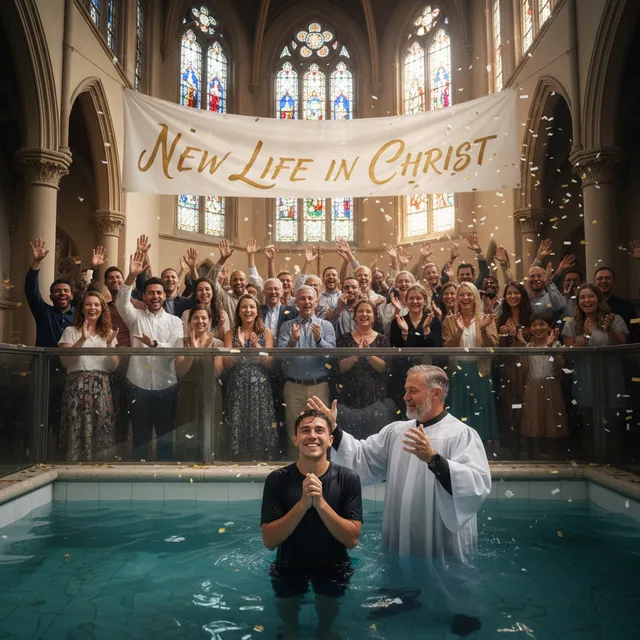
New Christians taking the meaningful step of baptism as their first act of obedience.

New Christians discovering foundational truths in community with others on the journey.

New Christians wrestling with questions and discovering answers in God's Word.

New Christians naturally telling others about the transformation they've experienced.
Comprehensive foundations covering everything a new Christian needs to know. Complement with our salvation Bible study for deeper understanding of God's saving work.
What happened when you trusted Christ and what it means for your life
How to read, understand, and apply God's Word to your life
The foundational doctrines that shape authentic Christianity
Practical steps for growing in faith and Christ-like character
Real testimonials from those building their faith foundation with Bible Way
"I accepted Christ at a friend's church but had no idea what to do next. Bible Way's new Christian study walked me through everything step by step. Now I actually understand what I believe and why. It's been transformational."
"We both came to faith around the same time and wanted to learn together. The new Christian resources gave us a solid foundation. We study together every evening now and it's strengthened both our faith and our marriage."
"I use Bible Way's new Christian study with everyone I disciple. It covers all the essentials without overwhelming people. The people who complete it stay engaged in faith and church life long-term. Highly recommended."
Everything you need to build a solid foundation in faith. Perfect alongside our daily Bible study resources.
A complete roadmap for your first weeks as a Christian, with daily readings and practical applications.
8-week study covering essential beliefs and practices every new Christian needs to understand.
Tools and reminders to help you establish consistent daily Bible reading and prayer habits.
Answers to the most common questions new Christians ask about faith, the Bible, and Christian living.
Essential Bible verses every Christian should know, with memorization tips and devotional thoughts.
A practical guide to baptism, church membership, serving, and growing in your faith community.
When you put your faith in Jesus Christ, something miraculous happened. The Bible describes it as being "born again" (John 3:3), becoming a "new creation" where "the old has gone, the new is here" (2 Corinthians 5:17). You were adopted into God's family (Romans 8:15), your sins were completely forgiven (Colossians 1:14), and eternal life became your certain possession (John 3:16). This wasn't something you earned through good behavior but received freely by God's grace through faith (Ephesians 2:8-9). Understanding what happened at the moment of salvation provides the foundation for confident Christian living and joyful assurance.
As a new Christian, you now have the Holy Spirit living within you (1 Corinthians 6:19), guiding you into truth, convicting you of sin, and empowering you for godly living. You're never alone on this journey - God Himself walks with you every step. While you'll still face temptation and sometimes fail, you're no longer enslaved to sin's power. The Christian life is a process called sanctification, where you become more like Christ over time. Bible study is the primary way God transforms your thinking (Romans 12:2) and reveals Himself to you. It's not about religious duty but about knowing the God who loves you and has an incredible purpose for your life.
Join thousands of new Christians building solid foundations through God's Word. Great for online Bible study anytime, anywhere.
"I became a Christian at 35 with no church background at all. I was completely lost about where to begin. Bible Way's new Christian study assumed nothing and explained everything. Six months later, I'm confident in my faith and now helping others start their journey too."
Angela R.
Marketing Manager, Denver
Common questions new Christians ask about faith and Bible study
The Gospel of John is the ideal starting point for new Christians because John explicitly wrote "that you may believe that Jesus is the Christ" (John 20:31). John focuses on Jesus' identity and mission in clear, accessible language. After John, the Gospel of Mark offers a fast-paced account of Jesus' ministry. For practical Christian living, Philippians provides encouragement and guidance. Psalms helps develop a vocabulary for prayer and worship. Avoid starting with Genesis or attempting to read straight through - the Bible wasn't designed as a chronological narrative. Instead, begin with books that directly address your new faith, then gradually expand. A structured reading plan like those in Bible Way helps you experience Scripture systematically. Consistency beats volume - even 10 minutes daily is more valuable than occasional longer sessions. Use a modern translation like NIV, ESV, or NLT for easier comprehension as you're learning.
Assurance of salvation comes from three sources. First, God's promises: Scripture guarantees that genuine faith in Christ results in eternal salvation regardless of feelings (John 3:16, 6:37, 10:28-29). If you've truly trusted Christ as Savior and Lord, you are saved - period. Second, the Holy Spirit's witness: Romans 8:16 says the Spirit testifies with our spirit that we're God's children. Believers typically sense they belong to God, even when doubts arise. Third, evidence of change: 1 John provides marks of genuine faith - loving other believers, desiring to obey God, and grieving over sin. These evidences are imperfect but confirm real spiritual life. Many new Christians struggle with assurance when emotions fluctuate or old sins resurface. Remember: salvation depends on Christ's work, not your performance. Doubts can actually indicate spiritual life - unbelievers rarely worry about whether they're saved. Continue trusting God's promises, pursue growth, and assurance typically strengthens with time and experience.
Baptism is Jesus' clear command for everyone who follows Him (Matthew 28:19), and new converts in Acts were consistently baptized immediately after believing. It's your first public act of obedience. Baptism doesn't save you - the thief on the cross entered paradise without it (Luke 23:43), and Ephesians 2:8-9 confirms salvation comes by grace through faith alone. Instead, baptism symbolizes what already happened spiritually: going under water pictures dying and being buried with Christ; coming up pictures rising to new life (Romans 6:3-4). It publicly identifies you with Christ and His church, declaring to everyone - family, friends, even spiritual forces - that you now belong to Jesus. Most Christians practice believer's baptism by immersion (fully underwater), though practices vary. Don't postpone baptism - the New Testament expected it immediately after conversion. Talk to your pastor or church leader about scheduling yours soon. It's one of the most meaningful experiences of your new life in Christ.
Continued struggle with sin surprises many new Christians who expected instant perfection. Scripture explains that while your spirit was regenerated at salvation, you still inhabit a body with sinful desires (the "flesh") that wars against the Spirit (Galatians 5:17). Sanctification - becoming practically holy in daily life - is a gradual process, not an instant transformation. Even the apostle Paul described struggling with doing what he didn't want to do (Romans 7). The crucial difference is that you're no longer enslaved to sin; you now have power to resist through the Holy Spirit (Romans 6:14, 8:13). Growth happens progressively as you renew your mind through Scripture (Romans 12:2), depend on the Spirit's power, practice saying "no" to temptation, and confess quickly when you fail (1 John 1:9). Don't be discouraged by ongoing struggle - be encouraged that you now hate sin! That grief over sin is evidence of spiritual life. The unsaved don't care about their sin. Keep fighting, keep confessing, keep growing - transformation is happening even when it feels slow.
Finding a church is essential because Christianity is inherently communal - the New Testament knows nothing of isolated Christians. Look for several key elements: (1) Biblical teaching - does the pastor preach from Scripture and take it seriously as God's authoritative Word? (2) Gospel centrality - is salvation through Christ alone clearly proclaimed? (3) Community - are there meaningful opportunities to know and be known by others? (4) Appropriate size - both mega-churches and tiny congregations have tradeoffs; choose where you can genuinely connect. (5) Theological alignment - once you understand basic doctrine, find a church matching your convictions on secondary issues. Visit multiple churches, attend several times before deciding, and look beyond music style or production quality. Ask yourself: "Can I grow here? Serve here? Be cared for here?" No church is perfect because churches contain imperfect people. But regular gathering (Hebrews 10:25), using your gifts to serve (1 Corinthians 12), and submitting to spiritual leadership (Hebrews 13:17) are biblical expectations for every believer. Church isn't optional - it's where you'll grow, serve, and thrive.
Prayer is simply conversation with God - your heavenly Father who loves you and delights to hear from you. There's no required formula or religious vocabulary. The Lord's Prayer (Matthew 6:9-13) provides a helpful pattern: address God as Father, worship Him for who He is, ask for His will to be accomplished, request daily needs, confess sins and seek forgiveness, and ask for spiritual protection. But don't recite it mechanically - use it as a framework. Pray conversationally, honestly, and specifically. Thank God for blessings, even small ones. Confess sins as the Spirit reveals them. Ask for help with challenges you're facing. Pray for others' needs. Express your genuine feelings, including frustration and doubt - the Psalms model raw honesty with God. Start small: even 5 minutes daily builds the habit. Pray throughout the day, not just at set times. Speak silently or aloud, alone or with others. Don't worry about eloquence - God cares about your heart, not your vocabulary. As you grow in Scripture knowledge, your prayers will naturally mature and expand.
Family and friend reactions to your faith can range from supportive to hostile. Jesus warned this would happen (Matthew 10:34-36) and called us to follow Him even when relationships become strained (Luke 14:26). However, opposition often softens over time as people observe genuine, loving transformation in your life. Respond to resistance with grace and patience - don't preach at people or become self-righteous. Let your changed life speak louder than words (1 Peter 3:1-2). Continue showing love rather than withdrawing unless absolutely necessary for your spiritual wellbeing. Pray persistently for loved ones' salvation. Find spiritual family in your church community to support you when biological family doesn't. Avoid unnecessary offense, but don't hide your faith either. Set healthy boundaries if needed. Remember that others' resistance may stem from fear, misunderstanding, or even spiritual conviction - seeds you plant now could produce fruit years later. Your faithful witness might eventually lead them to Christ too.
Doubts are completely normal and can actually strengthen faith when properly addressed. Even John the Baptist, who identified Jesus as "the Lamb of God," later sent messengers asking if Jesus was truly the Messiah (Matthew 11:2-3). Doubt differs fundamentally from unbelief: doubt struggles toward faith while unbelief refuses to believe despite evidence. Bring your doubts to God honestly - He's not threatened by your questions. Investigate them through Scripture, prayer, and conversations with wise Christians. Doubts often arise from misunderstanding biblical teaching (which study resolves), emotional struggles (which time and support heal), unanswered intellectual questions (which require patient exploration), or spiritual attack (which prayer and truth counter). Don't let doubts isolate you from Christian community - that's when they become most dangerous. Many mature believers have walked through seasons of intense doubt and emerged with deeper, stronger faith. Apologetics resources can address intellectual questions. The goal isn't eliminating every uncertainty but trusting God even amid questions, walking "by faith, not by sight" (2 Corinthians 5:7).
New Christians are often the most effective witnesses because they remember life before faith and still have relationships with non-Christians. Start with your personal testimony - what you believed before, what happened when you encountered Christ, and how your life has changed. No one can argue with your own experience. Be natural rather than pushy, ask questions and listen more than talk, and build authentic friendships rather than treating people as conversion targets. Let your genuinely transformed life create curiosity. Learn the basic gospel message: all have sinned (Romans 3:23), sin's consequence is death and separation from God (Romans 6:23), God demonstrated His love by sending Christ to die in our place (Romans 5:8), salvation comes through faith in Jesus alone (John 3:16), and we must respond by believing and confessing Him as Lord (Romans 10:9-10). Invite people to church or Bible study. Pray for specific opportunities and courage. You don't need all the answers - it's okay to say "I don't know, but let me find out." The Spirit works through your faithful witness; conversion is ultimately His work, not yours.
Spiritual growth requires intentional practices, often called "spiritual disciplines." Focus on the fundamentals: (1) Daily Bible reading - even 10-15 minutes engaging Scripture and considering how it applies to your life; (2) Prayer - regular conversation with God throughout the day, not just during emergencies; (3) Church attendance - weekly gathering for worship, teaching, and fellowship with believers; (4) Christian relationships - meaningful connections beyond Sunday services where you know and are known; (5) Service - using your time and abilities to help others in Jesus' name; (6) Giving - financially supporting God's work as an expression of worship and trust. Build habits gradually rather than attempting everything immediately. Consistency matters far more than intensity. Connect new practices to existing routines - Bible reading with morning coffee, prayer during your commute. Use tools like Bible apps, devotional guides, and accountability partners. When you miss a day (and you will), don't spiral into guilt - simply resume the next day. These practices don't earn God's favor (you already have it in Christ) but position you for the transformation and growth He wants to accomplish in you.
When you trusted Christ, the Holy Spirit came to dwell permanently within you (1 Corinthians 6:19, Ephesians 1:13-14). He's not an impersonal force but the third person of the Trinity - fully God. His roles in your life include: Conviction - He reveals sin so you can confess and turn from it (John 16:8); Guidance - He leads you into truth and helps you understand Scripture (John 16:13); Empowerment - He gives power to resist temptation and live godly (Galatians 5:16); Fruit-bearing - He produces Christ-like character over time: love, joy, peace, patience, kindness, goodness, faithfulness, gentleness, self-control (Galatians 5:22-23); Gifting - He equips you with spiritual abilities to serve the church (1 Corinthians 12); Comfort - He comes alongside during difficulty (John 14:16); Prayer assistance - He intercedes when you don't know how to pray (Romans 8:26). Being "filled" with the Spirit (Ephesians 5:18) means yielding to His direction and influence moment by moment. The Spirit is your constant companion, helper, and source of spiritual power for Christian living.
Growth in Christ is a lifelong journey without shortcuts, but certain approaches accelerate development: (1) Immerse yourself in Scripture - not just casual reading but serious study, meditation, and memorization; (2) Apply what you learn - obedience to known truth opens doors to more revelation; (3) Get deeply into community - you'll grow faster with others than alone; (4) Find a mentor - someone further along who can guide, challenge, and encourage you; (5) Serve actively - using your gifts helps develop them; (6) Embrace trials faithfully - difficulties, while painful, produce growth when responded to biblically (James 1:2-4); (7) Pursue holiness intentionally - don't just avoid sin but actively pursue righteousness; (8) Study theology - understanding doctrine deepens worship and transforms thinking. Beware two dangers: impatience (expecting overnight transformation) and passivity (expecting growth without effort). God does the transforming, but He works through your active participation. Set specific goals: a book to study, a sin to address, a discipline to develop, a relationship to build. Track progress and celebrate growth while acknowledging how much remains. Aim for lifelong faithfulness rather than sprinting then burning out.
Additional external resources to support your faith journey
Read the Bible in multiple translations, search passages, and access study resources
biblegateway.com →Biblical answers to the most common questions new Christians ask
gotquestions.org →Articles and resources on foundational topics for new Christians
desiringgod.org →Contemporary Christian perspectives on faith, culture, and daily living
christianitytoday.com →Every mature Christian started exactly where you are now. A Bible study for new Christians provides the solid foundation you need to grow strong in faith, understand the God who saved you, and live the abundant life Jesus promised. You don't have to figure this out alone - Bible Way offers clear guidance, practical tools, and a supportive community to walk alongside you. Whether you made a decision for Christ yesterday or you're still exploring what faith means, our new Christian resources will meet you where you are and guide you forward. Download Bible Way today and take your next step in the greatest journey of your life.