Key Takeaways
Run to win the imperishable prize - "Everyone who competes in the games goes into strict training" (1 Corinthians 9:25)
Your body is God's temple - care for it as an act of worship (1 Corinthians 6:19-20)
Do everything for God's glory - including your sport (1 Corinthians 10:31)
Strength comes through Christ - "I can do all things through him who strengthens me" (Philippians 4:13)
Perseverance produces character - trials build the resilience champions need (Romans 5:3-4)
Run with endurance - fix your eyes on Jesus, the author and perfecter of faith (Hebrews 12:1-2)
Why Athletes Study Scripture
The Bible speaks directly to the athletic experience - discipline, perseverance, competition, and purpose. Explore our comprehensive features designed to help you compete with excellence and faith.
Competition with Purpose
Learn to compete for God's glory, transforming every practice, game, and race into an act of worship and witness.
Mental Toughness Training
Develop unshakeable confidence rooted in faith. Build resilience through Scripture that carries you through adversity.
Focus & Discipline
Apply biblical principles of self-control and perseverance to enhance your athletic training and performance.
Team & Community
Build stronger teammate relationships through servant leadership and biblical principles of unity and encouragement.
Pre-Game Preparation
Develop powerful pre-competition routines that center your mind on Christ and prepare your heart for battle.
Victory & Defeat
Handle both winning and losing with grace, maintaining perspective and character through every outcome.
Athletes in Bible Study
See how competitors integrate faith into their training and competition
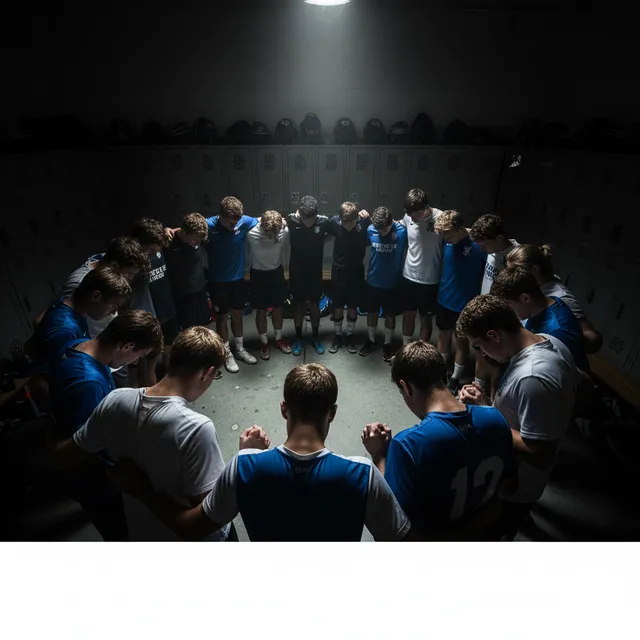
Pre-Game Prayer
Teams centering themselves on Christ before competition through prayer and Scripture.

Personal Devotion
Athletes spending quiet time in Scripture before training or competition.

Team Bible Study
Athletes growing together through shared Scripture study and fellowship.
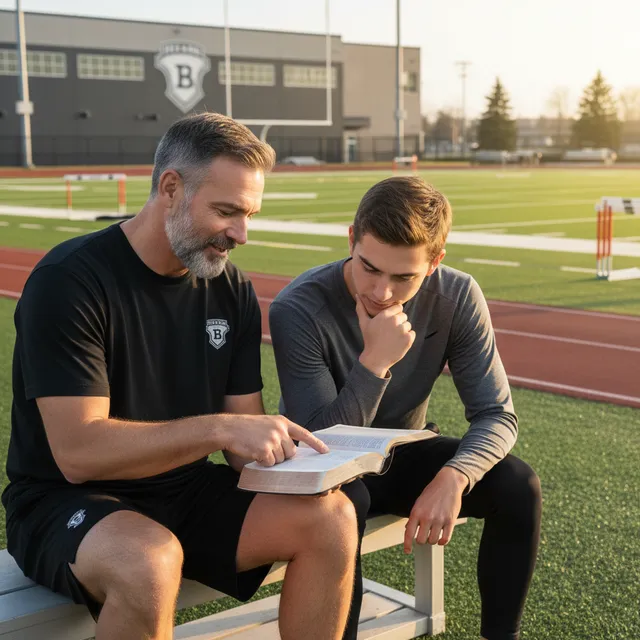
Athletic Mentorship
Experienced athletes and coaches discipling the next generation in faith.

Recovery & Renewal
Finding strength and perspective through Scripture during injury recovery.
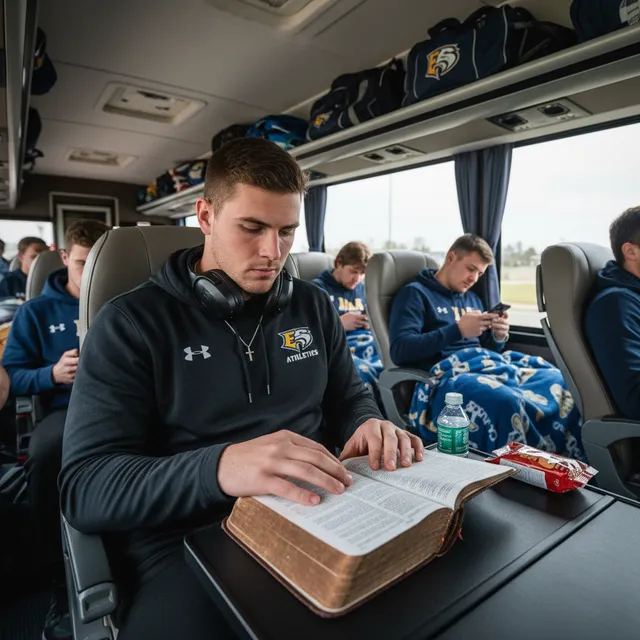
Faith on the Road
Maintaining spiritual disciplines during team travel and competition schedules.
Athlete-Focused Study Topics
Comprehensive biblical studies for athletic application. Complement with our leadership Bible study for team captains and coaches.
The Athlete's Identity
Understanding who you are in Christ beyond athletic performance
- 1 Corinthians 9:24-27 - Running to Win the Imperishable Prize
- 2 Timothy 4:7-8 - Fighting the Good Fight
- Hebrews 12:1-3 - Running with Endurance
- Philippians 3:12-14 - Pressing On Toward the Goal
- Psalm 139:13-16 - Fearfully and Wonderfully Made
- 1 Corinthians 6:19-20 - Your Body as God's Temple
Competing with Excellence
Biblical principles for giving your best in competition
- Colossians 3:23-24 - Working for the Lord
- Ecclesiastes 9:10 - Whatever Your Hand Finds to Do
- Proverbs 22:29 - Excellence Brings Recognition
- 1 Corinthians 10:31 - Doing All for God's Glory
- Daniel 6:3 - An Excellent Spirit
- Galatians 6:4 - Testing Your Own Work
Mental Toughness & Perseverance
Building resilience through faith
- James 1:2-4 - Joy in Trials Produces Perseverance
- Romans 5:3-5 - Suffering Produces Character
- Isaiah 40:28-31 - Renewing Strength Like Eagles
- Joshua 1:9 - Be Strong and Courageous
- Philippians 4:13 - I Can Do All Things Through Christ
- 2 Corinthians 12:9-10 - Strength in Weakness
Handling Pressure & Performance
Managing stress and expectations through Scripture
- Philippians 4:6-7 - Peace Through Prayer
- Psalm 56:3-4 - When I Am Afraid, I Trust
- Proverbs 3:5-6 - Trust in the Lord
- Matthew 6:25-34 - Do Not Be Anxious
- Isaiah 26:3 - Perfect Peace for the Steadfast
- 1 Peter 5:7 - Casting All Your Anxieties
What Athletes Say
Real testimonials from competitors transformed by studying Scripture
"Bible Way transformed how I approach the game. The study on competing for God's glory changed my mindset completely. Now every practice and every play is an opportunity to honor Christ. My performance improved because I stopped playing scared."
"As a runner, I struggled with identity - was I only as valuable as my last race? This Bible study helped me understand my worth comes from being God's child, not my times. Ironically, that freedom helped me PR three times this season."
"The pressure at this level is intense. Bible Way's studies on handling pressure and trusting God have been my anchor. Before games, I now focus on playing for an audience of One. It's transformed both my game and my peace."
Athlete Resources
Tools designed for competitive schedules. Access alongside our online Bible study platform and daily devotionals.
Pre-Game Devotional
Quick 5-minute devotions designed for competition days with focus and prayer prompts.
Athlete's Prayer Guide
Prayers for practices, games, injuries, disappointments, and victories.
Mental Toughness Verses
Memorizable Scripture cards for building resilience and focus under pressure.
Team Devotional Guide
Materials for leading Bible studies with teammates or sports ministry groups.
Off-Season Growth Plan
Structured Bible reading plan for developing spiritually during training seasons.
Injury Recovery Devotional
Biblical encouragement and perspective for athletes navigating injury and setbacks.
Biblical Principles for Athletic Excellence
A Bible study for athletes reveals that Scripture speaks directly to the competitive experience. The Apostle Paul frequently used athletic metaphors because the parallels between spiritual growth and athletic training are profound. In 1 Corinthians 9:24-27, Paul writes, "Do you not know that in a race all the runners run, but only one gets the prize? Run in such a way as to get the prize." This isn't just metaphor - it's a call to approach both faith and sport with maximum effort and intentional discipline. Athletes understand the sacrifice required for excellence, and Scripture honors that commitment while redirecting its ultimate purpose toward eternal rewards. The discipline of training, the perseverance through pain, the pursuit of excellence - all become spiritual practices when offered to God.
Athletic competition also provides unique opportunities to demonstrate character under pressure. How you respond to bad calls, tough losses, difficult teammates, and the temptation to cut corners reveals your true self. Hebrews 12:1-3 encourages believers to "run with perseverance the race marked out for us, fixing our eyes on Jesus." Christian athletes who study hope in Scripture and develop purpose-driven faith find that their sport becomes a platform for witness. Every game becomes an opportunity to demonstrate grace, integrity, and the difference Christ makes in how we compete and relate to others.
Athletic Faith Benefits:
Start Your Athletic Faith Journey
Join thousands of athletes integrating faith with competition. Connect with our young adult and college student Bible studies for peer support.
What You'll Learn
- How to compete for God's glory in every game
- Biblical framework for handling pressure
- Building identity beyond athletic performance
- How to lead and influence teammates spiritually
"Bible Way helped me understand that my athletic gifts are from God and meant to bring Him glory. When I stopped playing for scouts and started playing for the Lord, everything changed. I'm more relaxed, more focused, and performing better than ever."
Alex M.
High School Baseball Player
Frequently Asked Questions
Common questions about faith, sports, and athletic competition
What does the Bible say about sports and competition?
Scripture speaks positively about athletic competition when approached with the right heart. The Apostle Paul frequently used athletic imagery, understanding the value of disciplined training and wholehearted effort. In 1 Corinthians 9:24-27, he writes, "Everyone who competes in the games goes into strict training. They do it to get a crown that will not last, but we do it to get a crown that will last forever." This affirms the legitimacy of athletic competition while redirecting its ultimate purpose. Similarly, 2 Timothy 4:7 celebrates the athletic life: "I have fought the good fight, I have finished the race, I have kept the faith." The key biblical principles for sports include: compete with excellence ("Whatever you do, work at it with all your heart" - Colossians 3:23), maintain integrity (don't cheat, lie, or harm opponents), treat competitors with respect (love your neighbor includes opponents), handle both victory and defeat with grace, and remember your sport is ultimately for God's glory. Competition becomes problematic when winning becomes an idol, when we harm others to succeed, or when our identity becomes solely defined by performance. Christian athletes can compete intensely while maintaining love for opponents and submission to God.
How can I use my athletic platform for God?
Athletic platforms provide unique opportunities for witness and influence. First, your character speaks loudest. How you respond to adversity, treat opponents and officials, handle victory and defeat, and interact with teammates demonstrates what you actually believe. People watch athletes carefully - your actions either validate or undermine your verbal witness. Second, relationships matter. Teammates spend enormous amounts of time together in practices, travel, and competition. These deep relationships create opportunities for meaningful spiritual conversations that few other contexts allow. Third, visibility amplifies influence. Athletes, especially successful ones, have platforms that extend beyond the playing field. Social media, interviews, and public appearances provide opportunities to share faith authentically. Many professional athletes effectively use their platforms by speaking at churches, schools, and community events, sharing their testimony in media, supporting charitable causes aligned with their faith, and mentoring younger athletes. Fourth, sports ministry organizations like FCA, AIA, and Navigators provide structured ways to reach athletes. Hosting Bible studies, attending camps, or simply inviting teammates creates entry points. The key is authenticity - not using sports to preach but letting your faith naturally overflow from who you are into everything you do.
How do I handle the pressure of competition biblically?
Competition pressure often comes from misplaced identity and fear - fear of failure, fear of disappointing others, fear of not measuring up. Scripture addresses these root issues directly. First, secure your identity in Christ, not performance. "See what great love the Father has lavished on us, that we should be called children of God!" (1 John 3:1). Your worth isn't determined by wins and losses but by being God's beloved child. This foundation provides freedom to compete without the crushing weight of proving yourself. Second, compete for an audience of One. "Whatever you do, work at it with all your heart, as working for the Lord, not for human masters" (Colossians 3:23). When you're playing for God's approval rather than chasing the approval of coaches, scouts, fans, or even yourself, you're freed from the tyranny of performance-based acceptance. Third, cast your anxieties on Him. "Cast all your anxiety on him because he cares for you" (1 Peter 5:7). Bring your competition fears to God in prayer before, during, and after competition. Fourth, focus on what you can control - your effort, attitude, and preparation - and release outcomes to God. "Trust in the LORD with all your heart and lean not on your own understanding" (Proverbs 3:5). Fifth, develop pre-competition routines that center your mind on truth - Scripture reading, prayer, worship music - that remind you of who God is and who you are in Him.
What should I do when I face injury or setback?
Injury and setback are among the hardest experiences for athletes because they strike at the core of athletic identity. Scripture provides both comfort and perspective. First, remember that God is with you in suffering. "The LORD is close to the brokenhearted and saves those who are crushed in spirit" (Psalm 34:18). Injury can feel like God has abandoned you, but He's actually drawing near. Second, trials have redemptive purposes. "We also glory in our sufferings, because we know that suffering produces perseverance; perseverance, character; and character, hope" (Romans 5:3-4). The patience, perspective, and empathy developed through injury often become some of an athlete's greatest strengths. Third, your identity remains secure. If you've built your identity solely on athletic performance, injury forces a painful but necessary recalibration. "Your body is a temple of the Holy Spirit" (1 Corinthians 6:19) - you are more than what your body can do. Fourth, this is an opportunity for deeper faith. Many athletes report that injuries forced them to develop spiritual disciplines and deepen their faith in ways that success never did. Fifth, use this time for mental and spiritual training. Watch film, study the game, work on the mental aspects that often get neglected during physical training. Finally, trust God's timing for your return. Rushing back too soon often leads to re-injury; patience honors both your body and God's healing process.
How do I balance athletics with spiritual growth?
The demanding schedules of athletics can make spiritual disciplines challenging, but they're essential for long-term sustainability and effectiveness. First, integrate rather than separate. Your sport itself can be spiritual practice when done for God's glory. Training becomes an offering when you give your best effort as worship. Competition becomes ministry when you demonstrate Christ-like character. Second, use transitions. Travel time, pre-game prep, cool-down periods, and off days provide natural opportunities for Bible reading, prayer, and reflection. Apps like Bible Way make Scripture accessible anywhere. Third, prioritize ruthlessly. You make time for what matters most. Early morning devotions before practice, team chapel, or post-game reflection can be protected if you're intentional. Fourth, find community. Team Bible studies, FCA/AIA groups, or accountability partners who understand athletic demands provide support that generic small groups may not. Fifth, use your sport to drive you to God. Let the pressures, challenges, and joys of competition constantly point you back to dependence on Him. "I can do all things through Christ who strengthens me" (Philippians 4:13) isn't just a verse for the locker room wall - it's a lifestyle of moment-by-moment dependence. Sixth, protect the off-season. Use periods of reduced athletic demand for more intensive spiritual growth - retreats, longer Bible reading plans, deeper study.
Is it okay to pray to win?
This common question deserves thoughtful biblical reflection. First, consider that both teams often have Christians praying for victory - God isn't picking sides based on prayer quantity or quality. Second, Jesus taught us to pray "Your will be done" (Matthew 6:10). This acknowledges that God's purposes are higher than our preferences. We can bring our desires to God honestly while surrendering outcomes to His wisdom. Third, consider what's worth praying for: "Lord, help me compete with excellence and character that honors You. Give me strength to give my best effort. Help me demonstrate grace whether I win or lose. Use this competition for Your purposes, whatever the outcome." Fourth, it's appropriate to pray for specific skills and focus - "Help me see the ball clearly, make good decisions, stay calm under pressure." These prayers align your desires with God's design for excellence. Fifth, avoid treating God as a cosmic vending machine who grants athletic success to those who pray correctly. This misunderstands both prayer and God's sovereignty. Finally, the most spiritually mature athletes often pray more about their response to competition than the results - prayers for character, witness, and glorifying God regardless of outcome. Victory and defeat both become opportunities to demonstrate faith when our prayers focus on faithfulness rather than just results.
How do I handle difficult coaches or teammates?
Athletic environments often include challenging relationships that test our faith. Scripture provides guidance for these situations. First, model respect for authority even when it's difficult. "Let everyone be subject to the governing authorities" (Romans 13:1) applies to coaches. Unless they're asking you to sin, maintain a respectful, cooperative attitude even when you disagree with decisions. Second, with difficult teammates, remember Jesus' command to love even enemies: "Love your enemies and pray for those who persecute you" (Matthew 5:44). Teammates who frustrate you still bear God's image and deserve respect. Third, seek to understand before judging. Difficult people often have painful backgrounds driving their behavior. Compassion doesn't excuse bad behavior but helps us respond graciously. Fourth, address conflict biblically. "If your brother or sister sins, go and point out their fault, just between the two of you" (Matthew 18:15). Direct, private conversation is better than gossip, passive-aggression, or avoidance. Fifth, set appropriate boundaries. Loving others doesn't mean enabling abuse or tolerating sin. You can respect a coach's authority while respectfully raising concerns about inappropriate behavior. Sixth, trust God's sovereignty over your athletic situation. He has you on this team for a reason, possibly to be a light in a dark place. Finally, seek wisdom from mature believers outside the situation who can provide perspective and advice.
What does the Bible say about taking care of my body as an athlete?
Scripture affirms the importance of physical stewardship, which has direct application for athletes. "Do you not know that your bodies are temples of the Holy Spirit, who is in you, whom you have received from God? You are not your own; you were bought at a price. Therefore honor God with your bodies" (1 Corinthians 6:19-20). This foundational text establishes that our bodies belong to God and deserve careful stewardship. For athletes, this means: proper nutrition that fuels performance and health rather than just indulgence; adequate rest and recovery - even God rested (Genesis 2:2-3), and overtraining dishonors the body; avoiding substances that harm the body, including performance-enhancing drugs that violate both rules and bodily integrity; training wisely to prevent unnecessary injury; seeking proper medical care when needed rather than "playing through" in ways that cause long-term damage; maintaining appropriate weight and body composition for your sport without extreme measures that damage health. The parallel passage in 1 Corinthians 9:27 shows Paul taking bodily discipline seriously: "I discipline my body and keep it under control." Athletic training aligns with this principle when it builds up rather than tears down the body God gave us. Finally, remember that while physical training has value, "godliness has value for all things" (1 Timothy 4:8). Don't let physical training crowd out spiritual training.
How can I lead a team Bible study for athletes?
Team Bible studies can be powerful because athletes share unique experiences that create deep bonds. Here's how to start and lead effectively: First, get appropriate permissions. Talk with coaches and, if at a school, administration about hosting a voluntary Bible study. Emphasize that it's optional and won't affect team standing. Second, find a consistent time and place - before or after practice, during team meals, or travel are natural options. Consistency builds habit. Third, keep it athlete-friendly: brief (15-30 minutes works well), interactive rather than lecture-heavy, and relevant to athletic experience. Use passages about discipline, perseverance, competition, teamwork, and handling pressure. Fourth, create a safe environment. Some teammates may be exploring faith for the first time. Avoid jargon, welcome questions, and don't pressure anyone. Fifth, use good resources. Organizations like FCA and AIA have athlete-specific devotionals and study guides. Bible Way's athlete resources are designed for competitive contexts. Sixth, involve others. Don't do all the talking - let teammates share, ask questions, and even lead occasionally. This builds ownership and develops leadership. Seventh, connect Scripture to sport specifically. After reading a passage, ask: "How does this apply to our next game? Our practice today? A challenge you're facing?" Finally, model what you teach. Your life is the most powerful teaching tool. How you compete, handle adversity, and treat others demonstrates whether your Bible study content is real.
What are some examples of Christian athletes who integrated faith well?
Many athletes have demonstrated how faith and sport can unite powerfully. Eric Liddell, the Scottish sprinter whose story inspired "Chariots of Fire," famously refused to race on Sunday at the 1924 Olympics due to his convictions, then won gold in the 400m instead. He later became a missionary in China. His quote captures his philosophy: "God made me fast, and when I run, I feel His pleasure." Tim Tebow has used his platform consistently for faith, from John 3:16 eye black to hospital visits, demonstrating that high-profile athletes can be openly Christian while competing at elite levels. Allyson Felix, one of the most decorated Olympic track athletes, has spoken openly about her faith journey through career challenges, motherhood, and advocacy, modeling how faith shapes not just competition but all of life. Kurt Warner went from grocery store stocker to Super Bowl MVP, consistently crediting God and using his platform for ministry. Simone Biles demonstrated faith-informed wisdom when she prioritized mental health at the 2020 Olympics, recognizing that honoring God with her body sometimes means stepping back. David Robinson combined NBA excellence with deep faith, founding a school in San Antonio and modeling that business acumen and faith can serve communities. What these athletes share: they competed with excellence, handled both success and setback with grace, used their platforms for good, and maintained integrity throughout their careers.
How should I respond to trash talk and unsportsmanlike behavior?
Competitive environments often include behavior designed to provoke, intimidate, or distract. Scripture guides our response. First, don't return evil for evil. "Do not repay anyone evil for evil. Be careful to do what is right in the eyes of everyone" (Romans 12:17). Responding with your own trash talk or dirty play surrenders your witness and often escalates conflict. Second, maintain self-control. "A person without self-control is like a city with broken-down walls" (Proverbs 25:28). Athletes who lose control of their emotions become vulnerable to manipulation. Opponents who trash talk often want you angry and distracted - don't give them what they want. Third, let your play speak. The best response to disrespect is excellent, composed performance. Nothing silences critics like winning with class. Fourth, respond with unexpected kindness. "If your enemy is hungry, feed him; if he is thirsty, give him something to drink" (Romans 12:20). Helping an opponent up after a hard foul, complimenting a good play, or simply refusing to engage can be disarming and create opportunities for witness later. Fifth, protect teammates without retaliating. Good teammates stand up for each other, but there's a difference between physical protection and revenge. Sixth, remember the bigger picture. Your response is your testimony. Opponents, officials, fans, and teammates are all watching. How you handle provocation demonstrates whether your faith is real or just words. Finally, report genuinely dangerous behavior to officials rather than handling it yourself in ways that could result in ejection or injury.
What should I do when my athletic career ends?
Every athletic career eventually ends, whether through graduation, injury, age, or circumstance. This transition can be profoundly difficult, especially when identity has been built primarily around sport. Scripture provides perspective and hope. First, remember that your identity is in Christ, not your sport. "So we fix our eyes not on what is seen, but on what is unseen, since what is seen is temporary, but what is unseen is eternal" (2 Corinthians 4:18). Athletic careers are temporary by design; only what's built on Christ lasts forever. Second, recognize that skills developed through sport transfer to other areas: discipline, teamwork, handling pressure, goal-setting, time management, and resilience all serve you in career, family, and ministry. Third, grieve the loss appropriately. The end of an athletic career is a real loss worth mourning. Don't minimize or spiritualize away the genuine difficulty of transition. Fourth, find new ways to stay connected to sport if that brings life - coaching, mentoring young athletes, recreational competition, or supporting programs that develop young people. Fifth, let the transition deepen your faith. Many former athletes report that retirement forced them to develop their spiritual lives in ways that active competition crowded out. Sixth, serve others going through similar transitions. Your experience can help younger athletes prepare for the inevitable end of their playing careers. Finally, trust God's purposes. "For I know the plans I have for you," declares the LORD, "plans to prosper you and not to harm you, plans to give you hope and a future" (Jeremiah 29:11).
Trusted Athletic Faith Resources
Additional external resources to deepen your study of faith in sports
BibleGateway Sports Topics
Collection of verses about discipline, perseverance, and competition
biblegateway.com →Got Questions: Christians & Sports
Biblical answers to questions about faith and athletic competition
gotquestions.org →FCA Resources
Fellowship of Christian Athletes devotionals and study materials
fca.org →Athletes in Action
Campus ministry resources for college athletes and teams
athletesinaction.org →