
Personal Devotion
Individuals discovering God's unconditional love through personal Scripture study.
You belong here. An affirming Bible study welcomes LGBTQ+ Christians and allies to explore Scripture in an environment that honors both your faith and your identity. Whether you're returning to faith after church hurt, seeking to deepen your spiritual life, or looking for resources for your affirming congregation, our comprehensive Bible study resources provide welcoming pathways to encounter God's Word. Discover the God of radical love who welcomes all who come and calls each of us beloved.
God's love is unconditional and extends to every person regardless of sexual orientation or gender identity (Romans 8:38-39)
Every person is created in God's image and possesses inherent dignity and worth (Genesis 1:27)
Scripture study benefits from understanding historical context, original languages, and cultural backgrounds
There is no condemnation for those who are in Christ Jesus - grace is freely offered to all (Romans 8:1)
The body of Christ includes diverse members, each bringing unique gifts to the community (1 Corinthians 12)
Healing is possible for those who have experienced spiritual trauma from non-affirming religious environments
Everyone deserves to encounter God's Word in a safe, welcoming environment. Explore our comprehensive features designed for inclusive spiritual growth.
Study Scripture in a space that honors both your faith journey and your identity. No judgment, no condemnation - just authentic engagement with God's Word.
Explore the Bible with scholarly resources that consider historical context, original languages, and diverse theological perspectives.
Connect with other LGBTQ+ Christians and allies who share your desire to grow spiritually and study Scripture together.
Resources for prayer, meditation, and spiritual practices that nurture your relationship with God in authentic ways.
Access scholarly perspectives on Scripture, including affirming interpretations from respected theologians and biblical scholars.
Resources for those healing from spiritual wounds, finding peace with faith and identity, and experiencing God's unconditional love.
See how LGBTQ+ Christians and affirming communities are growing in faith together
Individuals discovering God's unconditional love through personal Scripture study.

Affirming small groups exploring Scripture in welcoming community.

Partners growing spiritually together through shared Bible study.
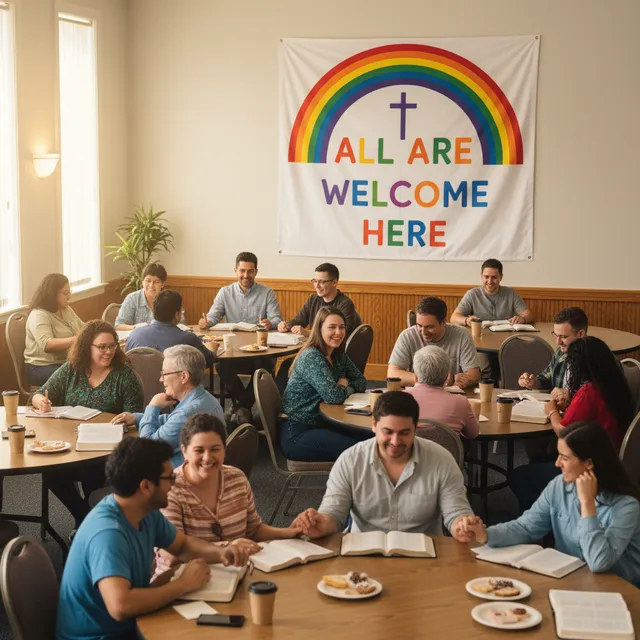
Affirming congregations building faith through group study.

Virtual affirming Bible study connecting believers across distances.

Finding peace and restoration through Scripture after spiritual trauma.
Comprehensive studies exploring God's love, grace, and welcome for all. Pair with our Bible study on love for deeper understanding of God's heart.
Exploring the breadth and depth of God's love for all people
Understanding who we are as beloved children of God
The radical grace of God that welcomes all who come
Finding your place in the family of God
Real testimonials from LGBTQ+ Christians finding spiritual growth through affirming Bible study
"For years I thought I had to choose between my faith and my identity. Bible Way helped me discover that God's love is bigger than I ever imagined. I've found a way to grow spiritually while being authentically myself."
"As a married lesbian couple, we struggled to find Bible study resources that didn't make us feel like outsiders. Bible Way welcomed us and helped us build a deeper relationship with God together."
"I recommend Bible Way to everyone in our congregation, especially LGBTQ+ members who are healing from past church hurt. The resources help people rediscover the God of love rather than the god of judgment they'd been taught."
Everything you need for inclusive spiritual growth. Access alongside our online Bible study platform.
Verse-by-verse studies examining passages in their historical, cultural, and linguistic context.
Daily spiritual readings that nurture faith and affirm your identity as God's beloved child.
Resources for developing a rich prayer life and experiencing God's presence authentically.
Access to scholarly perspectives on Scripture from affirming theologians and biblical scholars.
For those working through spiritual trauma, finding peace with faith and identity.
Resources for group study in affirming communities, small groups, and faith gatherings.
An affirming Bible study provides a welcoming space for LGBTQ+ Christians and allies to engage with Scripture authentically. This approach recognizes that many LGBTQ+ people have experienced hurt from religious institutions and need safe environments to reconnect with faith. Affirming Bible study doesn't mean ignoring difficult texts - rather, it means examining them with scholarly rigor, considering historical context, original languages, and diverse theological perspectives. Many respected biblical scholars have written extensively about how traditional interpretations of certain passages reflect cultural assumptions rather than clear biblical mandates. The affirming approach seeks to honor the authority of Scripture while recognizing that interpretation requires careful study.
At its core, affirming Bible study centers on the clear, overarching message of Scripture: God's radical, unconditional love for all people. Jesus consistently welcomed those whom religious authorities rejected. The early church struggled with inclusion - particularly regarding Gentiles - and Acts 10-15 shows how God expanded the community of faith beyond what they originally imagined. Understanding this pattern helps us see how the Spirit continues to work today. Whether you're exploring God's grace, the Gospel of John's message of love, or finding hope after spiritual trauma, affirming Bible study creates space for genuine encounter with God.
Whether you're returning to faith, deepening your spiritual life, or leading an affirming congregation, our resources welcome you. Join young adults, couples, and believers of all ages discovering God's inclusive love.
"I spent 20 years believing God couldn't love me as I am. Bible Way's affirming resources helped me rediscover the God who created me, knows me, and loves me completely. My faith has never been deeper or more authentic."
David K.
Teacher, Denver
Common questions about affirming Bible study
An affirming Bible study is one that welcomes LGBTQ+ people to participate fully in studying Scripture and growing spiritually. This approach recognizes that sexual orientation and gender identity do not exclude anyone from God's love or the community of faith. Affirming Bible study doesn't mean ignoring Scripture or dismissing difficult passages - rather, it means engaging with the Bible seriously while examining texts in their historical, cultural, and linguistic context. Many affirming Christians have found that careful study of Scripture leads to a deeper, not shallower, engagement with God's Word. Affirming Bible studies create space for LGBTQ+ individuals to grow spiritually without being told their identity is inherently sinful. They focus on the central message of Scripture - God's radical love for all people - while examining traditionally cited passages with scholarly rigor. This approach allows participants to develop authentic faith that integrates rather than compartmentalizes their identity and spirituality.
Absolutely. Affirming Bible study often involves deeper, more rigorous engagement with Scripture than surface-level readings allow. This approach takes seriously the tools of biblical interpretation: examining original Hebrew and Greek, understanding historical and cultural contexts, considering genre and literary forms, and studying how early Christians interpreted texts. Many affirming scholars are deeply committed to biblical authority and have spent their careers studying Scripture carefully. They argue that traditional interpretations of certain passages reflect cultural assumptions that weren't inherent to the original texts. For example, the concept of sexual orientation as we understand it today didn't exist in the ancient world - so asking "What did this text mean to its original audience?" often yields different answers than "What does our tradition say about this?" Affirming Bible study honors Scripture by refusing to settle for easy answers and instead doing the hard work of careful interpretation.
Many LGBTQ+ Christians have found that faith and identity can be beautifully integrated rather than perpetually in conflict. This journey often begins with understanding that one's identity is not a choice or a mistake, but part of who God created them to be. Genesis 1:27 affirms that all humans are created in God's image - this includes LGBTQ+ people. Psalm 139 describes how God knits us together in the womb, knowing us intimately before birth. The reconciliation process often involves: (1) Studying Scripture with affirming resources and scholars who provide alternative interpretations of commonly cited passages. (2) Finding affirming community - churches, small groups, and friends who welcome you fully. (3) Allowing yourself to experience God's love without conditions. (4) Potentially working through religious trauma with a supportive counselor. (5) Discovering LGBTQ+ saints and spiritual leaders throughout history who have lived faithful lives. Many find that integrating faith and identity leads to deeper, more authentic spirituality than either suppressing their identity or abandoning their faith.
This question requires more nuance than a simple answer allows. Affirming scholars point out several important considerations: First, the concept of "homosexuality" as a sexual orientation is modern - ancient writers didn't have this framework. Biblical references that may relate to same-sex behavior typically address specific contexts like temple prostitution, pederasty (adult-child exploitation), or expressions of dominance and humiliation. Second, there are only about six passages that traditionalists cite, and each has significant interpretive questions when examined in depth. Third, Jesus never mentioned homosexuality, though he frequently challenged religious authorities who used Scripture to exclude and condemn. Fourth, the Bible's main themes - God's love, justice, mercy, caring for the marginalized - consistently point toward inclusion rather than exclusion. Affirming Christians don't dismiss these passages but engage with them seriously while questioning whether traditional interpretations accurately reflect what the biblical authors intended to communicate. Many resources exist for those wanting to study these specific texts in depth.
Yes, numerous respected biblical scholars, theologians, and denominations support affirming interpretations of Scripture. Authors like Matthew Vines ("God and the Gay Christian"), James Brownson ("Bible, Gender, Sexuality"), and Colby Martin ("UnClobber") have written accessibly about affirming scholarship. Theologians like Walter Brueggemann, Miguel De La Torre, and many others have contributed to affirming theological perspectives. Multiple Christian denominations and congregations have officially adopted affirming positions after careful study of Scripture, including the United Church of Christ, Episcopal Church, Presbyterian Church (USA), Evangelical Lutheran Church in America, and many others. The Anglican Communion, United Methodist Church, and others continue to engage in discussion. While Christianity remains divided on this issue, the affirming position is held by serious, committed Christians who take Scripture seriously and have come to different conclusions through careful study. This isn't a matter of "liberal" versus "conservative" but of genuine interpretive differences among people who all love God and Scripture.
Finding affirming community is crucial for LGBTQ+ spiritual health. Several resources can help: (1) Church directories like Church Clarity, Believe Out Loud, and GLAAD's religion page list affirming congregations by location. (2) Denominational websites for affirming denominations often have congregation finders. (3) Search online for "affirming church" plus your city. (4) LGBTQ+ community centers sometimes maintain lists of local affirming religious communities. (5) Pride events often include affirming religious groups. When visiting a potential church, look for clear welcoming statements, LGBTQ+ visibility in leadership and membership, use of inclusive language, and how they respond to direct questions about their policies. It's okay to ask specifically about their position on LGBTQ+ inclusion, marriage, and ordination. If you live somewhere without affirming churches nearby, many affirming congregations offer online services and communities. National organizations like Believe Out Loud, Q Christian Fellowship, and others provide community connections as well.
Many LGBTQ+ people have experienced significant harm from religious institutions - this is real trauma that deserves care and healing. Recovery is possible, though it takes time and support. Steps toward healing include: (1) Acknowledge the harm - what happened to you was real and it wasn't your fault. (2) Find a therapist experienced with religious trauma, particularly one familiar with LGBTQ+ issues. Organizations like the Religious Trauma Institute can help locate specialists. (3) Connect with others who've had similar experiences - you're not alone, and community support is powerful. (4) Give yourself permission to step back from faith if needed - sometimes distance is necessary for healing. (5) If you choose to re-engage with faith, do so slowly and on your own terms. (6) Seek affirming spiritual communities that provide safe space to process your journey. (7) Consider resources specifically addressing religious trauma, like "Leaving the Fold" by Marlene Winell or the work of organizations like Recovering from Religion. Healing is possible, and many former religious trauma survivors have found vibrant, authentic faith on the other side.
Absolutely! Many LGBTQ+ couples find that studying Scripture together deepens both their faith and their relationship. Couples Bible study provides opportunity for spiritual intimacy, shared growth, and unified decision-making grounded in faith. Resources designed for couples often focus on themes like love, commitment, communication, and building a God-centered home - all of which apply beautifully to LGBTQ+ relationships. Some couples adapt traditional couples devotionals by applying the principles to their own context. Others prefer resources specifically created for LGBTQ+ couples that address unique aspects of their experience. Studying passages about covenant love, faithfulness, and partnership (like Ruth and Naomi's commitment, or the love poetry of Song of Songs) can be particularly meaningful. Many affirming churches offer couples groups where LGBTQ+ partners can connect with other couples for group study and community. Whether engaged, married, or dating, studying God's Word together helps couples build their relationship on a strong spiritual foundation.
Navigating relationships with non-affirming family members is one of the most challenging aspects of being an LGBTQ+ Christian. Some suggestions: (1) Set healthy boundaries - you don't have to accept abuse, even from family. (2) Educate when it's safe and productive, but recognize you may not change minds. Resources like "Mom, I'm Gay" by Susan Cottrell can help. (3) Find chosen family and community who accept you fully - this provides essential support. (4) Consider whether ongoing discussions help or harm you - sometimes stepping back protects your mental health. (5) If family is open, share your faith journey and the scholarly resources that have shaped your understanding. (6) Seek common ground where possible - you may disagree on this issue while connecting on other aspects of faith. (7) Remember that their response is their responsibility - you cannot control others' reactions. (8) Some families evolve over time; others don't. Either way, your worth and belonging in God's family doesn't depend on human acceptance. Organizations like PFLAG provide support for LGBTQ+ individuals and their families working toward understanding.
While the Bible doesn't address sexual orientation as we understand it today, some readers find meaningful examples of deep same-sex relationships. The most frequently cited is David and Jonathan, whose love the Bible describes as "surpassing the love of women" (2 Samuel 1:26). Their story includes covenant-making, emotional intimacy, and loyalty that reflects deep love. Ruth and Naomi's story shows profound female covenant love - Ruth's pledge to Naomi (Ruth 1:16-17) is often read at weddings. While interpreting these as romantic relationships is debated, they demonstrate that intense same-sex love was celebrated rather than condemned in Scripture. The Ethiopian eunuch in Acts 8, a person who wouldn't fit binary categories, is explicitly welcomed into the faith community. Jesus praised those who were "eunuchs from birth" (Matthew 19:12) - a category some scholars believe included those with diverse gender expressions or sexual orientations. Throughout history, LGBTQ+ saints and spiritual leaders have served faithfully, even if their stories were suppressed. Affirming Bible study recovers these voices and stories.
Spiritual growth for LGBTQ+ Christians follows the same broad patterns as for any believer - with some unique aspects. Core practices include: (1) Regular Scripture engagement - using affirming resources to study God's Word without shame. (2) Prayer - developing an honest relationship with God where you can bring your whole self. (3) Community - connecting with affirming believers who encourage your faith. (4) Worship - finding or creating worship experiences that help you encounter God authentically. (5) Service - using your gifts to love others and build God's kingdom. (6) Sabbath and rest - creating space for renewal. Unique aspects of LGBTQ+ spiritual growth may include: Processing religious trauma and finding healing. Integrating faith and identity rather than compartmentalizing. Learning to trust God again after being hurt in His name. Celebrating the gifts your unique perspective brings to the church. Mentoring others on similar journeys. Many LGBTQ+ Christians discover profound spiritual depth precisely because they've had to wrestle with faith more intentionally than those for whom it came easily.
Parents, family members, and allies play crucial roles in supporting LGBTQ+ loved ones' spiritual journeys. Numerous resources can help: Books like "Unconditional" by Brian Proctor (a pastor and father of a gay son), "Mom, I'm Gay" by Susan Cottrell, and "Always Our Children" (US Catholic Bishops' pastoral message) offer family-focused perspectives. PFLAG provides support groups and resources nationwide for families. The Marin Foundation, Free Mom Hugs, and Fortunate Families offer community and education. Many affirming denominations have specific resources for families. Allies can support LGBTQ+ loved ones by: (1) Educating themselves about affirming theology. (2) Listening more than speaking. (3) Advocating in their own faith communities. (4) Attending Pride events and affirming church services. (5) Examining their own assumptions and biases. (6) Offering unconditional love while allowing space for the person's own faith journey. (7) Connecting with other affirming families for support. Your support can literally save lives - LGBTQ+ youth with family acceptance have dramatically lower rates of depression, substance abuse, and suicidal ideation.
Additional external resources for affirming Bible study and spiritual growth
Access multiple Bible translations for study and comparison
biblegateway.com →Community and resources for LGBTQ+ Christians
qchristian.org →LGBTQ+ justice resources and church finder
believeoutloud.com →Support for LGBTQ+ people and families including faith resources
pflag.org →