1 Corinthians Bible Study - Unity, Love, and Resurrection
Discover Paul's practical wisdom for church life in his letter to the troubled church at Corinth. A 1 Corinthians Bible study addresses the real issues churches face today: divisions, spiritual immaturity, moral failures, questions about marriage and singleness, the proper use of spiritual gifts, and the foundational truth of Christ's resurrection. From the famous love chapter to the powerful resurrection discourse, 1 Corinthians offers biblical guidance for building healthy, unified Christian communities that glorify God.
Key Takeaways from 1 Corinthians Bible Study
Church unity comes through focusing on Christ crucified, not human leaders or worldly wisdom
Our bodies are temples of the Holy Spirit - we must honor God with sexual purity and holiness
Christian liberty must be balanced with love for others - what's permissible isn't always beneficial
Spiritual gifts are given for the common good - love is the more excellent way above all gifts
Christ's resurrection is historically verified and foundational - without it our faith is futile
Believers will be bodily raised with imperishable, glorious bodies - death has lost its sting
Why Study 1 Corinthians?
Paul's most practical letter addresses issues that every church and believer faces today
Church Unity
Learn how Paul addressed divisions in Corinth and discover principles for maintaining unity in Christ despite differences.
Spiritual Gifts
Understand the proper use of spiritual gifts for building up the church body, with each member contributing uniquely.
The Love Chapter
Dive deep into 1 Corinthians 13, the most famous description of Christian love that surpasses all spiritual gifts.
Resurrection Hope
Explore Paul's powerful teaching on Christ's resurrection and our future bodily resurrection in chapter 15.
Moral Purity
Discover Paul's guidance on sexual ethics, marriage, and honoring God with our bodies as temples of the Spirit.
Lord's Supper
Learn proper observance of communion and what it means to examine ourselves before partaking of the table.
Understanding 1 Corinthians in Context
First Corinthians stands as one of Paul's most important letters, written around AD 55 from Ephesus to address serious problems in the church at Corinth. This 1 Corinthians Bible study reveals a church struggling with divisions, immorality, misuse of spiritual gifts, and confusion about resurrection. Corinth was a major commercial hub - wealthy, cosmopolitan, and notoriously immoral. The young church there reflected its surrounding culture more than it should have. This Bible study helps modern believers see that the church's struggles aren't new - and neither are God's solutions.
The Corinthian church was dividing into factions following different leaders - Paul, Apollos, Peter, and Christ Himself became party names. Paul responds by emphasizing Christ crucified as the only foundation and true wisdom that seems foolish to the world. The letter then addresses a shocking case of sexual immorality being tolerated, lawsuits between believers, questions about marriage and singleness, meat sacrificed to idols, proper worship practices, spiritual gifts, and the resurrection. For those seeking structured online Bible study, 1 Corinthians provides essential guidance for Christian living and church health.
Perhaps no section of 1 Corinthians is better known than chapter 13, the "love chapter" read at countless weddings. Yet in context, Paul presents love as the solution to the Corinthians' gift-envy and division - love is greater than eloquent speech, prophetic powers, mountain-moving faith, or sacrificial giving. Without love, these impressive spiritual achievements amount to nothing. Whether you pursue daily Bible study or weekly group discussions, understanding love as Paul defines it - patient, kind, not envious or boastful, not self-seeking - will transform your relationships and church involvement.
The letter climaxes in chapter 15 with the most extensive treatment of resurrection in Scripture. Paul presents the historical evidence for Christ's resurrection (appearing to over 500 witnesses), explains its significance (if Christ is not raised, faith is futile), and describes the future resurrection body (imperishable, glorious, powerful, spiritual). The triumphant conclusion - "O death, where is your victory? O death, where is your sting?" - has comforted believers for centuries. From women's Bible studies to seminary classrooms, 1 Corinthians remains essential for understanding church life, Christian ethics, and resurrection hope. Let Bible Way guide your journey through this practical, life-changing letter.
Journey Through 1 Corinthians
From church divisions to resurrection victory - all 16 chapters explored
Chapters 1-4: Divisions and Wisdom
Addressing church splits and true versus worldly wisdom
- Greeting and Thanksgiving (1:1-9)
- Divisions in the Church (1:10-17)
- Christ the Power and Wisdom of God (1:18-31)
- Paul's Preaching - Not Eloquence but Spirit (2:1-16)
- Spiritual Maturity vs. Infancy (3:1-4)
- Servants of Christ - Planting and Watering (3:5-17)
- Boasting Only in the Lord (3:18-23)
- Apostolic Ministry and Suffering (4:1-21)
Chapters 5-7: Morality and Marriage
Addressing sexual sin and questions about relationships
- Discipline for Immorality (5:1-13)
- Lawsuits Among Believers (6:1-11)
- The Body is for the Lord (6:12-20)
- Principles of Marriage (7:1-16)
- Remain in Your Calling (7:17-24)
- The Unmarried and Widows (7:25-40)
- Marriage vs. Devotion to the Lord
- Flee Sexual Immorality
Chapters 8-11: Christian Liberty
Navigating freedom and responsibility in community
- Food Sacrificed to Idols (8:1-13)
- Paul's Rights as an Apostle (9:1-18)
- Becoming All Things to All People (9:19-27)
- Warnings from Israel's History (10:1-13)
- Flee Idolatry (10:14-22)
- Doing All for God's Glory (10:23-11:1)
- Head Coverings in Worship (11:2-16)
- Proper Observance of Lord's Supper (11:17-34)
Chapters 12-16: Gifts, Love, Resurrection
Spiritual gifts, the love chapter, and resurrection hope
- Variety of Spiritual Gifts (12:1-11)
- One Body, Many Members (12:12-31)
- The More Excellent Way - Love (13:1-13)
- Prophecy and Tongues (14:1-25)
- Orderly Worship (14:26-40)
- The Resurrection of Christ (15:1-11)
- The Resurrection of the Dead (15:12-58)
- Collection and Final Greetings (16:1-24)
The Heart of 1 Corinthians
"Love is patient, love is kind. It does not envy, it does not boast, it is not proud... Love never fails." - 1 Corinthians 13:4, 8
In a church torn by divisions, gift-envy, and spiritual immaturity, Paul points to love as the more excellent way. Not sentimental feelings but sacrificial action - patient when wronged, kind when mistreated, not keeping score of wrongs. This love is possible only through Christ who first loved us. Without it, the most impressive spiritual achievements mean nothing.
And from chapter 15, the foundation of our hope: "But Christ has indeed been raised from the dead, the firstfruits of those who have fallen asleep" (15:20). Because He lives, we will live also. Death is swallowed up in victory!
What Others Say About Our 1 Corinthians Study
How studying 1 Corinthians transformed their faith and church life
"1 Corinthians is the church manual we desperately need today. Bible Way's study helped our congregation navigate real issues - from divisions to spiritual gifts - with biblical wisdom that transformed our unity and worship."
"Our women's group studied 1 Corinthians 13 together using Bible Way. Going beyond the wedding reading to understand love as a way of life changed how we relate to each other. The chapter on resurrection gave us hope during grief."
"As someone navigating dating and career in a secular city, 1 Corinthians spoke directly to my questions about relationships, work, and living distinctly Christian. Paul's practical wisdom is timeless."
1 Corinthians Study Resources
Tools to help you understand unity, love, and resurrection
Chapter Summaries
Clear, concise summaries of all 16 chapters with key themes, famous verses, and practical applications.
Spiritual Gifts Study
In-depth exploration of the gifts listed in chapters 12-14, their purpose, and proper use in the church.
1 Corinthians 13 Deep Dive
Extended study of the love chapter - understanding agape love beyond sentiment to sacrificial action.
Key Verse Memory
Memorization guides for key passages: 1:18, 6:19-20, 10:13, 13:4-7, 15:3-4, 15:55-57.
Resurrection Study
Complete exploration of chapter 15 - the historical resurrection and its implications for believers.
Discussion Questions
Thought-provoking questions for personal reflection or group Bible study discussion.
1 Corinthians Study Visuals
Visual guides to help you understand the themes of 1 Corinthians
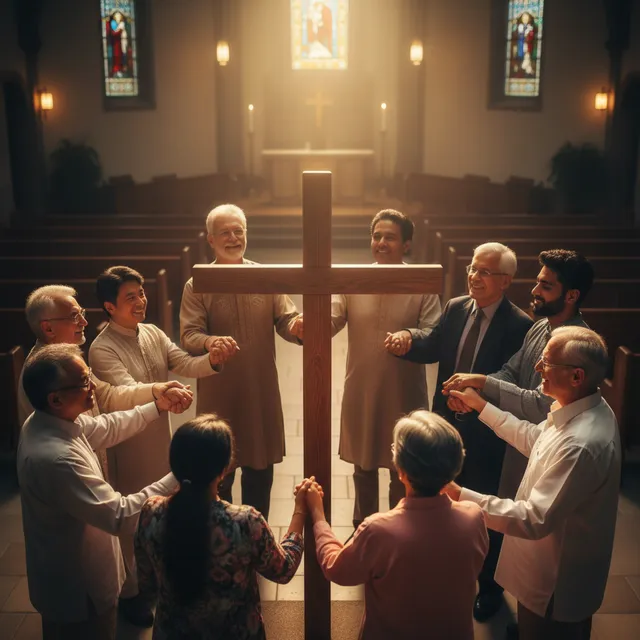
Unity in Christ
The church united around Christ crucified, not divided by human leaders.

Body of Christ
Many members with different gifts functioning as one body for God's glory.

Love Never Fails
The more excellent way - patient, kind, not envious, enduring forever.

Temple of the Spirit
Your body as God's dwelling place - honoring Him with physical holiness.

Resurrection Victory
Christ raised as firstfruits, guaranteeing our future resurrection.

Group Bible Study
Community study deepens understanding through shared insights and discussion.
Join Our 1 Corinthians Study Community
Experience the wisdom that builds healthy churches
What You'll Get
- Chapter-by-chapter study guides for all 16 chapters
- In-depth spiritual gifts study with practical applications
- 1 Corinthians 13 love chapter deep dive
- Resurrection teaching with apologetic resources
"1 Corinthians helped our small group navigate conflict biblically. When we focused on loving each other as chapter 13 describes, everything changed. Now we study it yearly as a spiritual health check."
Michelle T.
Small group coordinator
Frequently Asked Questions About 1 Corinthians Bible Study
Clear answers to common questions about First Corinthians
What are the main themes of 1 Corinthians?
The major themes of 1 Corinthians include: (1) Church unity - Paul addresses divisions over leaders and reminds believers they are one body in Christ. (2) Sexual purity - the body as temple of the Holy Spirit, with clear teaching on marriage, singleness, and avoiding immorality. (3) Christian liberty and love - balancing freedom in Christ with consideration for weaker believers. (4) Spiritual gifts - their diversity, purpose for common good, and proper use in worship. (5) Love as the greatest virtue - the famous chapter 13 describing patient, kind, selfless love. (6) Resurrection - the historical reality of Christ's resurrection and the believers' future bodily resurrection. (7) Church discipline - addressing sin in the community while offering restoration. (8) Orderly worship - principles for gathering that honor God and edify others. These themes address practical issues the Corinthian church faced, making the letter remarkably relevant for churches today navigating similar challenges.
Who wrote 1 Corinthians and why?
The Apostle Paul wrote 1 Corinthians around AD 55 from Ephesus during his third missionary journey. He had founded the Corinthian church on his second journey (Acts 18) and maintained contact with them. Paul wrote in response to disturbing reports from "Chloe's household" about divisions in the church (1:11) and to answer questions the Corinthians had sent him in a letter (7:1). Corinth was a major commercial city known for immorality - the term "to Corinthianize" meant to practice sexual immorality. The young church was struggling to live distinctly Christian lives in this environment. Paul addresses their problems systematically: divisions (1-4), immorality and lawsuits (5-6), marriage questions (7), food sacrificed to idols (8-10), worship practices (11), spiritual gifts (12-14), and resurrection doubts (15). The letter reveals both Paul's apostolic authority and pastoral heart as he corrects, instructs, and encourages this troubled but beloved congregation.
What does 1 Corinthians 13 really teach about love?
While 1 Corinthians 13 is famously read at weddings, its context reveals deeper teaching. Paul writes to a church that prized spectacular spiritual gifts, especially tongues and prophecy. Chapter 13 sits between chapters on gifts (12, 14) to show that without love, even the most impressive gifts are worthless. Paul begins by stating that eloquent speech, prophetic powers, mountain-moving faith, and sacrificial giving all amount to nothing without love (13:1-3). He then describes love's character: patient and kind, not envious or boastful, not proud or self-seeking, not easily angered, keeping no record of wrongs, always protecting, trusting, hoping, and persevering (13:4-7). Unlike spiritual gifts that will pass away, love is eternal - it never fails (13:8-12). The conclusion ranks love above faith and hope (13:13). This teaching corrects the Corinthians' gift-envy by showing that love is the "more excellent way" they should pursue (12:31). Love isn't just romantic feeling but intentional, sacrificial action toward others - including difficult church members.
What does 1 Corinthians teach about spiritual gifts?
1 Corinthians 12-14 provides the most extensive New Testament teaching on spiritual gifts. Key principles include: (1) Gifts are given by the Holy Spirit as He determines (12:11) - we don't choose our gifts. (2) Every believer has at least one gift (12:7) - no one is giftless. (3) Gifts are for the "common good" (12:7) - not for personal prestige. (4) The church is like a body with many parts (12:12-27) - each gift is necessary, none should be despised or envied. (5) God has arranged the gifts (12:28-30) - diversity in the body is His design. (6) We should desire the "greater gifts" (12:31) - those that most edify the church. (7) Prophecy is preferable to tongues in public worship because it edifies everyone (14:1-25). (8) Worship should be orderly, not chaotic (14:26-40). (9) Love must govern gift use (chapter 13). The Corinthians were abusing gifts, especially tongues, causing disorder and division. Paul redirects them toward love-motivated service that builds up the whole body rather than individual display.
What does 1 Corinthians 15 teach about resurrection?
1 Corinthians 15 is the longest and most detailed biblical teaching on resurrection. Paul first establishes Christ's resurrection as historical fact, citing eyewitnesses including himself - Peter, the twelve, 500 brothers at once (most still living), James, and all the apostles (15:3-8). He then argues that denying resurrection has devastating implications: if dead aren't raised, Christ isn't raised; if Christ isn't raised, preaching and faith are useless, apostles are liars, believers are still in sins, and those who died in Christ have perished (15:12-19). But Christ HAS been raised as "firstfruits" - the guarantee of our resurrection (15:20-23). Paul addresses questions about resurrection bodies: they will be imperishable, glorious, powerful, and spiritual, transformed from our current perishable, dishonorable, weak, natural bodies (15:35-49). The chapter climaxes with triumph: "Death is swallowed up in victory. O death, where is your victory? O death, where is your sting?" (15:54-55). Because of resurrection, our labor in the Lord is "not in vain" (15:58). This chapter provides both apologetic evidence for skeptics and comfort for believers facing death.
What does "your body is a temple" mean (1 Cor 6:19-20)?
In 1 Corinthians 6:19-20, Paul declares: "Do you not know that your bodies are temples of the Holy Spirit, who is in you, whom you have received from God? You are not your own; you were bought at a price. Therefore honor God with your bodies." This follows Paul's argument against sexual immorality. In the Old Testament, God's presence dwelt in the temple - a sacred, set-apart place. Now, the Holy Spirit dwells within each believer, making our physical bodies sacred space. The implications are profound: (1) We are not autonomous - we belong to God who purchased us with Christ's blood. (2) What we do with our bodies matters spiritually - sexual sin uniquely sins against our own body (6:18). (3) We should "flee" immorality, not negotiate with it (6:18). (4) The goal is to "glorify God" in our bodies - using them for His purposes. This teaching opposes both Greek dualism (body doesn't matter) and modern autonomy (my body, my choice). As God's dwelling, our bodies deserve respect, purity, and purposeful use for His glory. This applies to sexuality, health, and all bodily conduct.
What does 1 Corinthians teach about Christian freedom?
1 Corinthians addresses Christian liberty primarily regarding food sacrificed to idols (chapters 8-10), but the principles apply broadly. Paul establishes that Christians have freedom: idols are nothing, there's only one God, food doesn't commend us to God (8:4-8). However, freedom must be governed by love. Key principles include: (1) Knowledge puffs up, but love builds up (8:1). (2) Not everyone has this knowledge - some with weak consciences are troubled (8:7). (3) Be careful that your freedom doesn't become a stumbling block to the weak (8:9). (4) If exercising liberty causes a brother to stumble, it's sin against Christ (8:12-13). (5) Paul voluntarily limited his freedom - even forgoing support - to avoid hindering the gospel (9:1-23). (6) All things are lawful but not all things are helpful or build up (10:23). (7) Do everything for God's glory, giving no offense (10:31-33). The application: Christian freedom isn't about asserting rights but serving others. We willingly limit liberty for weaker believers' conscience and gospel witness, becoming "all things to all people" that some might be saved (9:22).
What does 1 Corinthians teach about the Lord's Supper?
1 Corinthians 11:17-34 contains important Lord's Supper teaching, prompted by abuse in Corinth. The wealthy were eating their fill while poor members went hungry - their gatherings did "more harm than good" (11:17). Paul corrects by recounting Jesus' institution: the bread representing His body "given for you," the cup the "new covenant in my blood" (11:23-25). The observance proclaims the Lord's death until He comes (11:26). Eating or drinking "in an unworthy manner" brings guilt and judgment (11:27-29). Some Corinthians were sick or had died because of irreverent participation (11:30). The solution: "examine yourself" before eating, "discerning the body" - recognizing both Christ's sacrifice and the church body represented (11:28-29). Wait for one another to eat together as one community (11:33). This passage establishes that the Lord's Supper is: (1) A memorial of Christ's death. (2) A proclamation of the gospel. (3) A communal meal requiring proper relationships. (4) A serious matter requiring self-examination. (5) An anticipation of Christ's return. Churches use this passage to guide communion practices and preparation.
How does 1 Corinthians address church divisions?
Division is the first major problem Paul addresses (1:10-4:21). The Corinthians were forming factions around leaders: "I follow Paul," "I follow Apollos," "I follow Cephas," "I follow Christ" (1:12). Paul's response includes: (1) An appeal to unity in the name of Christ - "Is Christ divided? Was Paul crucified for you?" (1:13). (2) Reminding them that God's wisdom (Christ crucified) appears foolish to the world (1:18-25). (3) Their own humble origins prove God chose what's foolish and weak to shame the wise and strong (1:26-31). (4) Paul intentionally preached simply to avoid personality-based following (2:1-5). (5) Christian leaders are merely servants through whom God works - "I planted, Apollos watered, but God gave the growth" (3:5-9). (6) Christ alone is the foundation; leaders build on it (3:10-15). (7) Boasting in human leaders is foolish when believers possess all things in Christ (3:21-23). The Corinthians had "worldly" thinking - elevating human wisdom and personalities instead of glorying in Christ alone. Unity comes through the cross, which levels all human distinctions.
What is the historical context of Corinth?
Understanding Corinth illuminates 1 Corinthians' message. Corinth was a major Greek city, destroyed by Rome in 146 BC and rebuilt by Julius Caesar in 44 BC as a Roman colony. Located on a narrow isthmus, it controlled trade routes between the Aegean and Adriatic seas, making it wealthy and cosmopolitan. Its population included Romans, Greeks, Jews, and people from across the empire. Corinth was notorious for immorality - the temple of Aphrodite reportedly employed 1,000 sacred prostitutes (though scholars debate this). "Corinthian girl" meant prostitute; "to Corinthianize" meant to practice immorality. The city hosted games second only to Olympics and prized rhetoric and wisdom. This context explains much of 1 Corinthians: the sexual immorality tolerated (chapter 5), Greek wisdom versus the "foolish" cross (chapter 1), lawsuits in pagan courts (chapter 6), idol feasts (chapters 8-10), resurrection skepticism (Greek philosophy viewed bodies negatively - chapter 15), and gift-envy reminiscent of competitive games (chapters 12-14). Paul wrote to a church struggling to live distinctly Christian in a challenging environment - much like believers today.
How should I study 1 Corinthians effectively?
To study 1 Corinthians effectively: (1) Read the entire letter first to grasp its flow - Paul addresses issues systematically. (2) Understand the Corinthian context - their problems shape Paul's responses. (3) Note the structure: divisions (1-4), moral issues (5-6), marriage (7), liberty (8-10), worship (11), gifts and love (12-14), resurrection (15), closing (16). (4) Pay attention to Paul's rhetoric - he uses irony, rhetorical questions, and appeals to reason and emotion. (5) Connect back to the cross - Paul keeps returning to Christ crucified as the solution (1:18, 2:2, etc.). (6) Note the "now concerning" phrases (7:1, 8:1, 12:1, 16:1) marking topics from their letter. (7) Memorize key verses: 1:18, 6:19-20, 10:13, 13:4-7, 15:3-4, 15:55-57. (8) Apply principles to contemporary situations - the specifics change, but principles remain. (9) Use study resources - Bible Way's guides, commentaries (Fee, Thiselton), and discussion groups enhance understanding. (10) Be honest about difficult passages - some (like head coverings) require careful interpretation. The goal is both understanding and transformation.
What are the best commentaries on 1 Corinthians?
For accessible introductions, try David Prior's "The Message of 1 Corinthians" (BST) - clear and practical. Craig Blomberg's "1 Corinthians" (NIVAC) bridges scholarship and application excellently. For deeper study, Gordon Fee's "The First Epistle to the Corinthians" (NICNT) is outstanding - detailed yet readable, especially strong on gifts and resurrection. Anthony Thiselton's massive "The First Epistle to the Corinthians" (NIGTC) is scholarly and comprehensive. Roy Ciampa and Brian Rosner's "The First Letter to the Corinthians" (PNTC) is thorough and evangelical. For Greek students, C.K. Barrett's "The First Epistle to the Corinthians" (BNTC) provides careful exegesis. Classic works include Charles Hodge's commentary and Leon Morris's contribution. For specific sections, Max Turner and D.A. Carson offer excellent work on spiritual gifts. John Stott's "Basic Christianity" chapter on resurrection complements 1 Corinthians 15. Bible Way curates these and other resources, providing study guides and questions that draw on the best scholarship while remaining accessible for personal or group study.
Helpful External Resources
Trusted resources for deeper 1 Corinthians study
Bible Gateway
1 Corinthians commentary with multiple translations and study tools
biblegateway.comBible Project
Visual overview of 1 Corinthians with animated explanations
bibleproject.comGotQuestions.org
Common questions about 1 Corinthians answered biblically
gotquestions.orgBlue Letter Bible
Original language tools and verse-by-verse study
blueletterbible.orgChristianity Today
Articles on 1 Corinthians themes and application
christianitytoday.comBibleHub
Parallel translations, commentaries, and concordance
biblehub.comGospel Coalition
Scholarly articles on 1 Corinthians themes and theology
thegospelcoalition.orgESV Study Bible
Scholarly introduction and notes on 1 Corinthians
esv.orgRelated Bible Studies
Romans Study
The gospel systematically explained
Ephesians Study
Blessings and unity in Christ
Galatians Study
Freedom from the law
Philippians Study
Joy in every circumstance
Explore More Bible Studies
Ready to Begin Your 1 Corinthians Bible Study?
Discover the practical wisdom that has guided churches for two millennia. From resolving divisions to understanding spiritual gifts, from the depths of Christian love to the heights of resurrection hope, 1 Corinthians speaks to the real issues believers face today. Download Bible Way and start your journey through Paul's most practical letter with comprehensive study guides, chapter summaries, and the famous love chapter deep dive. Let the wisdom that transformed the troubled Corinthian church transform your life and community.