
Every Spiritual Blessing
Visual representation of the riches believers have in the heavenly realms in Christ.
Discover the riches of your inheritance in Christ through Paul's magnificent letter to the Ephesians. This Ephesians Bible study reveals your identity as chosen, predestined, redeemed, and sealed by God. Learn about the church as Christ's body, the mystery of Jew and Gentile united, and how to stand firm in spiritual warfare with the full armor of God. Whether you're seeking to understand your spiritual blessings or strengthen your marriage and family, Ephesians provides the foundation for victorious Christian living.
Believers possess every spiritual blessing in the heavenly realms in Christ Jesus
Salvation is by grace alone through faith alone - not by works but for good works
The church is Christ's body and bride - a mystery hidden for ages now revealed
Unity comes through humility, gentleness, patience, and bearing with one another in love
God equips believers with spiritual armor to stand against Satan's schemes
Gospel truth transforms all relationships - marriage, family, and workplace
Ephesians reveals who you are in Christ and how to live worthy of that calling
Discover every spiritual blessing in the heavenly realms - chosen, predestined, redeemed, sealed, and seated with Christ in glory.
Understand the church as Christ's body and bride, where Jew and Gentile become one new humanity in Him.
Learn to stand firm against spiritual forces with truth, righteousness, faith, salvation, and the Word of God.
Apply gospel truth to marriage, family, and work - relationships transformed by mutual submission in Christ.
Experience Paul's powerful prayers for spiritual strength, comprehension of Christ's love, and God's fullness.
Embrace one body, one Spirit, one hope, one Lord, one faith, one baptism, one God and Father of all.
The Book of Ephesians stands as one of Paul's most profound and influential letters, often called the "crown jewel" of his epistles. Written during his Roman imprisonment around AD 60-62, this letter presents the most comprehensive picture of the church in the New Testament. Unlike his other letters addressing specific problems, Ephesians unfolds the eternal purpose of God - to unite all things in Christ and display His manifold wisdom through the church. This Bible study will help you understand why Ephesians has been called "the Alps of the New Testament" for its towering theological heights.
Paul's letter to the Ephesians divides neatly into two halves: chapters 1-3 present doctrine (who we are in Christ), while chapters 4-6 present practice (how we should live). The first half soars with some of Scripture's most elevated theology - chosen before the foundation of the world, predestined for adoption, redeemed by blood, sealed with the Spirit, raised and seated with Christ in heavenly places. The second half grounds these truths in everyday life - walking worthy, maintaining unity, speaking truth, transforming relationships, and standing firm in spiritual battle. For those seeking online Bible study that combines deep theology with practical application, Ephesians delivers both magnificently.
The central theme of Ephesians is unity - God's cosmic plan to bring all things together under Christ's headship. This includes the reconciliation of humanity to God (2:1-10), the reconciliation of Jew and Gentile to each other (2:11-22), and ultimately the reconciliation of all things in heaven and earth (1:10). The church, as Christ's body and bride, stands at the center of this plan, serving as God's display case to principalities and powers. Whether you pursue daily Bible study or in-depth theological education, Ephesians reveals the church's dignity, purpose, and cosmic significance in ways no other book matches.
What makes Ephesians essential for every believer? It answers questions we didn't know to ask. What spiritual resources do I have? Every blessing in the heavenly realms (1:3). How did I become a Christian? God chose you before the world began (1:4). What's my purpose? To display God's grace and wisdom (2:7, 3:10). How should I relate to other Christians? With humility, gentleness, patience, and love (4:2-3). How do I fight spiritual battles? With God's armor and prayer (6:10-18). From women's Bible studies to marriage counseling to spiritual warfare training, Ephesians provides rich material for every context. Let Bible Way guide your journey through this transformative epistle with chapter-by-chapter analysis, identity-in-Christ studies, and practical application guides.
From spiritual blessings to spiritual warfare - all 6 chapters explored
Every spiritual blessing and Paul's prayer for wisdom
Grace, salvation, and the new humanity
The church's calling and gifts for maturity
Imitating God and standing firm
"For by grace you have been saved through faith. And this is not your own doing; it is the gift of God, not a result of works, so that no one may boast." - Ephesians 2:8-9
This passage captures the gospel at its clearest: salvation is entirely God's gift, received through faith, not earned by human effort. Paul emphasizes that we were dead in sin (2:1), but God, rich in mercy, made us alive with Christ (2:4-5). Our response is not boasting in achievement but gratitude for grace - walking in the good works God prepared beforehand (2:10).
From the opening praise for spiritual blessings (1:3-14) to the closing call to spiritual warfare (6:10-20), Ephesians celebrates what God has done for us in Christ and calls us to live accordingly. Every command flows from gospel indicatives - we walk worthy because we've been made worthy; we put on new self because we've been made new; we stand firm because we've already been raised and seated with Christ.
How studying Ephesians transformed their faith and relationships
"Studying Ephesians 1 revolutionized my understanding of who I am in Christ. Bible Way helped me see that every spiritual blessing is already mine - I just needed to live in that reality. It changed how I lead and disciple other women."
"Ephesians gave our new church its DNA. The vision of one new humanity, gifts building up the body, and standing firm together - Bible Way's study resources made these truths practical and applicable for our diverse congregation."
"Ephesians 5 transformed our marriage when we finally understood it's about Christ and the church. Bible Way's study helped us see mutual submission as beautiful, not threatening. We're closer now than our wedding day."
Tools to help you discover your identity in Christ
Clear, concise summaries of all 6 chapters with key themes, famous verses, and theological insights.
Comprehensive list of who you are in Christ from Ephesians - chosen, redeemed, sealed, seated, gifted.
Detailed exploration of each piece of spiritual armor with practical application for daily battles.
In-depth study of Ephesians 5-6 household codes - Christ-centered relationships that reflect the gospel.
Learn to pray Paul's powerful prayers from Ephesians 1 and 3 for yourself and others.
Thought-provoking questions for personal reflection or group Bible study discussion.
Visual guides to help you understand the Book of Ephesians
Visual representation of the riches believers have in the heavenly realms in Christ.
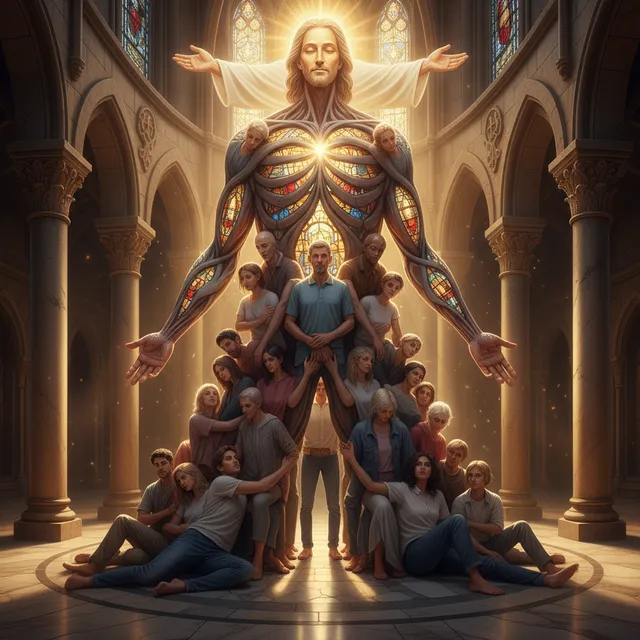
The church as one body with many members, each gifted to build up the whole.
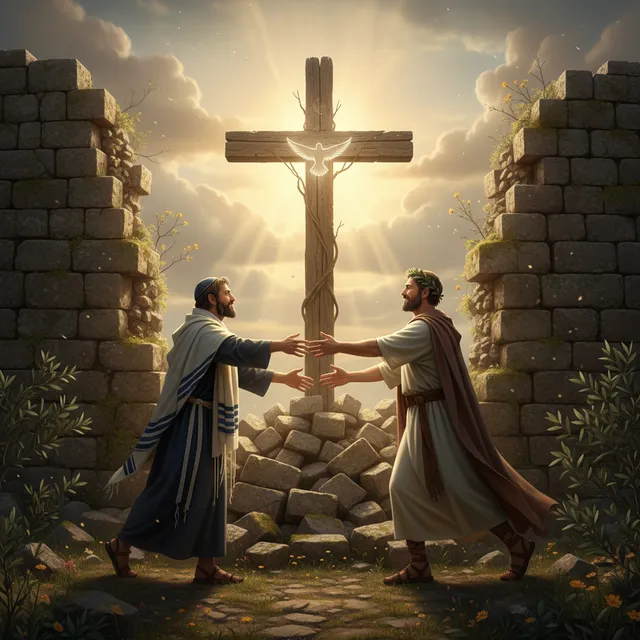
Christ destroying the dividing wall of hostility between Jew and Gentile.

Every piece of spiritual armor for standing firm against Satan's schemes.

Marriage as a picture of Christ's love for His bride, the church.

Community study deepens understanding of Ephesians through shared insights.
Discover every spiritual blessing in Christ
"Ephesians showed me I'm already blessed with everything I need in Christ. I stopped striving for God's approval and started living from it. Bible Way's identity study changed my entire spiritual life."
Amanda L.
Formerly performance-driven believer
Clear answers to common questions about the Book of Ephesians
The central theme of Ephesians is God's eternal purpose to unite all things under Christ's headship - particularly bringing Jews and Gentiles together into one new humanity, the church. Paul presents this as a "mystery" hidden for ages but now revealed (3:3-6). The letter divides into two main sections: chapters 1-3 explain our position in Christ (doctrine), while chapters 4-6 describe our practice in Christ (application). Key themes include spiritual blessings in the heavenly realms (1:3-14), salvation by grace through faith (2:8-9), the church as Christ's body and bride (1:22-23, 5:25-32), unity amid diversity (4:1-16), the transformed life (4:17-5:21), Christ-centered relationships (5:22-6:9), and spiritual warfare (6:10-20). Everything flows from what God has done for us in Christ - we're chosen, predestined, redeemed, sealed, raised, and seated with Him. The appropriate response is walking worthy of this calling through humility, love, truth, and Spirit-filled living.
The Apostle Paul wrote Ephesians during his first Roman imprisonment around AD 60-62, making it one of his "prison epistles" along with Philippians, Colossians, and Philemon. Paul identifies himself as the author (1:1, 3:1) and the letter reflects his apostolic authority and deep theological insight. Ephesians was likely written around the same time as Colossians, as both letters share similar themes and may have been carried by Tychicus (Ephesians 6:21, Colossians 4:7). Some scholars note that Ephesians lacks the personal greetings typical of Paul's letters and reads more like a circular letter. The earliest manuscripts omit "in Ephesus" from 1:1, suggesting it may have been written to multiple churches in the region with Ephesus as the primary destination. This would explain why Paul, who spent three years in Ephesus, doesn't mention specific people by name. Regardless of these details, the letter's Pauline authorship was universally accepted in the early church, and its profound theology bears Paul's distinctive theological fingerprint.
Ephesians 1:3-14 contains one of Scripture's most remarkable sentences (202 words in Greek!), praising God for "every spiritual blessing in the heavenly realms in Christ." These blessings include: (1) Chosen before the foundation of the world to be holy and blameless (1:4) - God's eternal selection of His people. (2) Predestined for adoption as sons through Jesus Christ (1:5) - our destiny as God's beloved children. (3) Redemption through His blood and forgiveness of sins (1:7) - freedom from sin's penalty and power. (4) The mystery of His will revealed (1:9-10) - understanding God's cosmic plan to unite all things in Christ. (5) An inheritance in Christ (1:11) - sharing in Christ's glorious destiny. (6) Sealed with the Holy Spirit (1:13-14) - God's mark of ownership and guarantee of future glory. These blessings are "spiritual" (originating from the Spirit), "heavenly" (our true citizenship is above), and "in Christ" (received through union with Him). The passage emphasizes that all these blessings are already ours - past tense, accomplished facts - not future promises dependent on our performance. This transforms how believers view themselves and live daily.
Ephesians presents the most exalted view of the church in Scripture using several powerful images. First, the church is Christ's body with Him as the head (1:22-23, 4:15-16) - believers are interconnected members dependent on Christ and one another, each gifted to build up the whole. Second, the church is God's temple (2:19-22) - built on apostles and prophets with Christ as cornerstone, where the Spirit dwells. Third, the church is Christ's bride (5:25-32) - loved, cleansed, and presented glorious; marriage reflects this ultimate relationship. Fourth, the church is God's workmanship/masterpiece (2:10) - created for good works God prepared beforehand. Fifth, the church is God's family (2:19, 3:15) - fellow citizens and household members with God as Father. Paul emphasizes that the church is the mystery now revealed - Jews and Gentiles united in one new humanity, the dividing wall demolished by Christ's cross (2:14-16). The church displays God's manifold wisdom to cosmic powers (3:10), demonstrating that God can reconcile the most hostile groups. This high ecclesiology transforms how we view church involvement - not optional but essential to God's eternal purpose.
Ephesians 6:10-20 describes spiritual warfare and the armor God provides for standing firm against Satan's schemes. The armor pieces include: (1) Belt of truth (6:14) - integrity and commitment to God's truth that holds everything together. (2) Breastplate of righteousness (6:14) - Christ's righteousness credited to us and the righteous living that protects our hearts. (3) Gospel shoes (6:15) - readiness to share the gospel and firm footing that comes from peace with God. (4) Shield of faith (6:16) - active trust in God that extinguishes Satan's fiery darts of doubt, temptation, and accusation. (5) Helmet of salvation (6:17) - assurance of salvation protecting our minds from despair and deception. (6) Sword of the Spirit (6:17) - God's Word as our offensive weapon, used by Jesus against Satan's temptations. Paul emphasizes that our struggle is not against flesh and blood but against spiritual forces of evil in heavenly realms (6:12). The armor is defensive except for the sword - we stand firm rather than attack. Prayer undergirds everything (6:18-20), keeping us connected to divine power. This passage reminds believers that Christianity involves real spiritual conflict requiring God's resources, not human strength.
Ephesians 5:22-33 presents marriage as a reflection of Christ's relationship with the church - the most profound marriage teaching in Scripture. Paul instructs wives to submit to husbands "as to the Lord" (5:22), not because women are inferior but because this mirrors the church's joyful submission to Christ's loving leadership. He instructs husbands to love wives "as Christ loved the church and gave himself up for her" (5:25) - self-sacrificing love that puts her needs first, seeking her spiritual flourishing. Christ's love is the standard: He cleanses, nourishes, cherishes, and presents the church glorious. The passage emphasizes mutual care: husbands must love their wives as their own bodies (5:28-29), and the two become one flesh (5:31). Paul reveals this is really about Christ and the church (5:32) - human marriage exists to display the greater divine romance. This transforms marriage from mere human arrangement to sacred picture of the gospel. Both roles involve sacrifice: wives yield independence; husbands yield self-centeredness. Neither domination nor doormat-ism is the model, but Christ-like mutual service. This teaching has guided Christian marriages for two millennia.
Ephesians 2:8-9 states one of Scripture's clearest gospel summaries: "For by grace you have been saved through faith. And this is not your own doing; it is the gift of God, not a result of works, so that no one may boast." Each element is crucial: "Grace" means unmerited favor - God giving us what we don't deserve rather than what we do deserve. "Saved" indicates rescue from spiritual death (2:1), God's wrath (2:3), and separation from Christ (2:12). "Through faith" identifies the instrument - trusting in Christ rather than ourselves. "Not your own doing" and "gift of God" emphasize that salvation originates entirely from God, including the faith itself. "Not a result of works" eliminates human merit - no religious rituals, moral achievements, or good deeds contribute to earning salvation. "So that no one may boast" reveals God's purpose - He alone receives glory for salvation. The context amplifies this: we were dead (2:1), following Satan and our sinful nature (2:2-3), deserving wrath (2:3). But God, rich in mercy (2:4), made us alive, raised us, and seated us with Christ (2:5-6). The result? We're God's workmanship, created for good works (2:10) - works flow from salvation, not toward it.
Ephesians contains two magnificent prayers that reveal what mature believers should pray for themselves and others. The first prayer (1:15-23) asks for wisdom and revelation to know God better (1:17), enlightened hearts to understand our hope, glorious inheritance, and incomparably great power (1:18-19). Paul wants believers to grasp what they already have in Christ - the same power that raised Jesus and seated Him above all rule and authority. The second prayer (3:14-21) goes even deeper, asking for inner strengthening through the Spirit (3:16), that Christ would dwell richly in hearts through faith (3:17), and that believers would grasp the incomprehensible dimensions of Christ's love (3:18-19). The goal is being "filled to the measure of all the fullness of God" (3:19). Both prayers emphasize knowing God experientially, not just intellectually. They focus on spiritual growth over material blessing. Paul concludes with a doxology praising God who can do "immeasurably more than all we ask or imagine" (3:20). Learning to pray these prayers transforms our prayer lives from wish lists to worship, from requesting things to requesting transformation.
Unity is central to Ephesians' message. In chapters 1-3, Paul establishes doctrinal unity: Jews and Gentiles are reconciled into one new humanity through Christ's cross (2:14-16), sharing equal access to God (2:18), citizenship in God's household (2:19), and inclusion in the body, inheritance, and promise (3:6). The dividing wall of hostility is demolished (2:14). In chapter 4, Paul moves to practical unity: "Make every effort to keep the unity of the Spirit through the bond of peace" (4:3). This unity has theological foundation - one body, one Spirit, one hope, one Lord, one faith, one baptism, one God and Father (4:4-6). The sevenfold repetition emphasizes oneness. Yet unity doesn't mean uniformity: Christ gives diverse gifts - apostles, prophets, evangelists, pastors, teachers (4:11) - precisely so the body can be built up into mature unity (4:12-13). True unity involves humility, gentleness, patience, and bearing with one another in love (4:2). Paul warns against what destroys unity: bitterness, rage, anger, brawling, slander, malice (4:31). Instead, believers should be kind, compassionate, forgiving (4:32). Unity reflects God's ultimate purpose: bringing all things together under Christ (1:10).
Ephesians provides the richest description of believer identity in Scripture. "In Christ" or equivalent phrases appear over 35 times, emphasizing union with Christ as the foundation of Christian identity. According to Ephesians, believers are: chosen before creation (1:4), predestined for adoption (1:5), accepted in the Beloved (1:6), redeemed and forgiven (1:7), given wisdom and understanding (1:8-9), sealed with the Holy Spirit (1:13), seated with Christ in heavenly places (2:6), God's workmanship/masterpiece (2:10), brought near by Christ's blood (2:13), fellow citizens with the saints (2:19), members of God's household (2:19), part of God's temple (2:21-22), recipients of grace (3:2, 7), able to approach God with freedom and confidence (3:12), strengthened by the Spirit (3:16), rooted and established in love (3:17), filled with God's fullness (3:19), part of Christ's body (4:12), new selves created in righteousness (4:24), children of light (5:8), and strong in the Lord's mighty power (6:10). This identity is not something we achieve but receive - it's already true of every believer. Understanding this transforms how we live, relate, and face spiritual battle.
In Ephesians, "mystery" doesn't mean something puzzling but something previously hidden that God has now revealed. Paul uses this term specifically for God's eternal plan to unite Jews and Gentiles in Christ. The mystery includes: (1) God's purpose to unite all things in Christ (1:9-10) - heaven and earth brought together under one head. (2) Gentile inclusion in God's people (3:3-6) - Gentiles are "heirs together with Israel, members together of one body, and sharers together in the promise in Christ Jesus." (3) The church displaying God's wisdom to cosmic powers (3:10) - through the church, rulers and authorities in heavenly realms see God's manifold wisdom. (4) Marriage reflecting Christ and the church (5:32) - the ultimate mystery behind earthly marriage. This mystery was "hidden for ages" in God (3:9), not fully revealed in the Old Testament, but now made known through apostles and prophets by the Spirit (3:5). Paul sees himself as a steward of this mystery (3:2), called to preach the "unfathomable riches of Christ" (3:8) and make plain this mystery's administration (3:9). The mystery reveals that God's plan is far bigger than Israel alone - it encompasses all peoples united in Christ.
To study Ephesians effectively, start by reading the entire letter in one sitting (only 6 chapters) to grasp its flow as a unified document. Notice the two-part structure: chapters 1-3 focus on doctrine (what God has done), while chapters 4-6 focus on practice (how we should live). Every command in chapters 4-6 flows from the truths in chapters 1-3 - Christian living isn't possible without Christian identity. Study the two prayers carefully (1:15-23, 3:14-21) and consider praying them for yourself and others. Create a list of "in Christ" statements and what they mean for your identity. Pay attention to Paul's logical connectors: "therefore" (4:1, 5:1, 6:14) shows how doctrine leads to practice. Memorize key verses: 1:3-4, 2:8-10, 3:20-21, 4:4-6, and the armor passage 6:10-18. Use cross-references to related passages in Colossians (similar themes). Study word meanings: mystery, grace, body, fullness, walk. Consider different perspectives on disputed passages (predestination in chapter 1, household codes in chapters 5-6). Apply truth to life - Ephesians moves from "therefore" moments of application. Bible Way provides chapter summaries, identity studies, and discussion questions to guide your journey through this magnificent letter.
Trusted resources for deeper Ephesians study
Ephesians commentary with multiple translations and study tools
biblegateway.comVisual overview of Ephesians with animated explanations
bibleproject.comCommon questions about Ephesians answered biblically
gotquestions.orgOriginal language tools and verse-by-verse study
blueletterbible.orgArticles on Ephesians and theology
christianitytoday.comParallel translations, commentaries, and concordance
biblehub.comScholarly articles on Ephesians themes and theology
thegospelcoalition.orgScholarly introduction and notes on Ephesians
esv.orgThe gospel explained systematically
Christ's supremacy over all
Joy in all circumstances
Freedom in Christ
Discover every spiritual blessing that's already yours in Christ. From your identity as chosen, predestined, and redeemed to the mystery of the church as Christ's body and bride - Ephesians reveals the riches of your inheritance. Learn to walk worthy of your calling, build up the body with your gifts, transform your relationships by the gospel, and stand firm against spiritual forces with God's full armor. Download Bible Way today and start your journey through Paul's magnificent letter with comprehensive study guides, identity resources, armor of God studies, and marriage enrichment materials.