Key Takeaways
Dyslexia affects reading, not intelligence - your comprehension can exceed your decoding ability, so use audio to match your intellectual level
Audio Bible is a legitimate primary method, not a "crutch" - listening to Scripture is how the church engaged with God's Word for most of history
Visual learning leverages dyslexic strengths - many people with dyslexia excel at big-picture thinking and visual-spatial reasoning
Dyslexic fonts and formatting actually help - research shows that specific typefaces reduce letter confusion and improve reading speed
Multi-sensory approaches improve retention - combining seeing, hearing, and doing creates stronger learning than reading alone
Simplified translations aren't "dumbing down" Scripture - they provide accurate biblical content in more accessible language structures
Why Dyslexia Needs Different Bible Study Tools
Traditional Bible reading assumes easy text decoding. Explore our comprehensive features specifically designed to make Scripture accessible for dyslexic readers.
Audio Bible First
Full Scripture in professional audio narration - listen while reading along or let your ears do the work entirely. Multiple narrator voices and speeds available.
Dyslexic-Friendly Fonts
OpenDyslexic and other specially designed fonts that reduce letter confusion. Adjustable sizing, spacing, and contrast for optimal readability.
Visual Learning Tools
Scripture through images, infographics, videos, and illustrated timelines. Learn biblical narratives through visual storytelling that bypasses reading challenges.
Easy-Read Translations
Access to simplified translations like NIrV, ICB, and NLT that use shorter sentences and simpler vocabulary while maintaining biblical accuracy.
Pace Control
No time pressure - pause, rewind, replay as needed. Text highlighting follows audio, letting you track your place without losing your position.
Multi-Sensory Engagement
Combine seeing, hearing, and doing for maximum retention. Touch-enabled activities, audio-visual synchronization, and hands-on responses to Scripture.
Dyslexia-Friendly Bible Study in Action
See how believers with dyslexia are engaging with Scripture through accessible methods

Audio Bible Immersion
Engaging with complete Scripture through professional narration - no reading required.

Visual Scripture Learning
Understanding biblical narratives through illustrations, graphics, and visual storytelling.
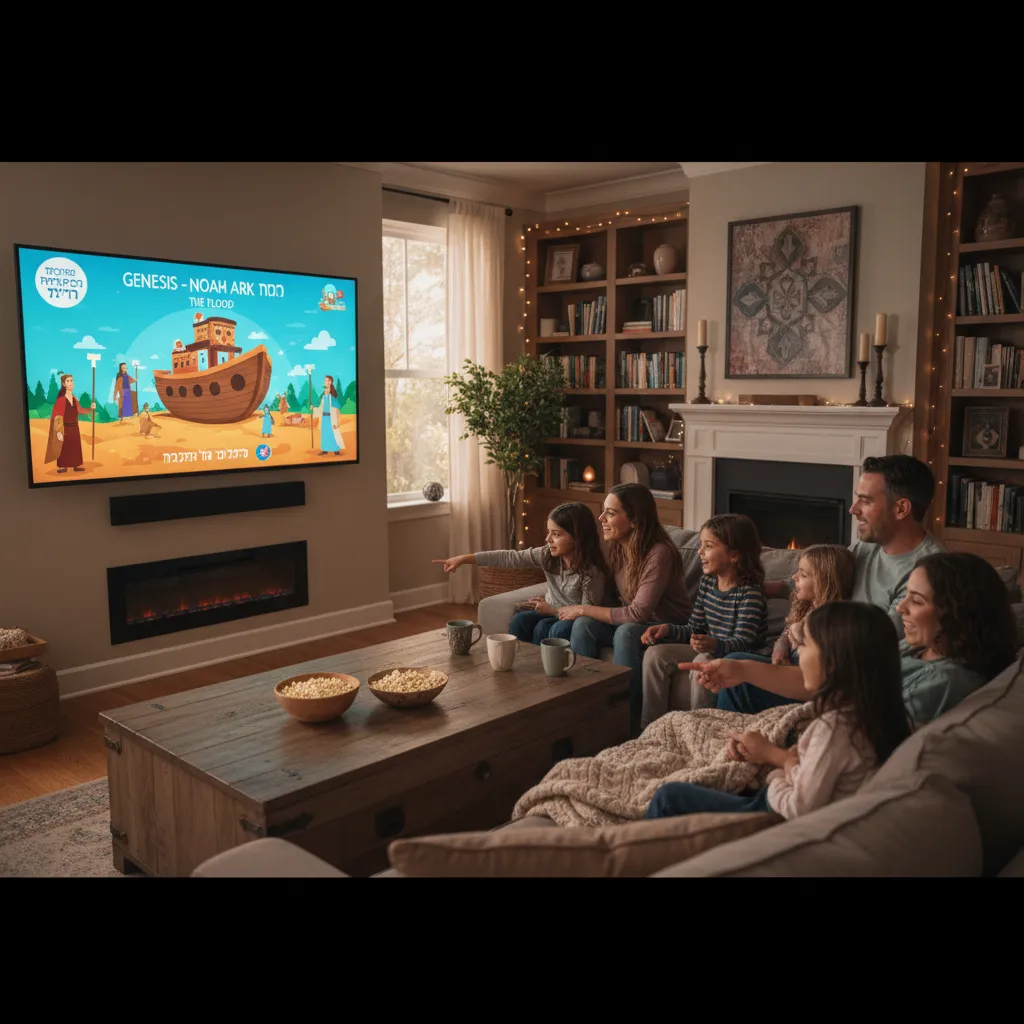
Video Bible Teaching
Complete Bible studies through video - watch, listen, and learn without text barriers.
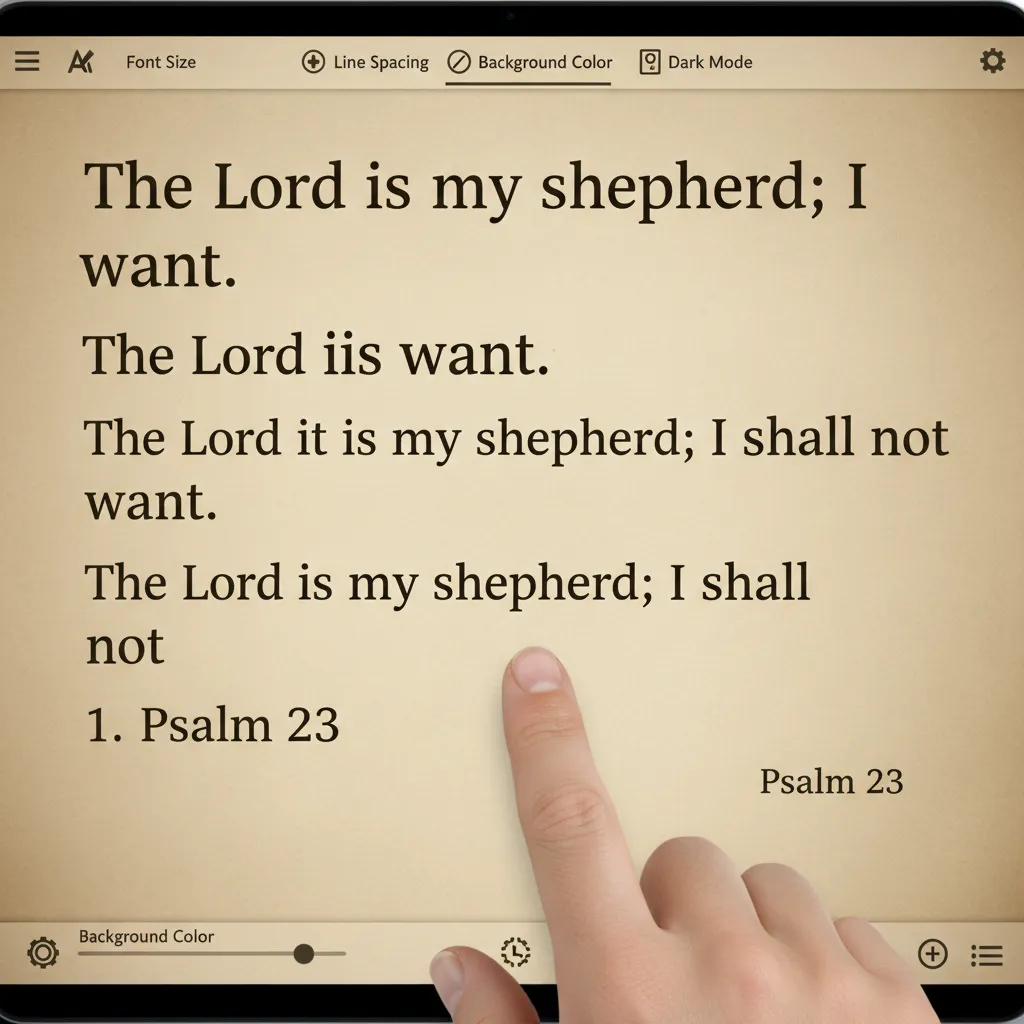
Dyslexic-Friendly Fonts
Reading Scripture with specialized fonts, spacing, and contrast that reduce confusion.

Discussion-Based Learning
Exploring Scripture through conversation and verbal processing rather than reading.

Creative Expression
Responding to Scripture through art, creativity, and hands-on expression.
Dyslexia-Optimized Study Approaches
Methods that work with dyslexic minds. Pair with our daily Bible study and online study for maximum accessibility.
Audio-Based Methods
Leveraging strong auditory processing
- Audio Bible - Full Scripture listening with dramatized options
- Podcast Devotionals - Short audio studies during commutes
- Scripture Memory Songs - Learn verses through music
- Audio Commentaries - Hear expert explanations spoken aloud
- Audiobook Bible Studies - Complete studies in audio format
- Voice-Activated Study - Ask questions, hear answers
Visual Learning Approaches
Using images to understand biblical content
- Illustrated Bibles - Scripture with accompanying artwork
- Video Bible Stories - Watch narratives come to life
- Infographic Scripture - Key concepts in visual format
- Mind Maps - Visual organization of biblical themes
- Timeline Charts - History in visual progression
- Picture Vocabulary - Biblical terms with images
Accessibility Features
Tools that make reading easier
- Dyslexic Fonts - OpenDyslexic and similar typefaces
- Adjustable Spacing - Line height and letter spacing
- Color Overlays - Tinted backgrounds for easier reading
- Text-to-Speech - Instant audio for any passage
- Reading Rulers - Digital guides to track lines
- High Contrast Modes - Customizable color schemes
Alternative Engagement
Non-reading ways to study Scripture
- Discussion Groups - Learn through conversation
- Hands-On Activities - Creative response to Scripture
- Video Teaching - Watch explanations instead of reading
- Drama and Role-Play - Act out biblical stories
- Art Response - Draw or create in response to Scripture
- Music and Worship - Engage through songs and hymns
What Our Dyslexic Community Says
Real testimonials from believers with dyslexia
"I was diagnosed with dyslexia at 8 and spent decades thinking I was "too dumb" to understand the Bible. Bible Way's audio Bible and visual tools changed everything. For the first time, I'm actually understanding Scripture - and it's not because I'm reading better, it's because I'm learning differently."
"I recommend Bible Way to all my Christian clients with dyslexia. The app understands that dyslexia affects decoding, not comprehension - people with dyslexia are often highly intelligent. The audio-first approach with visual supports lets them engage with Scripture at their intellectual level, not their reading level."
"Two of our three kids have dyslexia. Sunday school always made them feel dumb because they couldn't keep up with reading. Bible Way's kids features with audio and pictures finally let them participate in family devotions without shame. They're actually excited about Bible time now."
Dyslexia Bible Study Resources
Tools designed for accessible Scripture engagement. Access alongside our ADHD Bible study and autism Bible study resources.
Audio Bible Library
Complete Scripture in audio with multiple translations, narrators, and dramatized versions for engaging listening.
Dyslexic Font Options
Switch to OpenDyslexic or other specialized fonts designed to reduce letter reversals and confusion.
Visual Scripture Cards
Beautiful verse images that convey Scripture through design, color, and typography that supports dyslexic readers.
Video Bible Studies
Complete study curricula in video format - watch and learn without reading a single word.
Text-to-Speech
Instant audio for any passage with adjustable speed, allowing you to hear Scripture at your preferred pace.
Easy-Read Translations
Access to NIrV, ICB, NLT, and other translations with simpler sentence structures and vocabulary.
Understanding Dyslexia and Faith
A Bible study for dyslexia recognizes that dyslexia is a neurological difference affecting how the brain processes written language, not a reflection of intelligence or spiritual capacity. People with dyslexia often have strong verbal comprehension, creative thinking, and big-picture reasoning - they simply struggle with the mechanical process of decoding text. For Christians with dyslexia, this creates a painful barrier: the primary spiritual practice of most churches - reading the Bible - is precisely what's most difficult. This can lead to feelings of spiritual inadequacy, shame about needing accommodations, and frustration at being locked out of Scripture. But dyslexia isn't a barrier to knowing God - it's simply a different way of processing information that requires different access methods. The same God who inspired His Word also created dyslexic brains, and Scripture was designed to be accessible to all people, including the 15-20% of the population with reading difficulties. Our kids Bible study and family study resources also include dyslexia-friendly features.
It's important to remember that for most of Christian history, believers accessed Scripture through listening, not reading. Literacy was rare, Bibles were expensive, and oral tradition was the norm. The idea that "real" Bible study requires reading is a modern assumption, not a biblical requirement. Audio Bible, visual learning, and discussion-based study are all legitimate ways to engage with God's Word - ways that actually reflect historical Christian practice. A Bible study for dyslexia provides these access methods along with technological tools that make reading itself easier when desired: dyslexic-friendly fonts that reduce letter confusion, adjustable spacing and contrast, text-to-speech for any passage, and easy-read translations with simpler sentence structures. Many believers with dyslexia find that once they stop forcing traditional reading and embrace accessible methods, their understanding of Scripture actually deepens because they're no longer exhausting mental energy on decoding. Explore our mental health Bible study for additional support resources.
Dyslexia Study Benefits:
Start Your Dyslexia-Friendly Faith Journey
Bible study that works with how you learn. Perfect for adults, young adults, and kids with dyslexia.
What You'll Discover
- Complete audio Bible library
- Dyslexic-friendly reading options
- Visual Scripture learning
- Freedom from reading barriers
"I'm 52 years old and finally feel like I can really study the Bible. The audio Bible and visual tools let me engage with Scripture at my actual intellectual level, not my reading level. For the first time, I don't feel stupid at Bible study - I feel equipped."
David P.
Business Owner, Atlanta
Frequently Asked Questions
Common questions about Bible study with dyslexia
Why is reading the Bible so hard with dyslexia?
Reading the Bible is challenging with dyslexia because dyslexia affects the brain's ability to decode written text - connecting symbols (letters) to sounds (phonemes) and assembling them into words. This is a neurological difference, not a lack of intelligence or effort. The Bible presents additional challenges: archaic vocabulary, complex sentence structures, unfamiliar names and places, and small print in traditional formats. Many dyslexic readers spend so much mental energy on decoding individual words that comprehension suffers - they can "read" a passage without understanding anything. However, dyslexia only affects decoding, not comprehension. When text is presented audibly, people with dyslexia often demonstrate strong understanding - sometimes better than typical readers because dyslexic brains often excel at big-picture thinking and verbal reasoning. The solution isn't trying harder at reading; it's using access methods that bypass the decoding bottleneck entirely.
Is using audio Bible "cheating" at Bible study?
No, using audio Bible is absolutely not cheating - it's using the right tool for how your brain works. This concern reflects a modern bias that privileges reading over listening, but this preference isn't biblically or historically supported. For most of Christian history, believers accessed Scripture through hearing. Literacy was rare, Bibles were expensive manuscripts, and oral reading was the norm. Paul's letters were read aloud to gathered churches. Jesus himself quoted Scripture from memory in oral settings. The command to engage with Scripture is to "meditate" on it (Joshua 1:8), not specifically to read it visually. The Greek word for "to read" (anaginosko) literally means "to know again" - it's about understanding, not the mechanism of accessing text. Audio Bible provides the same inspired content as visual reading. Your brain processes it, your heart responds, the Holy Spirit works. Whether Scripture enters through eyes or ears doesn't affect its spiritual power.
What Bible translation is best for dyslexia?
The best Bible translation for dyslexia depends on individual needs, but generally translations with simpler sentence structures and modern vocabulary are most accessible. The New International Reader's Version (NIrV) was specifically designed for developing readers with shorter sentences and simpler vocabulary while maintaining accuracy. The International Children's Bible (ICB) uses similar principles. The New Living Translation (NLT) balances readability with literary quality. The Contemporary English Version (CEV) prioritizes natural English phrasing. For audio listening, any translation works since decoding isn't required - many dyslexic believers prefer more literary translations like NIV, ESV, or even KJV for audio because they appreciate the language when they don't have to decode it themselves. The key is matching the translation to the access method: simpler translations for reading attempts, any preferred translation for listening. Our NLT study and NIV study offer accessible options.
Do dyslexic fonts really help?
Yes, dyslexic fonts like OpenDyslexic can help many dyslexic readers, though research shows mixed results and individual responses vary. These fonts are designed with weighted bottoms (letters are heavier at the base) to reduce the visual "flipping" and "rotating" that many dyslexic readers experience with standard fonts. They also use unique letter shapes to reduce confusion between similar letters (b/d, p/q, m/w). Some studies show improved reading speed and accuracy with dyslexic fonts; others show minimal effect. What does consistently help is the combination of font choice with other formatting: increased letter spacing reduces crowding, increased line height separates lines visually, sans-serif fonts are generally easier than serif, larger font sizes reduce decoding demands, and high-contrast color combinations (but not pure black on white, which can cause glare) improve readability. Most importantly, these accommodations should be available as options - what helps one dyslexic reader may not help another. Customization is key.
How can I memorize Scripture with dyslexia?
Memorizing Scripture with dyslexia requires using methods that bypass visual decoding challenges. Audio repetition is highly effective - listen to the same verse repeatedly during commutes, chores, or exercise until it becomes automatic. Songs and music help enormously - Scripture set to melody activates different memory systems than spoken words. Many worship songs are direct Scripture quotations. Physical movement while reciting engages motor memory - pace, walk, or use hand motions with verses. Visual imagery (not visual text) can help - picture the scene the verse describes and associate it with the words. Chunking into smaller phrases makes memorization manageable - learn three words at a time rather than entire verses. Spaced repetition with audio apps provides systematic review. Recording yourself reciting the verse and listening back engages both speaking and listening memory. Group recitation in Bible studies provides social accountability and auditory modeling. Most importantly, focus on meaning rather than exact wording - understanding the concept deeply often leads to natural recall of the words.
Is dyslexia a spiritual problem or lack of faith?
No, dyslexia is not a spiritual problem, lack of faith, or character flaw - it's a neurological difference in how the brain processes language. Brain imaging studies show that dyslexic brains have different connectivity patterns in language-processing regions, and dyslexia has strong genetic components - it runs in families and is present from birth. Suggesting dyslexia is a spiritual issue would be like suggesting nearsightedness is caused by lack of faith. God created diverse brains with different processing styles, and dyslexia is part of that diversity. In fact, dyslexic brains often excel in areas neurotypical brains don't: spatial reasoning, big-picture thinking, creative problem-solving, and verbal comprehension (when not limited by decoding). Many highly successful people across fields have dyslexia. The shame some Christians feel about their dyslexia reflects ableist assumptions, not biblical truth. God doesn't judge spiritual maturity by reading ability. Our grace study explores how God's acceptance isn't performance-based.
How can I help my child with dyslexia engage with Scripture?
Helping a child with dyslexia engage with Scripture requires creativity and removing shame around reading struggles. Start with audio Bible resources - children's audio Bibles with dramatization, music, and engaging narration make Scripture come alive without reading demands. Use visual Bibles with extensive illustrations that tell the story through pictures. Watch Bible videos together - VeggieTales, The Bible Project for older kids, and dramatized Scripture bring narratives to life. Read aloud to your child regardless of their age - being read to is a gift, not a sign of inability. Discuss Scripture verbally - ask questions, have conversations, explore meaning through dialogue rather than worksheets. Use hands-on activities: act out stories, build scenes with blocks, draw responses, create crafts. Never force reading attempts during Bible time - keep Scripture associated with joy, not struggle. Advocate for Sunday school accommodations - audio options, verbal responses, visual materials. Model that audio Bible and other tools are normal and valuable, not lesser methods. Our kids Bible study includes many dyslexia-friendly features.
What technology tools help with dyslexic Bible reading?
Many technology tools can dramatically improve Bible access for dyslexic readers. Text-to-speech software (built into most devices) can read any Bible passage aloud instantly. Bible apps like Bible Way offer dyslexic font options, adjustable spacing, contrast settings, and audio synchronization. Screen readers (VoiceOver, TalkBack) provide comprehensive audio access to digital content. Audiobook platforms offer complete audio Bibles in multiple translations. Video Bible teaching (The Bible Project, RightNow Media) provides visual learning without reading. Screen tinting apps (overlays) reduce visual stress for some readers. Speed controls on audio let you adjust listening pace to optimal comprehension speed. Bookmarking and note features in digital Bibles let you capture thoughts without writing lengthy notes. Voice-to-text for journaling allows reflection without typing challenges. Reading ruler apps help track lines when reading is attempted. The key is building a personal toolkit of technologies that work for your specific needs - dyslexia presents differently in each person.
How can churches better support members with dyslexia?
Churches can dramatically improve support for members with dyslexia through several approaches. Normalize audio Bible by mentioning it positively from the pulpit and providing audio resources alongside printed materials. Display Scripture on screens rather than assuming everyone can read printed Bibles. Offer alternative response formats in Bible studies - verbal responses, drawing, discussion instead of writing. Train small group leaders about learning differences so they create inclusive environments. Provide children's ministry accommodations - audio lessons, visual materials, no forced reading aloud. Use dyslexic-friendly fonts and formatting in printed materials (larger text, increased spacing, sans-serif fonts). Create audio recordings of sermons and teaching for review. Avoid calling on people to read aloud unexpectedly - this causes significant anxiety for dyslexic people. Partner with organizations that support learning differences. Include people with dyslexia in teaching and leadership - different processing styles bring valuable perspectives. Remember that approximately 15-20% of your congregation may have reading difficulties to some degree.
Can dyslexia be overcome through more reading practice?
Dyslexia cannot be "cured" through reading practice because it's a fundamental difference in brain wiring, not a skill deficit. However, reading skills can improve with appropriate intervention - structured literacy approaches (Orton-Gillingham and similar methods) that explicitly teach phoneme-grapheme relationships can help many dyslexic readers decode more effectively. But improvement doesn't mean dyslexia goes away; it means developing compensatory strategies and working harder than neurotypical readers for similar results. For Bible study specifically, the question isn't whether dyslexia can be overcome, but whether struggling through difficult reading is the best use of your limited energy for spiritual growth. Most dyslexic believers find that using accessible methods (audio, visual, discussion) produces much deeper understanding than forcing reading practice during Bible time. Use evidence-based reading interventions to improve practical reading skills where needed, but don't conflate reading ability with spiritual development. The goal of Bible study is knowing God, not proving you can decode text.
Are there famous Christians with dyslexia?
Yes, many influential Christians have had dyslexia or significant reading challenges. Tim Tebow, the well-known Christian athlete and speaker, has been open about his dyslexia. Henry Winkler (The Fonz), a committed Christian, discovered his dyslexia as an adult and became an advocate. Whoopi Goldberg has dyslexia and speaks openly about her faith. Albert Einstein, while not specifically Christian, was raised with religious education and showed signs consistent with dyslexia. Many theologians and pastors through history likely had dyslexia before the diagnosis existed - working from memory, oral tradition, and having others read to them. The modern emphasis on reading as the primary spiritual discipline is historically unusual; for most of church history, hearing Scripture was the norm. God has always worked through people with diverse learning styles, including those who process written language differently. Your dyslexia doesn't disqualify you from spiritual leadership or deep faith - it simply means you access Scripture through different means.
How do I explain needing accommodations at Bible study?
Explaining accommodation needs at Bible study can feel vulnerable, but you have several options depending on your comfort level. Simple disclosure: "I learn better by listening - do you have audio options?" or "I have dyslexia, so I use audio Bible rather than printed text." No detailed explanation required. Normalizing statement: "I'm an auditory learner, so I'll follow along with the audio version on my phone." This frames your preference without necessarily disclosing disability. Group leader conversation: Speaking privately with the leader beforehand allows them to prepare accommodations and potentially normalize alternatives for everyone. General request: "Do we have options for people who prefer listening over reading?" This can prompt better accommodation without personal disclosure. Remember, you don't owe anyone an explanation for using accessibility tools. Audio Bible, visual resources, and verbal participation are all legitimate ways to engage with Scripture. Good Bible study leaders welcome diverse learning styles. If a group insists everyone must read visually, that group may not be the right fit - there are many inclusive options available. Our online study resources offer flexible, accessible formats.
Trusted Dyslexia & Faith Resources
Additional external resources for Christians with dyslexia
Got Questions - Dyslexia
Biblical perspective on dyslexia and engaging with Scripture
gotquestions.org →BibleGateway Audio Bible
Free audio Bible in multiple translations and narrators
biblegateway.com →International Dyslexia Association
Research-based information about dyslexia and accommodations
dyslexiaida.org →Christianity Today
Articles on faith, learning differences, and Christian life
christianitytoday.com →