Bible Study for Blended Families - Unite in Faith
Bible study for blended families presents unique opportunities and challenges. When stepparents and stepchildren, biological siblings and stepsiblings come together around Scripture, something powerful happens: neutral ground is established, shared experiences are created, and genuine bonds form over time. Bible Way understands that blended family dynamics require patience, sensitivity, and specially designed content that doesn't assume instant connection or ignore the complexity of your family's journey. Whether you're newly blended or years into your stepfamily adventure, our resources help you build unity through faith while honoring everyone's unique story. Explore our complete Bible study resources designed to strengthen every type of family.
Key Takeaways
Bible study creates neutral ground where stepparents and stepchildren can connect without the baggage of previous family traditions
Blended family bonding takes 5-7 years on average; Bible study provides consistent shared experiences throughout this journey
Healing from divorce and family transition happens through Scripture's message of redemption and new beginnings
Patience-centered content respects that trust must be earned rather than demanded in stepfamily relationships
Creating new family traditions through shared Bible study builds identity unique to your blended household
Scripture provides language for navigating loyalty conflicts, forgiveness, and building genuine love in complex family structures
Why Blended Families Choose Bible Way
Our features are specifically designed for the unique dynamics of stepfamilies, helping you navigate challenges while building genuine spiritual bonds
Unity-Building Content
Bible studies specifically designed to help stepparents and stepchildren build trust, respect, and genuine connection through shared Scripture exploration.
Healing-Focused Studies
Resources that address the pain of divorce, loss, and family transition with compassion, pointing to God's restoration and hope for new beginnings.
Blended Family Dynamics
Content that acknowledges the unique challenges of stepfamilies: loyalty conflicts, different household rules, and building new traditions together.
Patient Growth Approach
Studies that understand blended family bonding takes time, with patience-centered content that doesn't pressure instant connection or forced intimacy.
Neutral Ground Studies
Fresh Bible study content that neither family brought from their previous household, creating shared spiritual experiences without baggage.
New Family Traditions
Devotional resources that help blended families create their own spiritual traditions, routines, and faith practices unique to their household.
Blended Family Bible Study in Action
See how stepfamilies around the world are building unity and growing together in faith
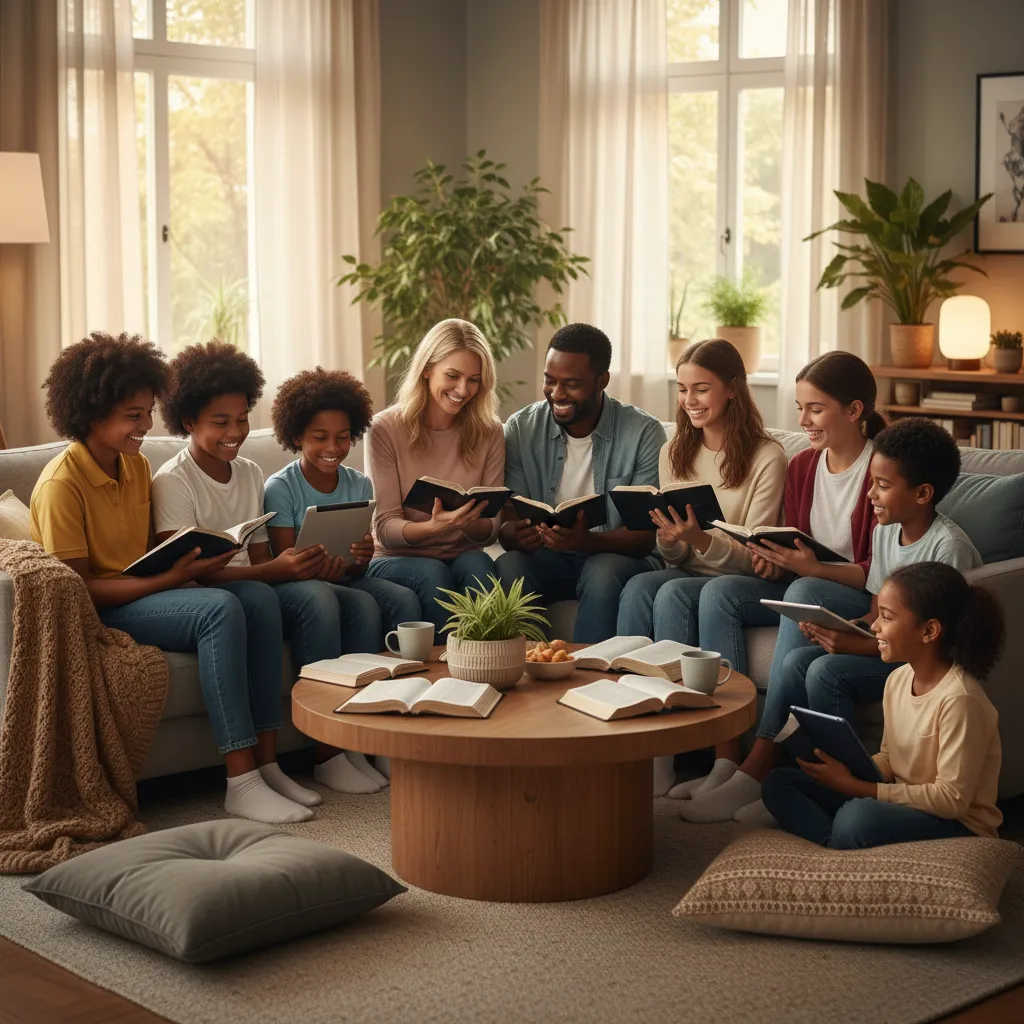
New Family Devotions
A newly blended family establishing their own spiritual traditions, creating shared experiences that belong to their unique household.

Building Trust Together
Stepparent and stepchild finding connection through Scripture, building relationship one Bible study at a time without rushing intimacy.
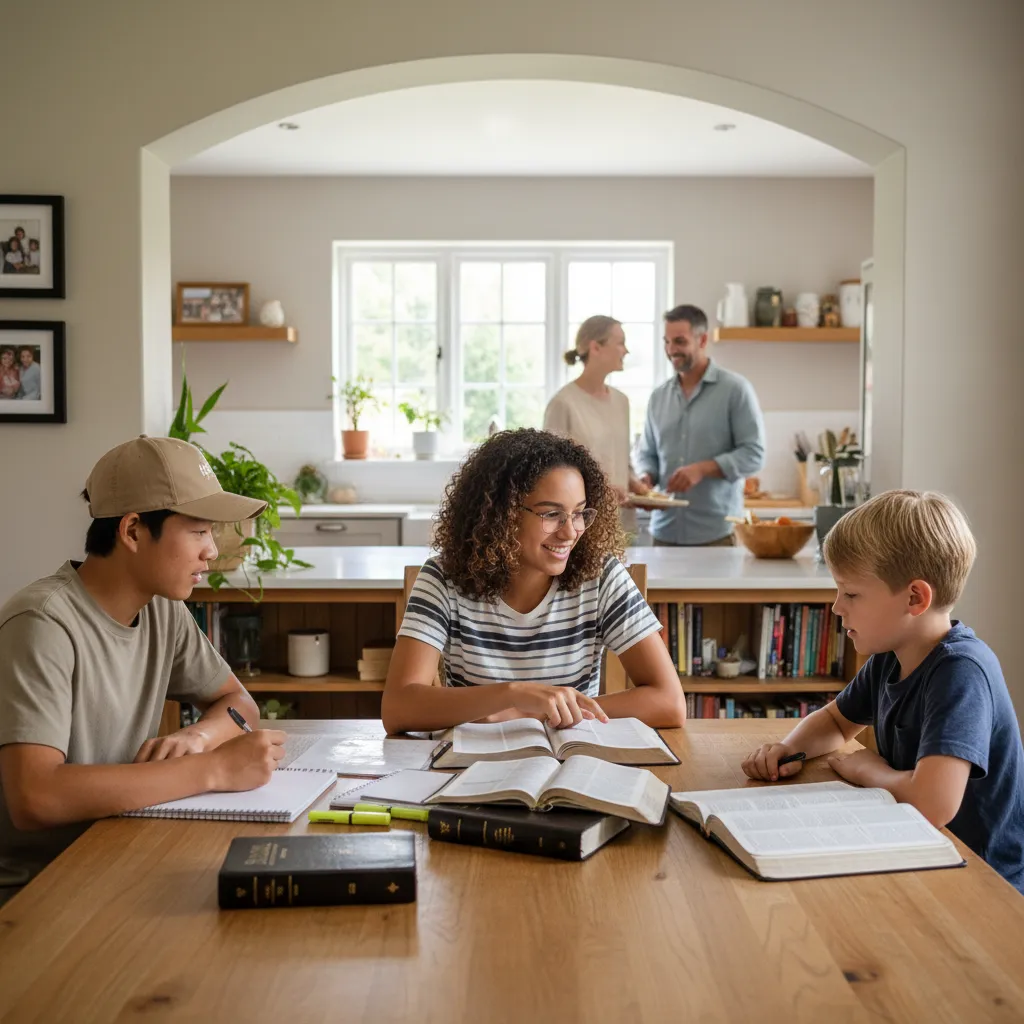
Stepsiblings Growing Together
Children from different families becoming brothers and sisters through shared faith experiences and spiritual growth together.
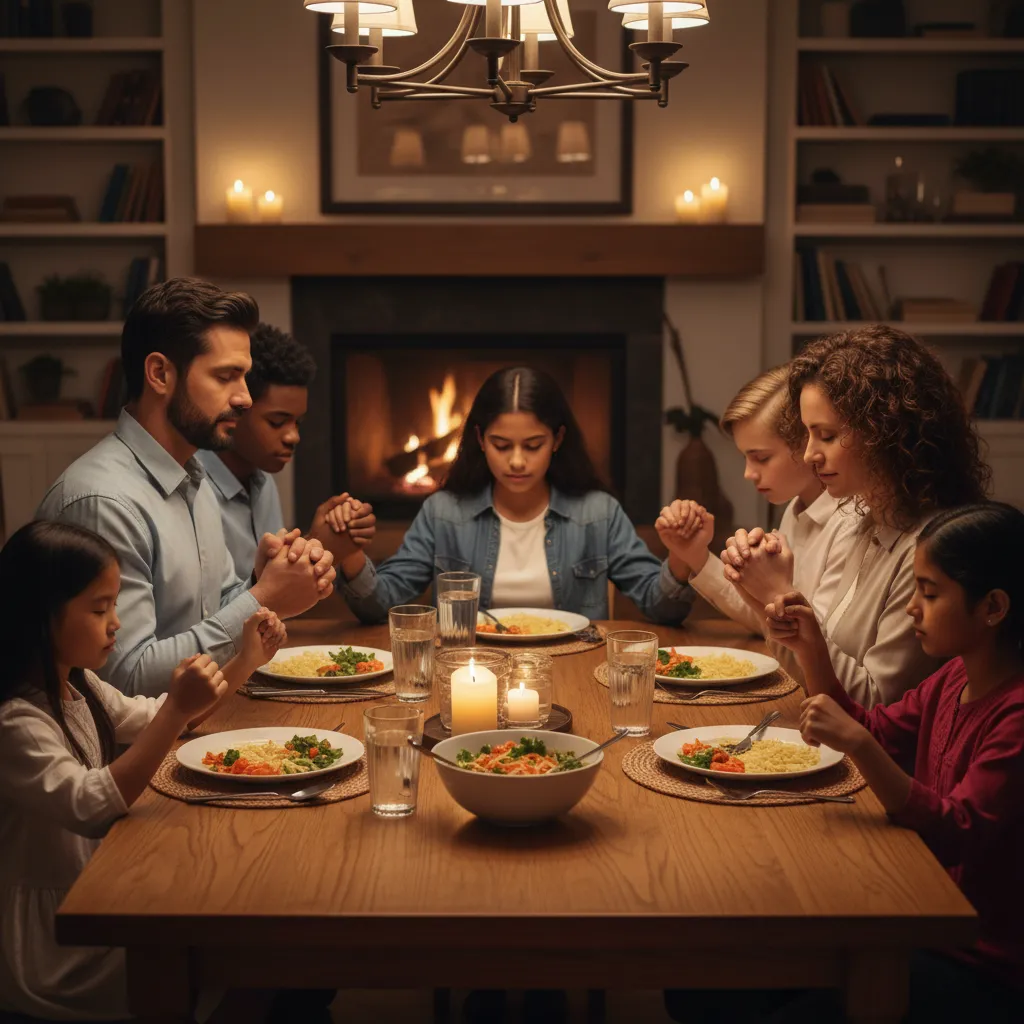
United in Prayer
Blended family experiencing the power of praying together, building spiritual bonds that transcend biological connections.
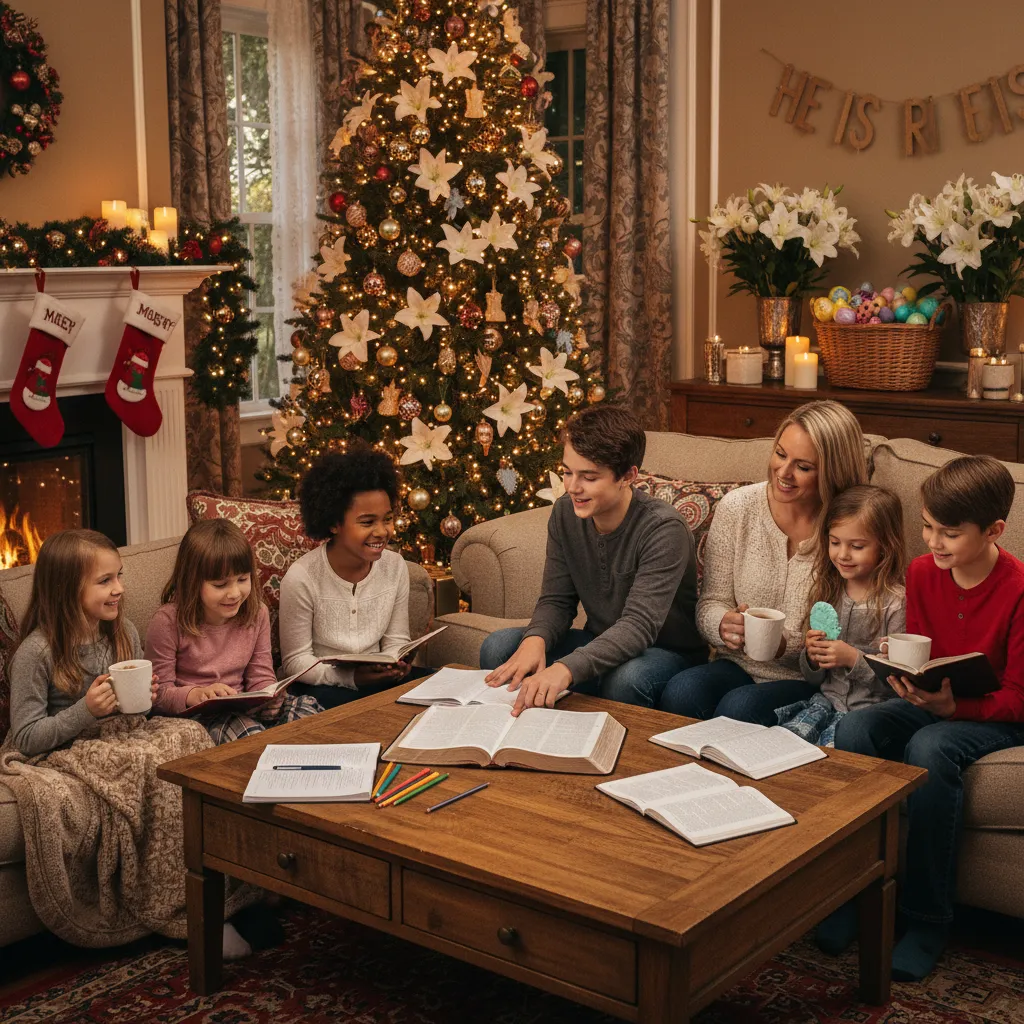
Creating New Traditions
Blended families building holiday traditions that honor their unique story while centering on Christ.
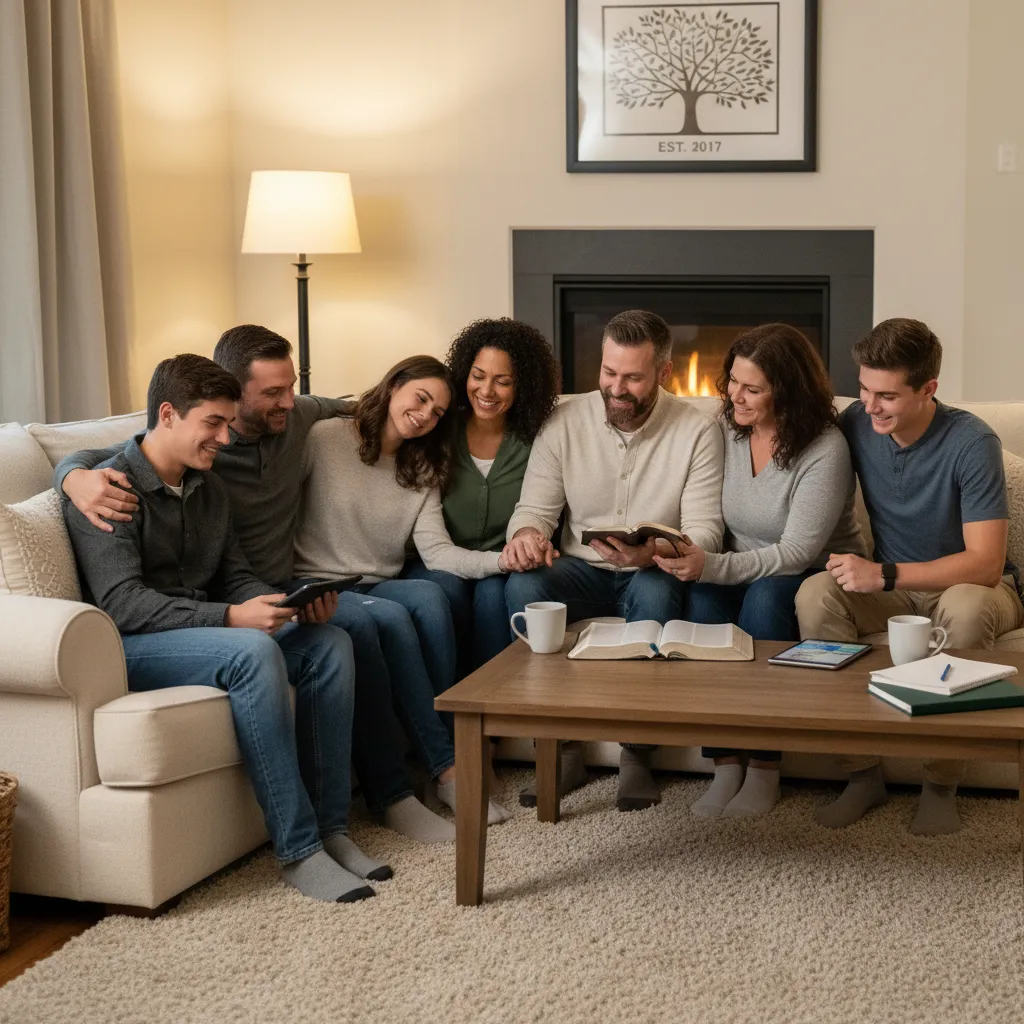
Years of Growth
A blended family that has journeyed together for years, showing the beautiful fruit of patient, consistent faith formation.
What Your Blended Family Will Study
Bible study topics designed specifically for blended family dynamics. Complement your study with a Bible reading plan that fits your household's schedule.
Building Trust & Unity
Foundation studies for bringing your blended family together
- Becoming One Family - God's Design for Unity
- Building Trust Step by Step
- Honoring All Parents - Navigating Loyalty
- Creating New Family Traditions
- Learning to Love Stepfamily Members
- Patience in Family Formation
Healing & Forgiveness
Processing past hurts and moving forward together
- Healing from Divorce - Parents' Journey
- Helping Children Process Change
- Forgiveness When It's Hard
- Letting Go of Bitterness
- Grief and New Beginnings
- God's Redemption of Broken Stories
Stepparent-Stepchild Relationships
Navigating the unique stepparent-stepchild dynamic
- The Stepparent Role - What Scripture Says
- Building Relationship Without Replacing
- Discipline in Blended Families
- Earning Trust and Respect
- When Stepchildren Resist
- Celebrating Stepfamily Bonds
Practical Family Life
Managing day-to-day blended family challenges
- Two Households, One Faith
- Managing Different Rules and Expectations
- Holidays and Special Occasions
- Dealing with Ex-Spouse Conflict
- Sibling Relationships in Blended Families
- Financial Stewardship as a Stepfamily
What Blended Families Are Saying
Real stepfamilies share how Bible Way transformed their household
"Bible Way gave us neutral ground. No one felt like we were doing "their" family's devotions. It became truly ours - our first real shared tradition. Three years in, I see my stepchildren opening up in ways I never expected."
"We tried forcing family devotions too fast and it backfired. Bible Way's patient approach let kids observe before participating. Now our 14-year-old stepdaughter actually asks when we're doing Bible study. That's a miracle."
"When our "ours" baby arrived, our older kids from previous marriages felt sidelined. Bible Way helped us study what Scripture says about family in ways that made everyone feel valued. It saved us from serious jealousy issues."
Understanding Bible Study in Blended Families
Blended families face unique dynamics that require thoughtful approaches to spiritual formation. When two families merge, they bring different histories, traditions, parenting styles, and often different faith backgrounds. Children may be processing grief over their biological family's dissolution while simultaneously being expected to embrace a new family structure. Stepparents walk a delicate line between building relationship and respecting boundaries.
Bible study in this context becomes both a challenge and an extraordinary opportunity. The challenge lies in navigating resistance, loyalty conflicts, and different starting points. The opportunity lies in creating something entirely new - shared spiritual experiences that belong uniquely to this blended family, untainted by associations with previous family configurations. When done well, family devotions become the neutral ground where genuine connection can develop organically.
Why Blended Families Need Specialized Resources
Standard family devotional materials often assume biological family structures with established trust and shared history. They may include prompts like "Share your favorite family memory" or "What does your family always do at holidays?" - questions that can inadvertently highlight the loss of previous family life or create awkwardness in newly blended households. Blended families need resources that acknowledge their reality without constantly emphasizing the "blended" label.
Bible Way's blended family resources are designed with these dynamics in mind. Our content starts with lower-pressure engagement opportunities, gradually building toward deeper sharing as trust develops. We address topics like forgiveness, patience, and family unity through Scripture without forcing premature intimacy or ignoring the elephant in the room. We understand that a stepchild observing quietly is still participating, and we honor that reality rather than demanding verbal engagement before relationship has been established.
The Role of Patience in Stepfamily Faith Formation
Research consistently shows that blended families take 5-7 years to fully integrate. This timeline holds true for spiritual bonding as well. Families who expect immediate intimacy in devotional settings often face resistance and disappointment. In contrast, families who approach Bible study with realistic expectations - viewing it as one consistent thread in a long weaving process - find greater success.
Patience in blended family Bible study means celebrating small wins: a stepchild who sits with the family instead of avoiding devotion time, a teenager who offers one comment instead of complete silence, a quiet moment of genuine connection during prayer. Over months and years, these small wins accumulate into genuine spiritual family identity. The stepparent who has patiently earned relationship through countless low-key devotions eventually earns the right to speak into their stepchildren's lives in meaningful ways.
Bible Way supports this patient approach with long-term content designed to accompany blended families through their entire integration journey. Our studies can be picked up and resumed as custody schedules allow, without requiring rigid sequential completion. We provide seasonal studies that build new traditions over years, creating accumulated shared experiences that eventually feel like "how our family has always done things."
Blended Family Bible Study Resources
Everything your stepfamily needs for meaningful Scripture engagement. Combine with daily Bible study habits for consistent spiritual growth.
Stepfamily Devotional Guides
Daily devotions that address blended family life with sensitivity, helping stepparents and stepchildren connect through Scripture.
Unity-Building Discussions
Carefully crafted discussion questions that open communication without forcing vulnerable sharing before trust is established.
Healing Studies
Bible studies that help family members process divorce, loss, and transition through the lens of God's restoration and hope.
Parent Guides
Resources specifically for stepparents navigating their unique role, with biblical wisdom for earning trust and building connection.
Age-Appropriate Content
Studies adapted for children at different ages and stages of accepting the blended family structure.
Tradition Builders
Tools to help your blended family create new spiritual traditions that belong exclusively to your household.
The Blended Family Reality
Blended families are a significant and growing part of today's family landscape. Understanding these realities helps stepfamilies know they're not alone in their journey.
of children in the U.S. live in blended families
average time for blended families to fully integrate
of married couples include at least one remarried partner
Sources: Pew Research Center, U.S. Census Bureau
Start Your Blended Family's Faith Journey
Join thousands of stepfamilies building unity through Scripture
What You'll Get
- Devotions designed for blended family dynamics
- Patient trust-building content
- Healing-focused studies for divorce recovery
- New tradition-building resources
"Bible Way understood what we needed as a blended family. No forced intimacy, no rushing - just consistent, patient content that let us grow together at our own pace."
The Williams-Chen Family
Blended 4 years, using Bible Way for 3 years
Frequently Asked Questions
Everything you need to know about Bible study in your blended family
How do I start family devotions in a newly blended family?
Starting devotions in a newly blended family requires patience and strategic thinking. Begin by choosing entirely new Bible study materials that neither family used before - this creates neutral ground where no one feels their previous family's traditions are being replaced or continued. Start with short, low-pressure sessions of just 5-10 minutes. Allow resistant children to observe without requiring participation; forced involvement breeds resentment. Focus on stories and topics that don't directly address stepfamily issues initially - save those for later when trust is established. Consider starting with just your biological children present initially, then gradually including stepchildren as they show curiosity. The biological parent should lead rather than the stepparent in early stages. Celebrate any participation, however small. Bible Way provides introductory studies specifically designed for new blended families, with gradual trust-building content that doesn't rush intimacy. Most importantly, don't compare your progress to intact families - blended family bonding follows a different timeline, and that's okay.
How can Bible study help stepparents and stepchildren bond?
Bible study creates unique bonding opportunities for stepparents and stepchildren that everyday life doesn't always provide. Studying Scripture together puts everyone on equal footing as learners before God, reducing the power dynamics that often complicate steprelationships. Discussing biblical characters' struggles and growth opens doors for sharing without the vulnerability of directly discussing personal issues. When a stepchild sees their stepparent grapple honestly with Scripture, it humanizes them and builds respect. Consistent devotion time creates reliable, positive shared experiences that accumulate into relationship equity. Studies on topics like forgiveness, patience, and love provide language for discussing stepfamily challenges indirectly. Bible Way includes discussion questions specifically designed to facilitate stepparent-stepchild connection without forcing premature intimacy. Over time, the ritual itself becomes a bonding agent - 'our thing' that belongs to this new family unit. Many stepfamilies report that Bible study became the activity where real relationship breakthrough happened, precisely because it's focused on God rather than forcing direct relational work.
What if my stepchildren resist family Bible study?
Resistance from stepchildren is normal and shouldn't be taken personally or forced through. Common reasons include loyalty to their other biological parent (participating might feel like betraying mom or dad), general resistance to the new family structure, negative associations with church or religion, or simply testing boundaries. Respond with patience rather than punishment. Let resistant children observe without participating - they're often absorbing more than they show. Avoid making Bible study a battleground; pick different hills to die on. Consider having their biological parent (your spouse) take the lead rather than you as stepparent. Make sessions short and genuinely engaging rather than lectures. Don't compete with what happens in the other household - stay focused on your home. If one child participates eagerly, don't use them as an example to shame resistant siblings. Privately express that you're glad they're present, even if they're not engaging. Bible Way offers content specifically for reluctant participants with lower-pressure entry points. Most importantly, remember that forced spiritual participation rarely produces genuine faith. Trust God to work in their hearts over time as they observe authentic faith lived out in your home.
How do we handle different faith backgrounds in our blended family?
Blending families with different faith backgrounds adds complexity but isn't insurmountable. First, the couple must align: have honest conversations about core beliefs, church attendance expectations, and how children will be raised spiritually. Where denominations differ, focus on the 90% you share rather than the 10% you don't. Choose Bible study materials that emphasize Scripture itself rather than denominational distinctives. When children come from different faith backgrounds, acknowledge differences honestly rather than dismissing them - 'In your mom's church, you learned X; in our church, we believe Y because of these Bible verses.' Avoid criticizing the other household's beliefs, which forces children into loyalty conflicts. Create space for questions without requiring agreement. Focus on Jesus and the Gospel message that unites Christians. If one parent is non-religious, the believing parent can still lead devotions with children while respecting the spouse's position. Bible Way's interdenominational content works across traditions while remaining biblically grounded. The goal isn't perfect theological unity but creating a home where faith can grow. Children benefit from seeing adults navigate differences respectfully while holding to convictions.
How do we coordinate faith development across two households?
Coordinating spiritual formation when children move between households presents real challenges. Ideally, communicate with your ex-spouse about shared faith goals, though this isn't always possible. Where cooperation exists, try to align on major issues: church attendance, age-appropriate topics, core doctrines. Where cooperation is limited, focus on what you can control - your household. Don't disparage the other home's spiritual practices (or lack thereof) to children; this puts them in impossible loyalty binds. Maintain your household's spiritual rhythms regardless of what happens elsewhere - children benefit from consistency in at least one home. Use transition times intentionally: brief prayers when children arrive or leave acknowledge both households. When children report conflicting teachings, help them think through Scripture rather than simply declaring one parent wrong. Don't interrogate children about the other household's spiritual life - this creates anxiety and divided loyalties. Bible Way's portable app allows children to continue personal Bible engagement in both homes, maintaining spiritual connection during transitions. Accept that you can't control everything; focus on making your household a place where faith is genuine, joyful, and welcoming.
When should the stepparent start leading family devotions?
Stepparent leadership in devotions should follow established relationship, not precede it. In early blended family stages (first 1-2 years), the biological parent should typically lead while the stepparent participates supportively. Premature stepparent spiritual leadership can feel like overstepping or attempts to replace the other biological parent, even when that's not the intent. As trust develops, gradually increase stepparent involvement: perhaps they lead prayer while the biological parent leads discussion, or they share personal insights during study. Watch for children's comfort levels and adjust accordingly. Different children in the same family may be ready for stepparent leadership at different times. When you do transition to stepparent-led devotions, start with low-stakes content - Bible stories, topical studies - rather than heavy relational topics. The stepparent who has patiently earned relationship earns the right to spiritual leadership. Forced authority produces resistance; earned influence produces respect. Bible Way's studies can be led by either parent and include guidance for navigating this sensitive transition. Remember: spiritual influence follows relational connection, not vice versa.
How do we address loyalty conflicts during Bible study?
Loyalty conflicts are among the most challenging aspects of blended family life, and they often surface during family devotions. Children feel torn between loving their biological parent in the other household and participating in spiritual life with their stepparent. Recognize the bind they're in rather than dismissing it. Never speak negatively about the other biological parent, even if they speak negatively about you - this forces children to defend their parent rather than engage with the study. Avoid comparing spiritual practices between households. Choose content that doesn't require children to verbally affirm the stepfamily structure before they're ready emotionally. When studying passages about family, acknowledge different family configurations without requiring children to label relationships. Don't demand that stepchildren call stepparents 'mom' or 'dad' as part of spiritual family identity. Bible Way includes studies on honoring parents that respect complex family situations without forced declarations. Create space for children to love all their parents - biological and step - without ranking. When children express loyalty conflict, listen and validate their feelings rather than solving the problem or defending yourself. Trust that consistent love and genuine faith over time resolve more loyalty conflicts than any individual conversation.
What Bible passages speak to blended family situations?
While the Bible doesn't use modern terms like 'blended family,' many passages speak directly to stepfamily situations. Ruth's story demonstrates beautiful chosen family relationships - her loyalty to Naomi models stepfamily love that isn't obligated by blood. Ephesians 2:14-22 describes God making 'one new humanity' out of two separate groups, directly applicable to blending two families. Joseph's acceptance of Mary and Jesus shows stepparent faithfulness. Moses was raised by Pharaoh's daughter, a non-biological parent who shaped his life. The adoption language throughout Scripture (Romans 8:15, Galatians 4:5, Ephesians 1:5) demonstrates that God's family is built on choice, not just biology. Stories of reconciliation (Jacob and Esau, Joseph and his brothers) provide models for healing broken family relationships. Psalms of lament (Psalm 13, 22, 88) give language for processing divorce grief. Proverbs offers wisdom for navigating complex household dynamics. Jesus' teaching on forgiveness (Matthew 18:21-22) is essential for blended family healing. Bible Way provides studies specifically connecting these passages to modern blended family experiences, helping families see themselves in Scripture's ancient stories.
How do we create new family traditions when everyone has different histories?
Creating new traditions in a blended family requires intentionality since you can't rely on accumulated shared history. Start fresh rather than adopting either previous family's traditions - this avoids implicit competition between 'how we used to do it.' Involve everyone in creating new practices: what time for devotions, what format, what translation, what topics to study. Let children suggest elements like opening songs or closing prayers. Create visual markers of your new family's spiritual life: a family Bible everyone signs, a devotional journal with each person's insights, photos of your family worshiping together. Establish rituals specific to your household: perhaps each person shares a highlight and prayer request, or you celebrate milestones with special prayers. Mark your blended family anniversary spiritually, not just romantically. Use Bible Way's tradition-building resources designed specifically for blended families starting fresh. Acknowledge that building traditions takes time - what feels awkward the first time becomes beloved after years of repetition. Document your emerging traditions so children can look back and see their family's unique spiritual heritage. The goal isn't replacing old traditions but creating new ones that belong exclusively to this family.
How do we handle holidays and special occasions as a blended family?
Holidays in blended families often involve complex logistics, potential conflict, and grief over changed traditions. Approach these seasons with spiritual intentionality and practical wisdom. Accept that holidays will look different than either previous family's experience - this is loss worth acknowledging, not dismissing. Create new traditions rather than competing to recreate old ones. Build spiritual content around the actual meaning of holidays rather than just activities: Advent studies before Christmas, Resurrection focus at Easter. Be flexible about dates - if children aren't with you on Christmas Day, celebrate Christmas Eve or December 26th with equal joy. Include prayers for absent family members (children with their other parent, extended family no longer connected) - this acknowledges reality without bitterness. Bible Way offers holiday-specific studies designed for blended family complexity. Use holidays as opportunities to practice grace: with ex-spouses over scheduling, with in-laws who may not fully accept the blended family, with children grieving what they've lost. Focus on gratitude for this family rather than comparison to other families or past years. Most importantly, center holidays on Christ rather than perfect family experiences - this takes pressure off and provides true meaning.
My stepchildren's other parent is hostile to our faith. What do we do?
Facing opposition from the other household creates real challenges but doesn't have to derail your family's spiritual formation. First, don't engage in spiritual warfare through the children - avoid speaking negatively about the other parent's beliefs or pressuring children to choose sides. Focus on making faith attractive, not obligatory, in your home. Answer children's questions about conflicting beliefs honestly but without disparaging: 'Your mom/dad believes differently, and we believe this because...' Create a home where children can explore faith freely without pressure, knowing they'll encounter different perspectives elsewhere. Document children's voluntary participation in faith activities in case custody issues arise, but don't use faith as a legal weapon. If children report being punished for faith participation at your home, document and consult with your attorney if necessary, but don't escalate through the children. Pray regularly for the other household, including in front of children - this models Christian response to opposition. Bible Way provides content for families navigating inter-household faith conflicts. Trust that seeds planted during your time with children can bear fruit even in hostile environments. Many children in divided-faith situations develop strong personal faith precisely because they had to own it themselves.
How long does it take for blended families to feel 'normal' spiritually?
Research consistently shows that blended families take 5-7 years to fully integrate, and spiritual bonding often follows this timeline. Expecting quick spiritual intimacy sets everyone up for disappointment. In Year 1-2, focus on establishing basic routines and reducing resistance - success is simply doing devotions together without conflict. In Years 2-4, relationships deepen enough for more vulnerable sharing and genuine spiritual connection. By Years 5-7, the blended family develops its own spiritual identity and authentic traditions. However, every family is different: some bond faster, others slower. Factors affecting timeline include children's ages at blending (younger typically adapts faster), quality of co-parenting relationships, previous trauma, and individual personalities. Don't compare your family to others or to unrealistic expectations. Celebrate progress rather than measuring against an ideal. Some relationships may never achieve the depth of biological families - and that's okay. Bible Way's long-term content accompanies families through this entire journey without rushing. The goal isn't reaching a destination but faithful presence over time. Many blended families report that around Year 5, they suddenly realize 'we actually feel like a family now' - including spiritually. Trust the process while staying consistent.
Helpful External Resources
Additional resources to support your blended family's spiritual journey
Focus on the Family
Blended family resources and guidance from leading family ministry
focusonthefamily.comBible Gateway
Multiple Bible translations and reading plans for family study
biblegateway.comSmart Stepfamilies
Ron Deal's research-based resources for stepfamily success
smartstepfamilies.comGot Questions
Biblical answers to blended family questions
gotquestions.orgFamilyLife Blended
Resources and events for stepfamilies
familylife.com/blendedChristianity Today
Articles on Christian family life and remarriage
christianitytoday.comDesiring God
Deep theological resources on family and redemption
desiringgod.orgBible Study Tools
Commentaries and study resources for deeper family study
biblestudytools.com