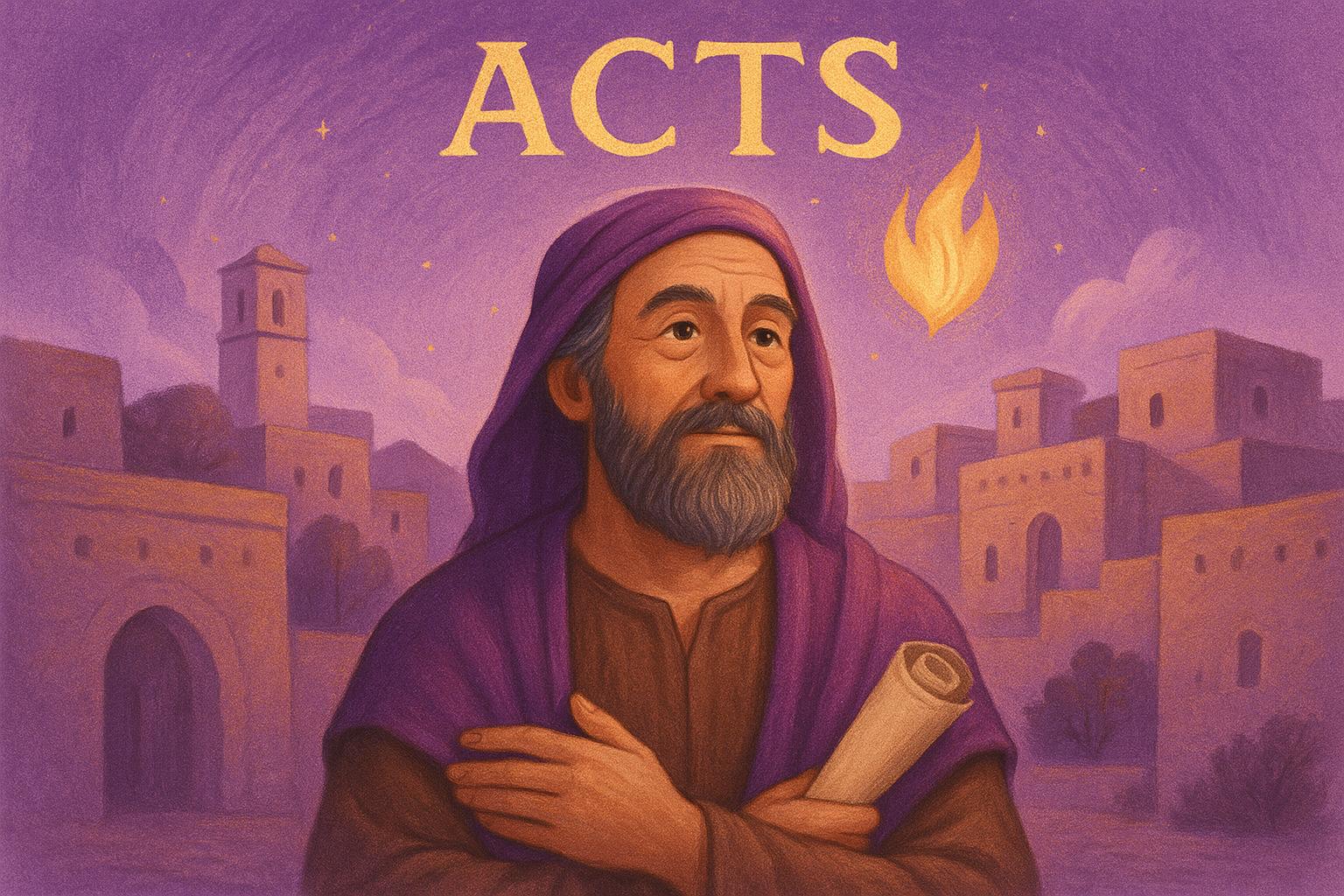
Acts of the Apostles
The history of the early Christian church and the spread of the gospel.
Key Takeaways
- Acts records the birth of the church and the coming of the Holy Spirit at Pentecost
- The book follows the gospel's spread from Jerusalem to Rome in 28 chapters
- Peter leads the first half (chapters 1-12), Paul leads the second half (chapters 13-28)
- Luke wrote Acts as a sequel to his Gospel, providing church history
- Bible Way's maps feature brings Paul's missionary journeys to life
Understanding Acts of the Apostles
The Acts of the Apostles, often simply called Acts, is the fifth book of the New Testament and serves as a crucial bridge between the Gospels and the Epistles. Written by Luke as a sequel to his Gospel, Acts traces the development of the early church from Jerusalem to Rome, covering approximately the first 30 years after Christ's resurrection (c. AD 30-62).
Acts shows how the gospel message expanded from being a small Jewish movement to a faith that spread throughout the Roman Empire, fulfilling Jesus' words in Acts 1:8 about being witnesses "in Jerusalem, and in all Judea and Samaria, and to the ends of the earth."
Related Bible Studies
Books in Acts of the Apostles
Acts
A historical account of the birth and expansion of the early Christian church from Jerusalem to Rome.
Key Events:
- Ascension of Jesus
- Pentecost
- Stephen's Martyrdom
- Conversion of Saul
- Peter's Vision
Related Reading Plans
Frequently Asked Questions
Who wrote the Book of Acts?
Luke, a physician and companion of Paul, wrote the Book of Acts. It is a sequel to his Gospel and is addressed to the same person, Theophilus. Luke was a careful historian who researched his sources and accompanied Paul on several missionary journeys.
What is the main message of Acts?
Acts shows how the Holy Spirit empowered the early church to spread the gospel from Jerusalem to the ends of the earth. It demonstrates that Christianity is not a Jewish sect but a universal faith for all people, and provides a model for how the church should function in mission, community, and worship.
How does Acts connect to the Epistles?
Acts provides the historical backdrop for understanding the New Testament letters. Paul's missionary journeys in Acts explain why he wrote to churches in Galatia, Corinth, Ephesus, Philippi, Thessalonica, and Rome. Understanding Acts helps readers interpret the Epistles in their proper context.
Key Information
Alternative Names
Acts, The Book of Acts
Author
Luke the Evangelist
Written
c. AD 80-90
Total Chapters
28 chapters
Key Themes
Holy Spirit's Empowerment
Witness and Evangelism
Church Growth and Organization
Inclusion of Gentiles
Persecution and Faithfulness
Guidance of God in Mission
External Resources
Start Studying Today
Download Bible Way for interactive study tools, reading plans, and community features.
Explore More Bible Study Resources
Ready to Dive Deeper into Acts of the Apostles?
Download Bible Way for interactive study tools, structured reading plans, and a supportive community of believers.