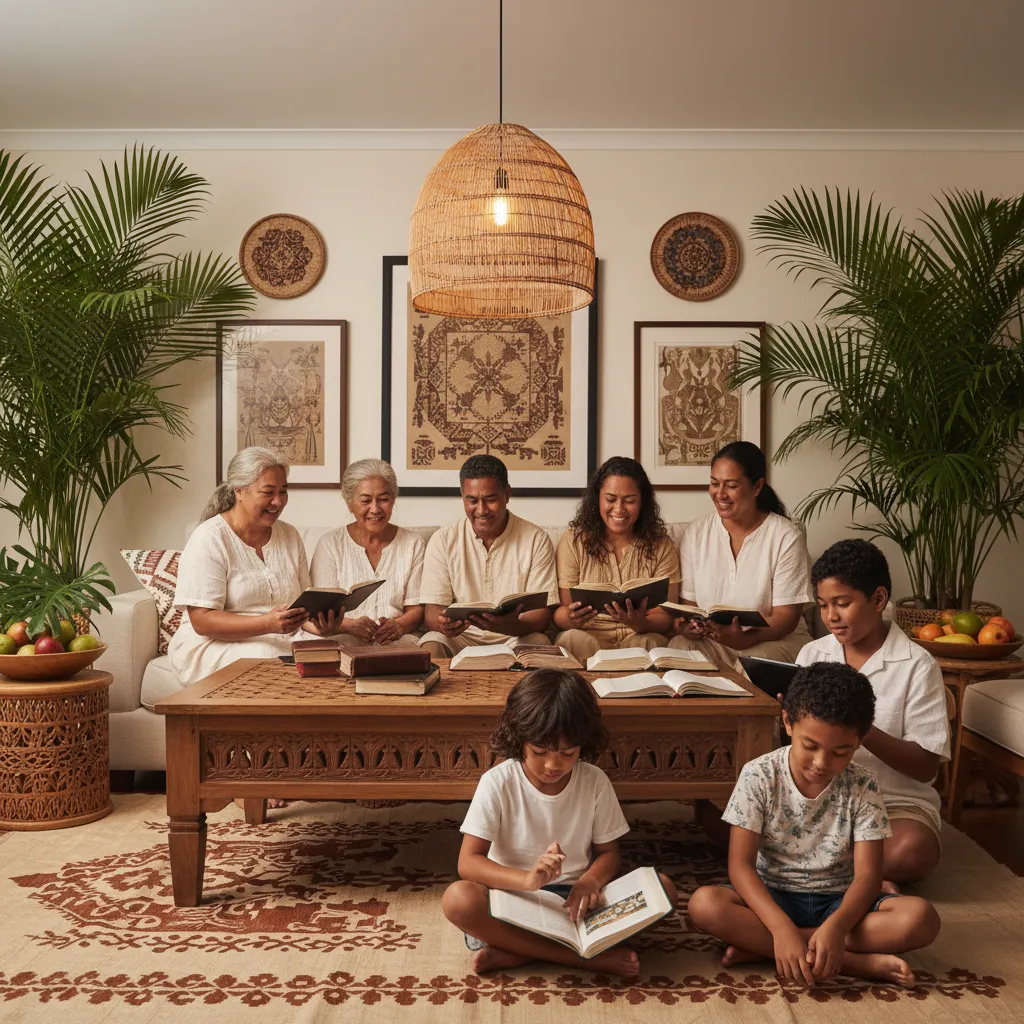
Bible study for Pacific Islanders embraces the profound Christian heritage of the Pacific Islands - a heritage that transformed Oceania from mission territory to one of the most Christian regions in the world. Pacific Islander Christianity is marked by powerful worship, strong extended family (aiga) bonds, deep respect for elders, and faith that has sustained communities through generations. Whether you are Samoan, Tongan, Fijian, Hawaiian, Maori, or from any Pacific Island nation - or living in diaspora communities in New Zealand, Australia, or the United States - these resources help you explore Scripture through your cultural heritage while growing in biblical faith rooted in Pacific experience.
Why Pacific Islanders Choose Bible Way
Bible study that celebrates your oceanic heritage, honors Pacific community values, and equips your church family with biblical truth for life's journey.
Oceanic Heritage
Study resources that honor the rich Christian heritage of Pacific Island nations spanning centuries of vibrant faith and missionary zeal.
Community Spirit (Aiga)
Embrace the Pacific Islander value of extended family and community - reflecting biblical principles of the body of Christ.
Multigenerational Faith
Resources designed for Pacific Islander families where elders, parents, and children worship and study together.
Joyful Worship
Incorporate the powerful harmonies, traditional chants, and expressive worship traditions of Pacific Island Christianity.
Contextual Faith
Engage with Pacific Islander perspectives that enrich understanding of Scripture through oceanic wisdom and island experience.
Diaspora Connection
Connect Pacific Islander Christians worldwide - from the islands to diaspora communities in New Zealand, Australia, and the United States.
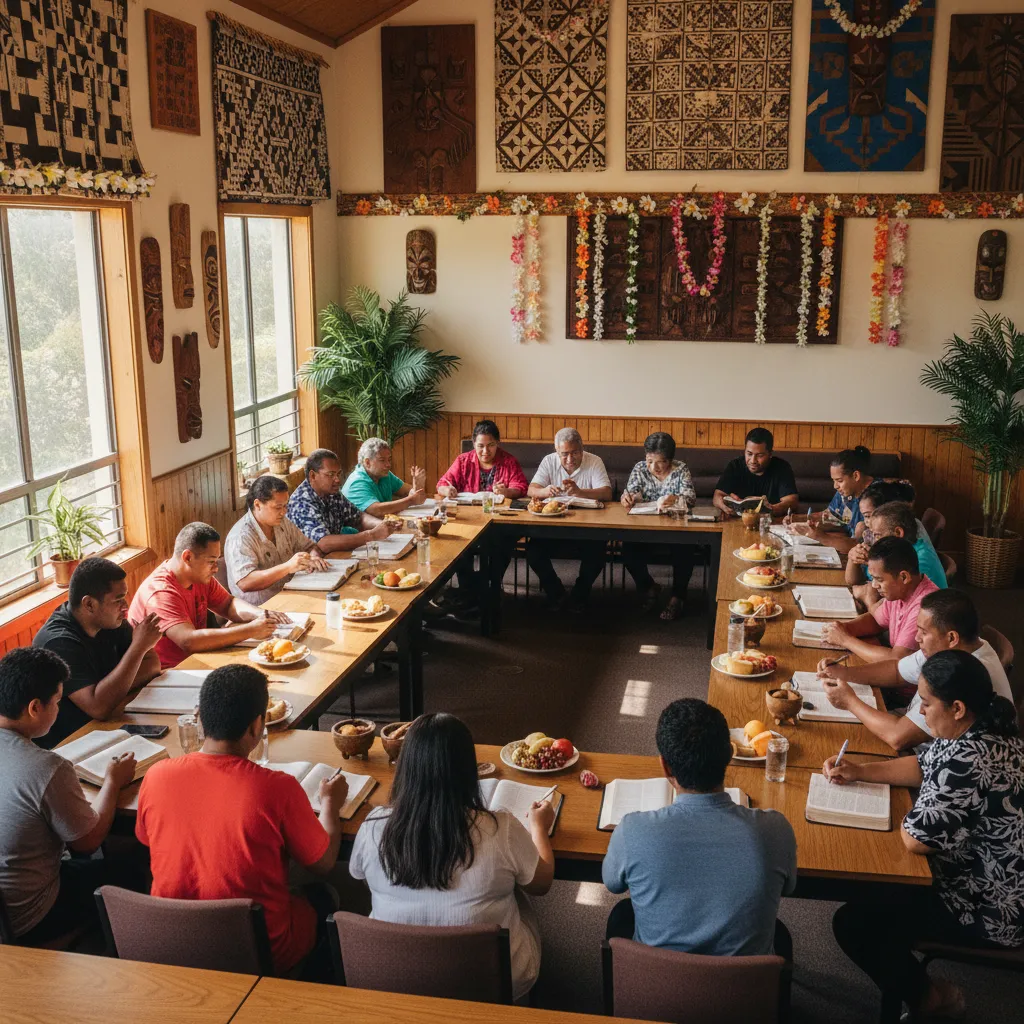
Pacific Islander communities gather for Bible study, carrying on centuries of faithful Christian tradition
Study Topics & Themes
Explore Scripture through Pacific Islander experience and heritage
Pacific Islander Christian Heritage
Exploring the deep roots of faith across Oceania
- Christianity's Arrival in the Pacific - Missionary Era to Today
- Indigenous Pacific Islander Missionaries and Evangelists
- The Role of the Church in Pacific Island Communities
- Revival Movements Across Polynesia, Melanesia, and Micronesia
- Pacific Islander Churches and Global Impact
- The Village Church as Community Center
Pacific Islander Values and Scripture
Island wisdom meets biblical truth
- Aiga (Family) - Extended Family and the Body of Christ
- Fa'a Samoa and Biblical Community Living
- Pacific Islander Hospitality and Biblical Welcoming
- Respect for Elders (Va Fealoa'i) in Scripture
- Mana, Authority, and God's Power
- Tapu (Sacred) and Biblical Holiness
Faith Through Pacific Experience
Scripture addressing Pacific Islander realities
- Jesus Calming the Storm - Pacific Seafaring Perspective
- Jonah's Journey - God's Sovereignty Over the Ocean
- Paul's Shipwreck - Pacific Islander Understanding
- Island References in Isaiah and Psalms
- The Great Commission and Pacific Missionary History
- Creation Care and Pacific Island Stewardship
Contemporary Pacific Islander Faith
Addressing modern Pacific Islander Christian life
- Faith and Island Economics in Scripture
- Pacific Islander Youth Maintaining Cultural Faith
- Marriage and Family in Pacific Islander Christianity
- Climate Change and Pacific Islander Creation Care
- Balancing Traditional Culture and Biblical Faith
- Pacific Islander Churches in Diaspora Communities
Stories from Pacific Islander Christians
See how Bible Way is impacting believers across the Pacific and the diaspora
"Finally, Bible study that understands our Pacific way! These resources help my congregation connect their Tongan heritage with Scripture. The family focus reflects who we are as Pacific people."
"Our children are learning that their Pacific Islander Christian heritage matters. They understand that faith and culture celebrate together in ways that honor both God and our ancestors."
"The community-focused Bible studies transformed our Samoan youth ministry. Young people finally see how Pacific values of respect and togetherness align perfectly with Scripture."
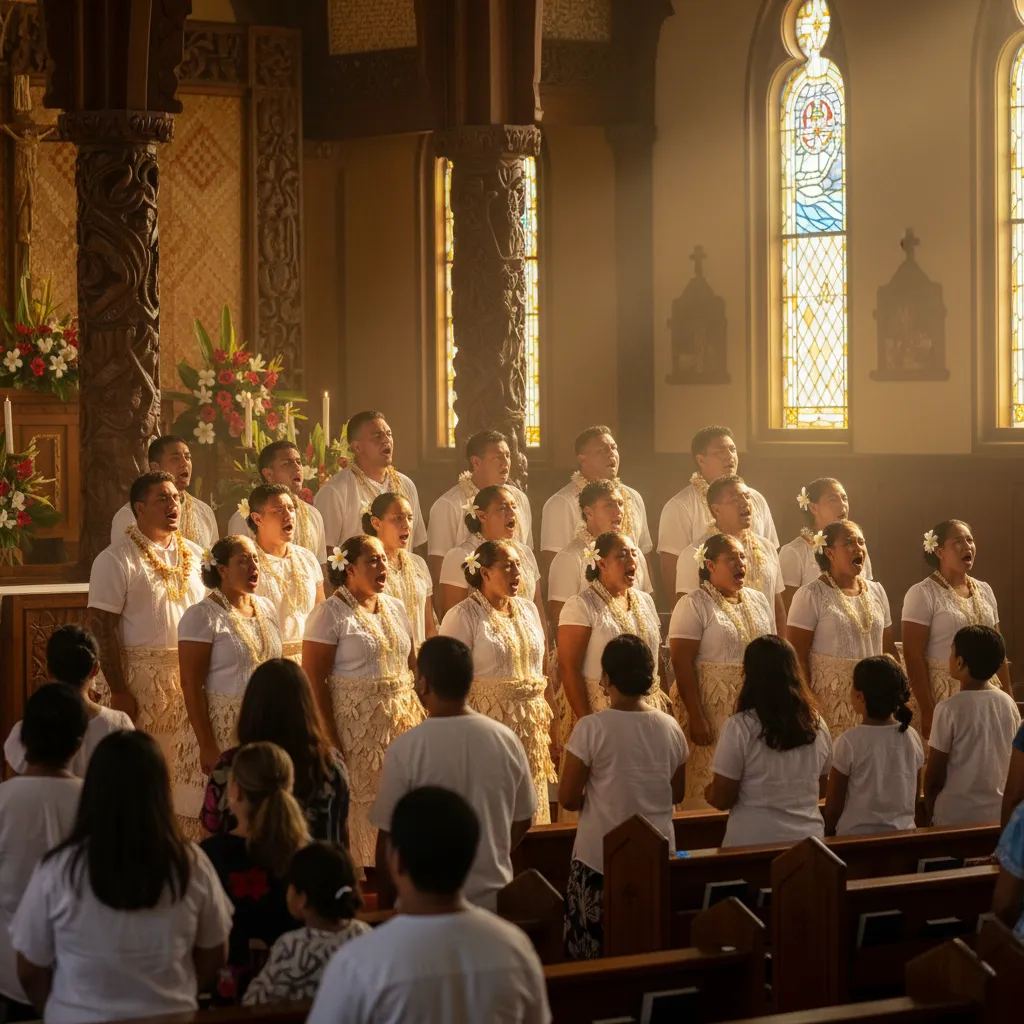
Pacific Islander worship is renowned worldwide for its powerful harmonies and joyful praise
Available Resources
Everything your community needs for meaningful Bible study
Heritage Devotionals
Daily devotionals connecting Pacific Islander Christian history with personal spiritual growth.
Community Study Guides
Comprehensive guides designed for Pacific Islander small groups and church communities.
Cultural Discussion Questions
Thought-provoking questions exploring Scripture through Pacific communal perspective.
Pacific Worship Resources
Integrate powerful Pacific Islander worship expressions into your Bible study experience.
Island Context Teachings
Learn from Pacific Islander pastors, scholars, and theologians who understand your context.
Pan-Pacific Community
Connect with Pacific Islander Christians across Oceania and diaspora communities worldwide.
Oceanic Roots, Living Faith
Pacific Islander Christianity has transformed the islands of Oceania into one of the world's most vibrant Christian regions. From the village churches that anchor every community to the powerful harmonies that fill Sunday mornings, from the prayers that open every gathering to the biblical values that shape family life - Pacific faith is strong, present, and deeply rooted.
This Bible study honors that legacy while addressing contemporary Pacific Islander Christian life. We explore themes central to Pacific experience - extended family (aiga), community togetherness, respect for elders, ocean stewardship, and joyful worship - all grounded in Scripture's eternal wisdom.
"E le se ma le va" - The space between us matters. We are connected.
- Samoan Proverb reflecting 1 Corinthians 12
Pacific Christian Heritage
- ✓Over 200 years of vibrant Christian history across Oceania
- ✓Indigenous Pacific missionaries spread the gospel across thousands of miles
- ✓Church central to Pacific Island community life and identity
- ✓Among the highest church attendance rates in the world
- ✓Pacific Islander Christians blessing global church through diaspora
Key Takeaways
Pacific Islander Christianity has over 200 years of history and produces some of the world's highest church attendance rates
Pacific values of extended family (aiga) and community deeply resonate with biblical teachings on the body of Christ
Scripture contains ocean and island references that speak powerfully to Pacific Islander experience and identity
Pacific Islander worship - powerful harmonies and joyful expression - reflects biblical patterns of praise
Pacific Islanders were remarkable missionaries who spread Christianity across Oceania at great personal sacrifice
Pacific Islander diaspora Christians bless the global church by bringing vibrant faith to new contexts
Pacific Islander Christian Community
One family in Christ - from the islands to the world
What We Offer
- Heritage devotionals connecting Pacific Christian history with daily faith
- Community-focused study guides for church groups
- Teachings from Pacific Islander pastors and scholars
- Pan-Pacific and diaspora community connection
"This app helped our church embrace that our Pacific way of worship is not 'too much' but perfectly biblical. Our young people now take pride in their faith and their Pacific Islander identity together!"
Pastor Manu A.
Church Leader, Apia, Samoa
Frequently Asked Questions
Common questions about Bible study for Pacific Islanders
What is the history of Christianity in the Pacific Islands?
Christianity arrived in the Pacific Islands primarily through European and American missionaries in the late 18th and 19th centuries. The London Missionary Society reached Tahiti in 1797, and Christianity spread rapidly across Polynesia. Remarkably, Pacific Islanders themselves became the primary evangelists - Tahitian, Samoan, Tongan, and Fijian missionaries carried the gospel across thousands of miles of ocean to neighboring island groups. In Samoa, Christianity became deeply embedded after the arrival of John Williams in 1830. Tonga was evangelized through Methodist missionaries and became one of the most Christian nations on earth. Hawaii received missionaries in 1820, transforming the islands' religious landscape. Fiji's conversion involved both Methodist missionaries and indigenous Pacific evangelists. Today, the Pacific Islands are among the world's most Christian regions, with church attendance rates far exceeding Western nations. Pacific Islander Christianity developed unique characteristics - powerful choral singing, strong community involvement, integration with cultural practices, and remarkable missionary sending. Churches often serve as community centers where language, culture, and faith are preserved together. Pacific Islander Christians have contributed significantly to global Christianity through their missionaries, worship styles, and theological perspectives shaped by oceanic experience.
How do Pacific Islander cultural values connect with biblical teachings?
Pacific Islander cultural values share profound connections with biblical principles, making Scripture resonate deeply in island contexts. The concept of Aiga (extended family in Samoan) or Kainga (in Tongan) mirrors the biblical understanding of believers as one family in Christ (Galatians 3:28, Ephesians 2:19). Pacific Islanders' communal approach to life - sharing resources, collective decision-making, and mutual responsibility - reflects the early church in Acts 2:44-45 where believers "had everything in common." The Pacific value of respect for elders (Va Fealoa'i in Samoan, Faka'apa'apa in Tongan) directly parallels biblical commands to honor the aged (Leviticus 19:32, 1 Timothy 5:1-2). Pacific Islander hospitality traditions - welcoming strangers, preparing feasts for visitors - embody Hebrews 13:2 and Jesus' teachings on generosity. The concept of Tapu (sacred, set apart) in Polynesian cultures connects with biblical holiness. Pacific understanding of Mana (spiritual power and authority) provides framework for understanding God's power and the Holy Spirit's work. The oceanic worldview - seeing the sea as connecting rather than separating islands - reflects God's intention for His people to be united despite distance. Rather than conflict, Pacific Islander Christians often find their cultural values affirmed and deepened by Scripture.
How should Pacific Islander Christians approach traditional cultural practices?
Pacific Islander Christians navigating relationships with traditional cultural practices require thoughtful biblical discernment. The key is distinguishing between cultural practices and spiritual beliefs. Many Pacific cultural elements are neutral or positive and can be fully embraced: kava ceremonies (when not involving spirit invocation), traditional dance and music, tattoo as cultural identity, respect rituals, hospitality customs, and community governance structures. These express Pacific identity without conflicting with Scripture. However, some traditional practices do require biblical evaluation. Ancestor veneration that involves prayer to or worship of the dead contradicts Scripture's teaching that Jesus is the only mediator (1 Timothy 2:5) and that we should not consult the dead (Deuteronomy 18:11). Traditional healing practices involving spirit manipulation conflict with biblical faith. The principle is "critical contextualization" - thoughtfully evaluating each practice through Scripture rather than blanket acceptance or rejection. Paul's approach in Acts 17 at Athens provides a model: affirming what is true in culture while redirecting what contradicts the gospel. Many Pacific Island churches have successfully integrated cultural expressions into worship - traditional instruments, dance, clothing, and language - while maintaining biblical integrity. Pacific Islander Christians need not choose between being authentically Pacific and authentically Christian.
What does the Bible say about the ocean and island peoples?
Scripture contains significant references to the ocean and islands that speak powerfully to Pacific Islander experience. God created the seas and declared them good (Genesis 1:9-10). Psalm 95:5 proclaims "The sea is his, for he made it." Isaiah frequently addresses islands and oceanic peoples: "Sing to the LORD a new song, his praise from the ends of the earth, you who go down to the sea... you islands and all who live in them" (Isaiah 42:10). Isaiah 49:1 calls out: "Listen to me, you islands; hear this, you distant nations." The Psalms celebrate God's sovereignty over waters: "He stilled the storm to a whisper; the waves of the sea were hushed" (Psalm 107:29). Jesus demonstrated authority over the sea (Mark 4:35-41), a truth that resonates deeply with Pacific seafaring peoples who understand the ocean's power. The disciples were fishermen whose livelihood depended on the sea. Paul's extensive sea voyages and shipwreck experience (Acts 27) connect with Pacific maritime experience. Revelation's vision includes people "from every nation, tribe, people and language" (Revelation 7:9), explicitly including Pacific peoples in God's eternal plan. While the Pacific Ocean wasn't known to biblical writers, God's intention to reach "the ends of the earth" (Acts 1:8) and "all nations" (Matthew 28:19) certainly encompassed Pacific Island peoples, as demonstrated by Christianity's remarkable spread across Oceania.
How can Pacific Islander Christians maintain faith while living in diaspora?
Pacific Islander Christians in diaspora communities (New Zealand, Australia, United States, and beyond) face unique challenges in maintaining faith and cultural identity. Scripture provides guidance through numerous examples of God's people living faithfully away from their homeland. Daniel and the exiles in Babylon maintained distinctive faith practices while contributing to their new society (Daniel 1-6). The early church scattered through persecution but spread faith wherever they went (Acts 8:1-4). Several strategies help diaspora Pacific Islanders thrive spiritually. First, connect with Pacific Islander churches and faith communities that provide spiritual home, cultural continuity, and mutual support. These communities preserve language, worship styles, and Pacific expressions of faith. Second, practice intentional cultural transmission - teach children Pacific languages, cultural expressions of faith, and stories of Pacific Christianity alongside engagement with their new context. Third, maintain transnational connections through regular communication with Pacific Island family and churches. Fourth, develop "third culture" identity that authentically integrates Pacific heritage with new context while maintaining core biblical faith. Fifth, recognize the missionary opportunity - Pacific Islander Christians bring vibrant faith to increasingly secular Western societies, contributing energy and commitment that bless their new communities. Rather than losing identity, diaspora Pacific Islanders can strengthen both their cultural heritage and Christian faith through intentional engagement with both communities.
What is the significance of music and worship in Pacific Islander Christianity?
Music and worship hold central importance in Pacific Islander Christianity, and this emphasis is profoundly biblical. The Psalms - essentially a worship songbook - demonstrate that physical, emotional, and musical expression has always characterized biblical worship. Psalm 150 commands praise with every instrument available. Psalm 149:3 instructs: "Let them praise his name with dancing." Pacific Islander churches are known worldwide for their powerful worship expressions. Polynesian harmonies - often sung a cappella with multiple parts - create some of the most beautiful choral music in global Christianity. Samoan, Tongan, Fijian, and Hawaiian congregational singing can move listeners to tears. Traditional instruments like the Pahu drum, Ukulele, and Ipu have been incorporated into worship. Pacific dance, when offered as worship to God rather than entertainment, expresses devotion through movement as David did before the Lord (2 Samuel 6:14). The "emotional" or "exuberant" worship sometimes observed in Pacific churches reflects biblical patterns more accurately than restrained Western services. Pacific Islander Christians need not apologize for joyful, harmonious, full-bodied worship - Scripture commands exactly this kind of praise. The key is ensuring worship focuses on God rather than performance, and that cultural expression connects with genuine heart devotion. Pacific worship traditions have blessed global Christianity, with Pacific choirs and worship leaders influencing churches far beyond the islands.
How do Pacific Islanders understand family and the church?
For Pacific Islanders, family (Aiga, Kainga, Ohana) is the fundamental unit of society, and this understanding profoundly shapes their experience of church. In Pacific culture, family extends far beyond nuclear family to include grandparents, aunts, uncles, cousins, and even close friends - a concept closely mirroring the biblical understanding of the church as extended spiritual family. The New Testament frequently uses family language for the church: believers are "brothers and sisters" (Romans 8:29), adopted children of God (Ephesians 1:5), and members of "God's household" (Ephesians 2:19). Pacific Islanders naturally understand church in these familial terms. Practically, this means Pacific Islander churches often function as extended families. Elders are respected as spiritual parents and grandparents. Younger members care for older ones. Resources are shared during hardship. Decisions are made collectively. Celebrations and sorrows are experienced together. Church activities involve entire families rather than age-segregated programs. This family-centered church experience can be deeply biblical, though it also requires vigilance against unhealthy patterns like authoritarianism or insularity. The Pacific Islander understanding that "it takes a village to raise a child" applies to spiritual development as well - faith is nurtured in community, not isolation. Many Western churches are rediscovering what Pacific Islanders have always known: Christianity is fundamentally communal, and the church is meant to function as a family.
What resources exist for Pacific Islander contextual Bible study?
Resources for Pacific Islander contextual Bible study have grown as Pacific theological scholarship has developed. The Pacific Theological College in Fiji serves as a major center for Pacific theological education. The South Pacific Association of Theological Schools (SPATS) coordinates theological training across the region. Many Pacific nations have Bible translations in indigenous languages - Samoan, Tongan, Fijian, Hawaiian, Māori, and others - allowing Scripture engagement in heart languages. The Bible Society of the South Pacific has produced numerous translations and resources. Individual denominations - Methodist, Catholic, Assembly of God, Latter-day Saints, and others - have developed Pacific-specific curricula. Online resources are expanding, with Pacific Christian media ministries, podcasts, and websites offering culturally relevant content. Pacific Islander pastors and theologians like Jione Havea, Winston Halapua, and Upolu Luma Vaai have published works on Pacific theology. The Bible Way app offers features supporting communal Bible study suited to Pacific contexts. Local church resources often provide the most contextually relevant materials - developed by Pacific Islanders for Pacific Islanders. The key is combining solid biblical scholarship with genuine Pacific perspective, avoiding both uncritical imports from the West and theological compromises. Pacific Islander Christians should also trust their own cultural insight when reading Scripture - communal reading often reveals meaning that individualistic interpretation misses.
How should Pacific Islander Christians approach climate change and environmental stewardship?
Climate change presents an urgent and deeply personal issue for Pacific Islander Christians, as rising sea levels and extreme weather threaten the very existence of low-lying island nations like Tuvalu, Kiribati, and the Marshall Islands. Scripture provides robust foundation for environmental stewardship. Genesis 2:15 establishes humanity's role to "work and take care of" God's creation. Psalm 24:1 declares "The earth is the LORD's, and everything in it." Pacific Islanders have traditionally understood themselves as stewards rather than owners of the land and sea - a perspective that aligns with biblical teaching. The ocean that sustains Pacific Island life belongs to its Creator. Pacific Islander Christians can engage climate issues through several biblical frameworks. First, creation care as worship - protecting the environment honors God as Creator. Second, love of neighbor - climate impacts most severely affect the poor and vulnerable, whom Scripture commands us to protect (Proverbs 31:8-9). Third, intergenerational responsibility - we are stewards of creation for future generations. Fourth, prophetic witness - speaking truth about climate justice to powerful nations whose emissions most cause the problem. Fifth, hope in God's ultimate restoration - while working for environmental protection, Pacific Christians trust that God will ultimately make "all things new" (Revelation 21:5). Rather than despair, Pacific Islander faith provides resilience and motivation for action.
What role have Pacific Islander women played in the church?
Pacific Islander women have played and continue to play crucial roles in Pacific Christianity, even as cultural expectations have sometimes limited formal leadership. Women's groups in Pacific churches - such as the Mafutaga a Tina in Samoan churches or the Hou'eiki Fefine in Tongan congregations - have been powerhouses of prayer, community care, and financial support for churches. These groups often fund church projects, care for the sick and elderly, and maintain spiritual vitality through prayer meetings. Biblical examples affirm women's significant place in God's kingdom: Deborah as judge and prophet (Judges 4-5), Priscilla teaching Apollos (Acts 18:26), Phoebe as deacon (Romans 16:1-2), and women as first witnesses to the resurrection. In Pacific Christianity, women have been foundational in transmitting faith to children and grandchildren. The concept of the "pule o le tina" (influence of the mother) recognizes women's spiritual authority within families even when formal church leadership was restricted to men. Contemporary Pacific churches are increasingly recognizing women in leadership roles - as pastors, theologians, denominational leaders, and missionaries. This development retrieves biblical precedent while addressing historical limitations. Pacific Christian women embody strength, wisdom, and faithfulness, often maintaining family spirituality through difficult circumstances. The church would not exist without Pacific Islander women's foundational contributions across generations.
How do Pacific Islander Christians view spiritual warfare and traditional beliefs?
Pacific Islander Christians generally maintain robust belief in spiritual reality - angels, demons, God's active intervention in daily life - that aligns closely with biblical worldview. This stands in contrast to secularized Western Christianity that sometimes minimizes supernatural dimensions. Traditional Pacific cultures recognized spiritual forces in nature, ancestral spirits, and various supernatural beings. Christianity in the Pacific addressed these beliefs directly rather than dismissing them as superstition. Scripture affirms that spiritual warfare is real (Ephesians 6:12), that Satan is active in the world (1 Peter 5:8), and that Jesus has authority over all spiritual powers (Colossians 2:15). Pacific Islander Christians understand their previous spiritual practices were engaging real but deceptive spiritual forces. Conversion to Christ means transferring allegiance to the true God who has ultimate authority over all spiritual powers. The dramatic conversions in early Pacific Christianity often involved confrontations with traditional spiritual powers - similar to biblical accounts in Acts. Pacific Islander Christians typically reject the extremes of either ignoring spiritual reality (Western rationalism) or giving excessive attention to demonic forces (some charismatic excess). The balanced biblical approach recognizes spiritual warfare while fixing attention on Christ's victory and the Holy Spirit's power. Pacific prayer practices often reflect this awareness - fervent, specific, and confident in God's power to intervene in spiritual and material circumstances.
How has Pacific Islander Christianity contributed to global mission?
Pacific Islander Christianity has made extraordinary contributions to global mission far exceeding what their small populations might suggest. From the earliest years of Christianity in the Pacific, converted islanders became missionaries themselves. Tahitian Christians evangelized the Cook Islands, Samoan missionaries carried the gospel to Tuvalu and Tokelau, Tongan missionaries reached Fiji and New Zealand, and Fijian missionaries served across Melanesia - all at great personal sacrifice. Many Pacific Islander missionaries died of disease or violence in their mission fields, yet others continued to go. This indigenous missionary movement was remarkable in church history - Pacific Islanders didn't wait for Western direction but took initiative in spreading the faith. Today, Pacific Islander Christians continue this missionary legacy. Samoan and Tongan churches send missionaries worldwide. Pacific Islander diaspora communities become mission bases in secular Western cities. Pacific worship styles and theological perspectives have influenced global Christianity. The model of community-based Christianity that Pacific Islanders practice offers alternatives to individualistic Western expressions. Pacific environmental theology is increasingly relevant as the global church addresses climate issues. Pacific Christians bring strong emphasis on prayer, supernatural faith, and joyful worship that revitalizes churches worldwide. Rather than being merely recipients of missionary effort, Pacific Islander Christians are significant contributors to global Christianity, embodying Jesus' promise that the gospel would go from Jerusalem "to the ends of the earth" - and back again.
Helpful External Resources
Trusted resources for Pacific Islander Christian Bible study
Related Bible Studies
Explore more cultural and community-focused Bible study resources
Caribbean Christians Bible Study
Faith resources for Caribbean Christians
Asian Families Bible Study
Resources for Asian Christian families
African Christians Bible Study
Faith resources for African Christians
Native American Bible Study
Indigenous perspectives on Scripture
Australia Bible Study
Resources for Australian Christians
Immigrant Families
Faith in new lands
Multicultural Families
Unity in diversity
Family Bible Study
Multigenerational faith resources